We met sometime in the late 1980’s at a plant society meeting at Seattle’s Center for Urban Horticulture, apparently the only male members under the age of forty.
Since the group skewed older, we were welcomed for our relative youth. We soon found ourselves chatting about the generational demographics. Steve and I shared an interest in the genus Primula and later discovered we were exactly the same age, sharing December 16th, 1948 as our first day on this lovely planet.
The coincidence cemented a friendship, though it was a friendship focused almost solely on horticulture. Considering our differences in temperament and personality it seemed unlikely that the friendship would endure.
Yet even though we drifted apart, we always reconnected on our birthday.
* * *
I had become interested in plants and gardening in my mid thirties when, married and secure in my masculinity, I was able to indulge my love of flowers, gardens and the natural world. As a child of the 50’s and 60’s growing up in a working class neighborhood my interests were limited to sports. It seemed to me that a boy expressing an interest in flowers, art, and sadly even books was inappropriate, certainly frowned on by my peers and even many adults. So I behaved accordingly.
Steve had a different kind of childhood. On one garden walk he explained to me that as a youngster in the 1950’s, suffering from both the effects of a Poliomyelitis infection (Polio) and the stigma attached to the disease, he would take walks in nearby woods, the plants and critters his only companions. That his treatment regime included antibiotics and mild exercise probably allowed his parents to approve of his solitary forays into the woods.
* * *
 Whether it was a walk in a Seattle park, trail-side in the woods or just a neighborhood stroll in West Seattle, Steve had a remarkable talent for pointing out the extraordinary beauty of flora in the natural world, be it an unusual cultivar, an overlooked native or a plant that deserved more use in gardens.
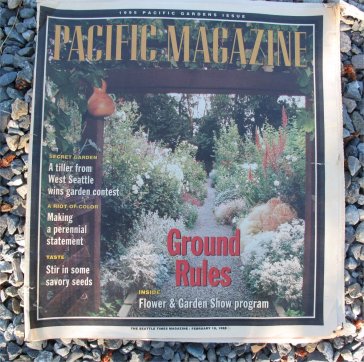
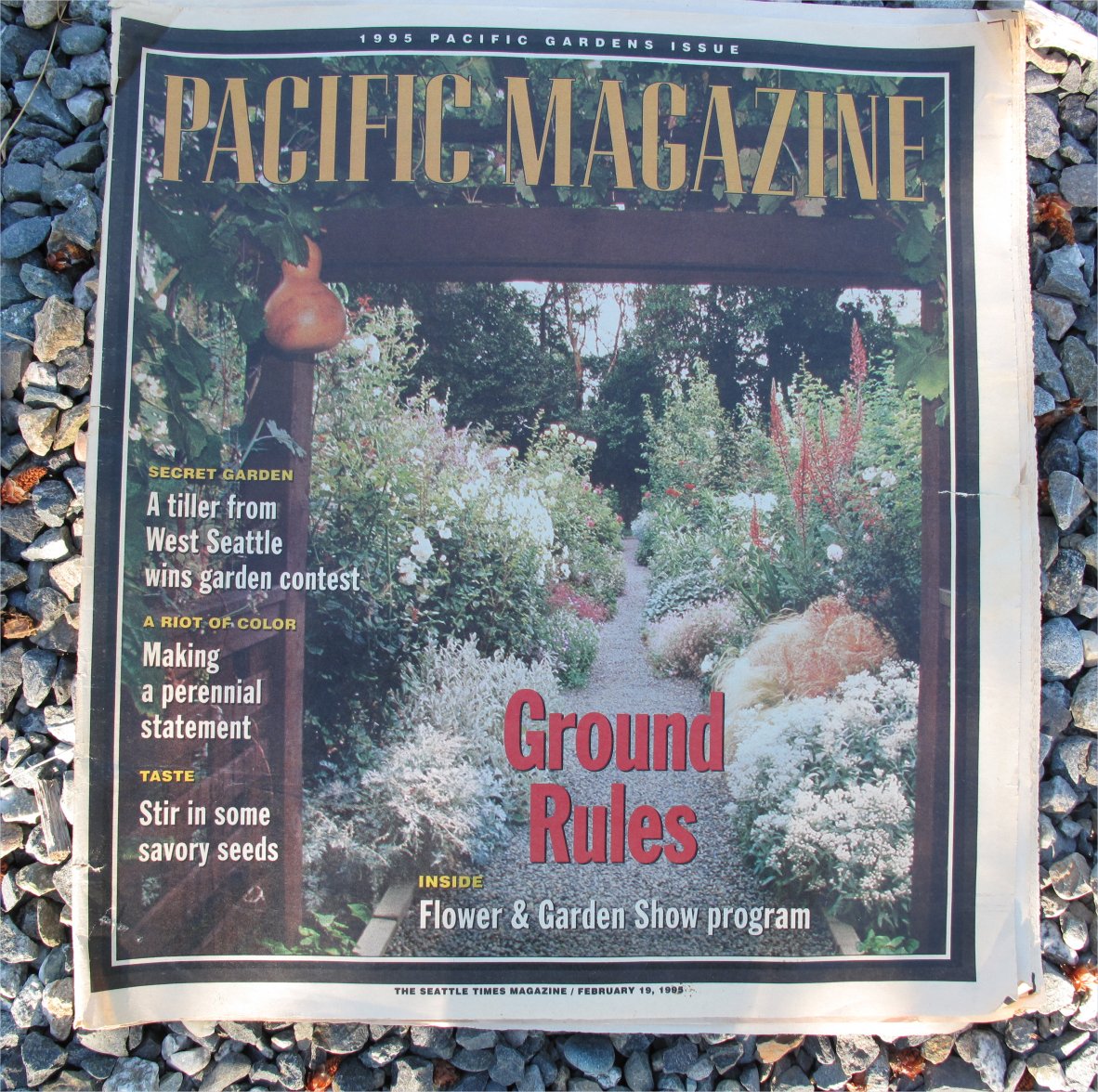
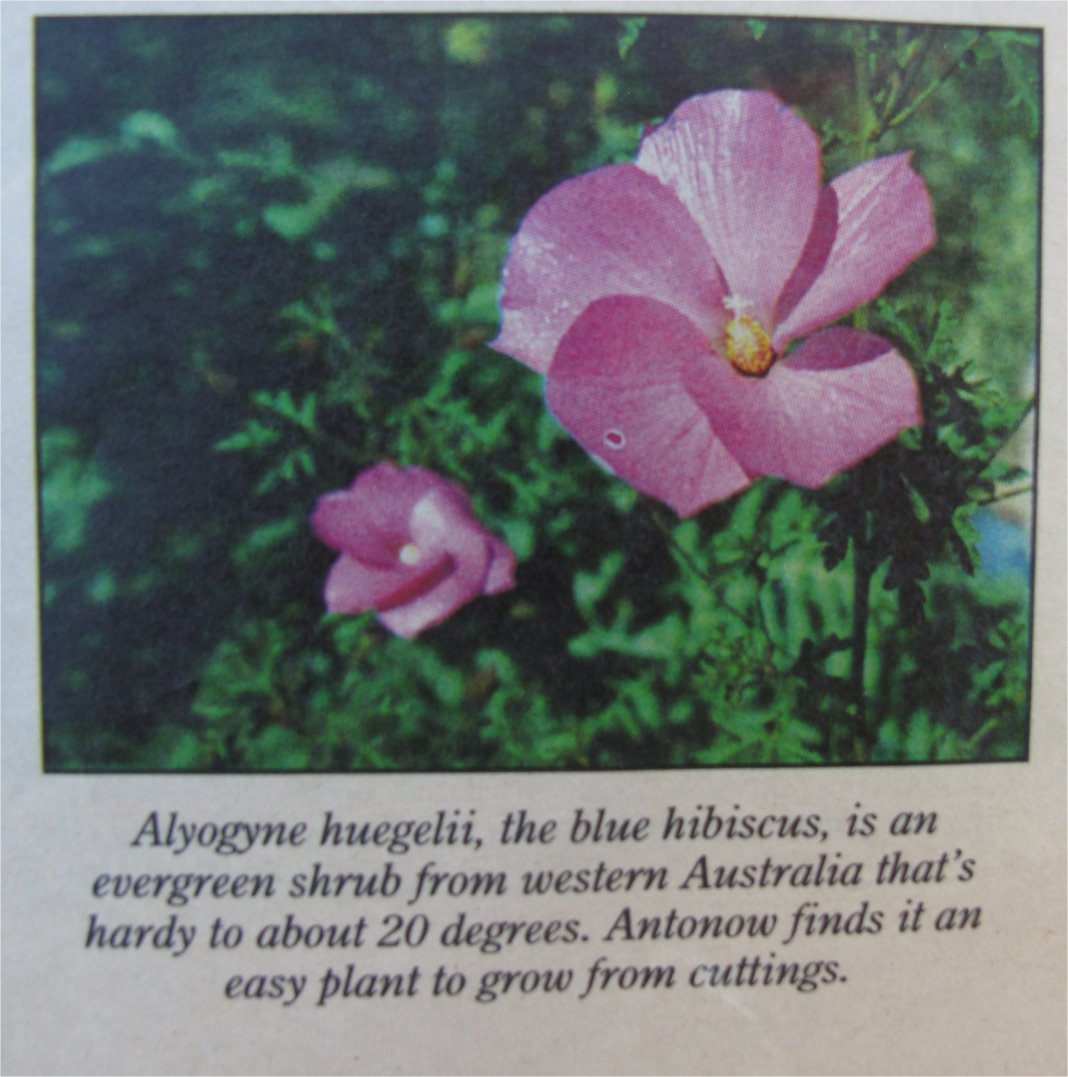
His own garden, densely packed with choice plants, remained a bit of a secret until 1995, when it won a major local prize. Here it is pictured on the cover of the Seattle Times’ Pacific magazine.
Writing about that prize winning garden in 1995, Dean Stahl marveled at Steve’s achievement and provided insight into Steve’s character:
Antonow pays serious attention to color, form, texture and how each plant relates to its neighbor. He has an artist’s eye, in this sense, and can foresee the big picture while surrounded by minutia. The cultivated space is so intensively planted that if you shift your attention an inch there is a new rarity to consider.
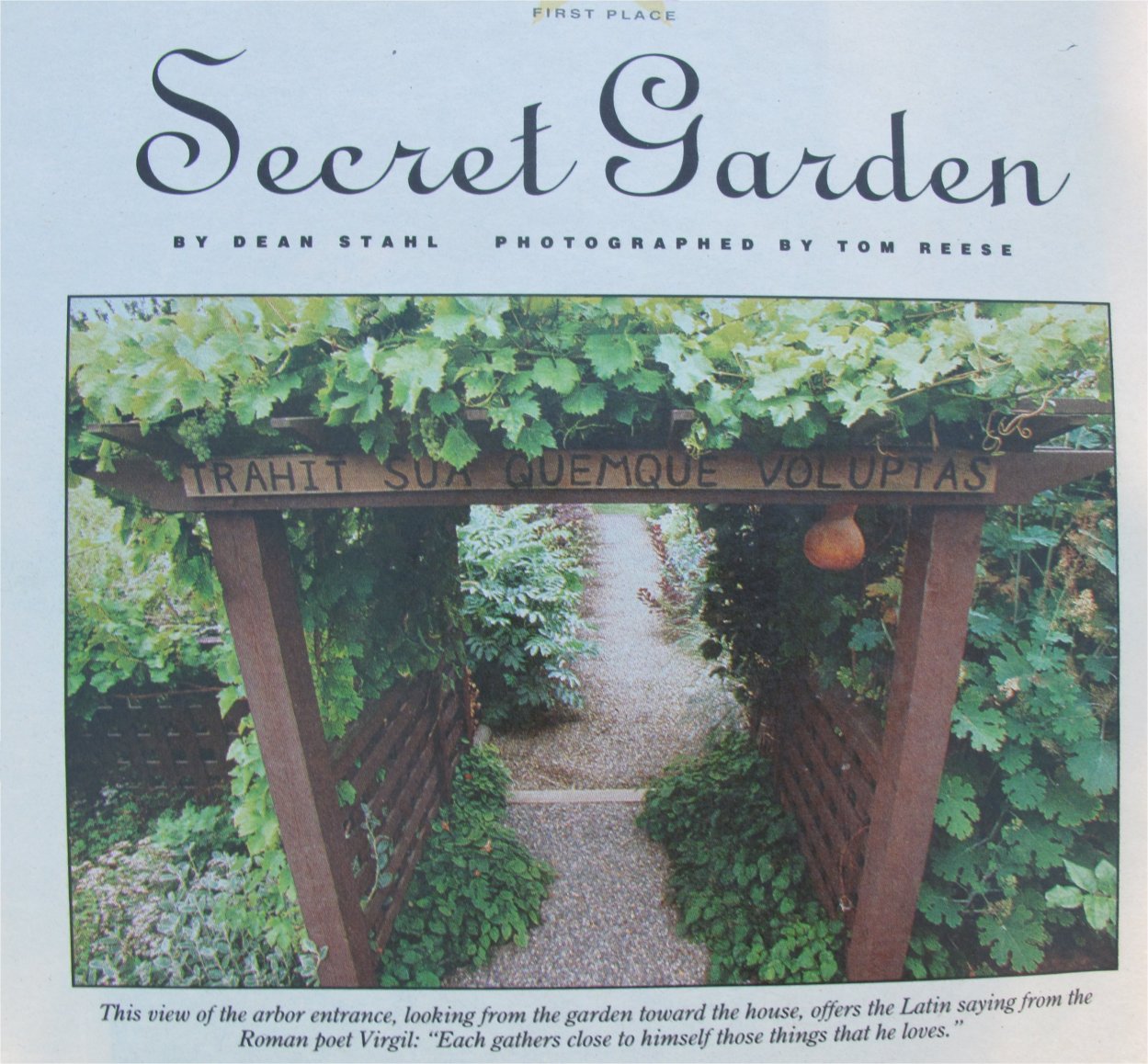
Antonow says, “A garden should have hidden qualities. That idea of being confined — passing through the [entry] arbor — then bursting into the open is appealing to me. The long line of plant material one comes upon is naturally a scene of release, of verge and power.”
He is a Jesuit-trained classicist who weaves poetry into everyday conversation and radiates contentment when he plunges his hands into homemade compost. If Gerard manley Hopkins and Emily Dickinson are his kindred spirits, horticulture is his abiding passion. It is no wonder that Antonow has arranged his life so he can work with plants nearly every day.
* * *
Steve retired early from a job with the federal government, I think he worked for OSHA in Chicago (he once mentioned testifying before Congress) and moved to West Seattle to devote all his energy to his passion for gardening. I’m not sure how long after we met he had purchased his house, but I believe he selected the Fauntleroy bungalow for the potential the backyard offered, rather than any amenities inside the house.
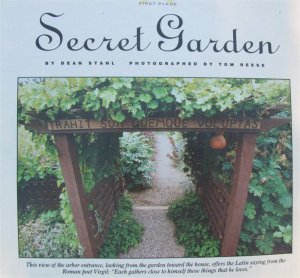 Steve’s choice of a neighborhood in West Seattle in close proximity to Puget Sound was the result of his desire to garden in a climate more hospitable to year-round gardening rather than what Chicago’s bitter winters could provide. Writing in an online garden forum Mindy Arbo had this to say in answer to the question of where a gardener seeking to garden all year should move:
“There once was a very amazingly talented and serious Chicago gardener named Steve Antonow. When he pondered your same question, he spent a great deal of time studying U.S.weather charts and soil data and every other kind of data (property prices etc.) that he could find. He then settled/retired in West Seattle and developed an extraordinary garden. He often verbally confirmed that he had indeed made the right choice. West Seattle.”
(Read all the answers to “Looking for a Perfect Gardening Weather...”
* * *
 I remember the first time Steve invited me to see his garden and my excitement at finally getting to see many of the plants we talked about. We had met several times at garden meetings and together had visited some of his friends and clients’ gardens. Many of those folks and their gardens were noteworthy in the insider world of “Seattle Garden Literati.” At the time, I didn’t consider myself worthy of hanging out with SGL types, since when it came to gardening I just dabbled ( a true gardening dilettante), but Steve always provided encouragement, “…but Bart you are a keen observer of plants and already know so much about the genus Primula.”
Steve’s digs in West Seattle were Spartan and utilitarian, little to distract from his primary goal of working tirelessly to turn the backyard into a plant collectors paradise. The front yard of the house remained no different than the other houses on the block.
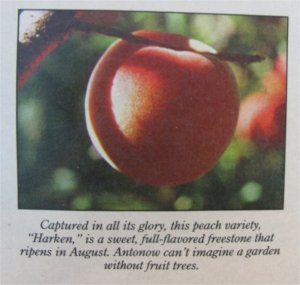
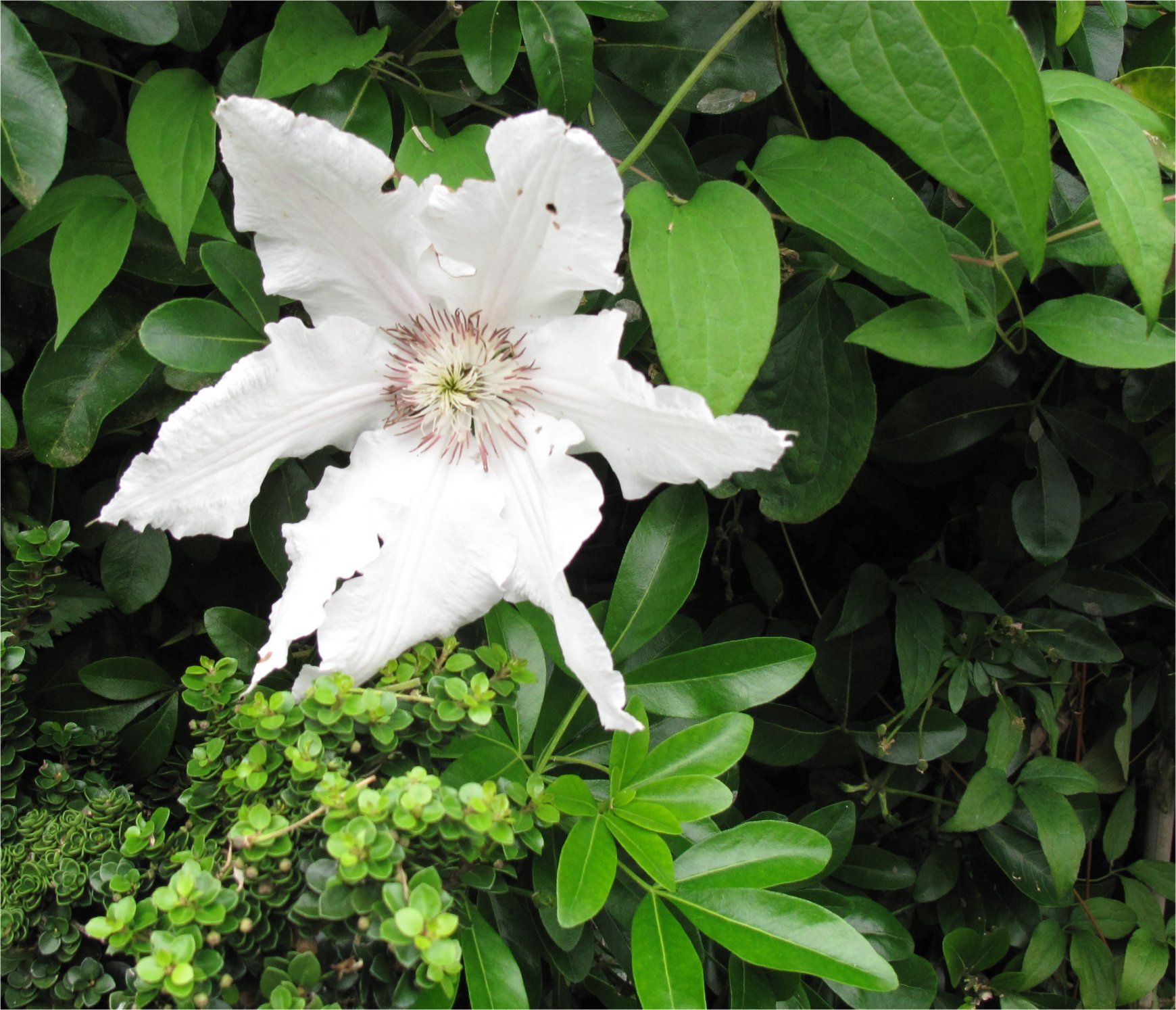
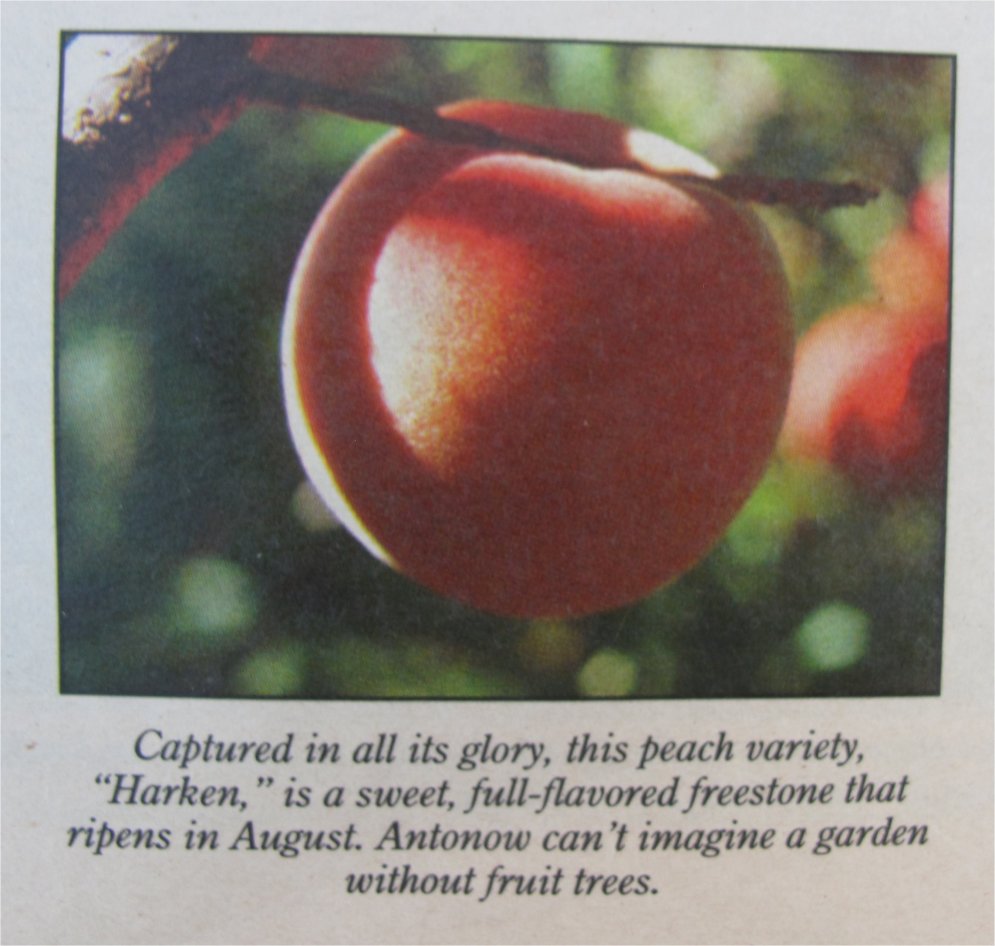
 The backyard was Steve’s secret garden, a sanctuary that changed daily. The garden featured tons of rose and clematis cultivars; all kinds of herbaceous perennials; espaliered apple, peach and pear trees, fig trees and a grape arbor.
On one side of the central path Steve had salvaged a large trough and somehow had wrestled it to eye level, the better to enjoy smaller plants, like Dianthus, Saxifrages, and even some alpine Lewisias.
***
I visited Steve’s garden at least three or four times after he won best garden in the 1995 contest, which was at that time sponsored by the Seattle Times and the Northwest Flower and Garden Show with the cooperation of the UW Arboretum Foundation (where Steve regularly volunteered) . First prize, was an all expense trip to the Chelsea Garden show in London. It would be the second time Steve visited English gardens.
I wouldn’t be surprised if on his first or second visit Steve toured Vita Sackville-West’s Sissinghurst garden. Steve’s garden figured In a 2011 lecture at Cornell University’s College of Agriculture and Life Sciences entitled, Literature, Life, Gardens: The Influence of Vita Sackville-West,
Say the name Vita Sackville-West and some will instantly think of Virginia Woolf’s “Orlando.” Others will picture Sackville-West’s magnificent garden at Sissinghurst, said Molly Hite, Cornell professor of English.
On Aug. 24 in Call Auditorium at Cornell University, Molly Hite, professor of English and noted garden photographer David McDonald brought the two strands of Sackville-West’s life together in the 15th annual Cornell Plantations William H. and Jane Torrence Harder Lecture, “Literature, Life, Gardens: The Influence of Vita Sackville-West.”
During the lecture, McDonald demonstrated Sackville-West’s enduring influence through photographs of modern gardens, including that of the late Steven Antonow, who adapted her ideas in a relatively small urban space. Like Sissinghurst, Antonow created occluded vistas so “there was always another corner to go around that would provide new surprises and new plants,” said McDonald. “That idea of breaking your space up into different smaller spaces and giving them particular themes is one of her enduring legacies.”
Steve died on May 5, 2003 after a short bout with Pancreatic cancer, probably no more than six months after he was diagnosed. Although we had kept up regularly through the 1990’s we had fallen out of touch and hadn’t spoken regularly since our 50th birthdays in December of 1998. The last time I saw Steve was in 2001 when we ran into each other at City People’s Garden Center in Madison Park. That conversation was all too short.
“There is pleasure in enjoying the arc of the life of a plant. To see it reach maturity and decline and the homogenizing quality of the compost heap. ‘The descending declining dissolving,‘ as Joyce wrote. This is as it should be.”
— Steve Antonow
Note on the pictures: All pictures in this post, except the Melianthus are copies from my aging, yellowing 1995 Pacific Magazine, which was published as an insert in the Sunday Seattle Times. Those photographs were taken by Tom Reese and are probably copyrighted property of the Seattle Times. The full article, text without pictures, written by Dean Stahl, is still available online in the Seattle Times archives at Secret Garden.



 Pacific Northwest Specialty Plants