
It doesn’t take much to get me to sit down and write a blog post about my favorite Lewisia. For weeks now I’ve been anticipating the first blooms from plants I started three years ago from seed.
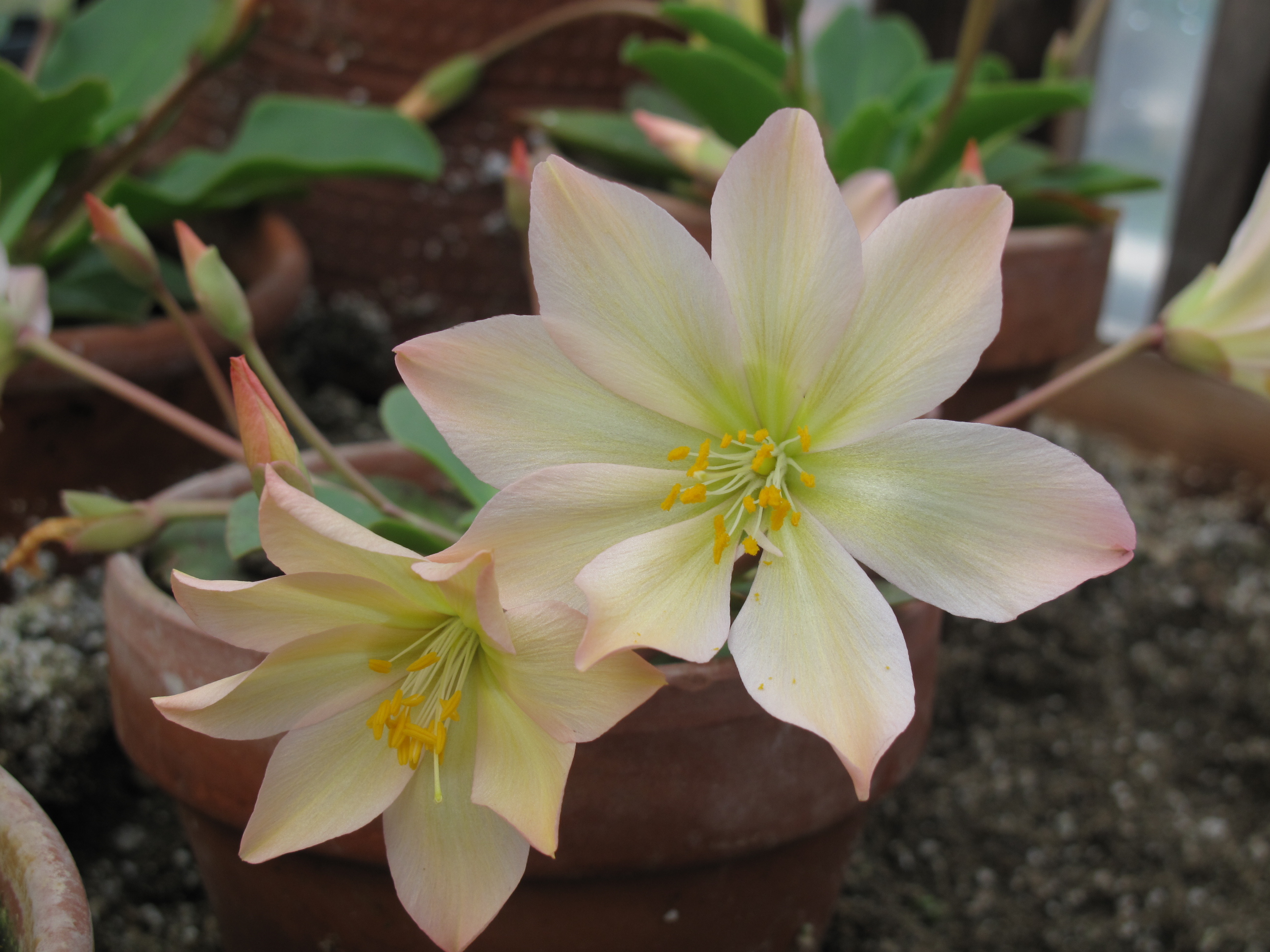
L. tweedyi blooms from seed sown in Feb. 2010
For years, Tweedy’s Bitteroot was considered part of the small western North American genus Lewisia. These days the researchers and scientists have been shifting it around the taxonomic landscape, first moving to a different Family (out of Portulacaceae and into Montiaceae), grouping it with Claytonia and the Montia genuses.
Though some of these scholars first assigned it to the genus Cistanthe, as far as I can tell, they’re making the case for a new genus called Lewisiopsis (probably a sop to those of us who see it rightly belonging with the other bitterroots rather than plants with the common name of “pussypaws!”). The resulting genus of Lewisiopsis now apparently contains only the former Lewisia ‘tweedyi’.
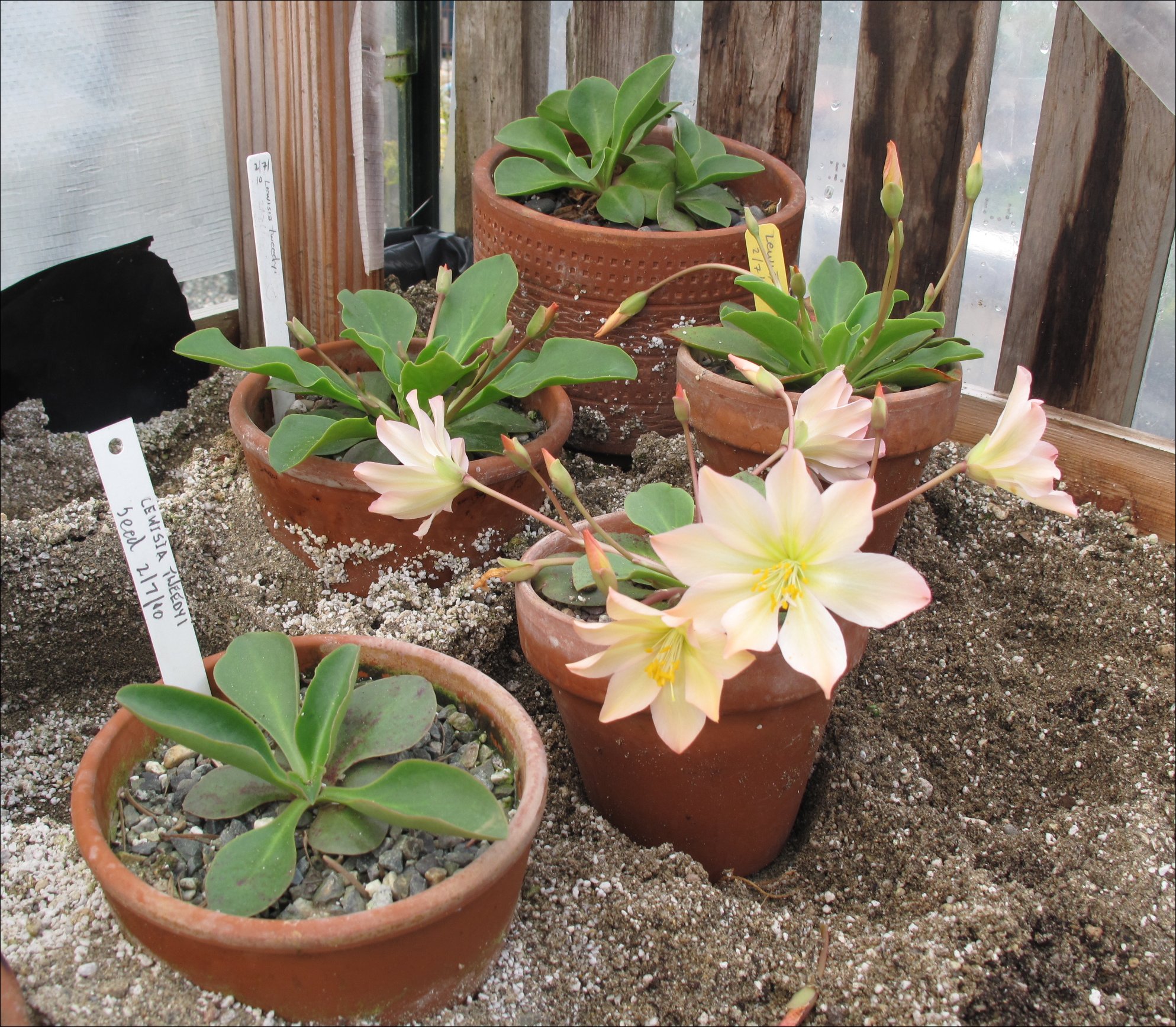
3-year old Lewisia ‘tweedyi’ in clay pots at home on the sand plunge bench
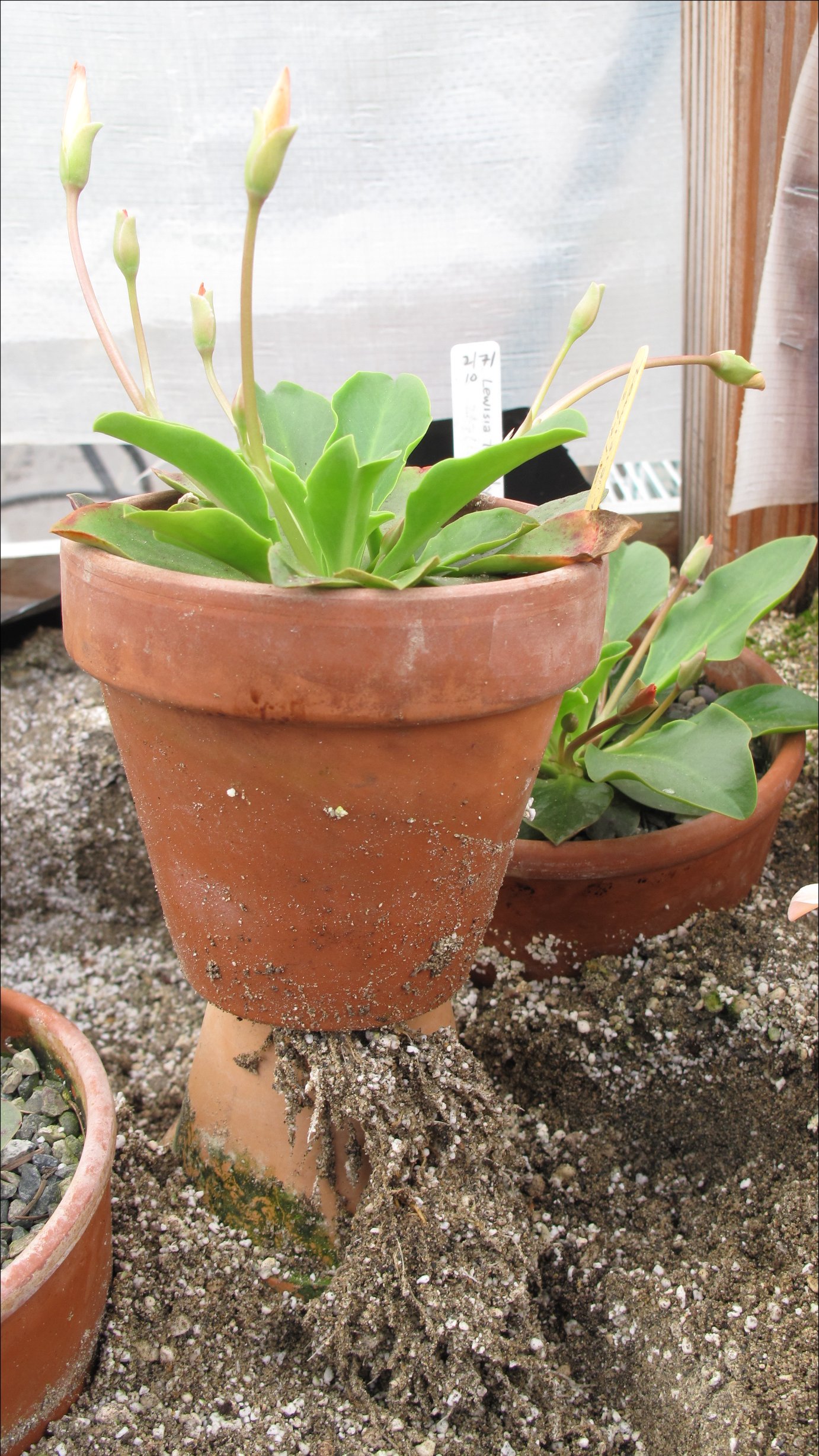
Out of the sand with roots showing
So should any of this be of the slightest concern to rock gardeners and plant lovers? Probably not, but rest assured I will never refer to this plant as Tweedy’s pussypaws (ugh). One thing is certain, Frank Tweedy — a topographic engineer and plant collector for the USGS — is credited for putting this northwest native on the horticultural map in 1882, when climbed Mt. Stuart near Wenatchee, Washington. For more on Frank Tweedy’s horticultural achievements, read this post.
So if you’ve read this far, check out this picture of tweddyi’s long root system, which ensures this plant its longevity and adaptability to the rocky scree-like soils of its home in the mountains.
Imagine coming across this little beauty while hiking around Icicle Creek Ridge near Leavenworth. Although I have yet to see it in the wild, this is the first time I can claim to have watched it go from seedling to flower.
My seed came from Alan Bradshaw, proprietor of Alplains (Alpine Plants on the Plains), in Kiowa Colorado. Alan collected the seed in 2009, while on one of his many far ranging trips around the west. In the 2010 Alplains catalog he remarked on taxonomy, “Some botanists regard this species worthy of its own genus given seed differences and its refusal to cross with other Lewisia species.”
For more on the history of Tweedy’s Bitterroot, see my previous post.
 Pacific Northwest Specialty Plants