June Bloom

Despite the garden taking off and plants blooming like crazy, it’s been more than five weeks since my last post. Plenty of blooming beauties to photograph, yet I haven’t managed to find the time for even a few pix. So what’s been holding things up?
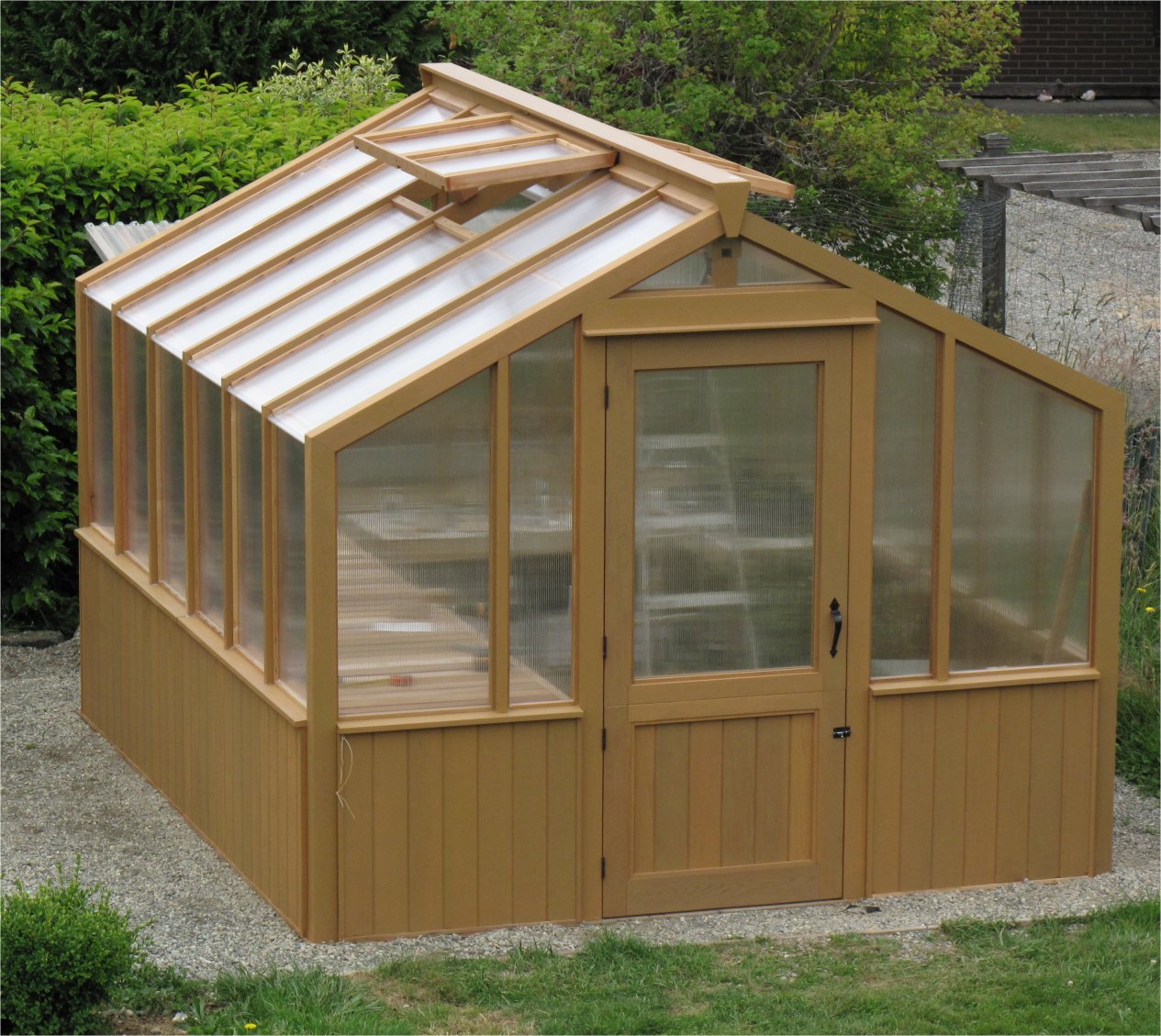
zonal denial greenhouse

New cedar greenhouse aka zonal denial enabler

That’s my new greenhouse, designed (I hope) to withstand our very windy site. Although a kit, it still required many hours of work to get to this point. With 4 X 4 cedar posts and heavy beams, I’m hoping it will be up to the task of occasional 60 to 80 mph gusts during winter storms.

I plan to use supplemental heat on the coldest winter days to keep the inside no lower than 40° F. That qualifies as a “cool” greenhouse, but will be just enough to keep plants like this potted olive tree, Olea europaea ‘arbequina, safe all winter.
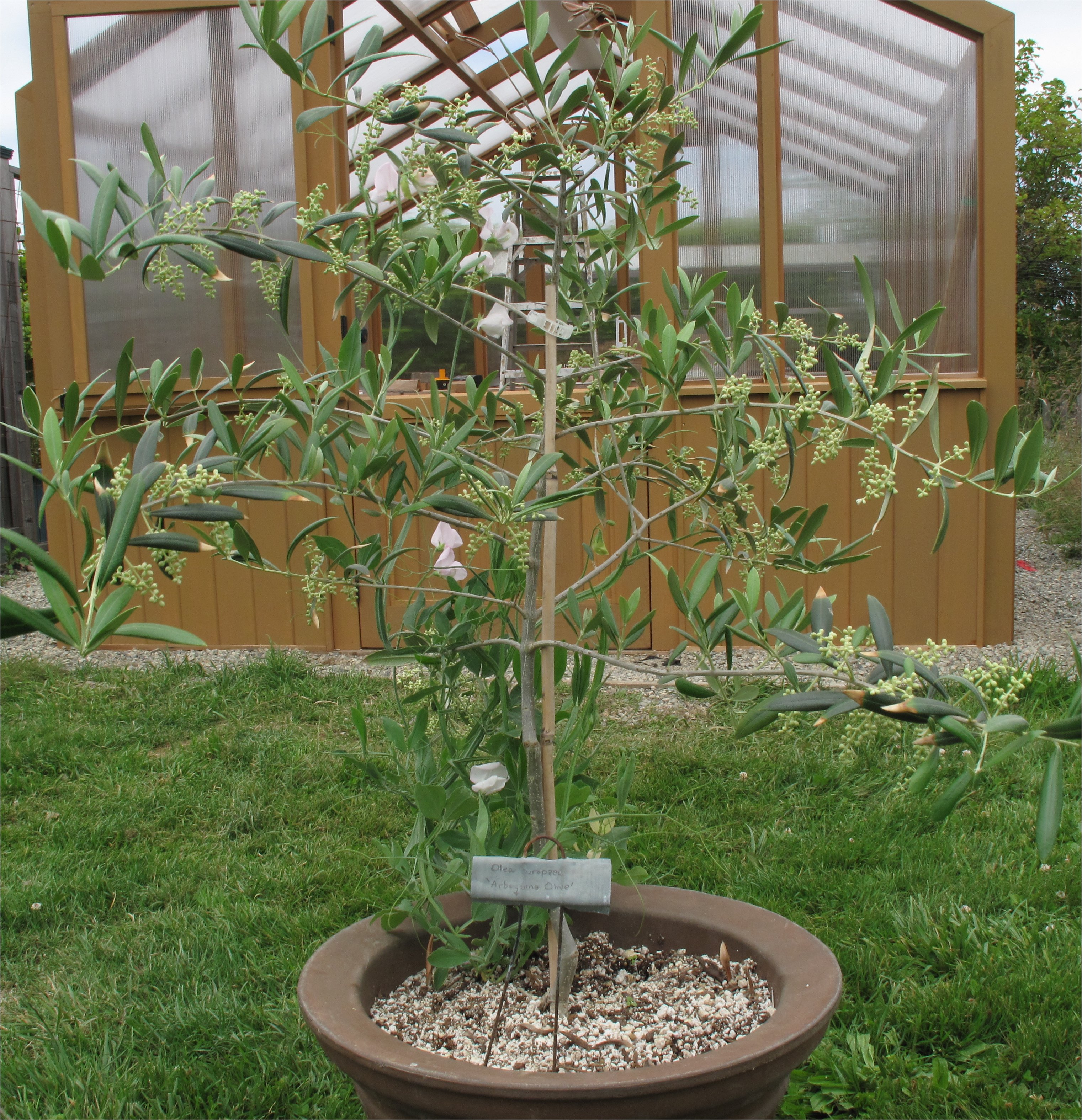
Olea europaea arbequina

Olea europaea arbequina

Many of my “zonal denial” plants will find their winter home in the greenhouse. But like many gardeners first attracted to ornamentals I’m growing more and more edibles, so the greenhouse will also help me start veggie seeds besides being the winter home for this olive tree, which is now covered in tiny buds.
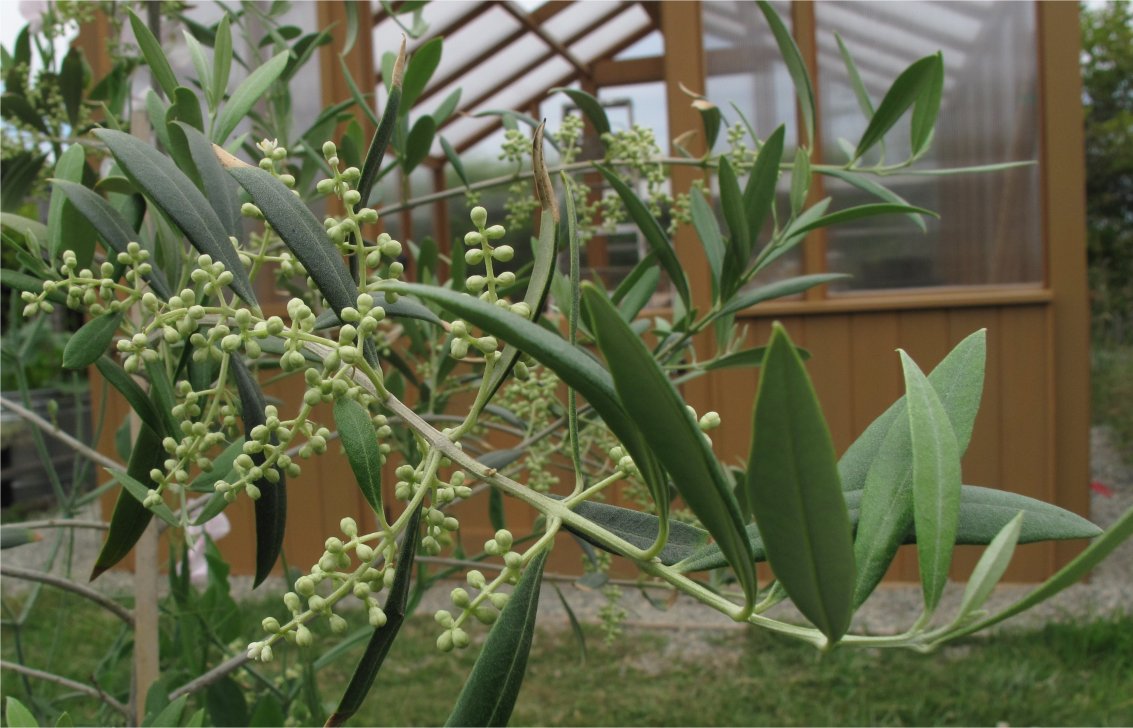
olive3

Olea europaea ‘arbequina buds soon to be tiny white, fragrant flowers

Now, instead of worrying about cold temperatures, better to concentrate on what’s happening in the garden right now and finally take some pix.
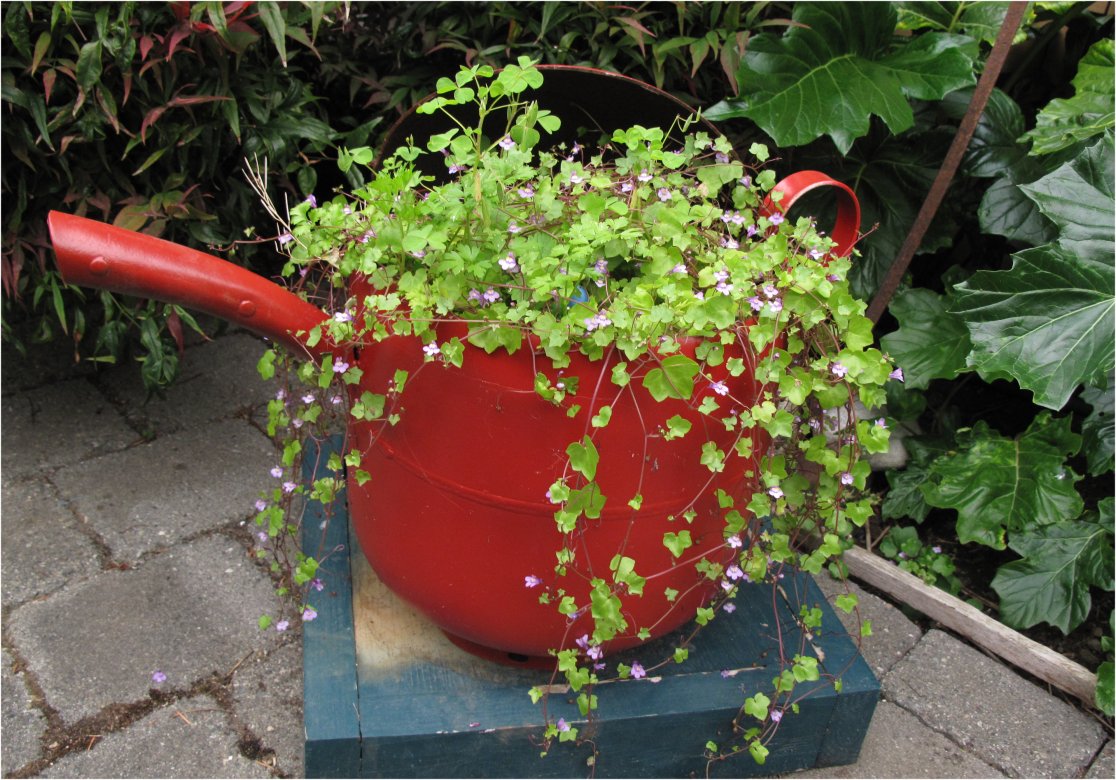
propane cannister

Propane cannister turned into planter locks nice against Acanthus leaves
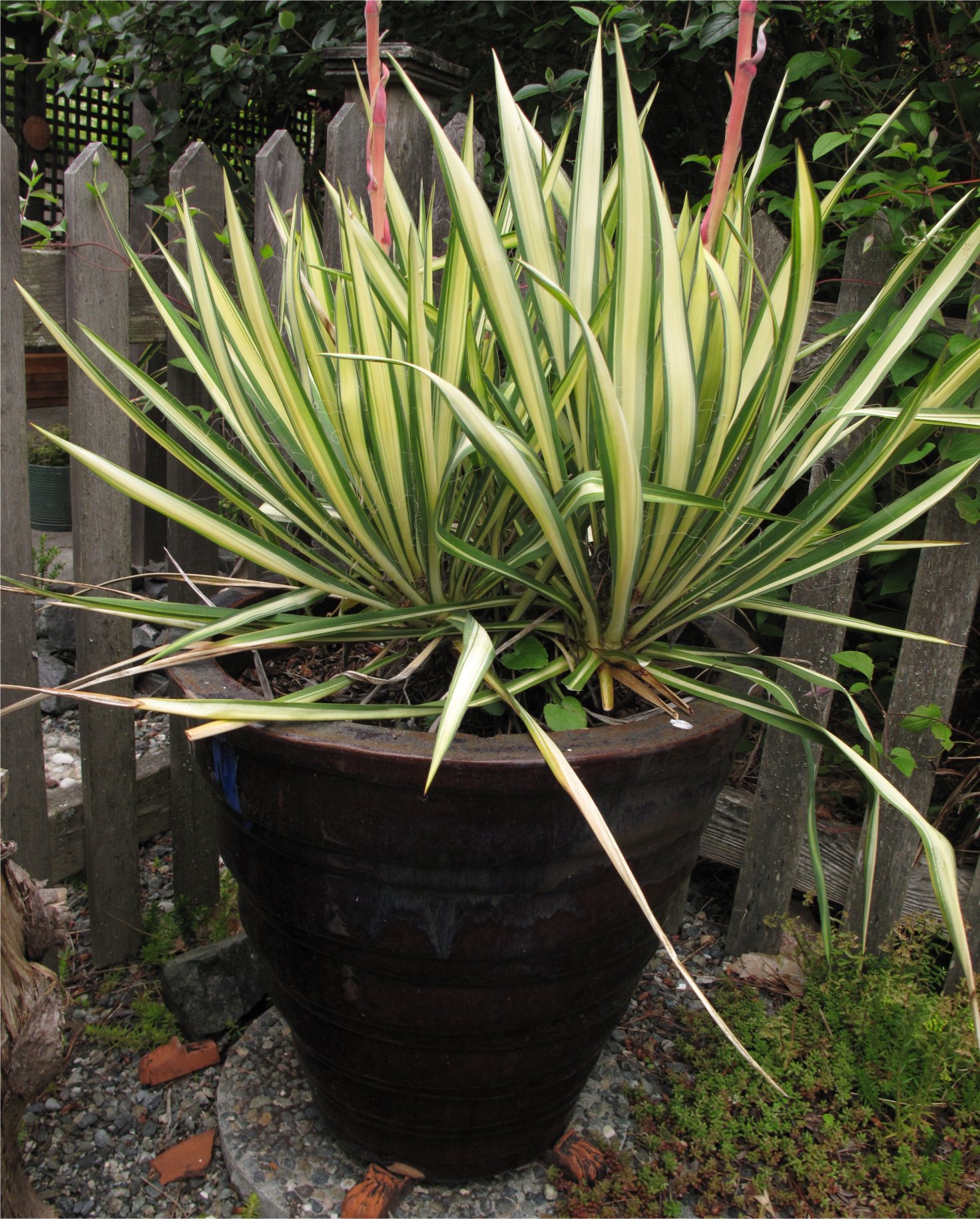
Yucca

Yucca getting ready to bloom

Yucca getting ready to bloom

This Yucca lights up a corner with its bright variegated leaves that contrast nicely with the dark pot. This year will be the first in quite a few years that the Yucca will bloom.

I have a vague memory that when I bought this Yucca the salesperson said the blooms were supposed to be  fragrant.  The stalk is just fattening up and should open soon finally revealing whether the blooms are scented. I’ve long since forgotten the name of the cultivar.

Some Yuccas are surprisingly hardy in our Puget Sound climate. Even though native to warmer climes, they definitely enjoy our hot dry summers and seem to tolerate are cold wet winters.
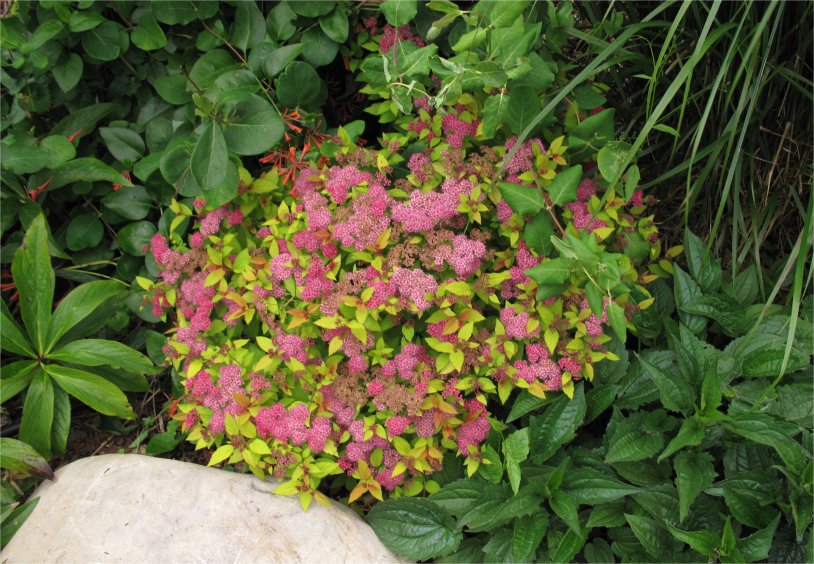
Spiraea japonica 'Magic Carpet'

Spiraea japonica ‘Magic Carpet’

Nandina and lavender

The lavender at the front of the border hasn’t quite colored up yet, but in a few weeks it will look stunning in front of the red Nandina leaves.
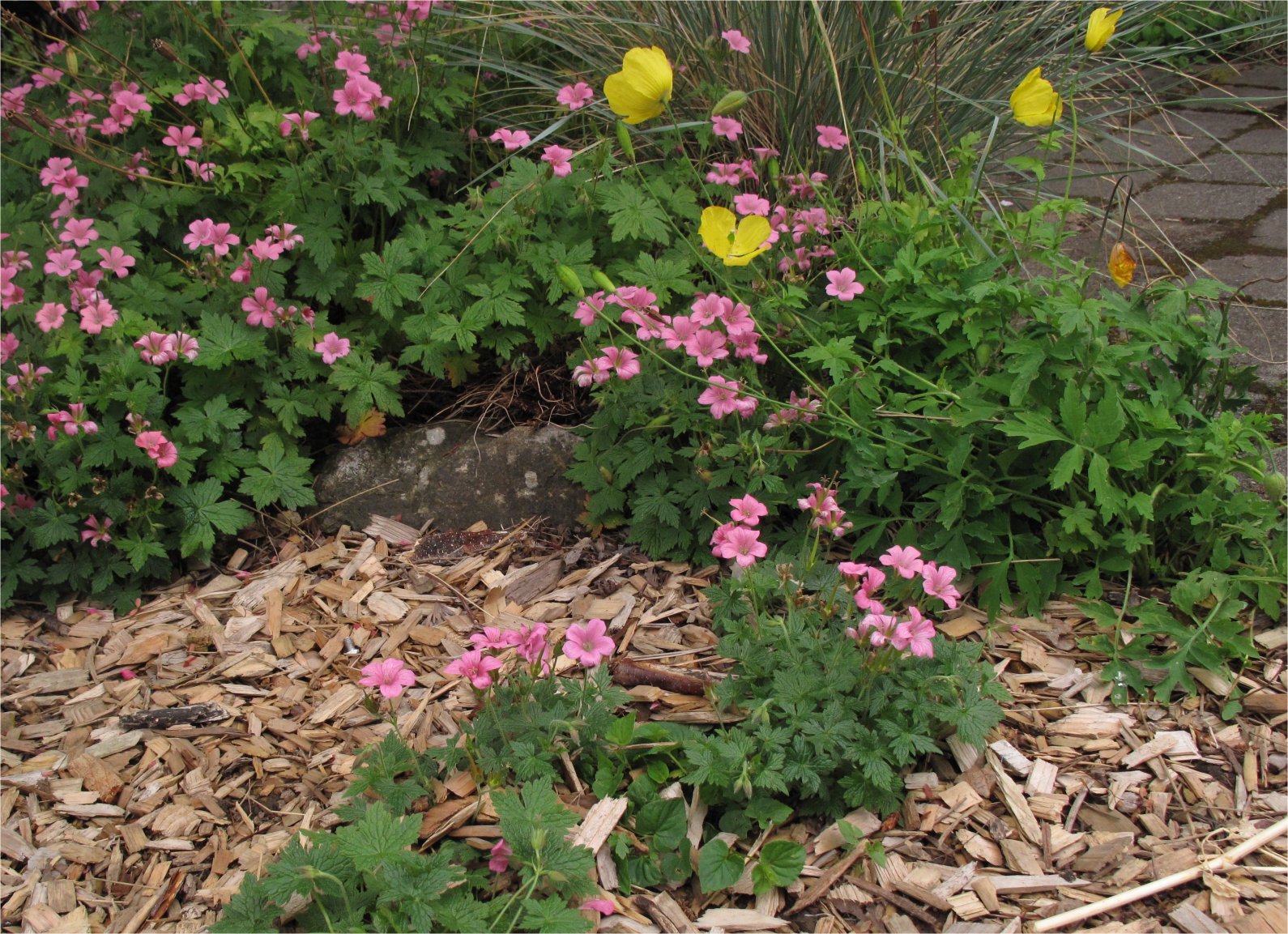
Claridge Druce

Geranium ‘Claridge Druce’ marches out of the border into the wood chip path
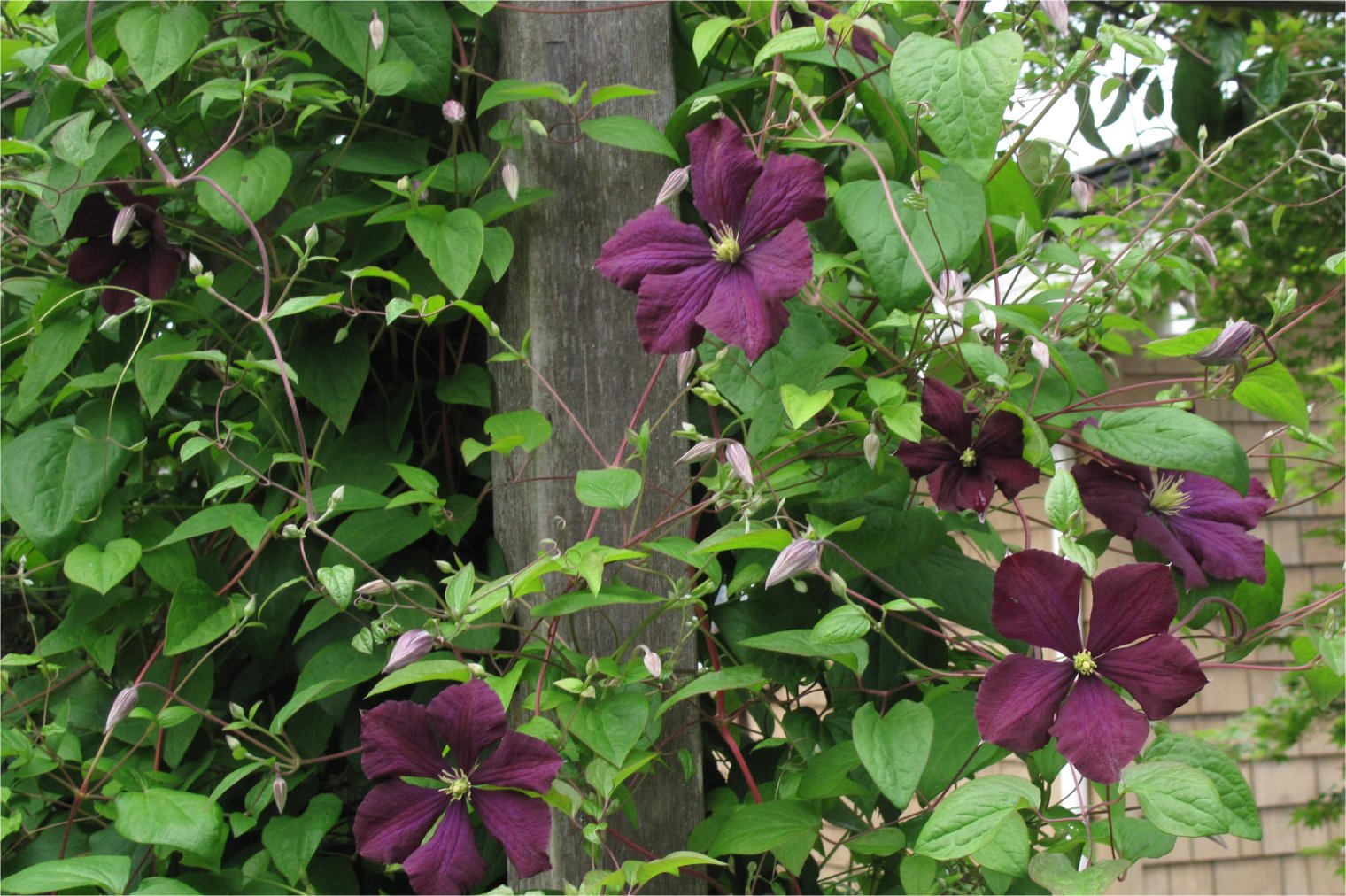
Clematis jackmanii climbing arbor
Clematis jackmanii climbing arbor

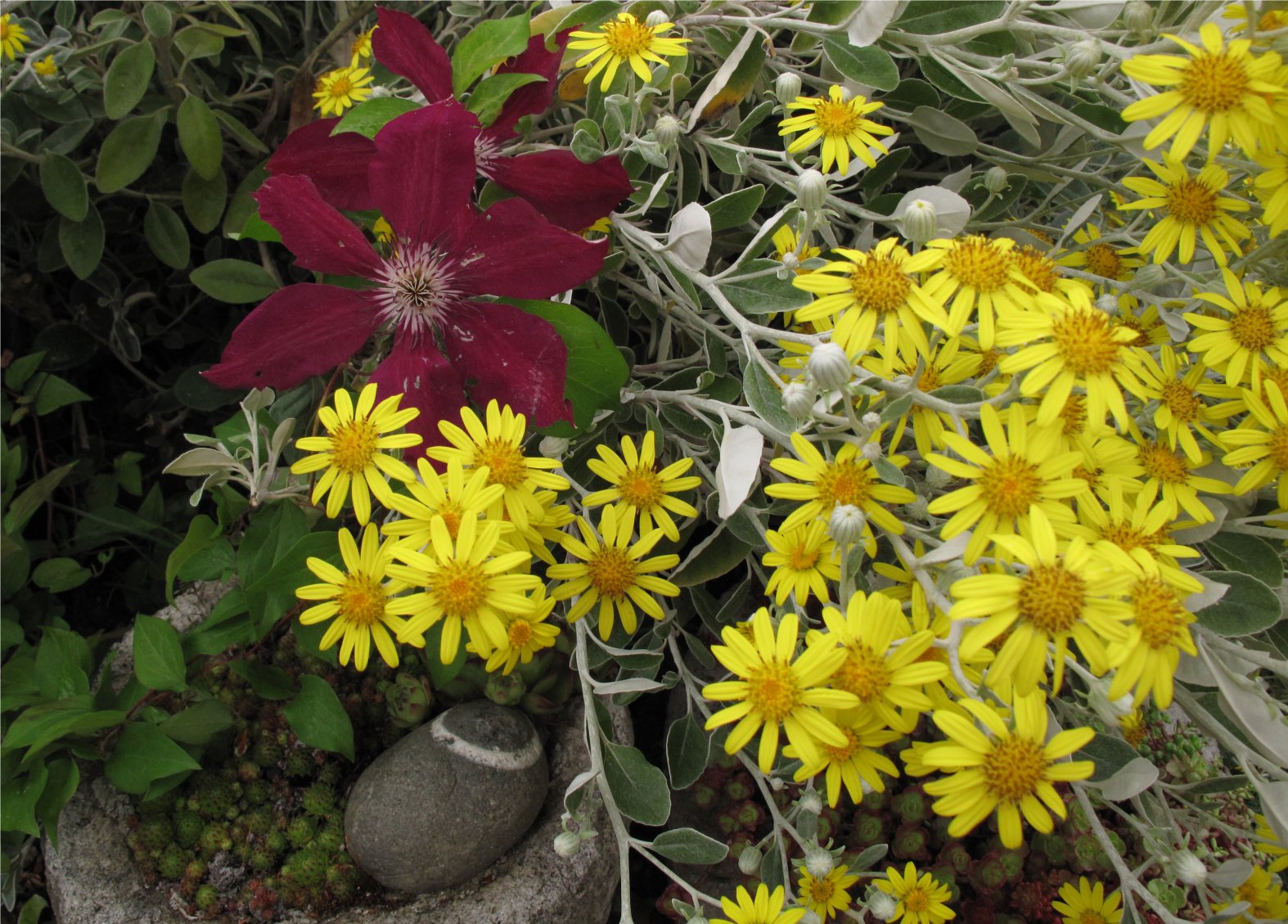
clematis roaming through Senecio

Clematis ‘Niobe’ rambling through Senecio greyii
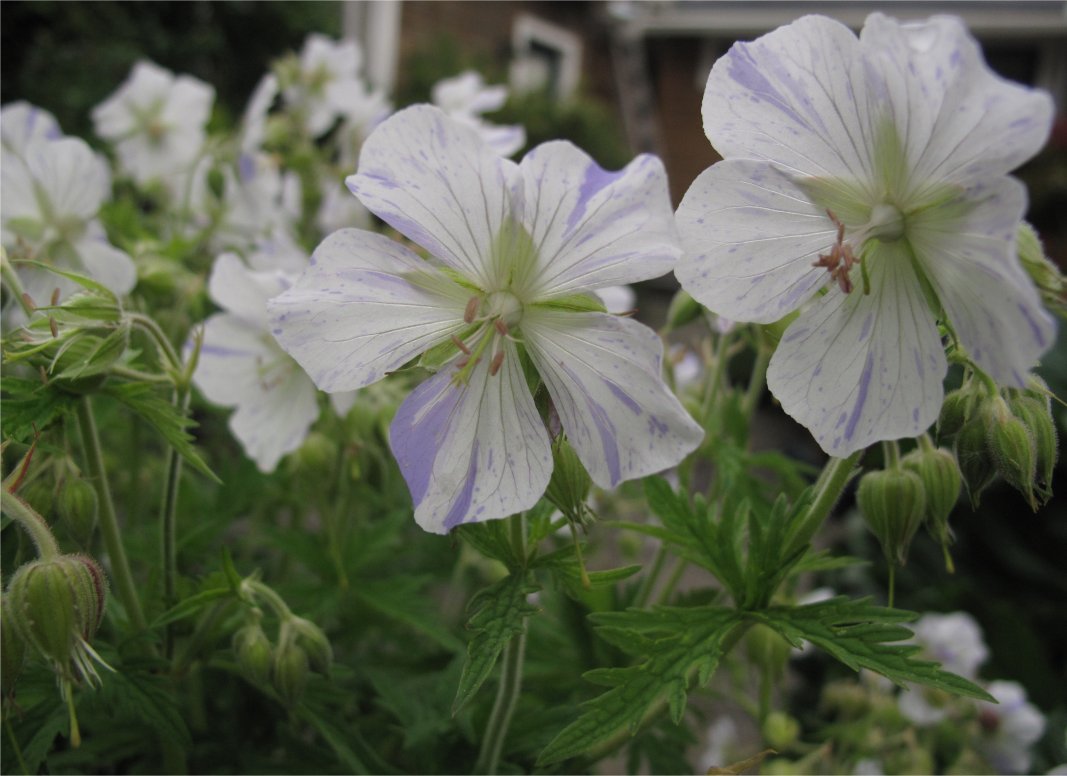
Variegated Hardy Geranium unknown cultivar
Variegated Hardy Geranium unknown cultivar

clematis stans leaves

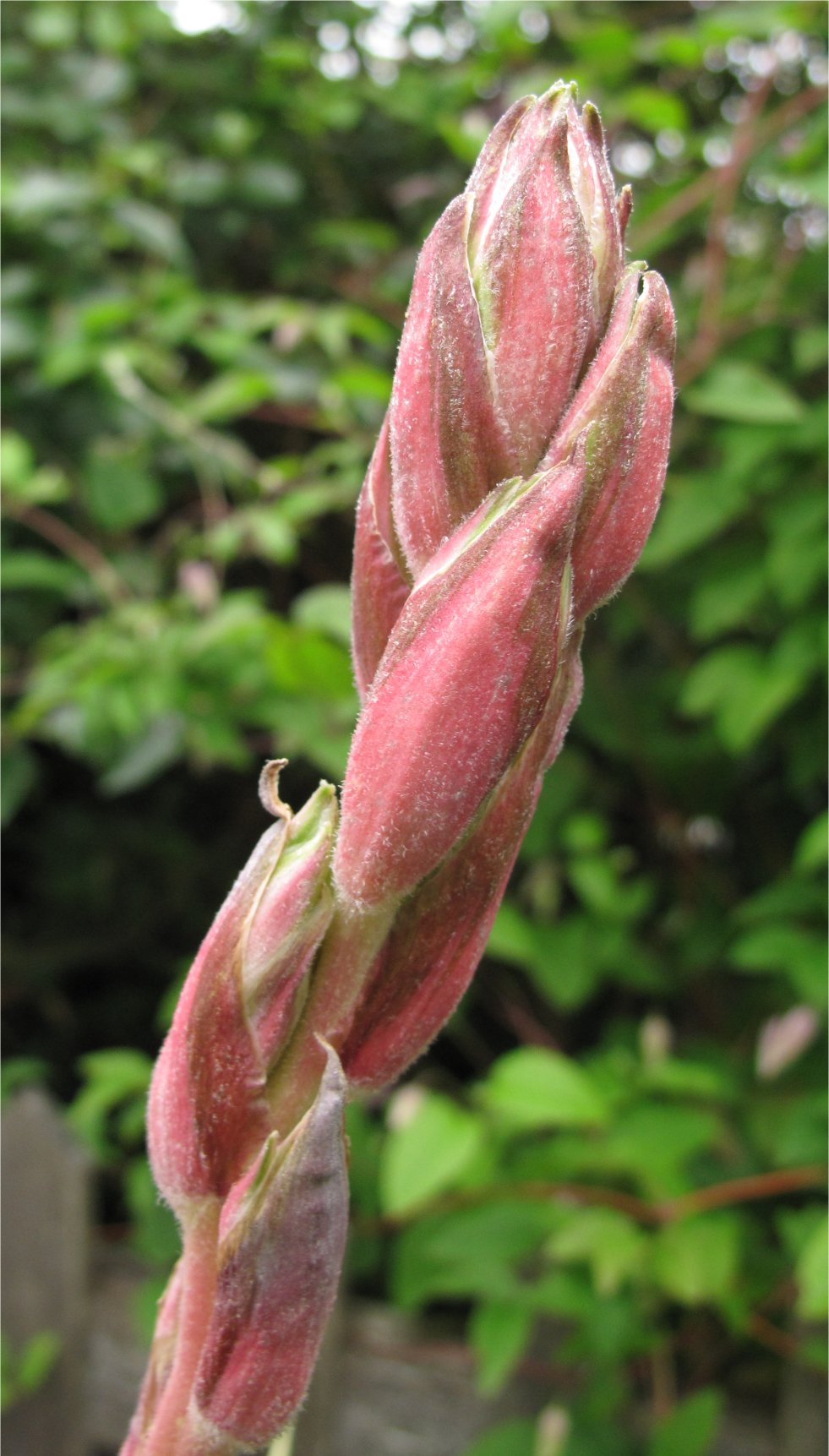
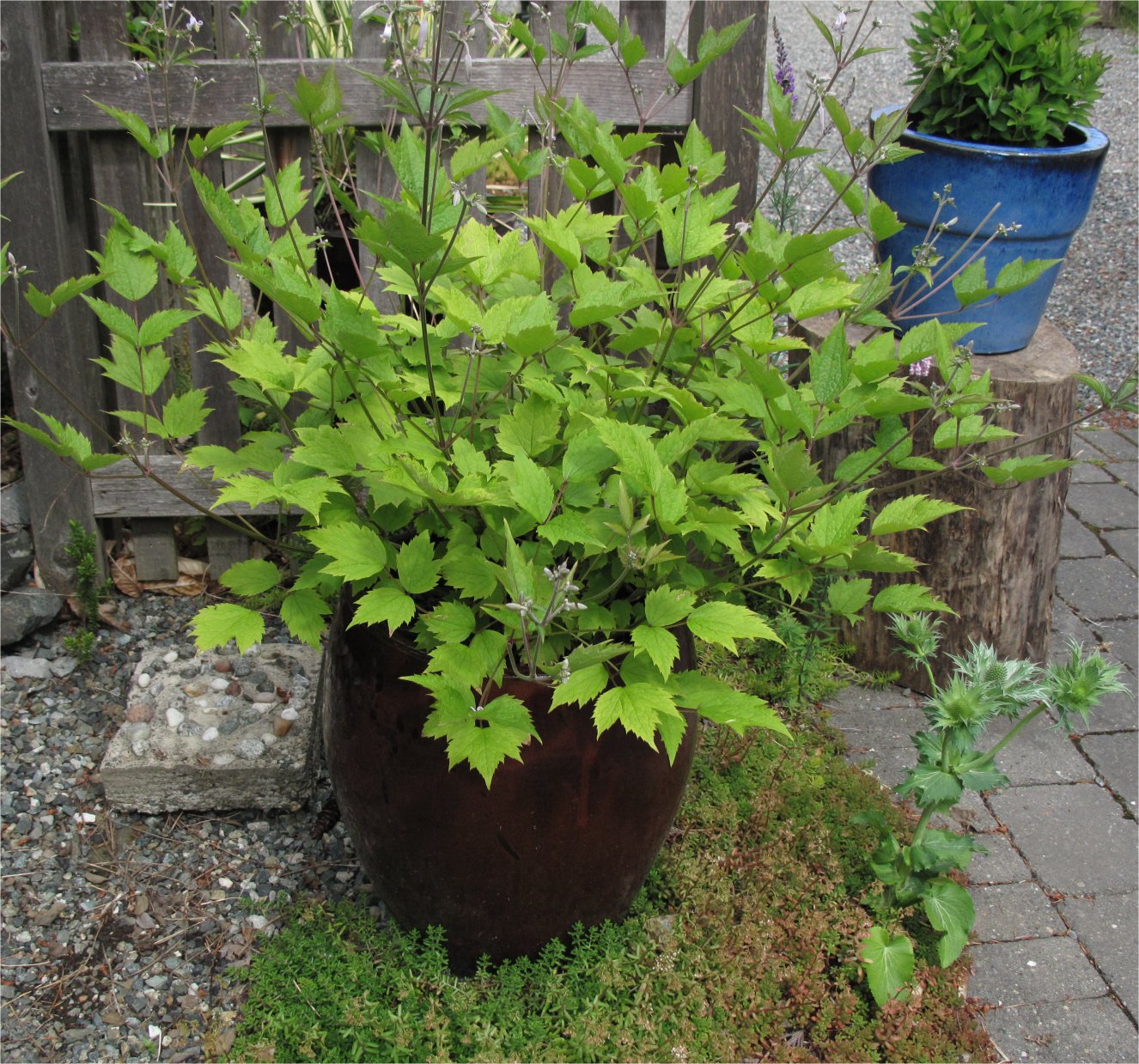
Clematis stans

Clematis stans

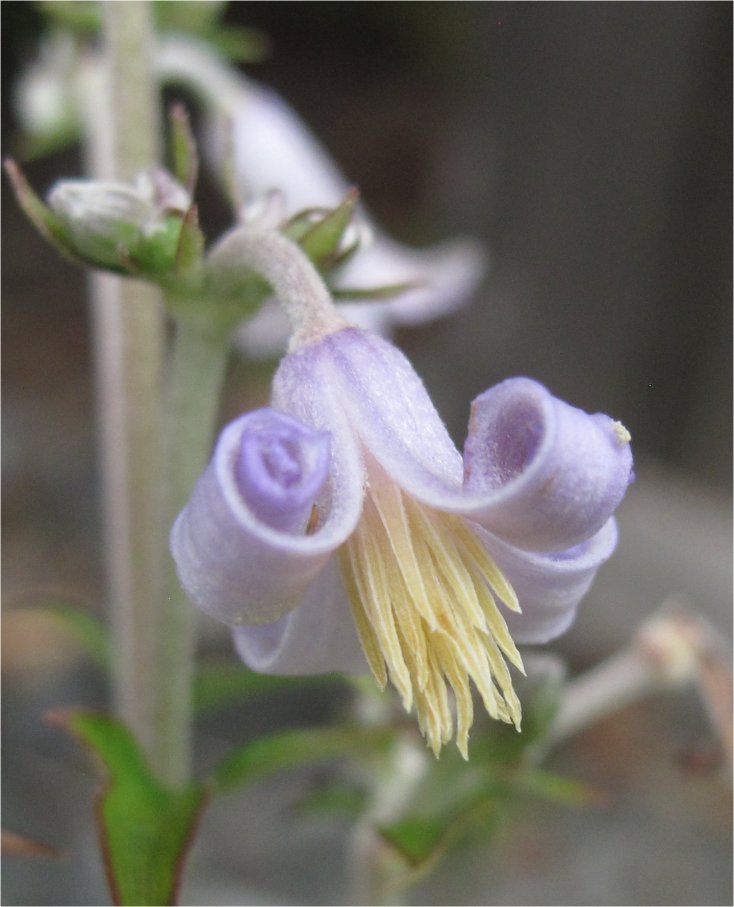
Clematis stans

Clematis stans is a native of Japan and is a bushy plant ( technically a sub shrub) rather than a climber.

It’s flowers are tiny compared to the spectacular flowers of most vines in the genus. Flower color size and shape is highly variable.

I’m growing it in a pot, but soon it will go in the ground. It’s a very hardy species that will survive USDA Zone 5 winters.

Left outside in a pot it dies back to its roots, but I suspect in the ground here in Zone 8 it will require cutting back in winter.
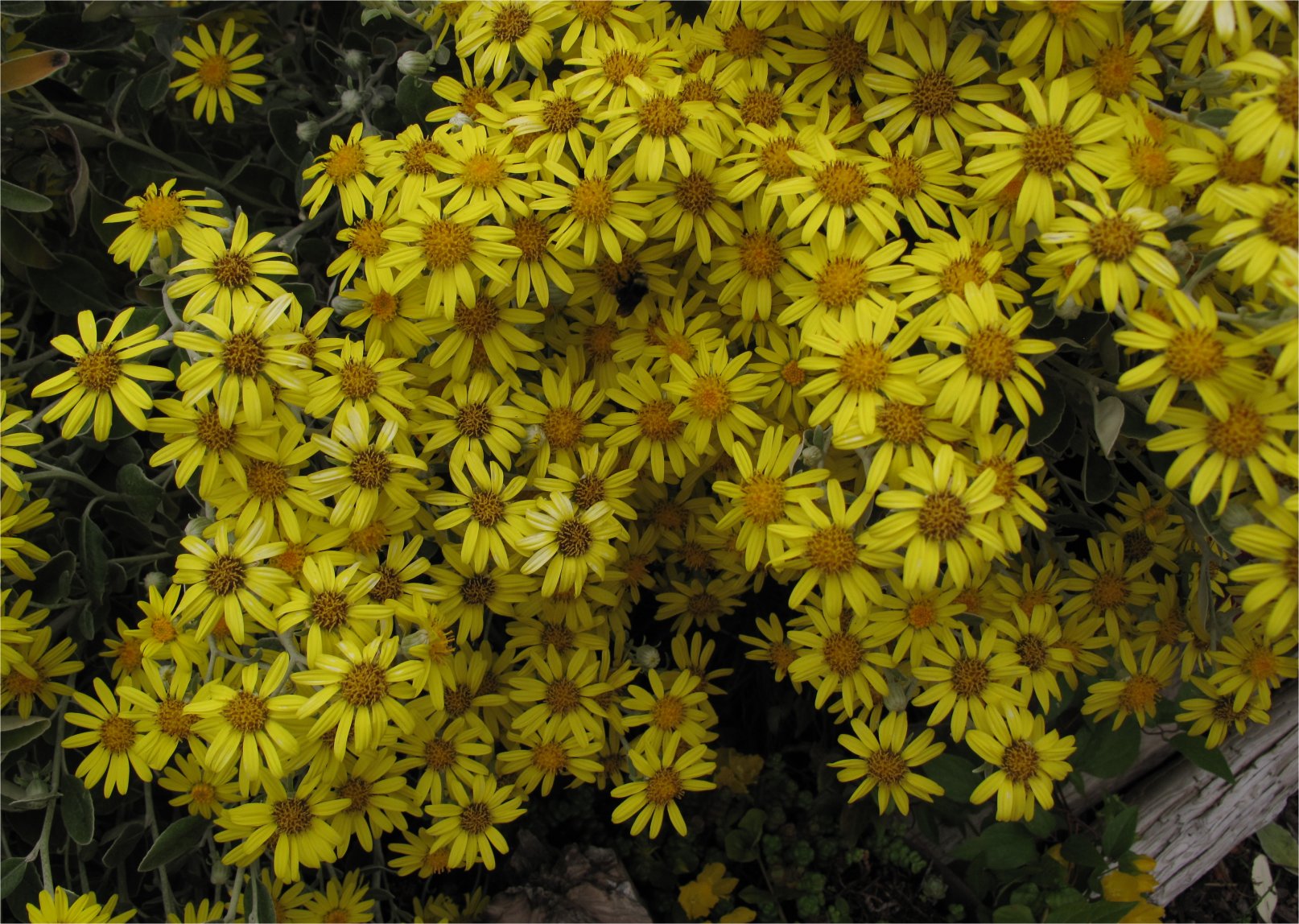
Senecio greyii blooms en masse

Senecio greyii blooms en masse
South African Tree Heaths

This past February at the Northwest Flower and Garden Show in Seattle I bought two South African tree heaths in four inch pots, potted them on, watered well and hoped to see some blooms.  Erica speciosa and Erica canaliculata are both blooming now!

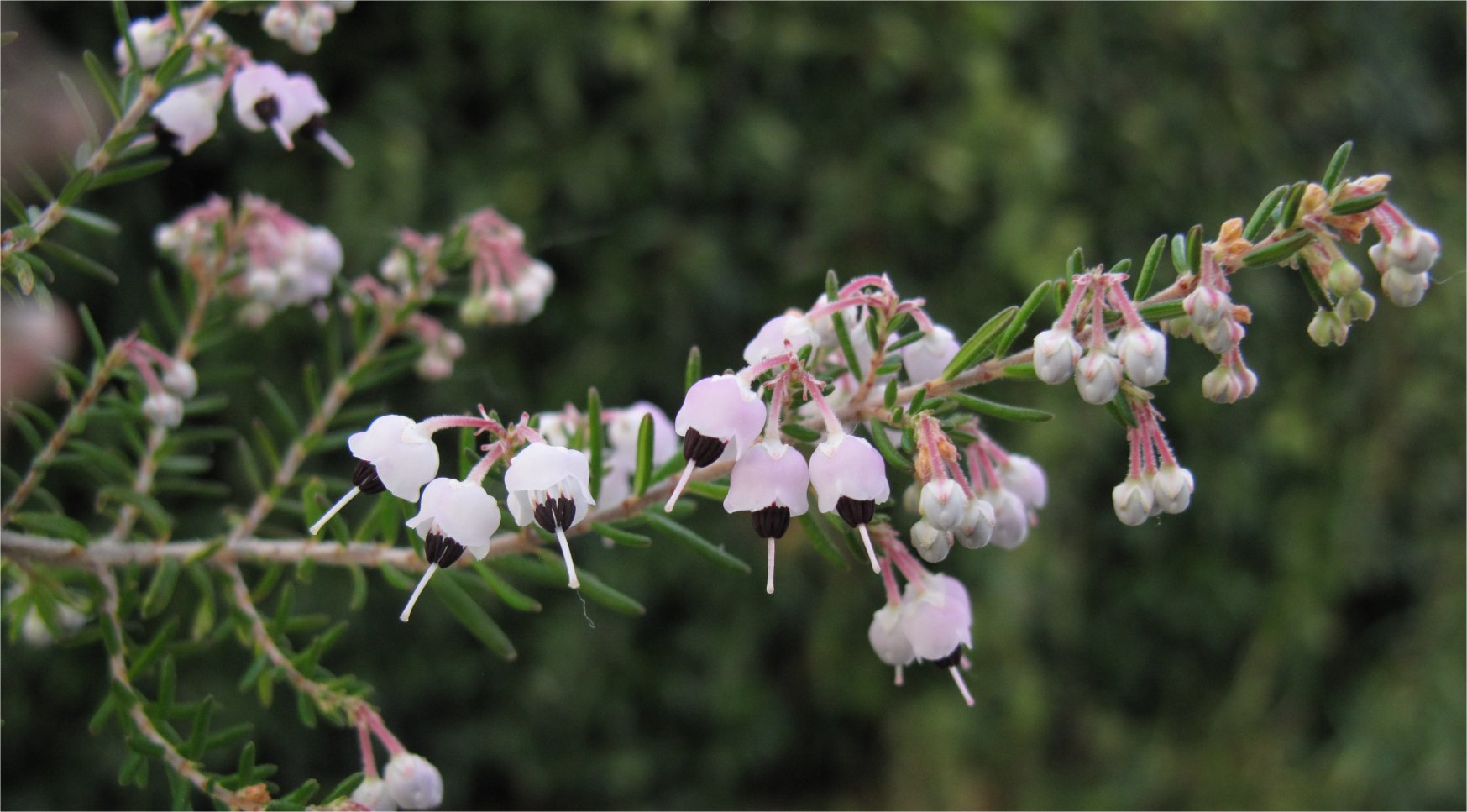
erica speciosa

Erica speciosa

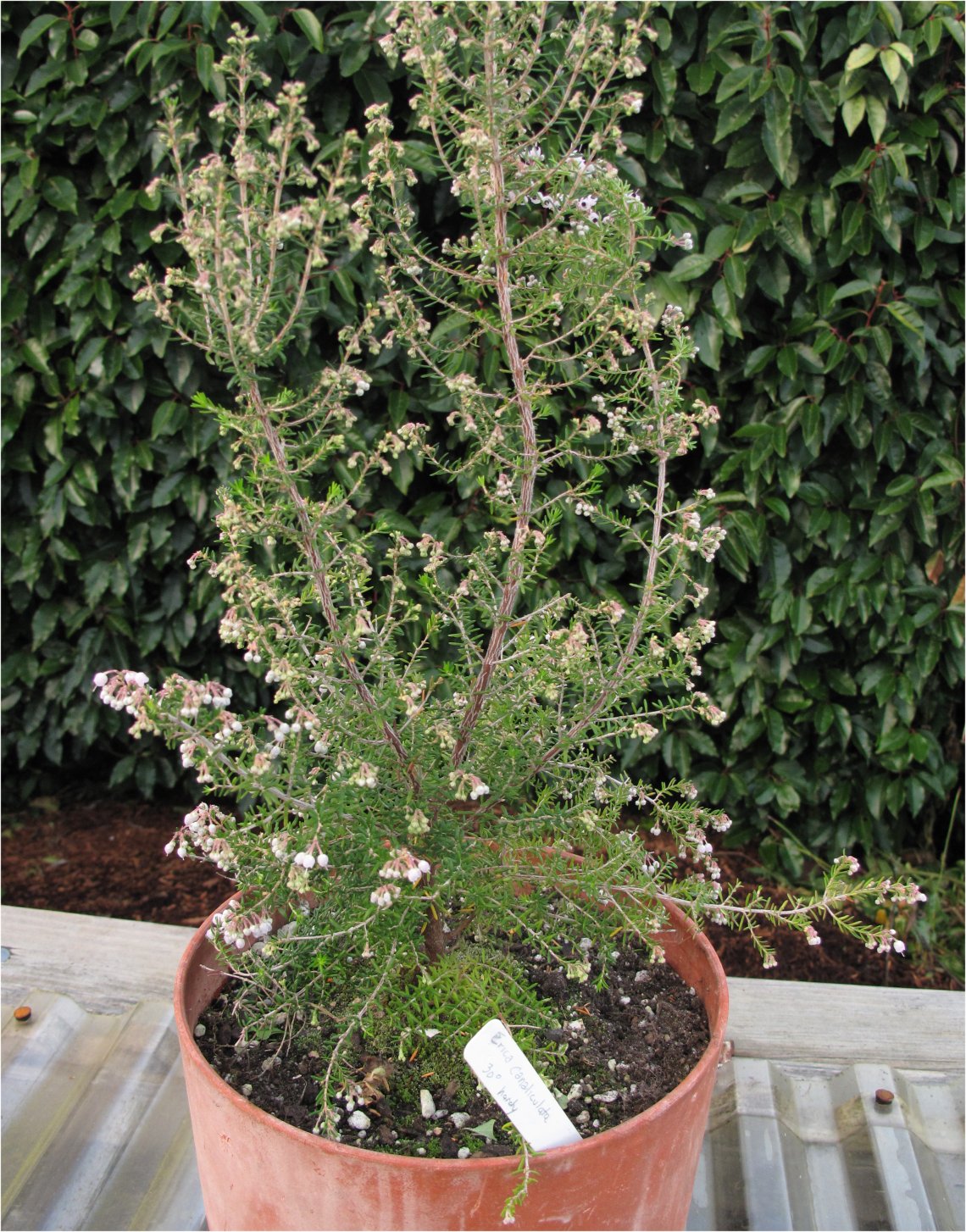
Erica speciosa reportedly is hardy to 20° Fahrenheit, while Erica canaliculata is a bit more tender, listed as hardy to only 30°

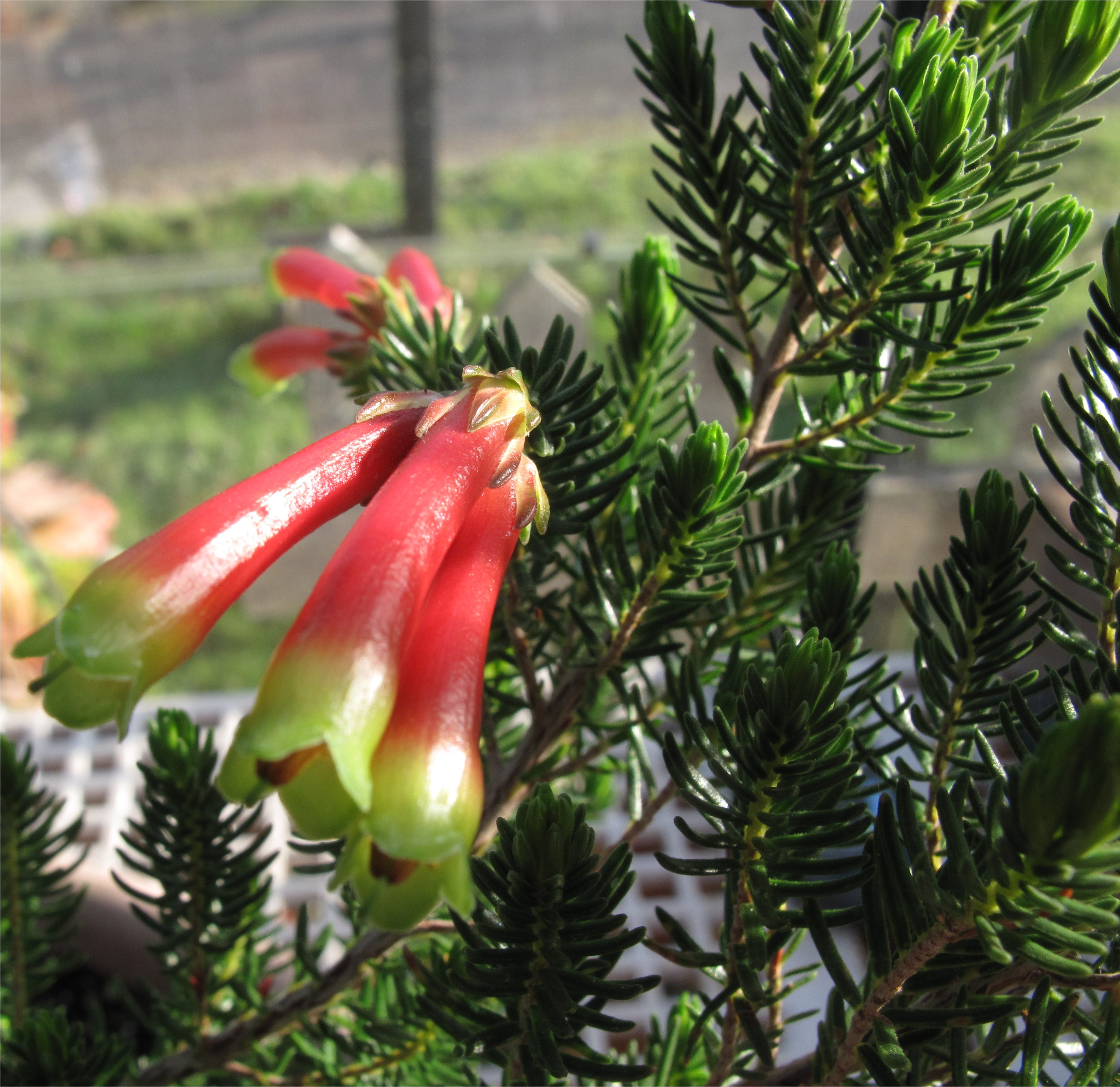
Erica canaliculata

Erica canaliculata

These two plants, from the genus Erica, are endemic (found only in one area of the world) to the Cape Peninsula of South Africa, where apparently over 600 Erica species call home. Up close the blooms are stunning.

Erica speciosa

Erica speciosa

Erica canaliculata

Erica canaliculata

I purchased my plants from the Heaths and Heathers’ booth at the show. Their retail nursery is near Shelton, WA, while their main nursery collection is on Harstine Island just east of Shelton:

“We have built the equivalent of a national collection of heather here open to the public.  There are over 800 cultivars in this 3/4 of an acre planting…our personal collection boasts over 900 different cultivars.  Many heathers bloom for several months. Some offer colorful foliage during the winter. On others, the new growth tips are very colorful during late winter and spring. Heaths and heathers range from nearly flat as a pancake to pincushion size to tree heaths. Most are very hardy and are growing in nearly every state in the union. They take minimum care and are drought tolerant once established.”

I definitely plan to visit the Heath and Heather nursery soon.

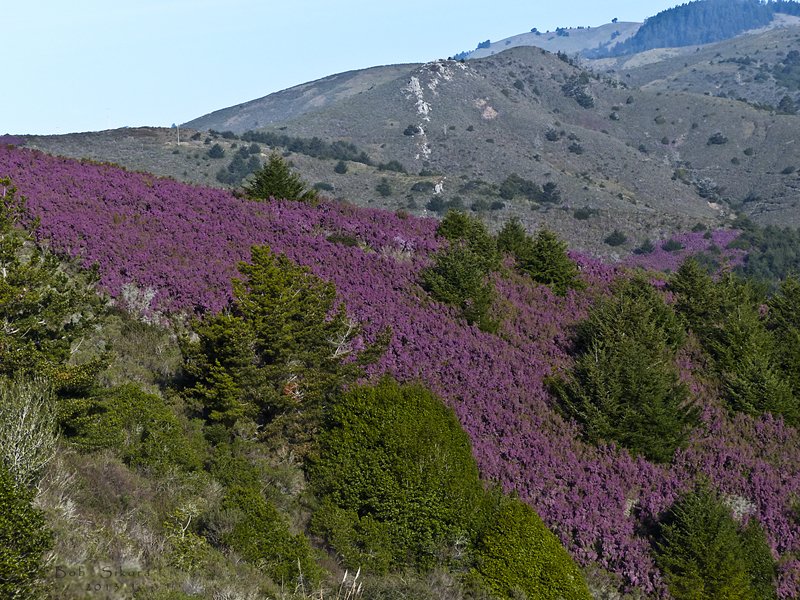
Further afield, in California, a hillside of a lavender colored E. canaliculata is terribly invasive and threatens the native plants north of the San Francisco Bay.  A cautionary tale, as Bob Sikora points out in his comment below.  Clearly this Erica — endemic to another continent  and hemisphere — was introduced to the hospitable Bay area climate and prospered to the detriment of the native plants.

3651

Above photo © Robert Sikora,  available at CalPhotos – a project of BSCIT , University of California, Berkeley

For more on another potentially invasive plant found widely in the nursery trade, see my post on Rosa rugosa ‘Hansa’ Friend or Foe?

Bengal Clock Vine

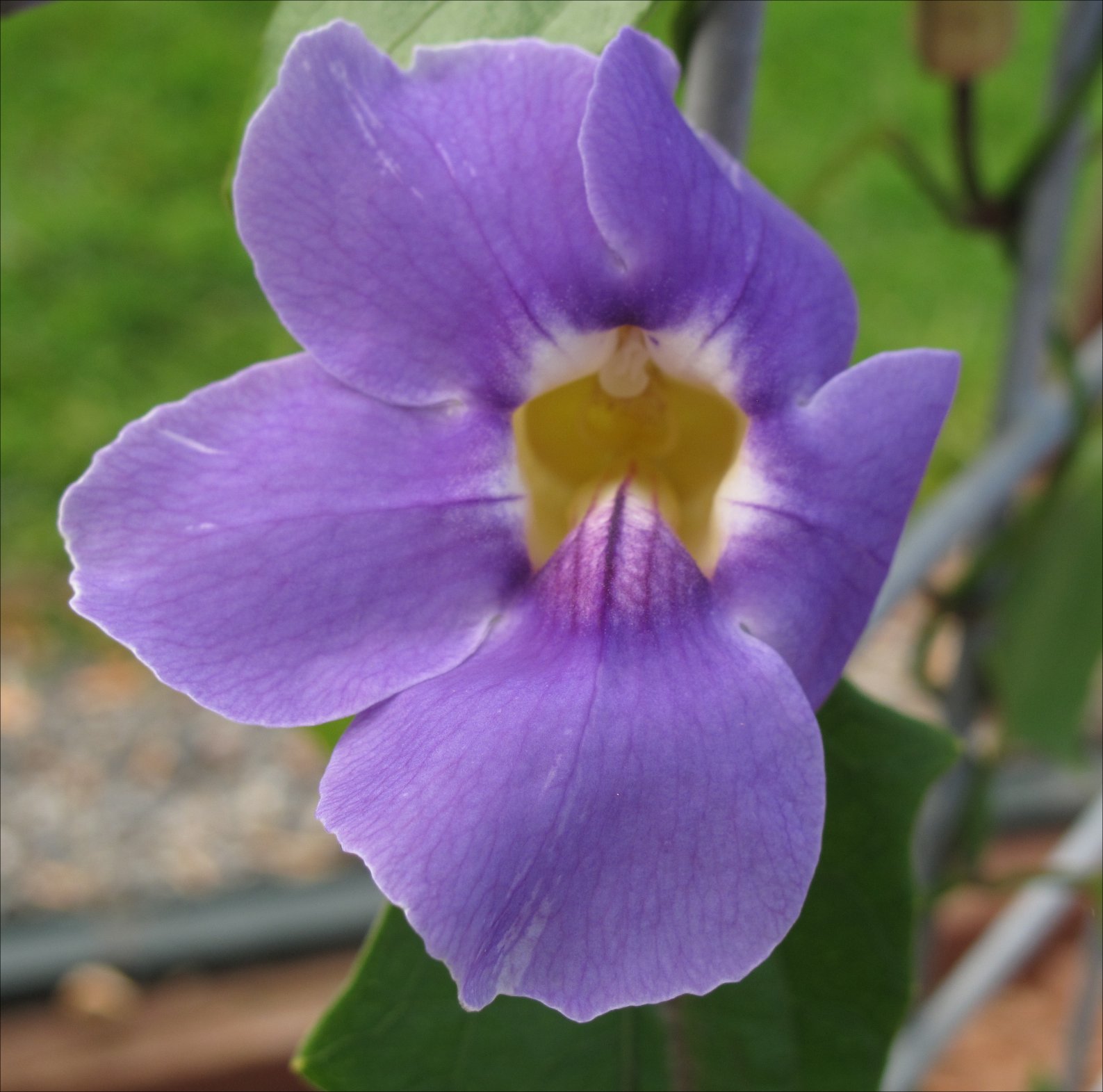
Native to northern India, Thunbergia grandiflora, is a vigorous, evergreen climber, especially  when grown in tropical or semi-tropical climates. So if you live in Houston or San Diego you’ve probably seen this covering a fence in its full glory.

Bengal Clock Vine

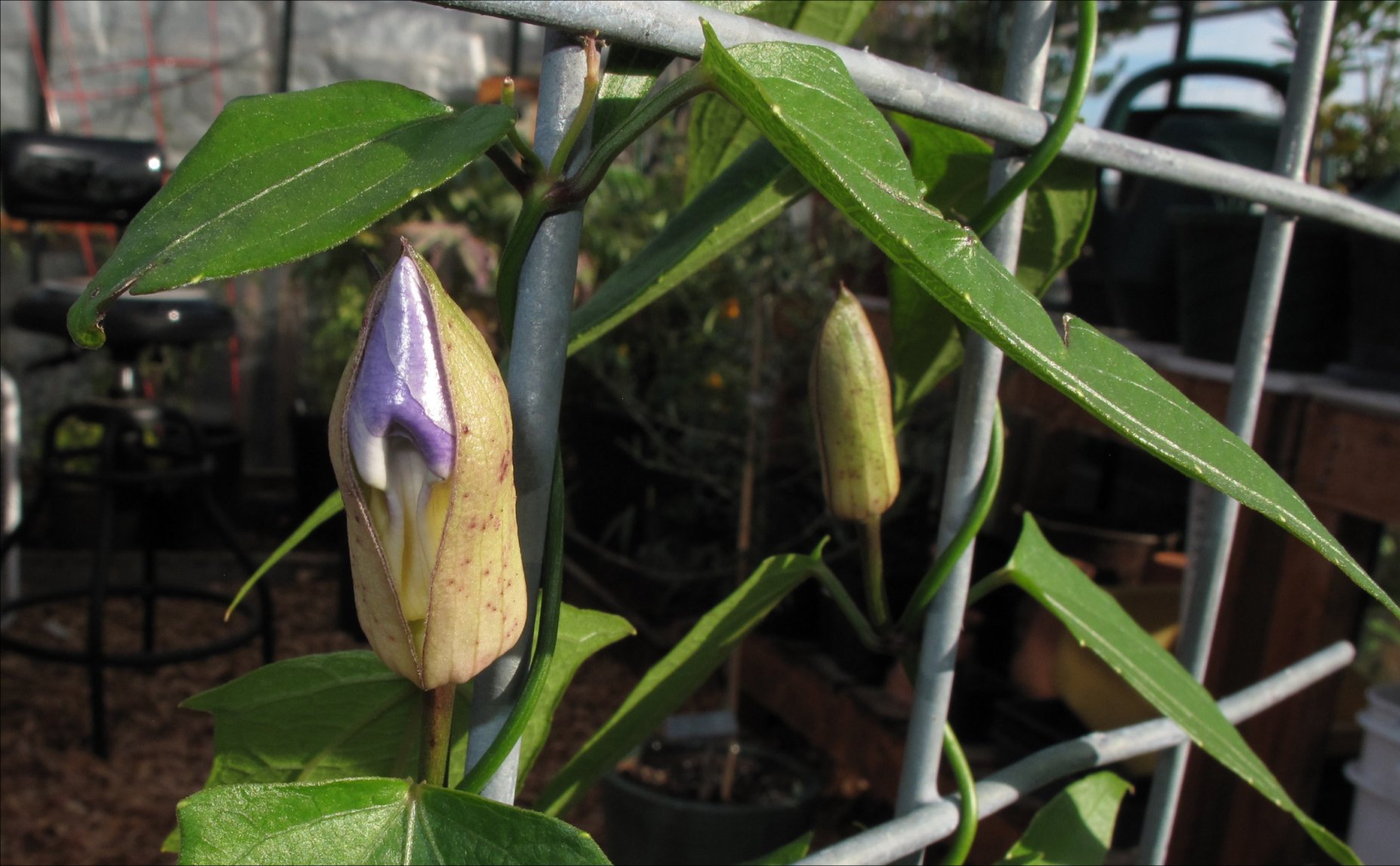
One of only two blooms on my Bengal Clock Vine aka Blue Sky vine

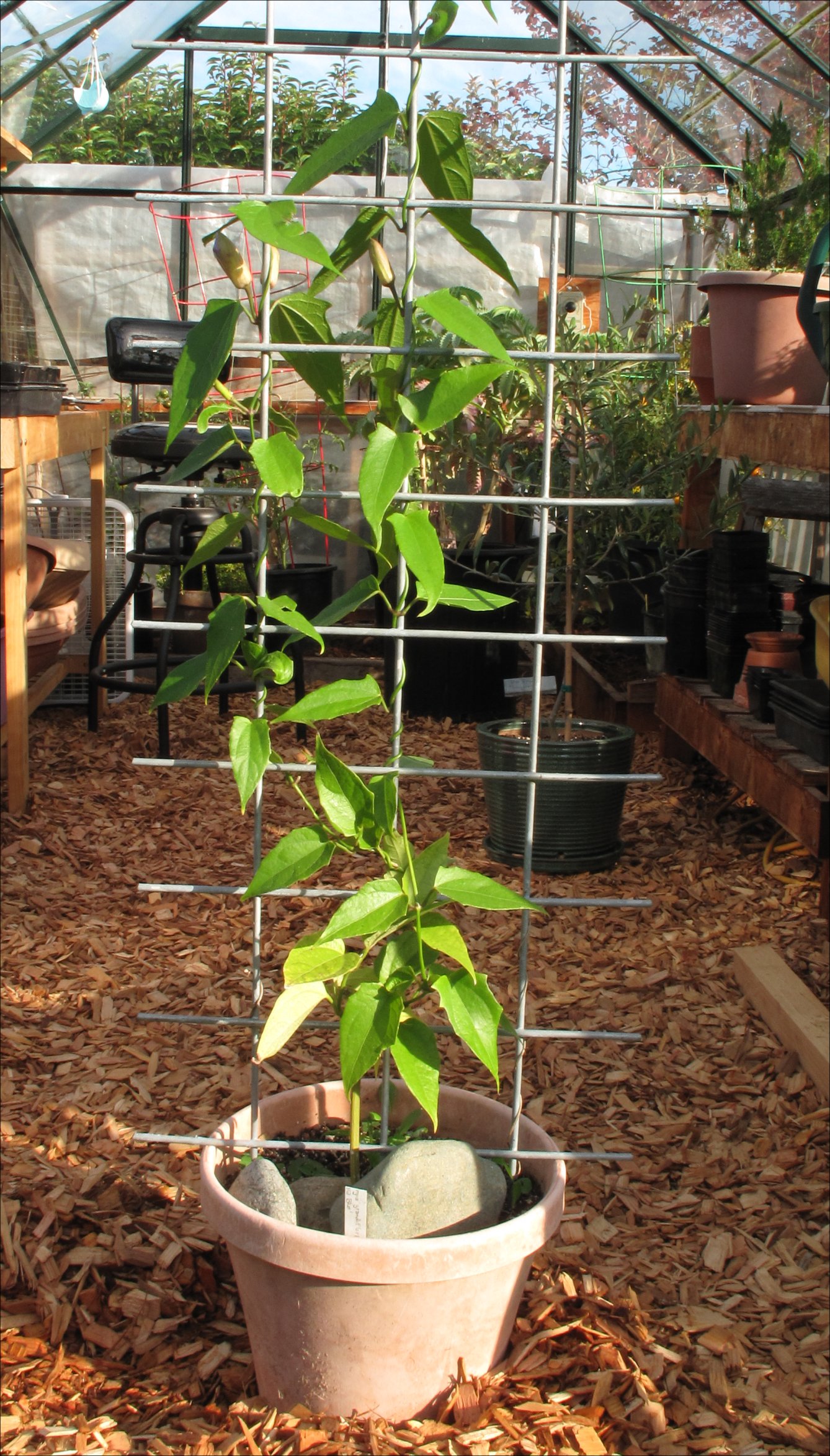
But if you live in Western Washington, growing this vine successfully is a challenge. Here’s my less than vigorous vine getting ready to flower for the first time.

Less than vigorous Bengal Clock Vine

Less than vigorous Bengal Clock Vine

This plant began as small seedling I ordered in May from Kartuz  Nursery. It didn’t do much at all until the weather warmed in July, when I potted it on into a bigger container. Yesterday, two or three buds were getting ready to open.

T. grandiflora bud getting ready to open

T. grandiflora bud getting ready to open

I hope to winter it over in my unheated greenhouse and by next summer have a more dense and flower laden vine. Like another favorite of mine, Orange Clock Vine (Thunbergia gregorii), Bengal Clock Vine twines in a clockwise direction.  Blooms of different cultivars range from blue to light mauve and even white.

Hardiness is generally 32° Farenheit, so even if its roots survive a frost, my guess is the plant would be less likely to recover fully.  My plan is to keep my “cool” greenhouse above freezing all winter to ensure many of my “zonal denial” plants survive.

There is another form of zonal denial that occurs to me.  It’s not as common as the plant envy that drives my desire for the warmer climate’s flora, since it is driven by lack of cold winters.

For example, folks living in the warmest parts of the country often have trouble growing peonies.  Many plants won’t bloom in Spring without sufficient vernalization, which is a requirement for a prolonged period of cold temperatures. Peonies struggle where summers are long and hot and winter dormancy may be short at best. So do gardeners in southern California envy us for our Peonies?