Avant Gardener: Music to My Ears

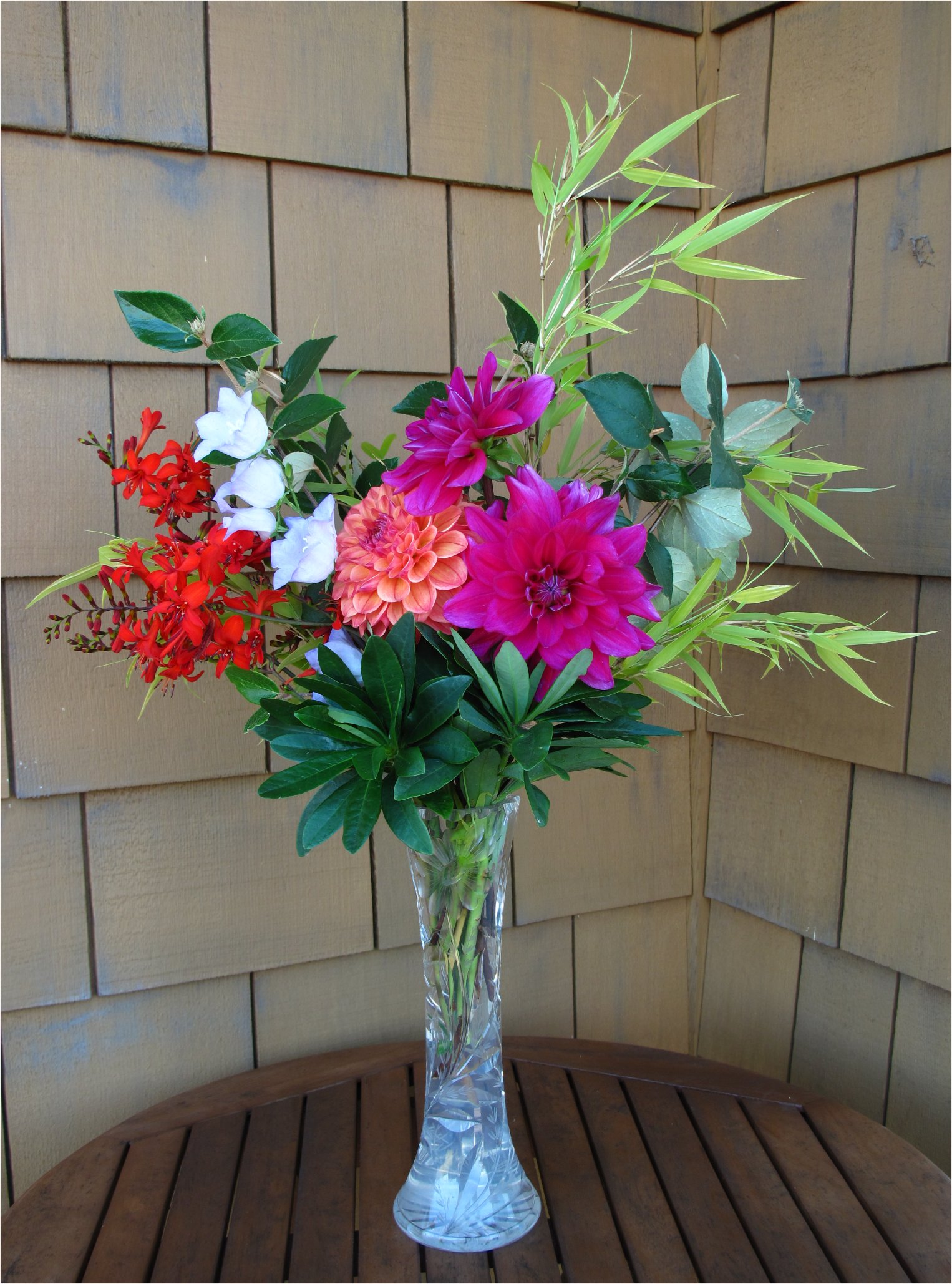
dahlias

Dahlias in a vase

I’ve been thinking of renaming my blog The Avant Gardner:  Reflections from a Vashon Island Garden.  When I first thought of the name, I guessed other bloggers were probably already using it and never followed up. I also figured my garden was hardly avant garde, and neither were my gardening techniques.

Last night, before bed, I was listening to Sound Opinions on the radio. The rock critics Jim DeRogatis and Greg Kot do a superb job of covering the music scene, past and present. This week’s show featured what they call “Buried Treasures: great, lesser-known albums from this year that deserve more attention.”

My ears perked up immediately when they played a song from Courtney Barnett’s new album…

I sleep in late
Another day
Oh what a wonder
Oh what a waste.
It’s a monday
It’s so mundane
What exciting things
Will happen today?
The yard is full of hard rubbish it’s a mess and
I guess the neighbours must think we run a meth lab
We should ammend that
I pull the sheets back
It’s 40 degrees
And i feel like i’m dying.
Life’s getting hard in here
So i do some gardening…

What follows that intro is apparently Courtney’s experience with anaphylactic shock in the garden.  The Australian singer’s new album, “A Sea of Split Peas,” features the song, named, you guessed it, Avant Gardener. 

This got me thinking of Aerosmith’s song,  Avant Garden, from their 2001 album “Just Push Play.”

I had a friend who spoke of fate and he
knew of another place in space in time.
He told of how me and my lady could look but we would never find,
said if you please I beg your pardon.
Sometimes the things you see they just ain’t so
your life can be an avant garden,
’cause love’s what makes your garden grow

By then, thanks to my sleep deprived state, my “Zonal Denial” plants were morphing into “Tonal Denial” plants. I decided it was time to fall asleep.
Valuable Volunteers

Some garden plants are very happy to oblige my lack of garden design expertise, taking it upon themselves to fill in spaces I never would have considered using as flower beds. The results are usually pleasing.

gravel driveway

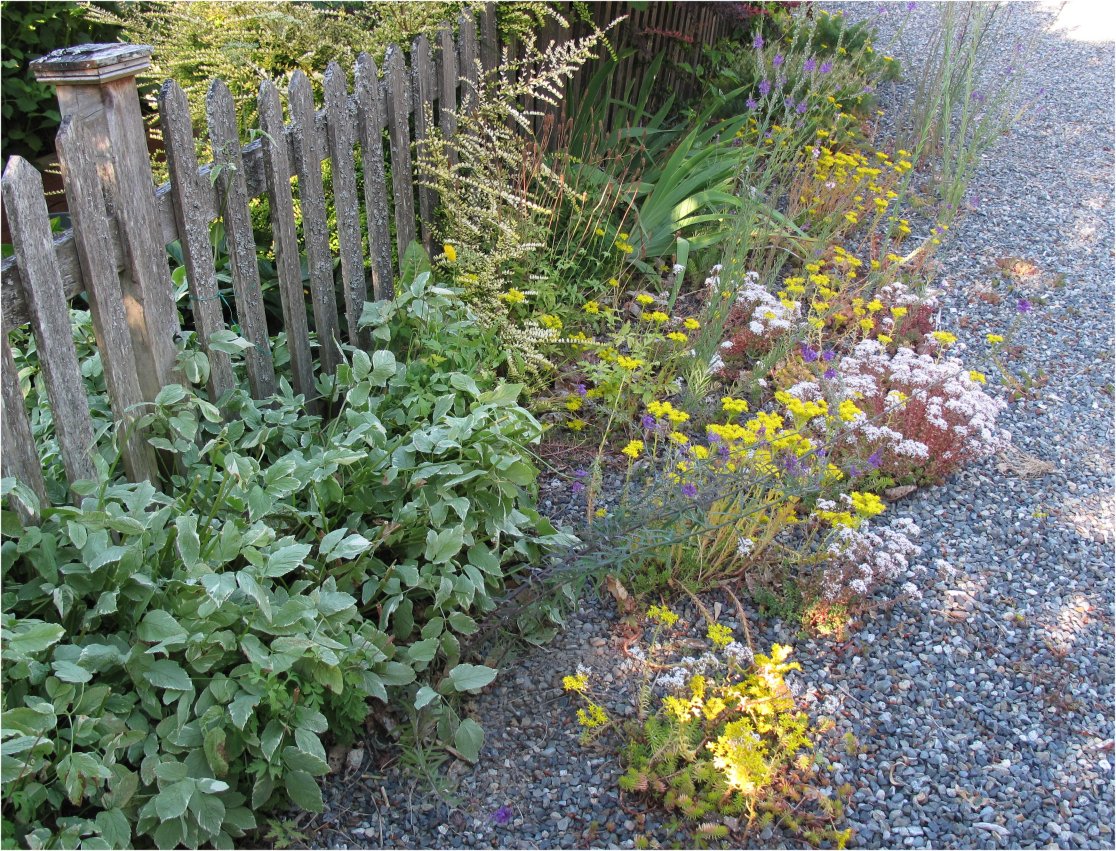
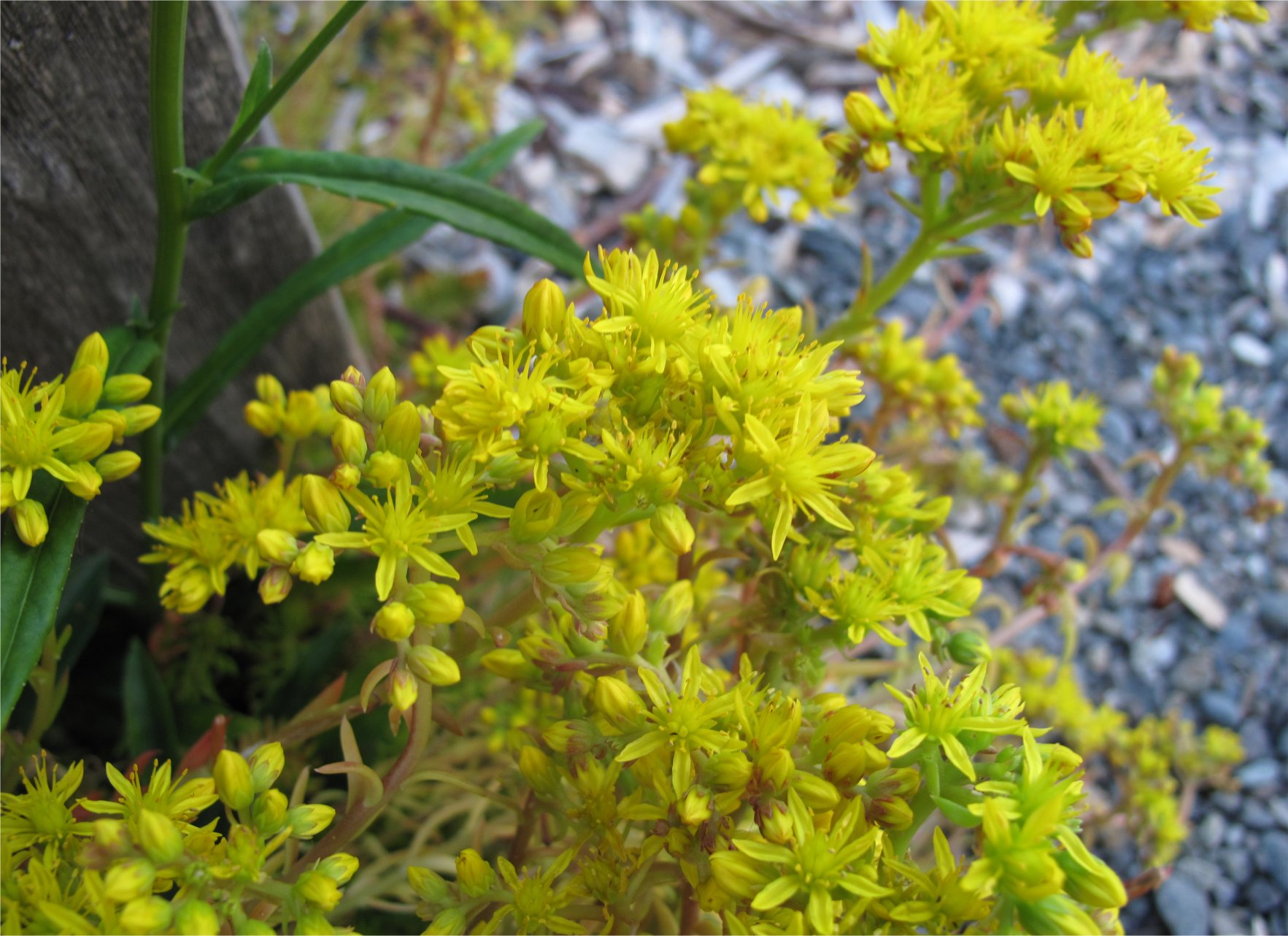
Volunteer yellow and white Sedum bloom in gravel driveway

The tiny yellow blooms on elongating succulent stalks are probably Sedum rupestre, which is also known as Sedum reflexum.

rupestre

This sedum is native to northern, central, and southwestern Europe and naturalizes easily in lean soils lacking much organic matter (think gravelly driveways).

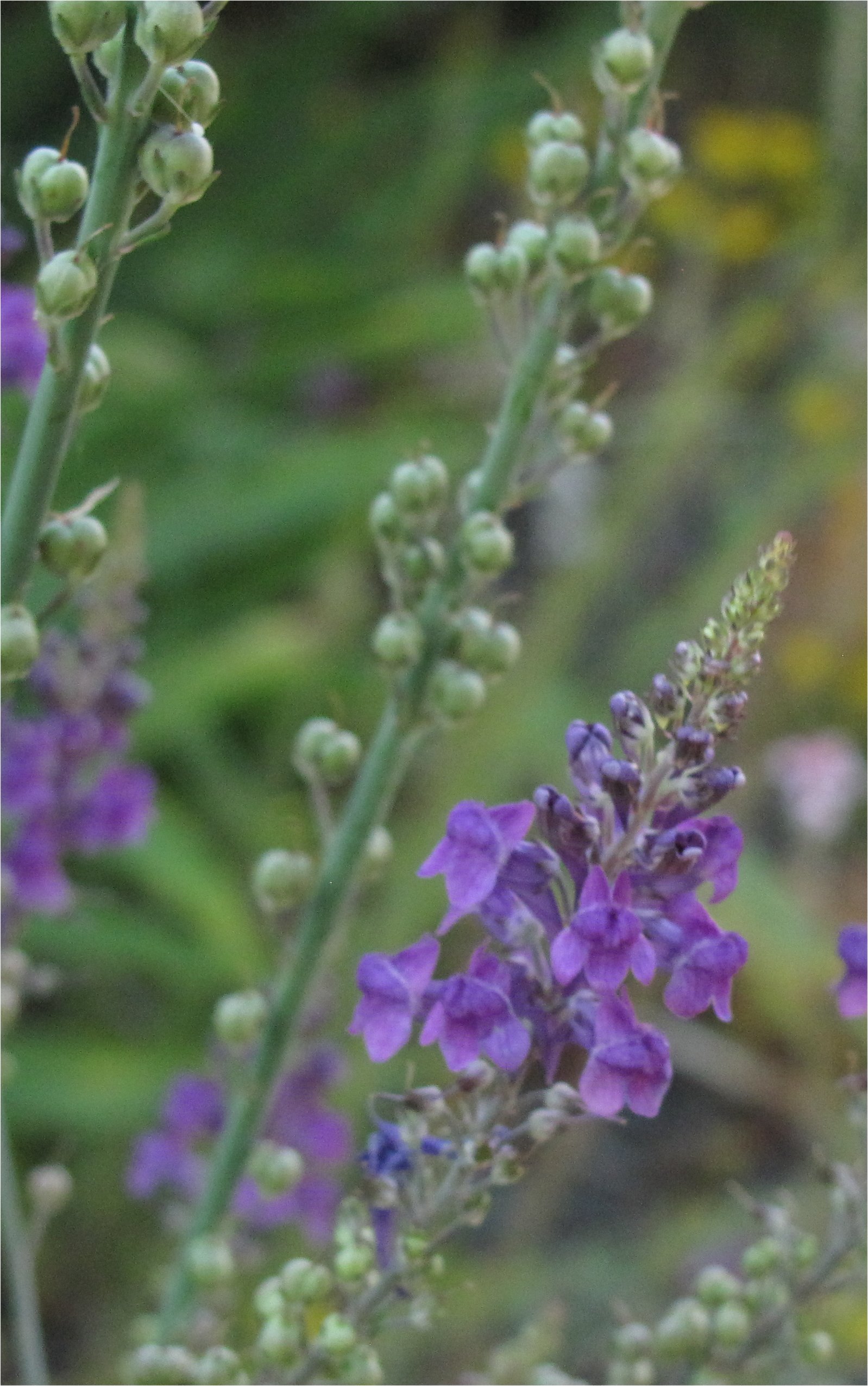
Linaria purpurea

Linaria purpurea

Completing the arrangement are Bishop’s Weed (the variegated green-leaved plant directly against the fence), a white blooming sedum, and Linaria purpurea (Purple Toadflax), which is past its prime and has mostly gone to seed. Earlier this summer Welsh poppies added to the mix.

All these plants colonized part of the gravel driveway in front of the aging cedar picket fence.

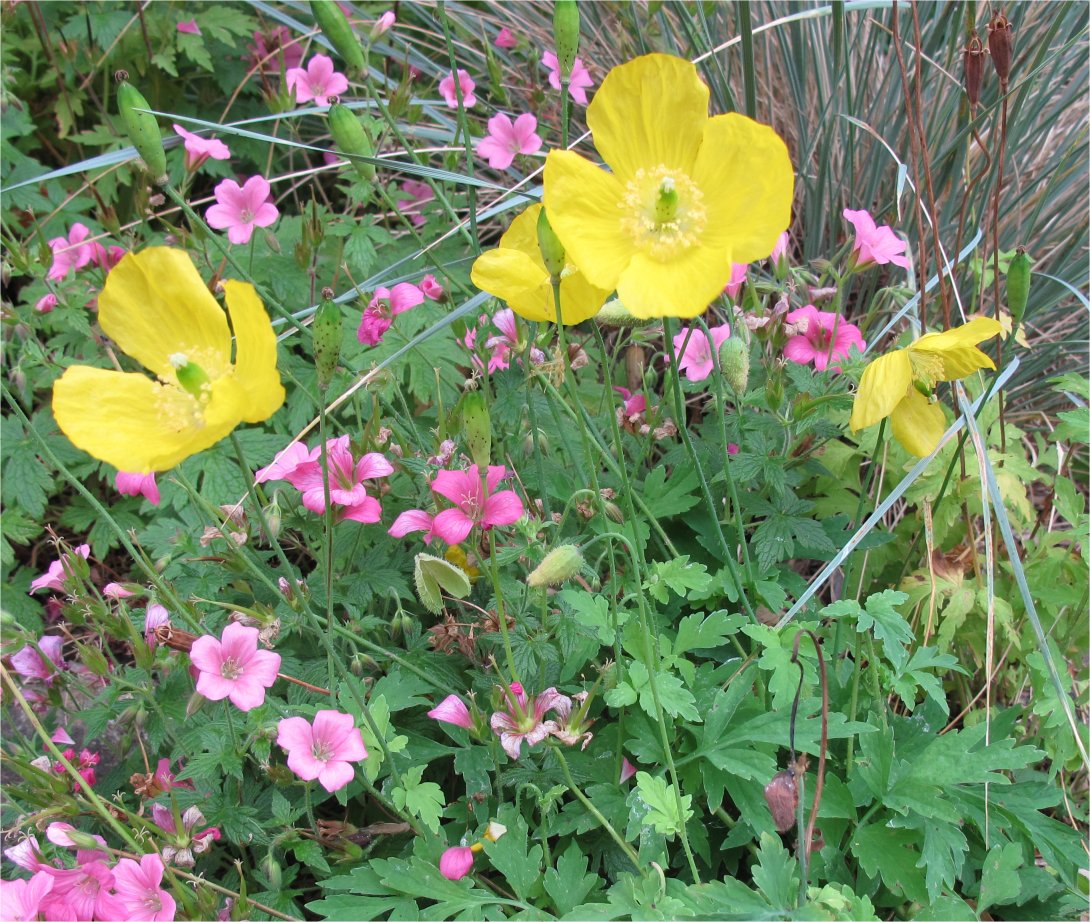
Just a few weeks ago the Linaria purpurea, Sedum rupestre and Welsh poppies (Meconopsis cambrica) were blooming profusely in concert. I was preoccupied with other tasks and missed getting a picture, but I thoroughly enjoyed the view whenever I walked from the driveway to the front door.

Of the four plants, my only regret is the Bishop’s Weed, which is far to aggressive for my tastes.

The Welsh poppies in the driveway have mostly gone to seed, but new seedlings still appear sporadically in other parts of the garden.

Welsh poppies

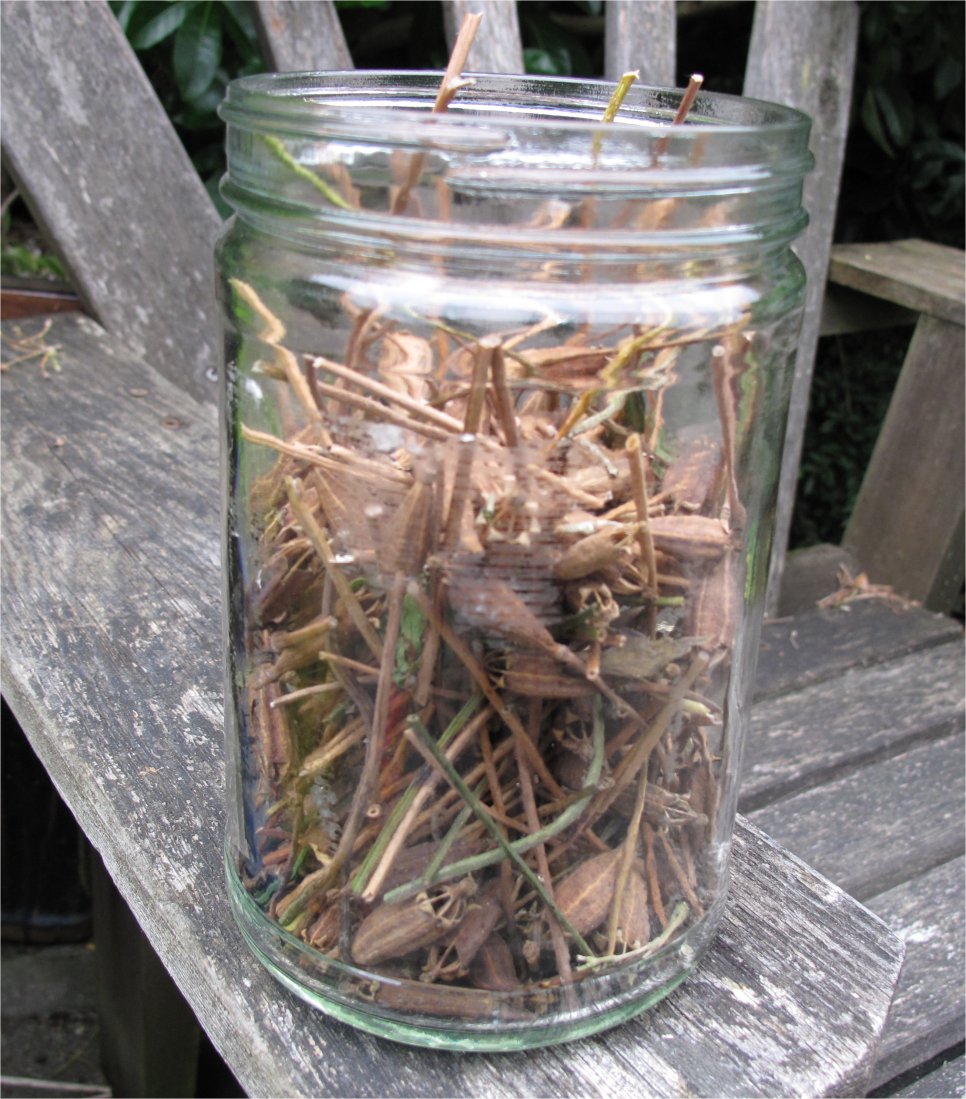
seeds meconopsis cambrica

Meconopsis cambrica seeds

My neighbor, impressed with last month’s plethora of yellow-golden blooms requested seeds for her yard, so I let the driveway Welsh poppies go entirely to seed. Normally, whenever I walk by the blooming poppies I deadhead the newly formed seedheads to encourage more bloom, but this time I just let them ripen on the plant.

It was easy to cut off the stems and seed heads and collect them in a glass jar for scattering around her garden next March.

The BBC gardening guide website had this to say about Meconopsis cambrica:

Common Name: Welsh poppy
Genus: Meconopsis
Species: cambrica
Skill Level: Beginner
Exposure: Full sun, Partial shade, Shade
Hardiness: Hardy
Soil type: Well-drained/light, Acidic, Chalky/alkaline
Height: 45cm
Spread: 20cm
Time to plant seeds: March to May

The Welsh poppy is happy almost anywhere, and spreads freely in many gardens. Plants are short and bushy, with elegant graceful foliage and lots of large, flimsy golden poppy flowers produced in succession from late spring to early autumn. Plants are not very long-lived but usually self-seed freely. Like all poppies, they dislike root disturbance, so plant pot-grown specimens and allow their seedlings to come up wherever they germinate naturally. These seedlings are then much more resilient than the pot-grown plants.

June Bloom

Despite the garden taking off and plants blooming like crazy, it’s been more than five weeks since my last post. Plenty of blooming beauties to photograph, yet I haven’t managed to find the time for even a few pix. So what’s been holding things up?

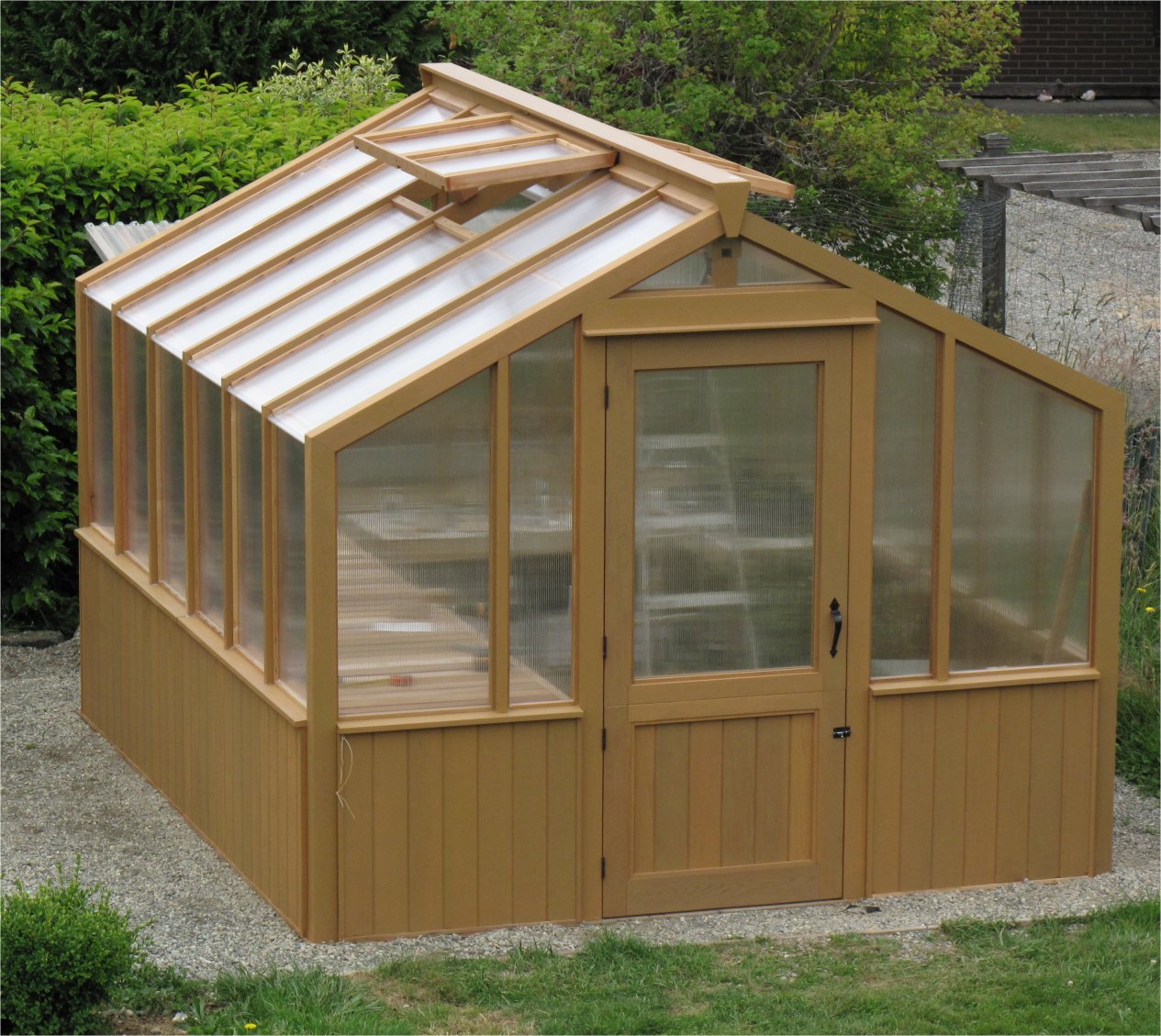
zonal denial greenhouse

New cedar greenhouse aka zonal denial enabler

That’s my new greenhouse, designed (I hope) to withstand our very windy site. Although a kit, it still required many hours of work to get to this point. With 4 X 4 cedar posts and heavy beams, I’m hoping it will be up to the task of occasional 60 to 80 mph gusts during winter storms.

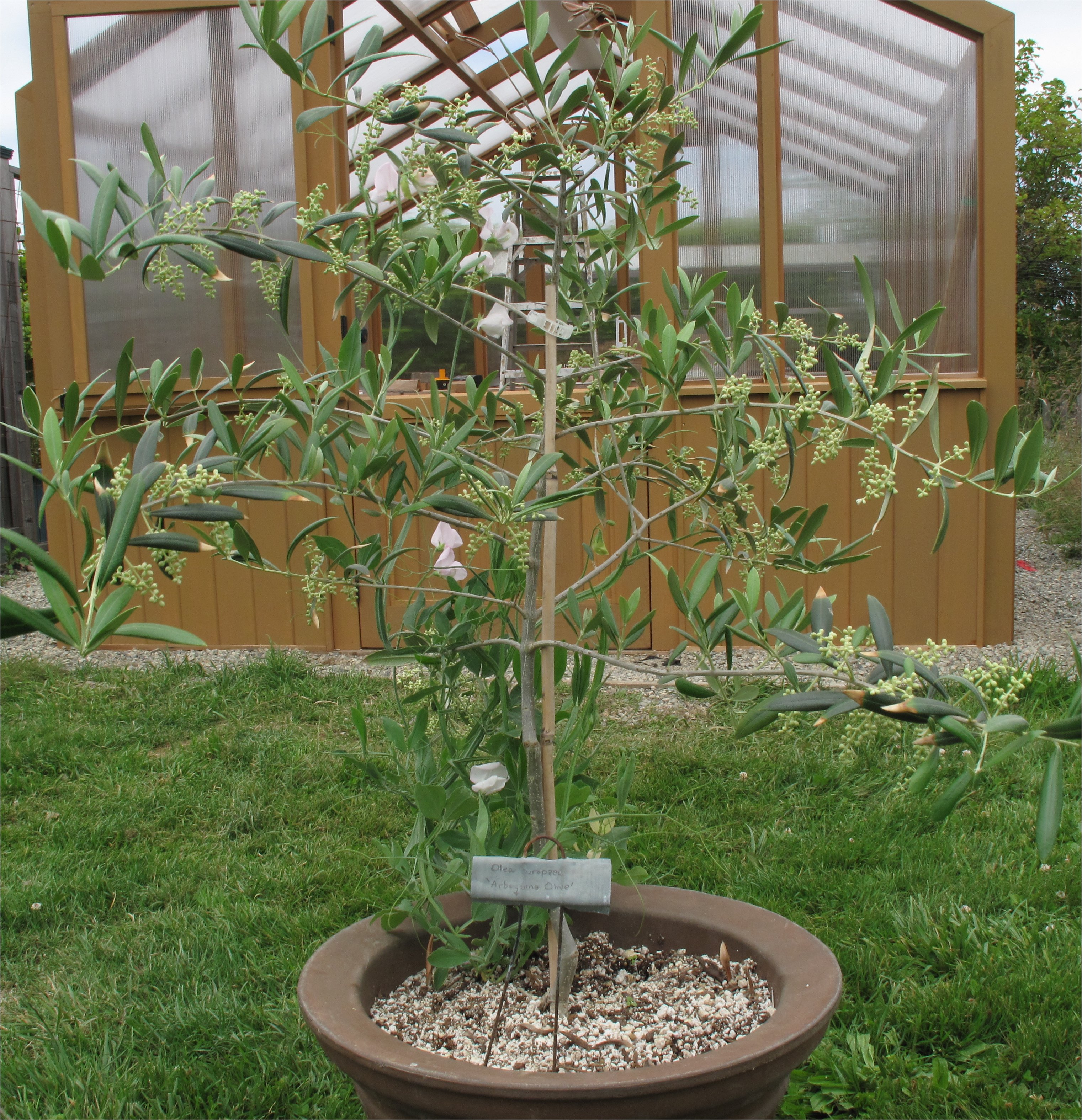
I plan to use supplemental heat on the coldest winter days to keep the inside no lower than 40° F. That qualifies as a “cool” greenhouse, but will be just enough to keep plants like this potted olive tree, Olea europaea ‘arbequina, safe all winter.

Olea europaea arbequina

Olea europaea arbequina

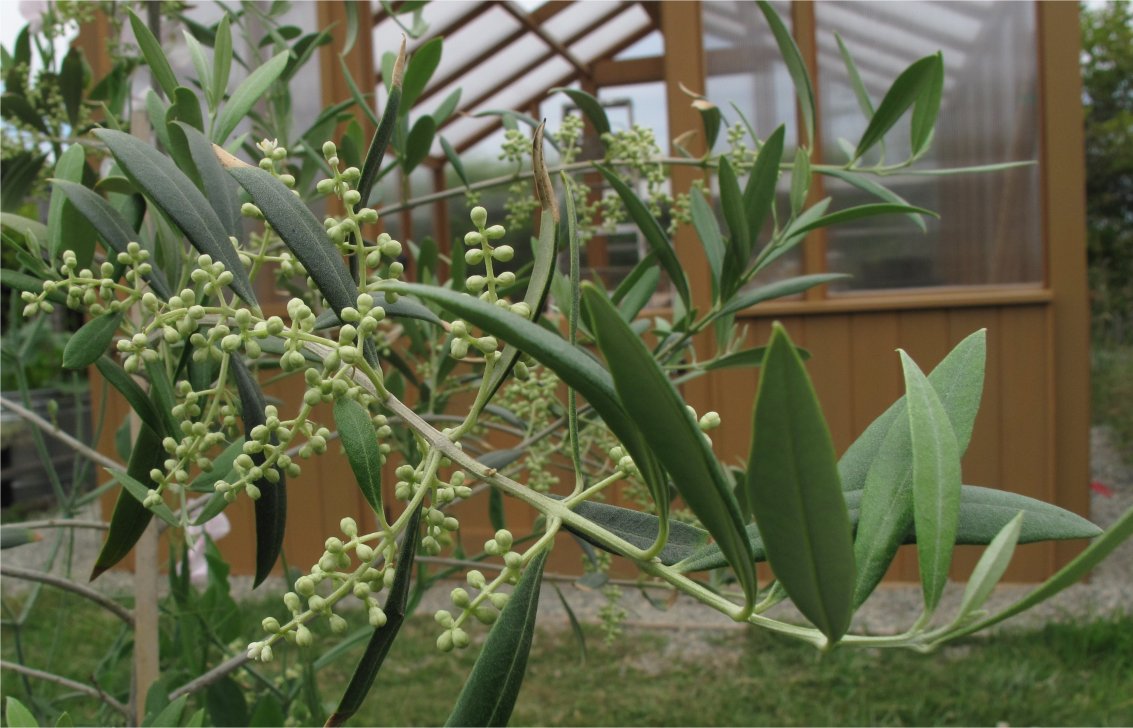
Many of my “zonal denial” plants will find their winter home in the greenhouse. But like many gardeners first attracted to ornamentals I’m growing more and more edibles, so the greenhouse will also help me start veggie seeds besides being the winter home for this olive tree, which is now covered in tiny buds.

olive3

Olea europaea ‘arbequina buds soon to be tiny white, fragrant flowers

Now, instead of worrying about cold temperatures, better to concentrate on what’s happening in the garden right now and finally take some pix.

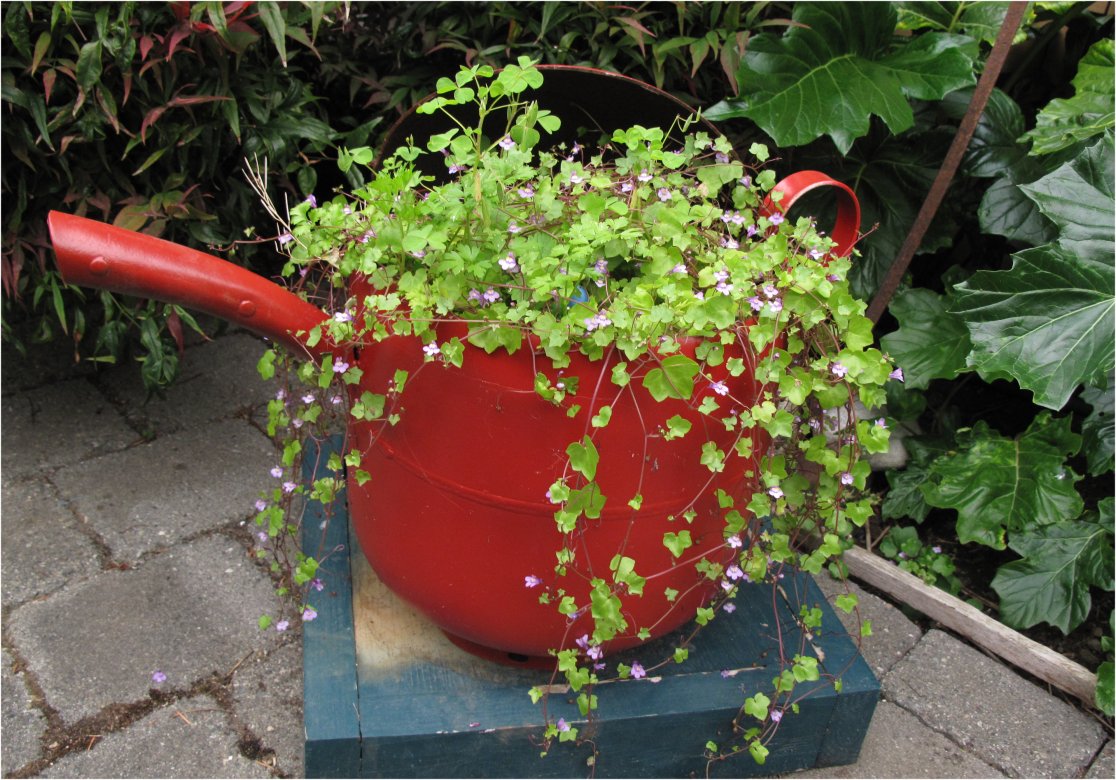
propane cannister

Propane cannister turned into planter locks nice against Acanthus leaves

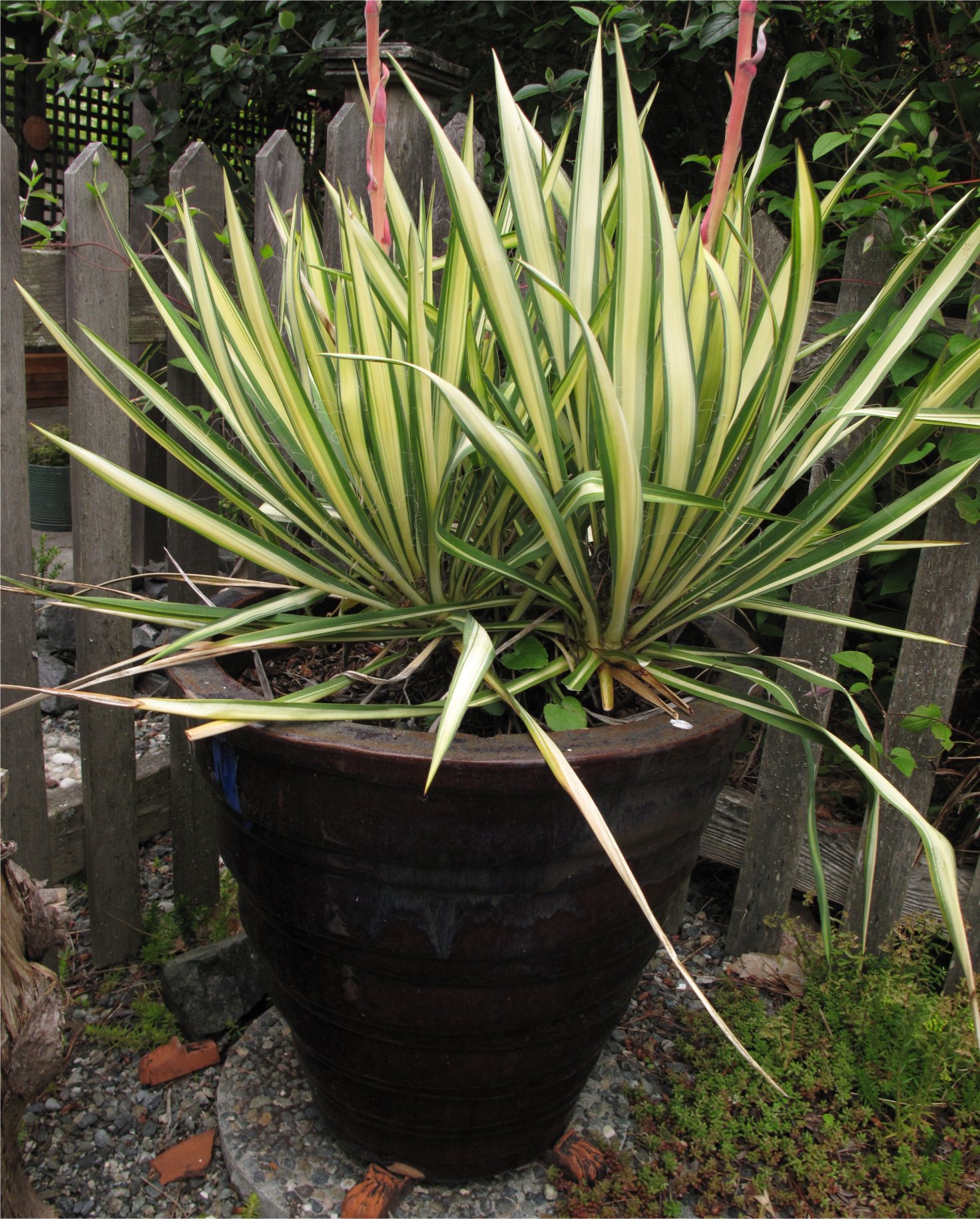
Yucca

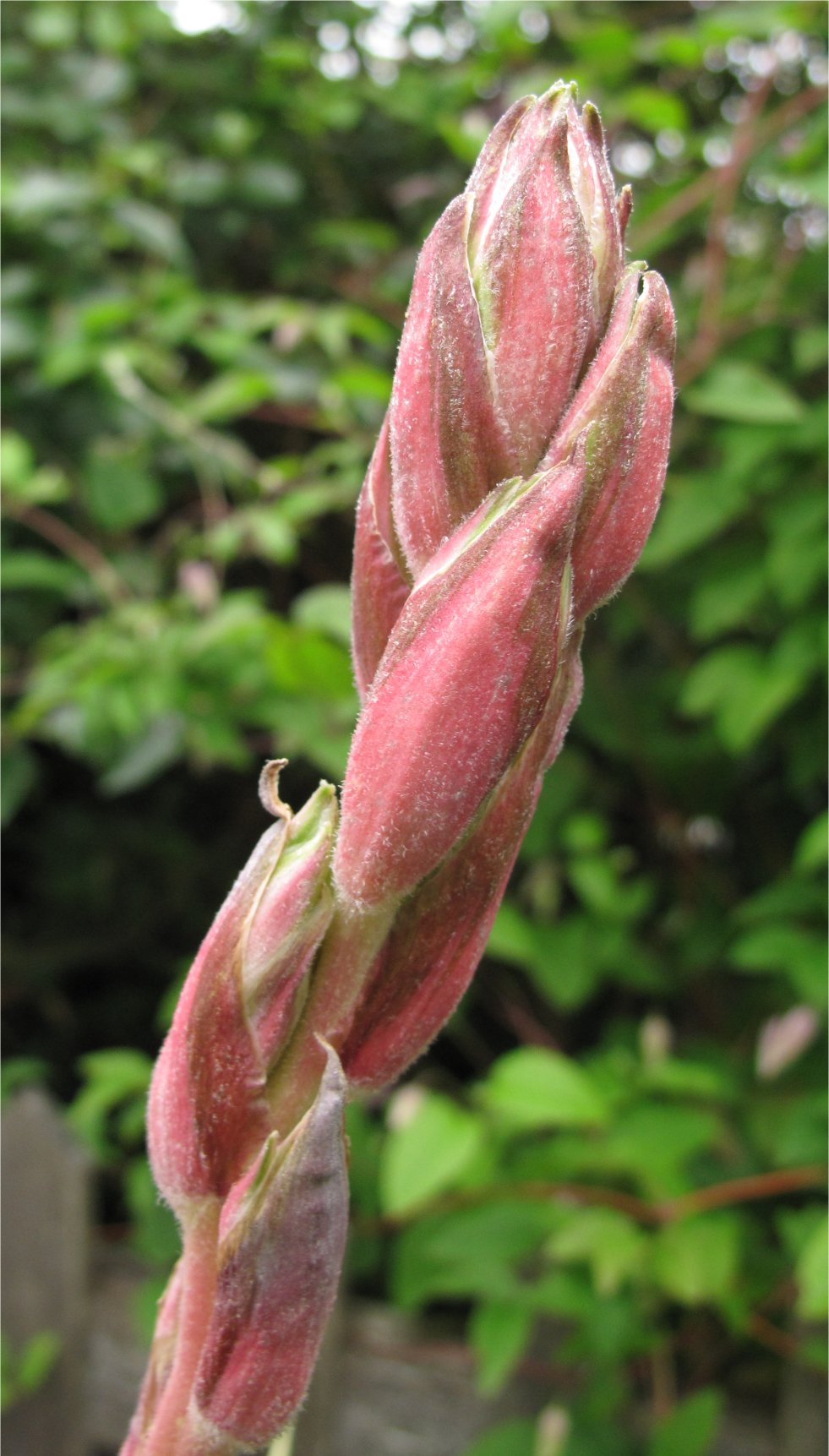
Yucca getting ready to bloom

Yucca getting ready to bloom

This Yucca lights up a corner with its bright variegated leaves that contrast nicely with the dark pot. This year will be the first in quite a few years that the Yucca will bloom.

I have a vague memory that when I bought this Yucca the salesperson said the blooms were supposed to be  fragrant.  The stalk is just fattening up and should open soon finally revealing whether the blooms are scented. I’ve long since forgotten the name of the cultivar.

Some Yuccas are surprisingly hardy in our Puget Sound climate. Even though native to warmer climes, they definitely enjoy our hot dry summers and seem to tolerate are cold wet winters.

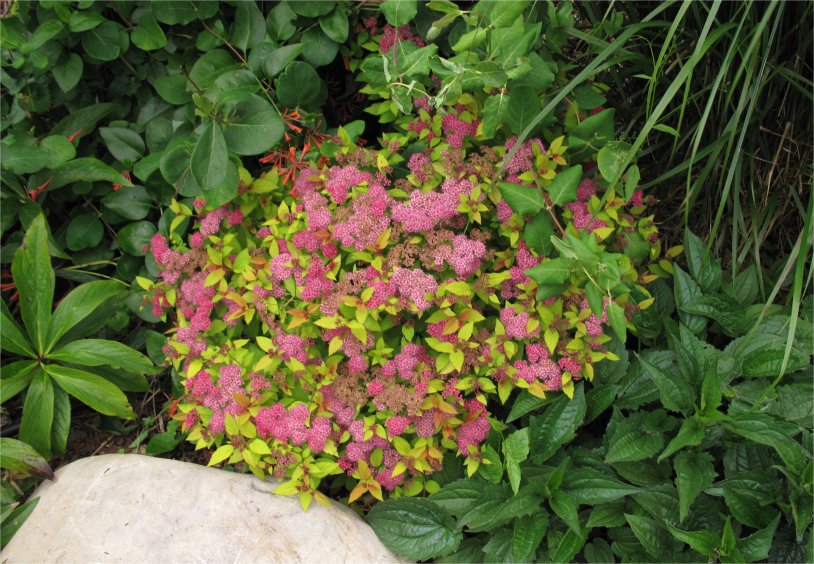
Spiraea japonica 'Magic Carpet'

Spiraea japonica ‘Magic Carpet’

Nandina and lavender

The lavender at the front of the border hasn’t quite colored up yet, but in a few weeks it will look stunning in front of the red Nandina leaves.

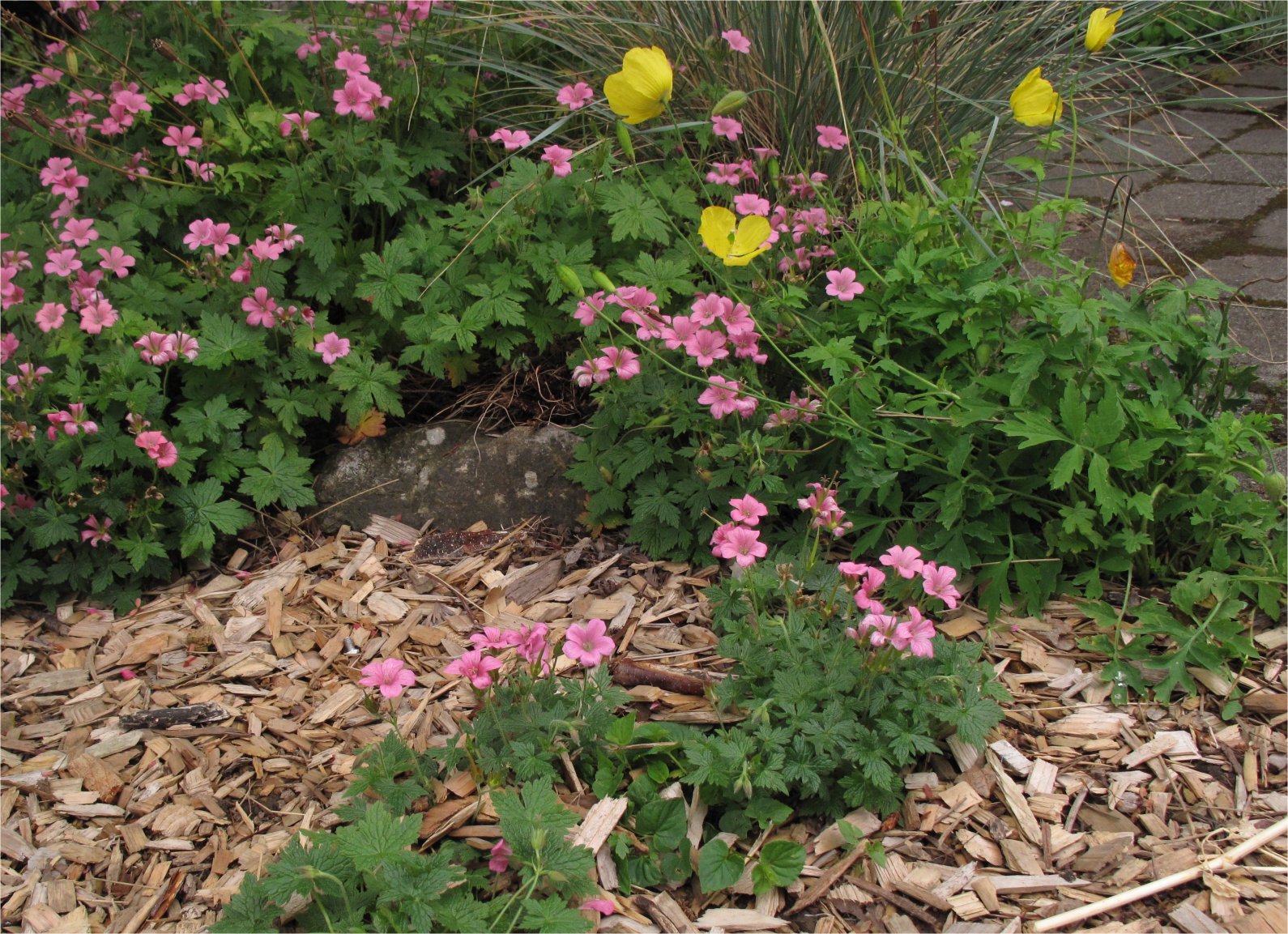
Claridge Druce

Geranium ‘Claridge Druce’ marches out of the border into the wood chip path

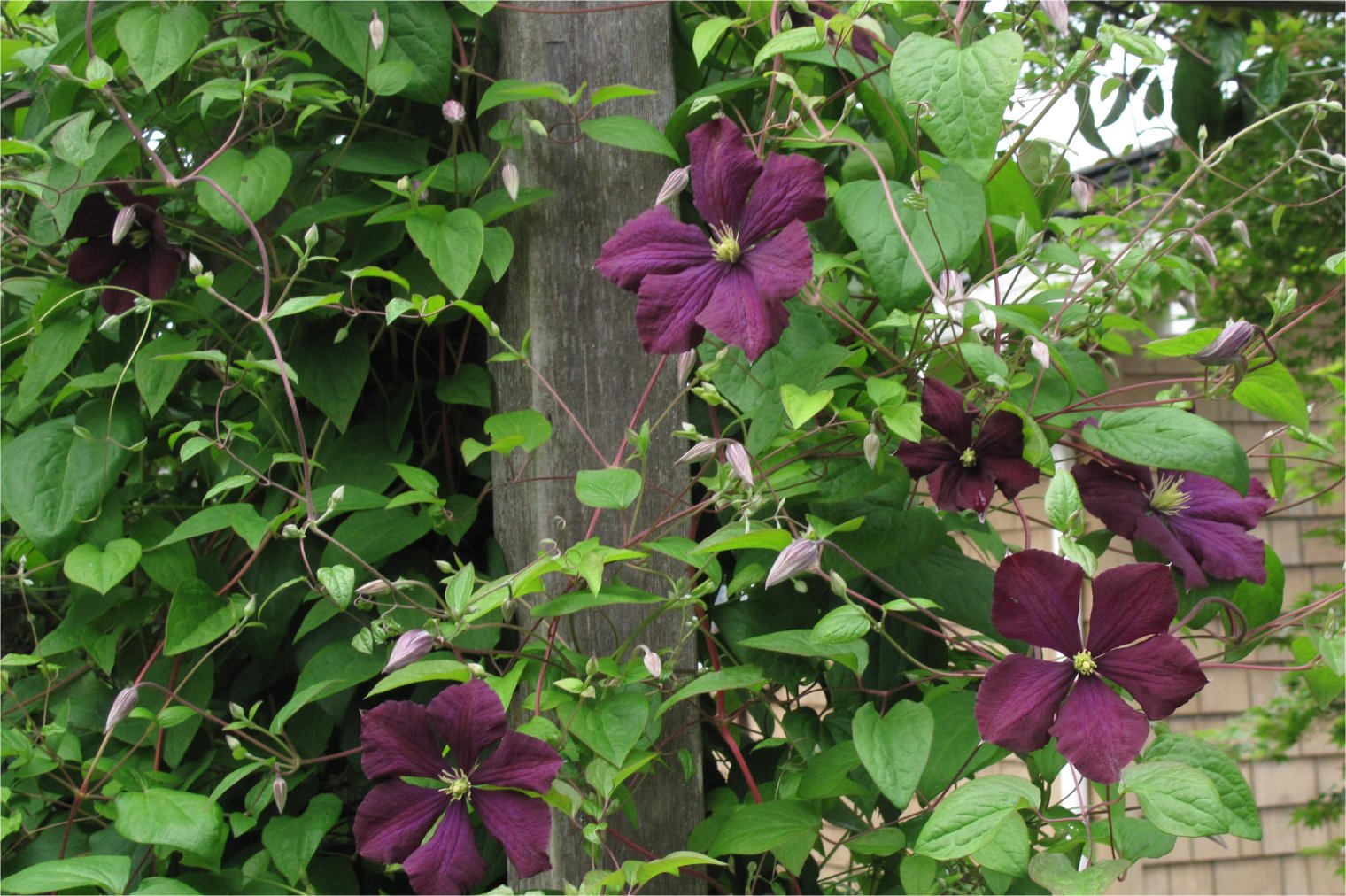
Clematis jackmanii climbing arbor

Clematis jackmanii climbing arbor

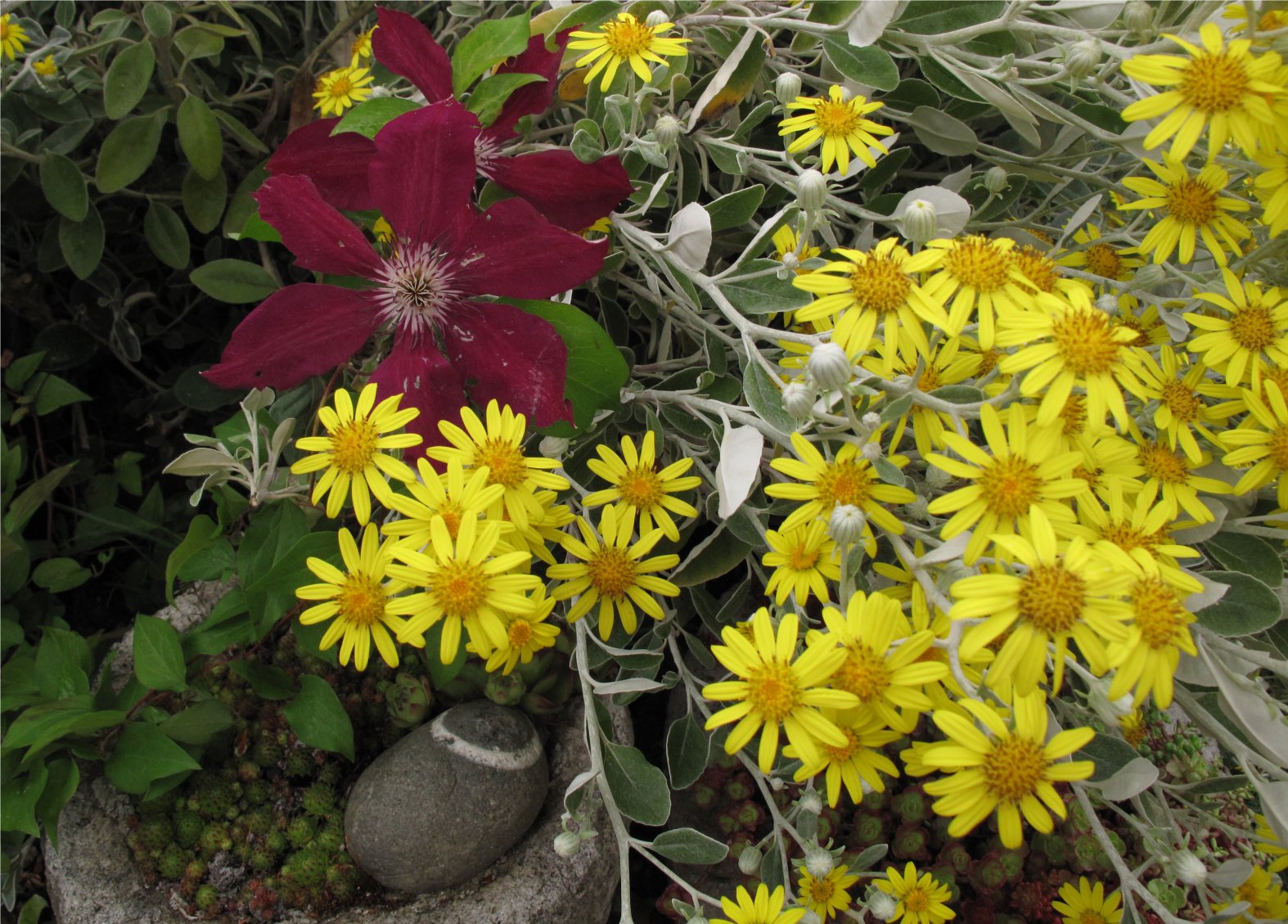
clematis roaming through Senecio

Clematis ‘Niobe’ rambling through Senecio greyii

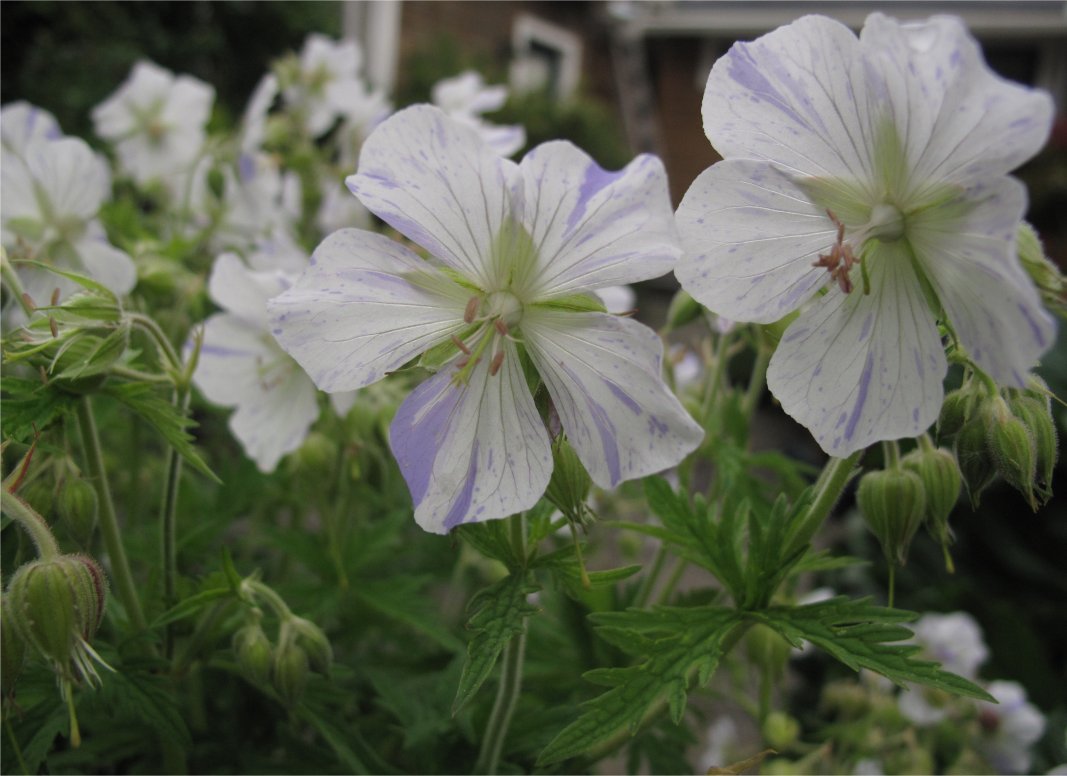
Variegated Hardy Geranium unknown cultivar

Variegated Hardy Geranium unknown cultivar

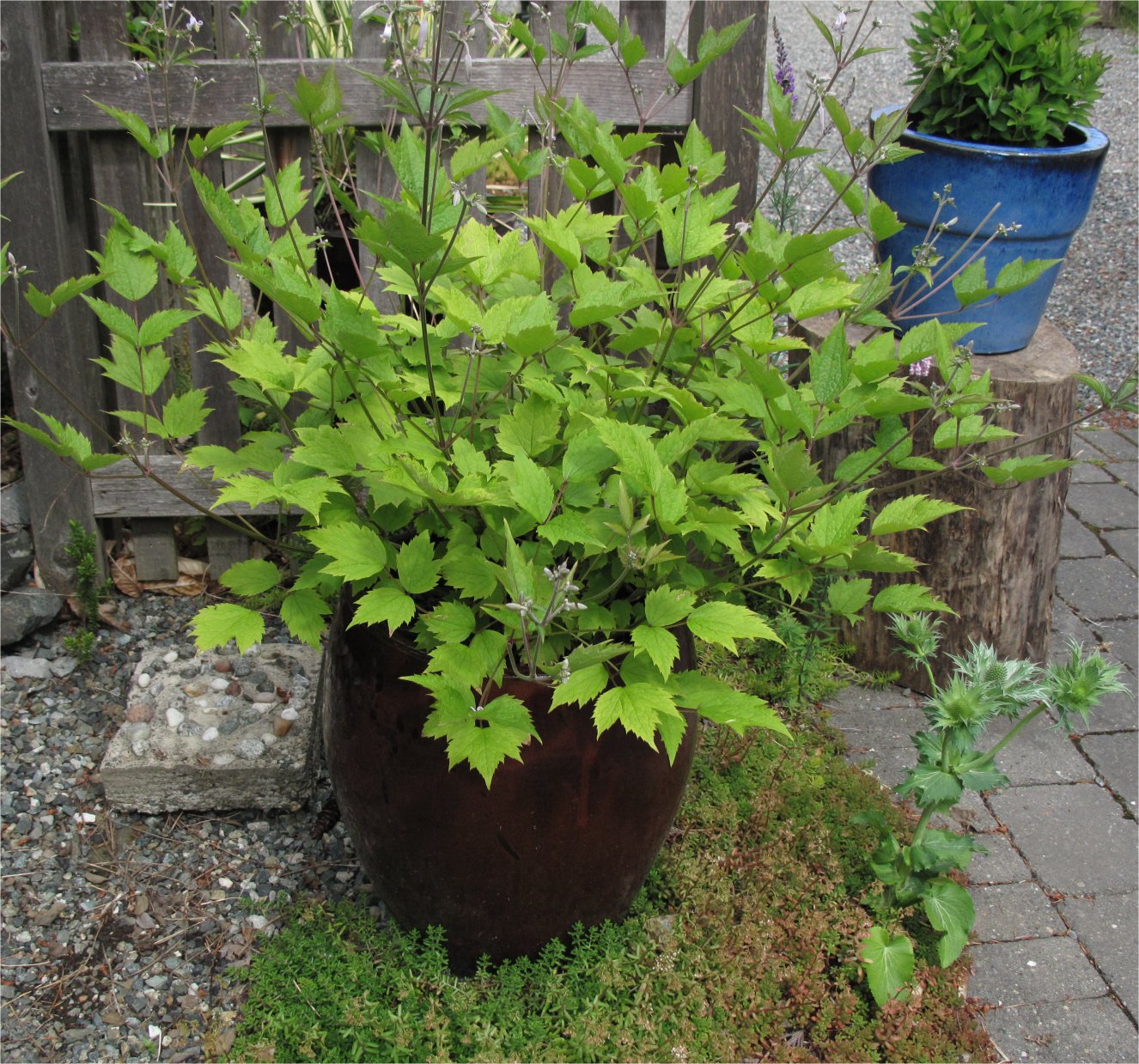
clematis stans leaves

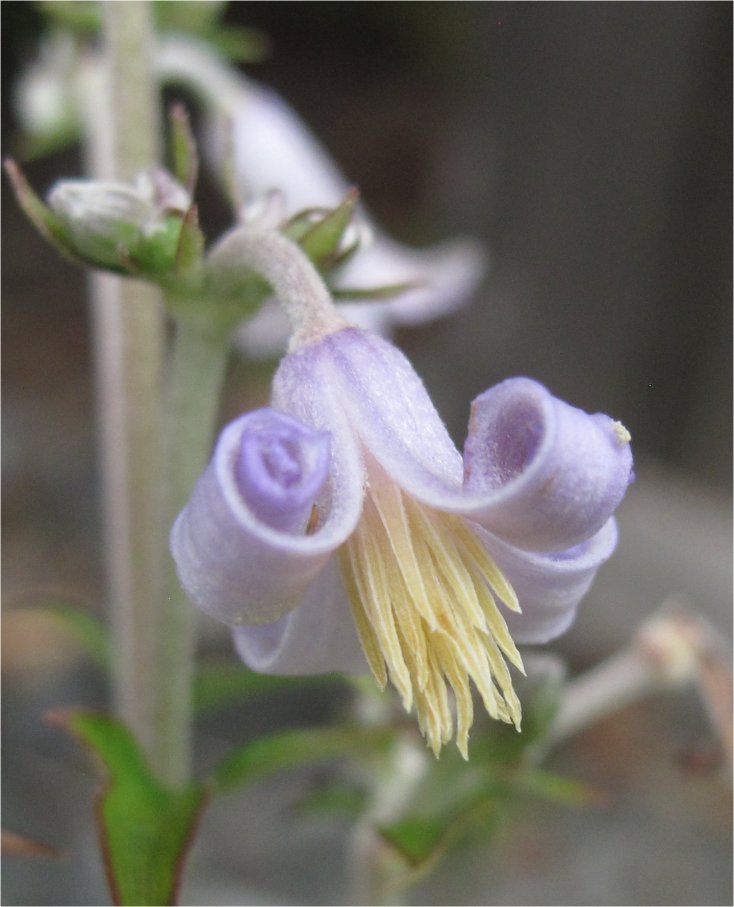
Clematis stans

Clematis stans

Clematis stans

Clematis stans is a native of Japan and is a bushy plant ( technically a sub shrub) rather than a climber.

It’s flowers are tiny compared to the spectacular flowers of most vines in the genus. Flower color size and shape is highly variable.

I’m growing it in a pot, but soon it will go in the ground. It’s a very hardy species that will survive USDA Zone 5 winters.

Left outside in a pot it dies back to its roots, but I suspect in the ground here in Zone 8 it will require cutting back in winter.

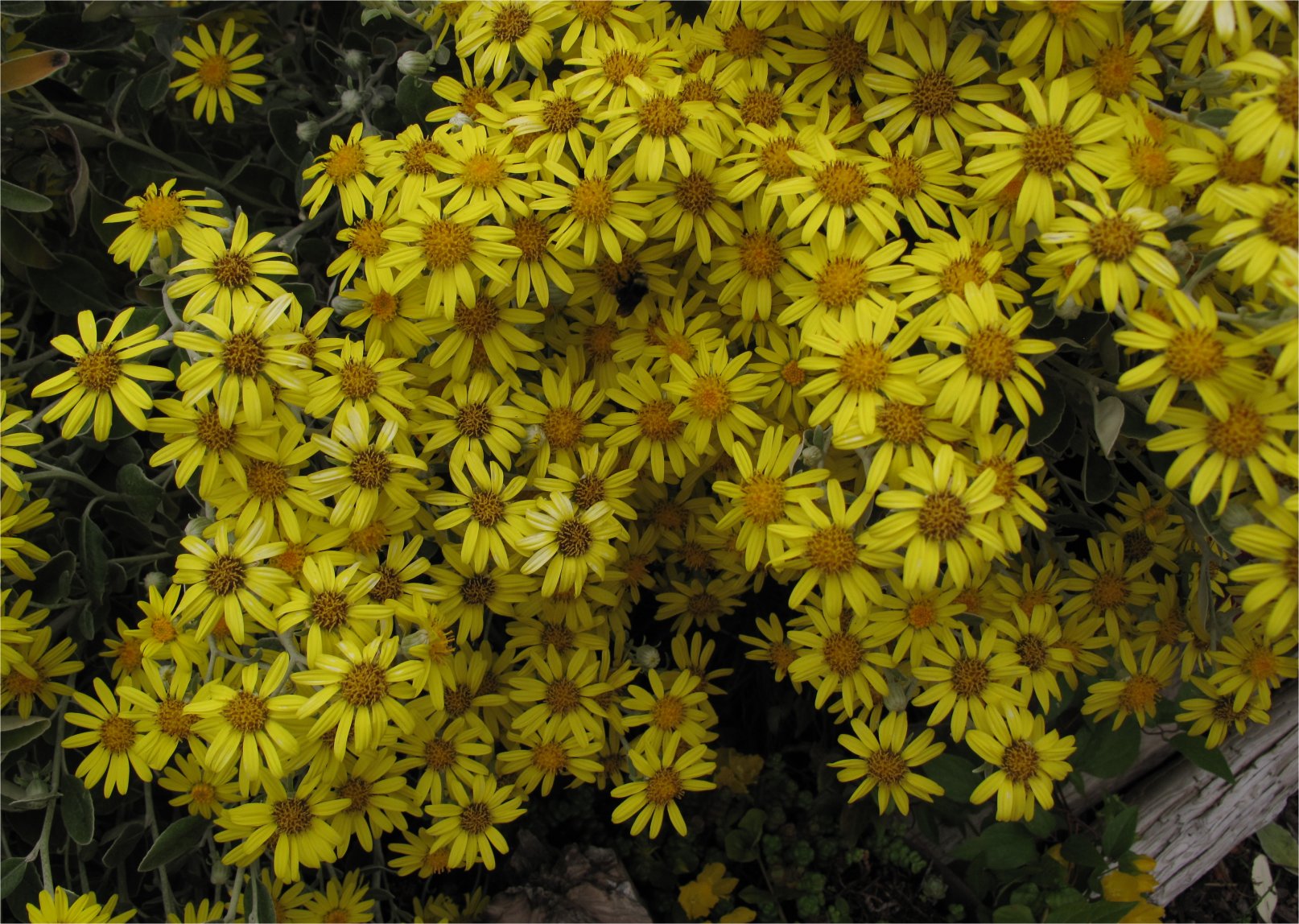
Senecio greyii blooms en masse

Senecio greyii blooms en masse