Dalmation Bellflower

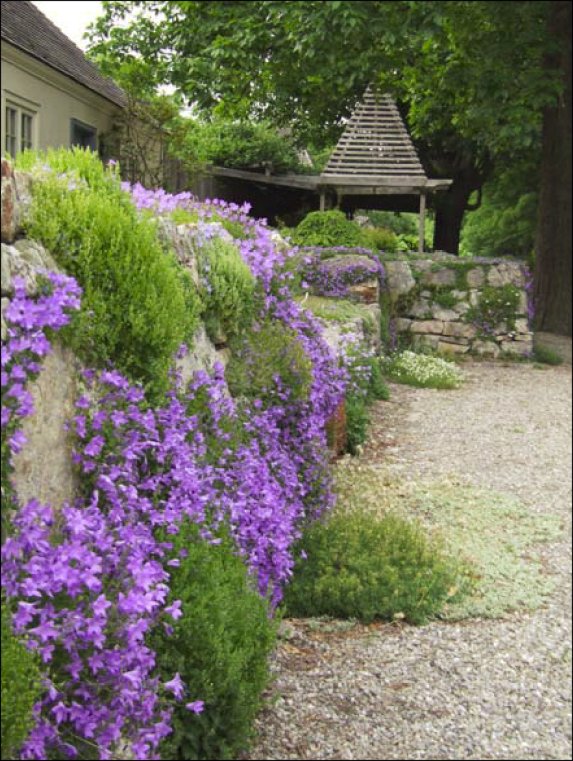
Campanula portenshlagiana at Stonecrop Gardens in near Cold Springs, N.Y.

Campanula portenshlagiana blooming at Stonecrop Gardens near Cold Springs, N.Y.

Who among plant lovers (and if your reading this blog you are undoubtedly one) do not struggle with the unattainable standards fostered by certain spectacular plant photos in garden books and magazines!

Like a song melody that constantly pops into your head, a certain plant photo can seem almost tyrannical in its single-minded effort to invade your consciousness. However, while these kinds of photos aim to capture perfection, they  leave out all the “sturm und drang” that goes into that perfect plant moment.
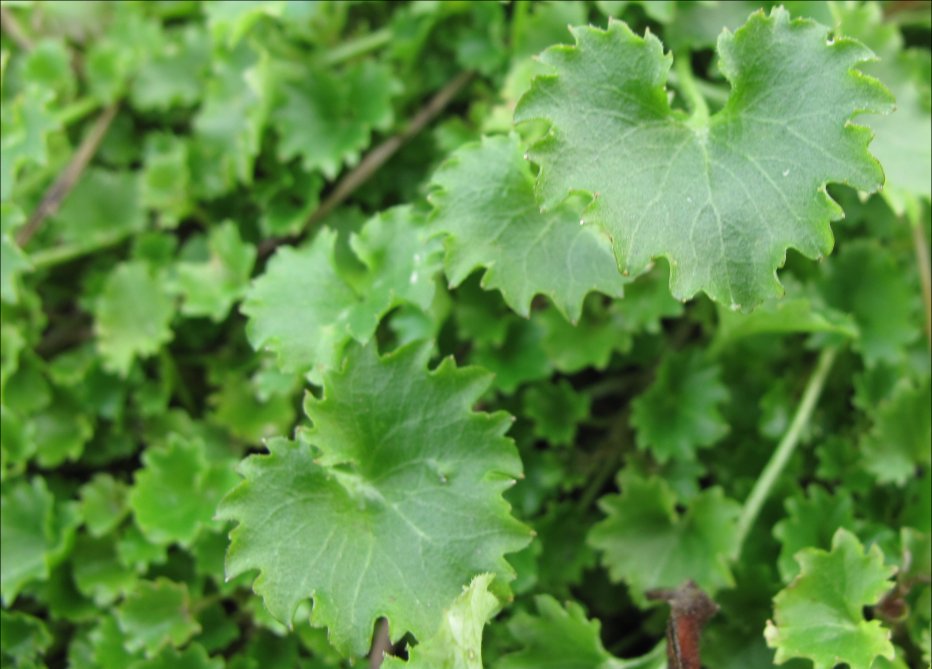
C.portenshlagiana-leaf detail

Leaf detail C. portenschlagiana

So even though the above photograph was hardly remarkable as a work of art — a rather typical stone wall covered with blooming Dalmation Bellflower — the image would, from time to time (unexpectedly), pop into my head.

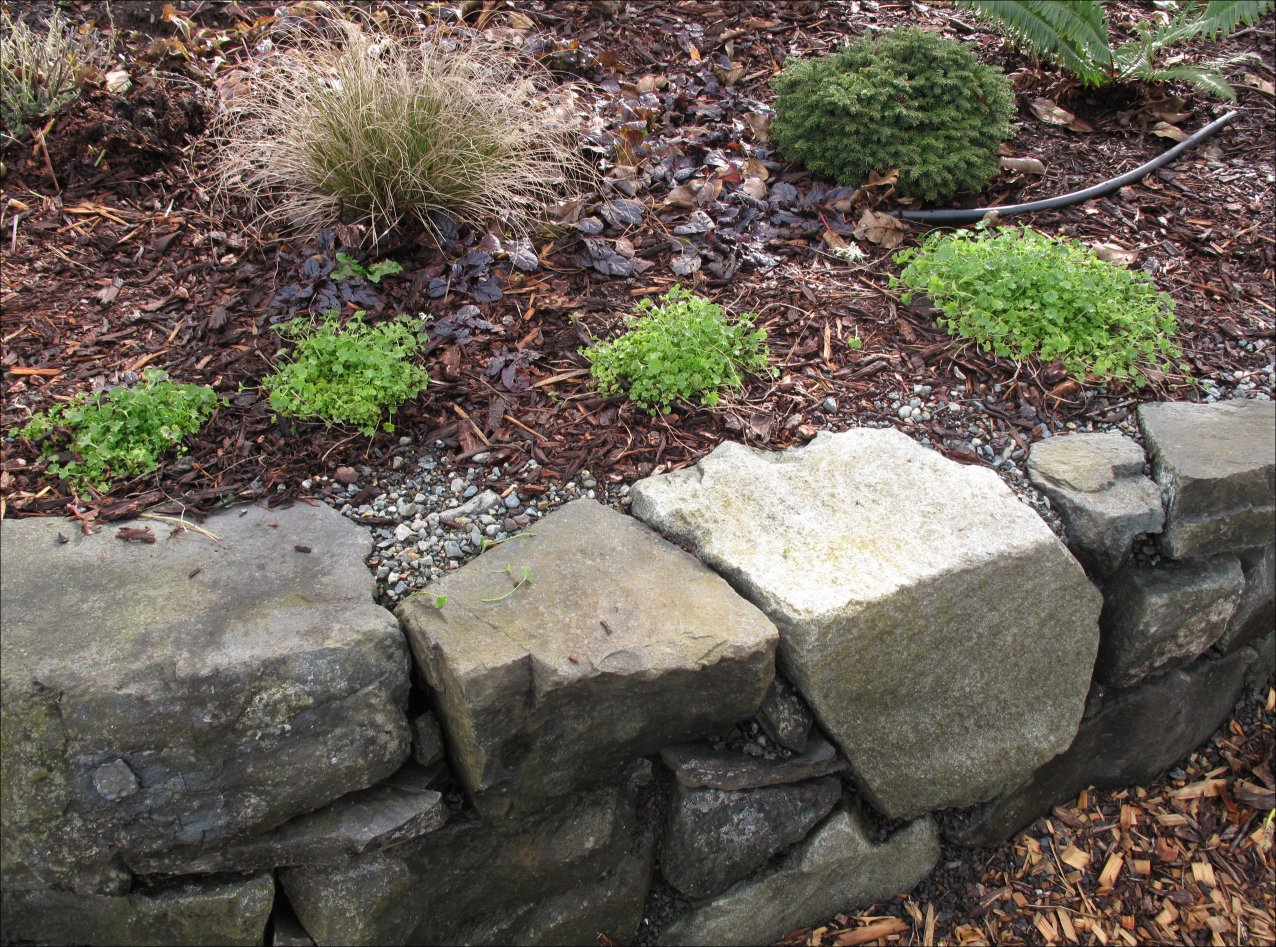
Then, about three years ago I finally ordered four Campanula protenschlagiana plants and established them on my own (albeit quite smaller) stone wall.  Here they are in their third season, nice clumps of serrated green leaves doing quite nicely after our mostly mild and, of course, wet winter.
Img_3082

Four clumps of Campanula portenschlagiana waiting for Spring

Soon after, purchasing the 4″ pots of Dalmation Bellflower,  I visited Stonecrop Gardens (the source of the photograph) in the Hudson River Valley near Cold Springs, NY.  Unfortunately, it was in September of 2011 and blooming was apparently long finished. And, I don’t recall finding that particular stone wall, though the remarkable garden and a fine alpine house were inspiring.

So even if tyranny is defined as “an arbitrary or unrestrained exercise of power,”  we can’t deny those carefully chosen images don’t inspire us nonetheless.  I’m hoping this is the spring and summer that these four clumps finally make it over the edge of the modest rock wall and tumble toward the wood chip path.  Stay tuned for a picture later this summer.  Who knows, it may just be an image that sticks in your head.

Update July 13, 2013

Hmmm…

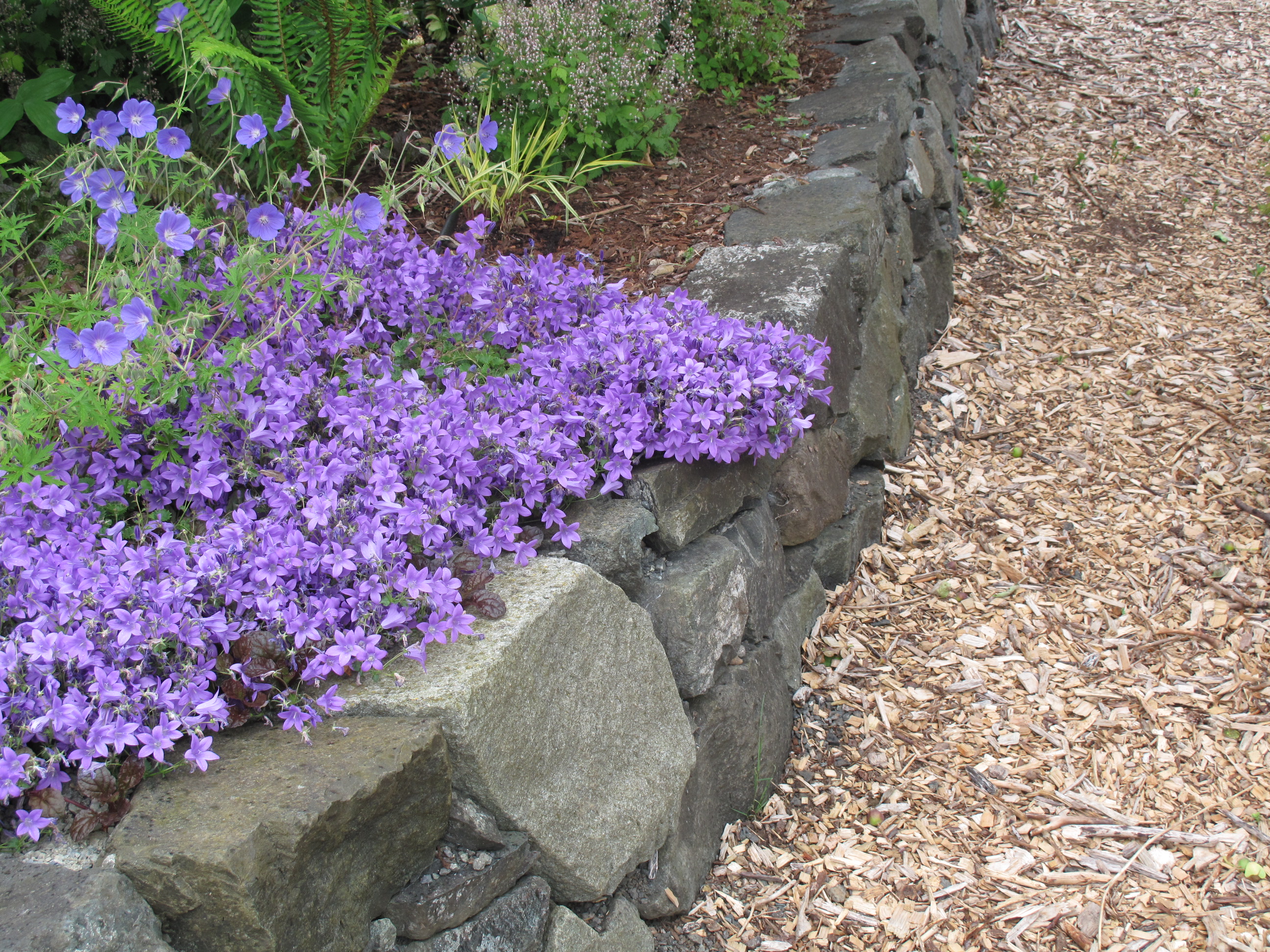
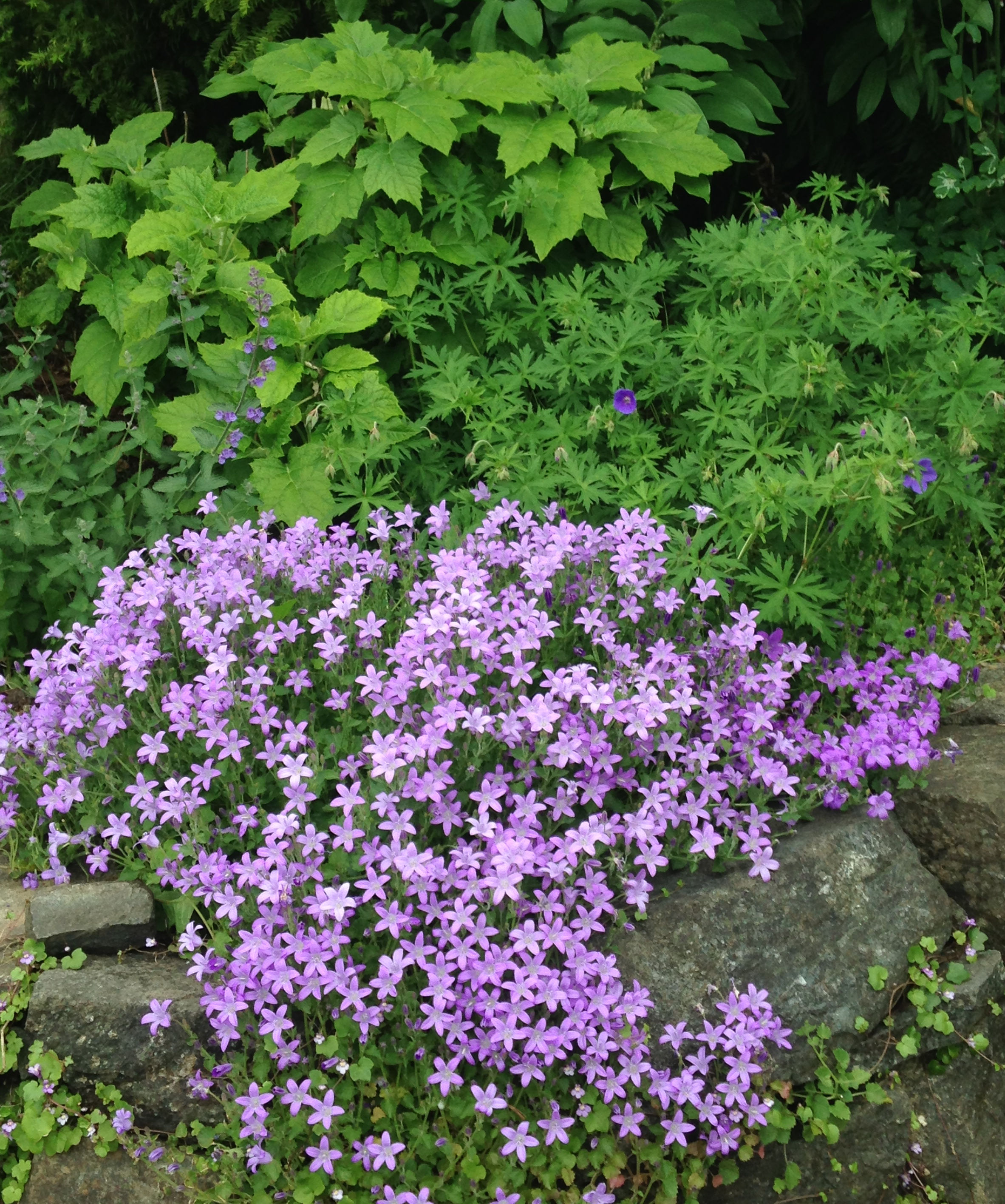
Despite reading in a Campanula book first published in England that this species spreads vigorously, my four plants barely made it over the wall  —  and this is their third year in this spot!
IMG_3419

Campanula portenschlagiana (Dalmation Bellflower) in mid June

Jason at Garden in a City blog calls it a kind of plant “delusion of grandeur,” although he was inspired by an actual visit, rather than a photo. Here’s a link to his post:  Delusions of Grandeur?

IMG_3420

Dalmatian Bellflower flirting with the wall’s edge

Update May 30, 2017
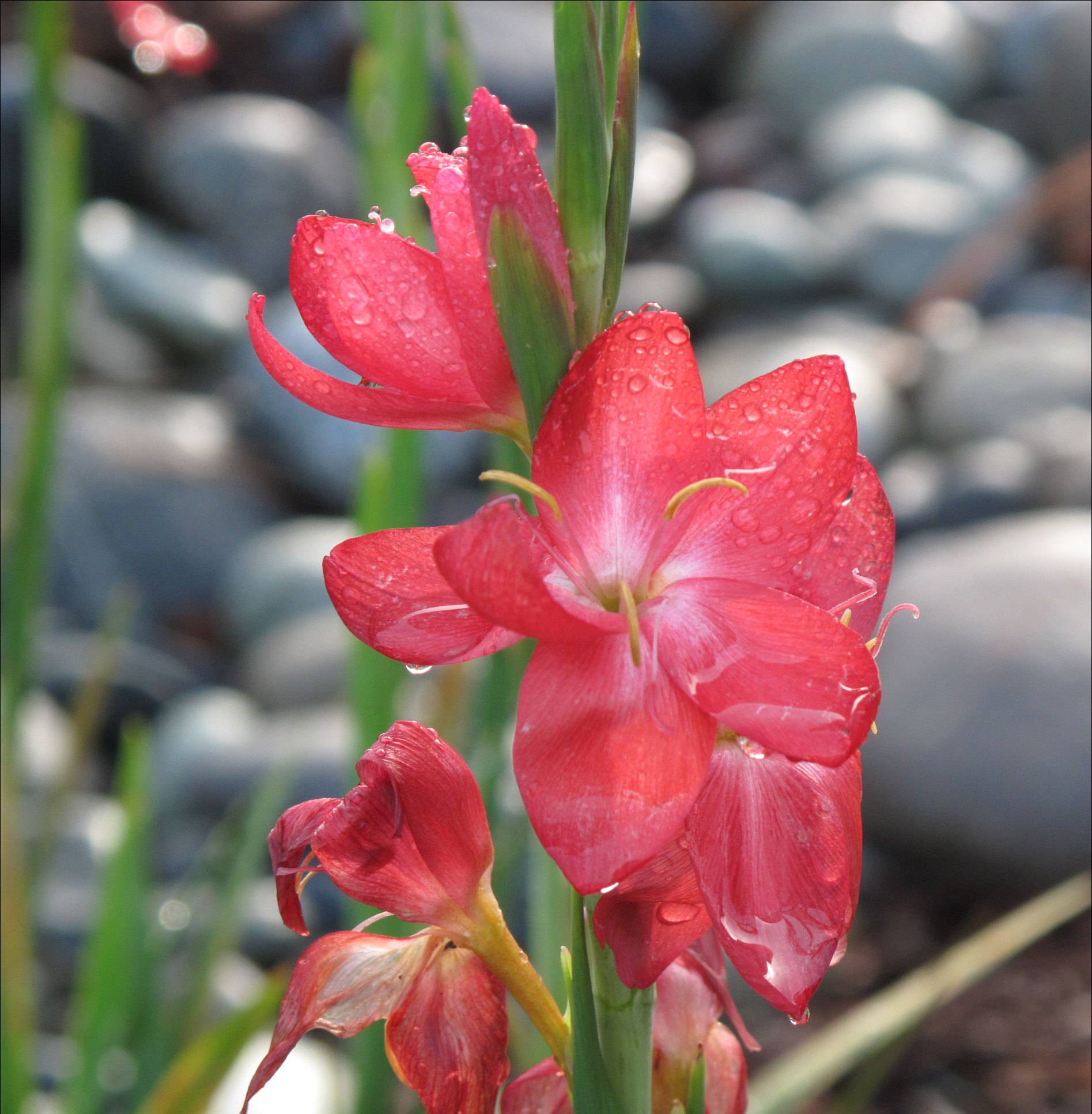
Crimson River Lilly ‘Oregon Sunset’

Many interesting plants for the garden share desirable characteristics of bloom, habit, ease of cultivation and a host of other attractive attributes — after all, that’s why they have reputations as choice plants.

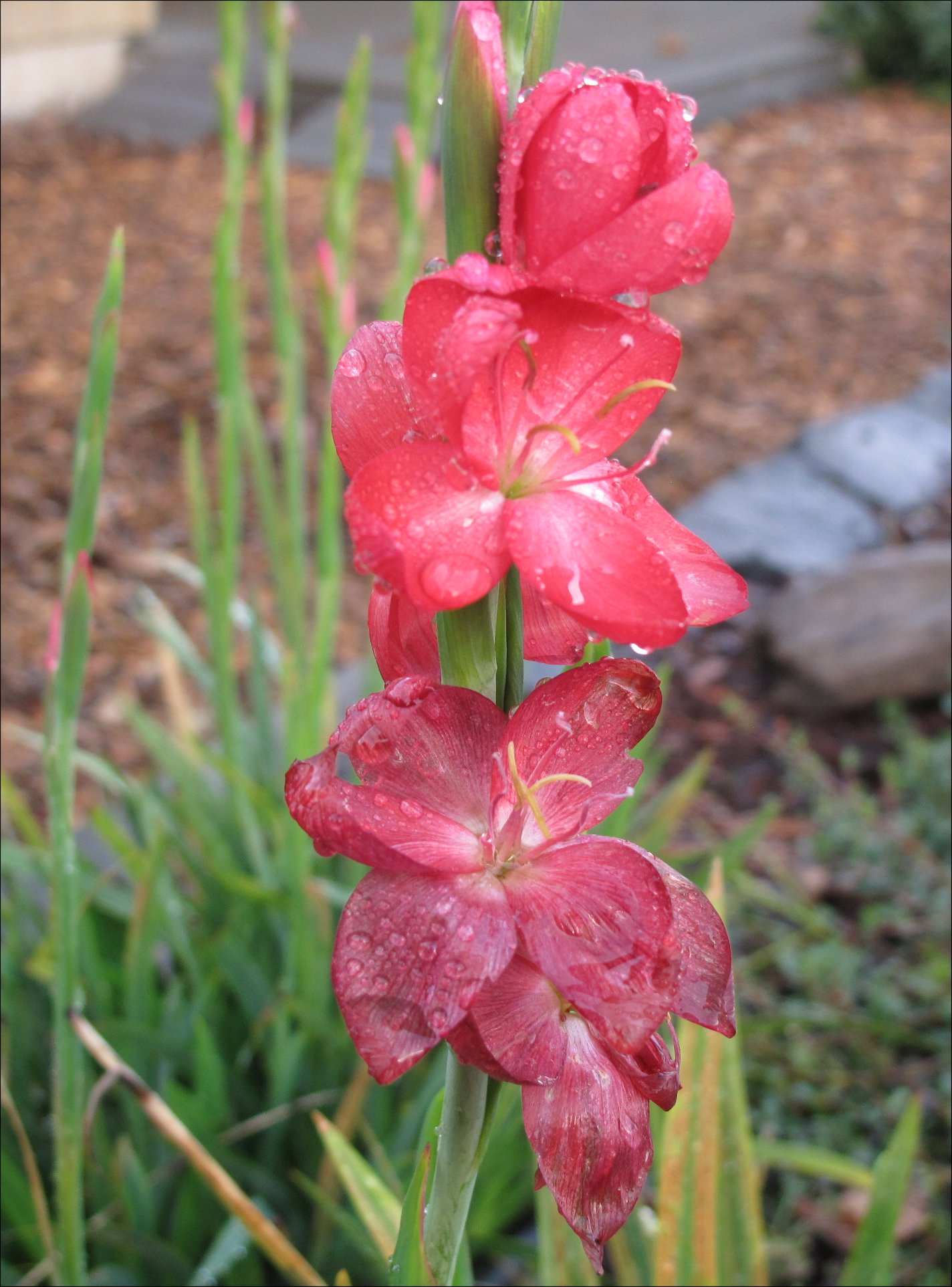
Crimison river Lilly Oregon Sunset2

Here’s a worthy garden plant for the Pacific Northwest whose two most salient characteristics are prominent winter blooms of stunning crimson flowers and a history of confusing and (in one case) a downright offensive name.

This relative of the gladiola started blooming for me in late summer and continues to this day (late January 2013), even after night time temperatures dropped below 32° for four or five consecutive days a earlier in the month.

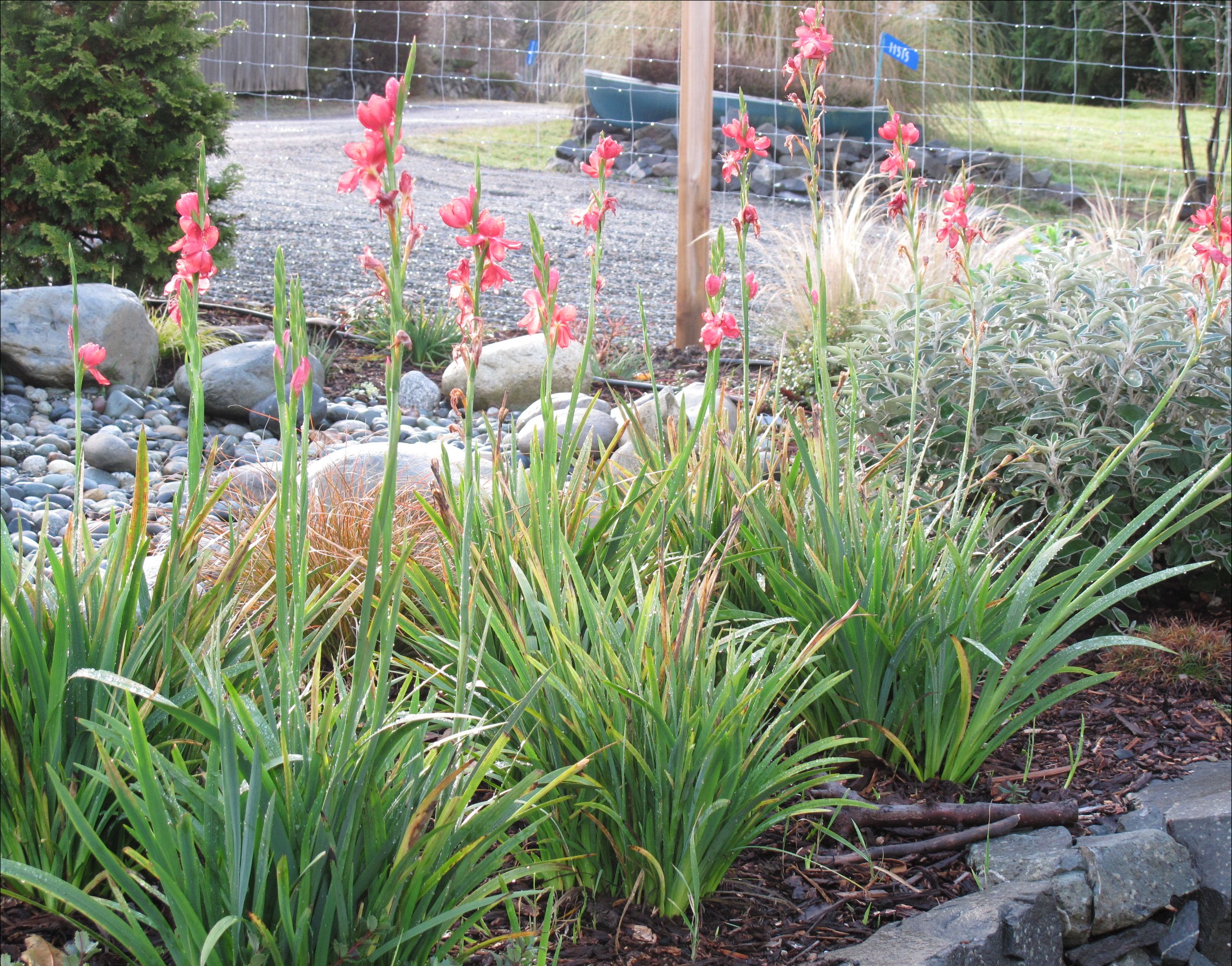
The six mature clumps shown below were started from four inch pots last May, probably propagated from divisions; the starter plants were only just poking out of the top of the pot by about 3 inches.  More than seven month later new shoots at the base of each clump are visible and will probably make it easy to propagate new clumps.

Img_3070

Now for the naming issues. Botanists have recently settled on Hesperantha coccinea, but in the nursery trade, Schizostylis coccinea predominates.

Hesperantha coccinea ‘Oregon Sunset’ on a wet January day

There is, of course, the usual confusion with genus and species names, mostly due to ongoing botanical research using newer molecular techniques such as DNA sequencing. But even before that research, plant biologists were constantly coming up with new classifications based on the visible characteristics. For that matter, relationships between plant populations has never been an exact science, since nature constantly surprises. It is the common name where this plant’s story becomes uncommonly interesting.

Here in the Untied States and in the nursery trade it’s best known as the “Kaffir” lilly.  No doubt many using that name are unaware of it’s modern meaning in South Africa, where the species originates.  The Oxford English Dictionary succinctly defines it this way:   “Since the early 20th century extremely offensive in South African contexts, and widely avoided elsewhere.”

The origins of the term apparently originate in the antecedents of the Arabic language, where its root letters acquired the meaning of to cover or to hide. Later, “kafir” was used to describe unbelievers, or those who rejected the Islamic faith.  By the 15th century the term was used to describe non- Muslim African natives.  Apparently by the  20th century the word had morphed into a racial slur, equivalent to the American “N” word.  Other common names used in lieu of Kaffir Lilly are Crimson Flag and Crimson River Lilly.

Hesperantha coccinea belongs to the Iridaceae family, which also includes gladiolas.  The rhizomatous perennials of the genus Hesperantha have sword shaped leaves and starry, often cup shaped flowers borne on tall spikes.  A mature clump’s height varies from about 15 to 36 inches.

The South African species hails from a summer rainfall area, which is widely distributed throughout the eastern provinces of the country. The species name coccinea means ‘scarlet’ and refers to the bright red flowers. Until fairly recently this species was known by its old name Schizostylis coccinea.

Hesperantha coccinea is a water- loving, bulbous perennial that adapts nicely to our cold wet climate. It occurs naturally growing in full sun on saturated soils often associated with stream banks.   Although the flowers are normally bright red, there are also pink and white forms within the genus, which consists of about 65 different species. The color of the cultivar Oregon Sunset closely resembles the species.

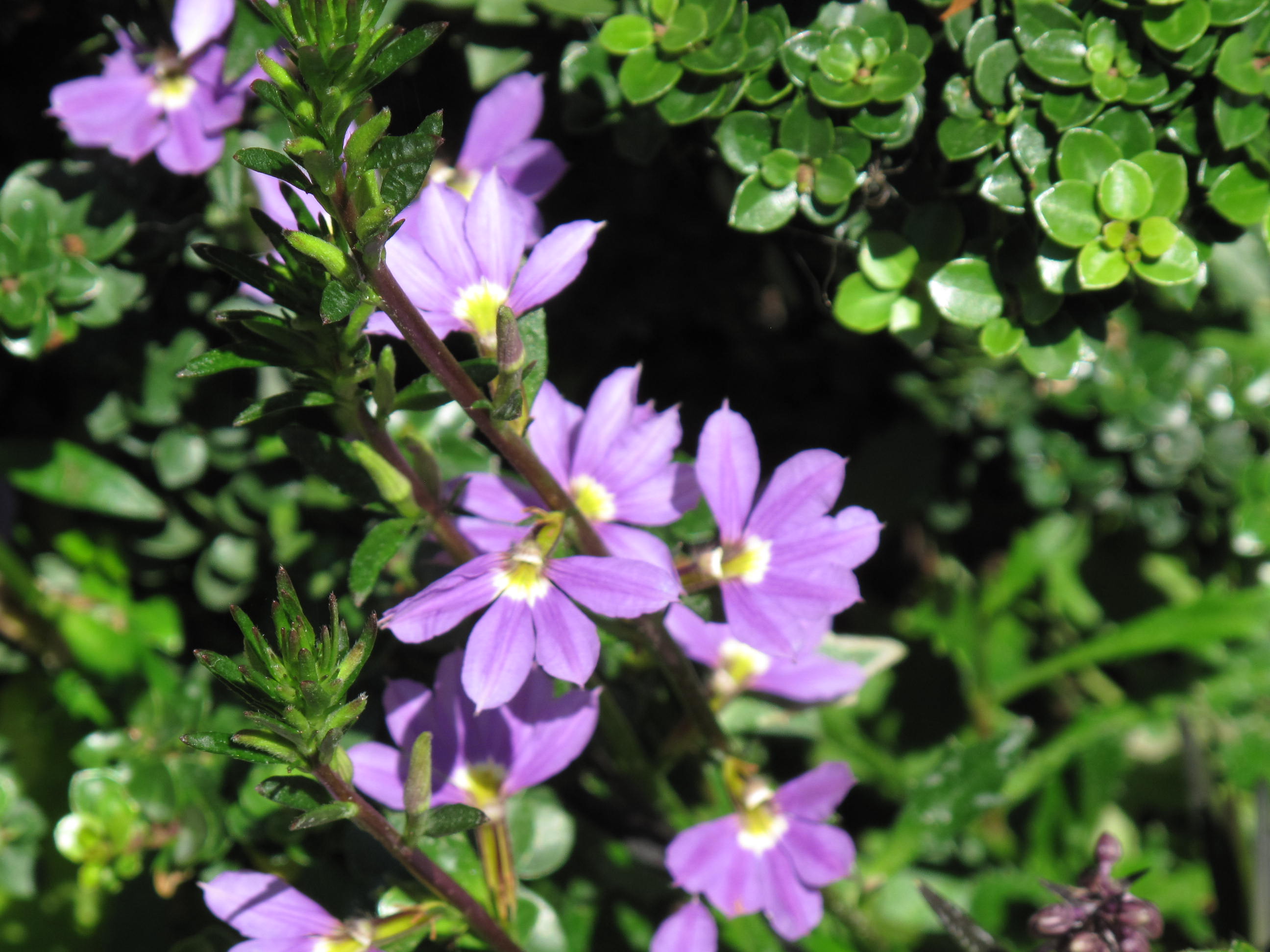
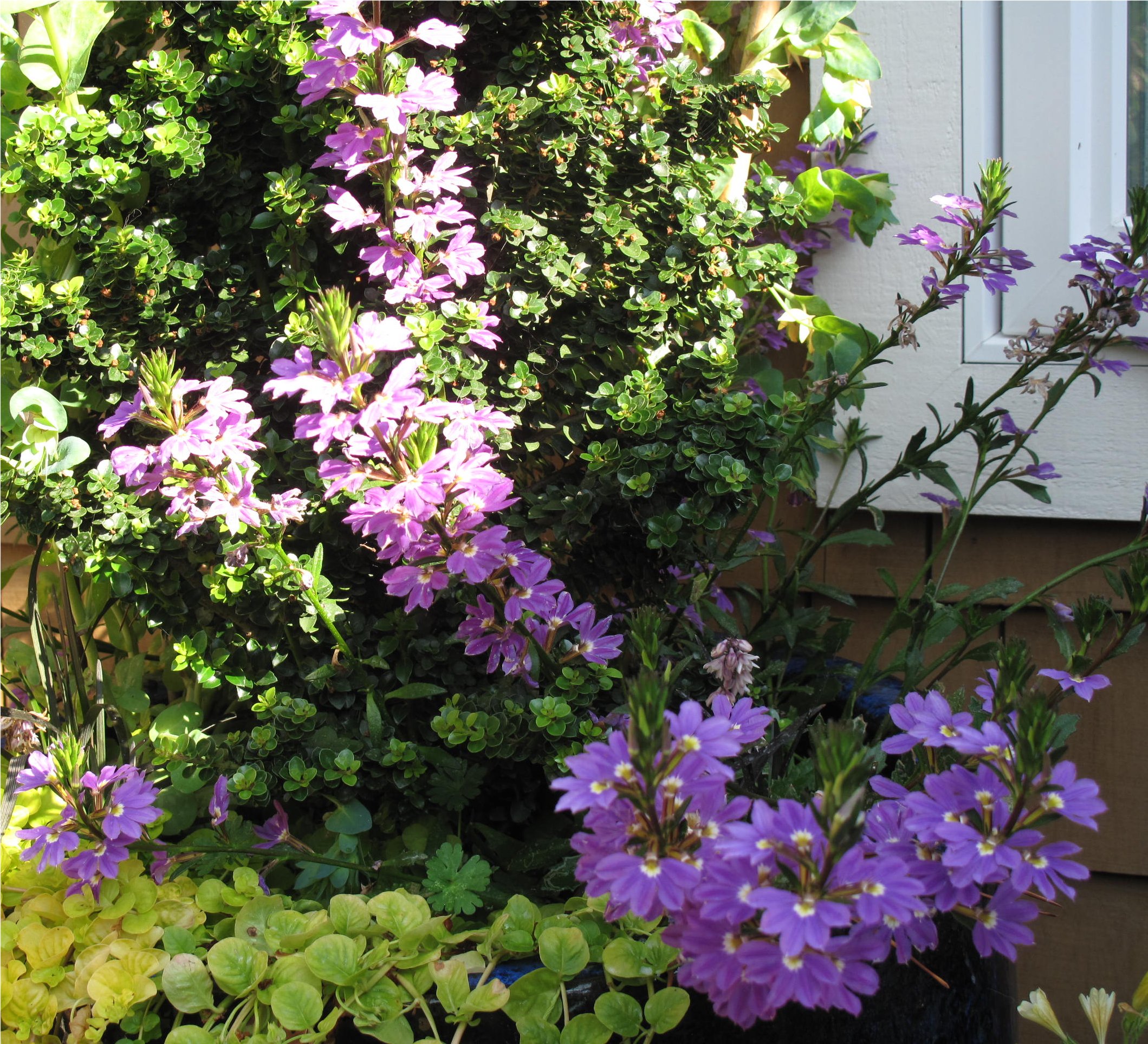
Scaevola aemula (Fan Flower)

Fan flower hales from Australia and is usually sold and treated as an annual in the Pacific Northwest.  Common names abound:  Fairy Fan Flower;  Common Fan Flower, Escabola;  Blue Wonder (clearly an epithet based on this plant’s dependable, long lived and persistent blooms).

Scaevola aemula ‘Blue Wonder’ with Ilex crenata ‘Dwarf Pagoda’

In its native Australia, fan flower is a sprawling evergreen perennial with ascending, slightly arching or procumbent (trailing) stems.  It thrives in hot, humid climates where it produces a non-stop bloom of dark blue fan-shaped flowers in the leaf axils throughout summer to first frost. As the stem elongates new flowers open, but the remarkably long-lived flowers lower down on the stem remain vibrant.

I’m growing mine in a large pot with the dwarf conifer Ilex crenata ‘Dwarf Pagoda’ as the centerpiece. The stems of my Fan Flower seem to arch more than trail, though some of that habit may be due to the support of the Ilex.

It may take some searching local nurseries to turn up a plant.  I’m not sure why, but most plant buyers don’t seem to have it on their radar.  It’s best to look when annuals first arrive in the nurseries.

I’ll be taking cuttings this fall and will also try to winter over the “Mama Plant,” either in my “cold” greenhouse or simply dragging into the garage during prolonged frosts. Conventional wisdom says it’s hardy to around 30°  but that’s clearly in the ground and not in a pot.  (Indeed, those cold hardy numbers on the plant tags aren’t referring to potted plants, nor are they necessarily accurate for plants in the ground, rather they are notorious for stretching credulity in favor of sales).