Campanula ‘Birch Hybrid’

This little hybrid (Campanula portenschlagiana x poscharskyana) makes a fine trough, rock garden or pot specimen.  If your patient, it may reward you by tumbling over a rock wall.  When it first blooms in mid spring the purple flowers profusely cover the plant.

For the impatient gardener, one of its parents, either C. portenshlagiana or C. poscharskyana would probably be a bit more vigorous at cascading over a rock wall.
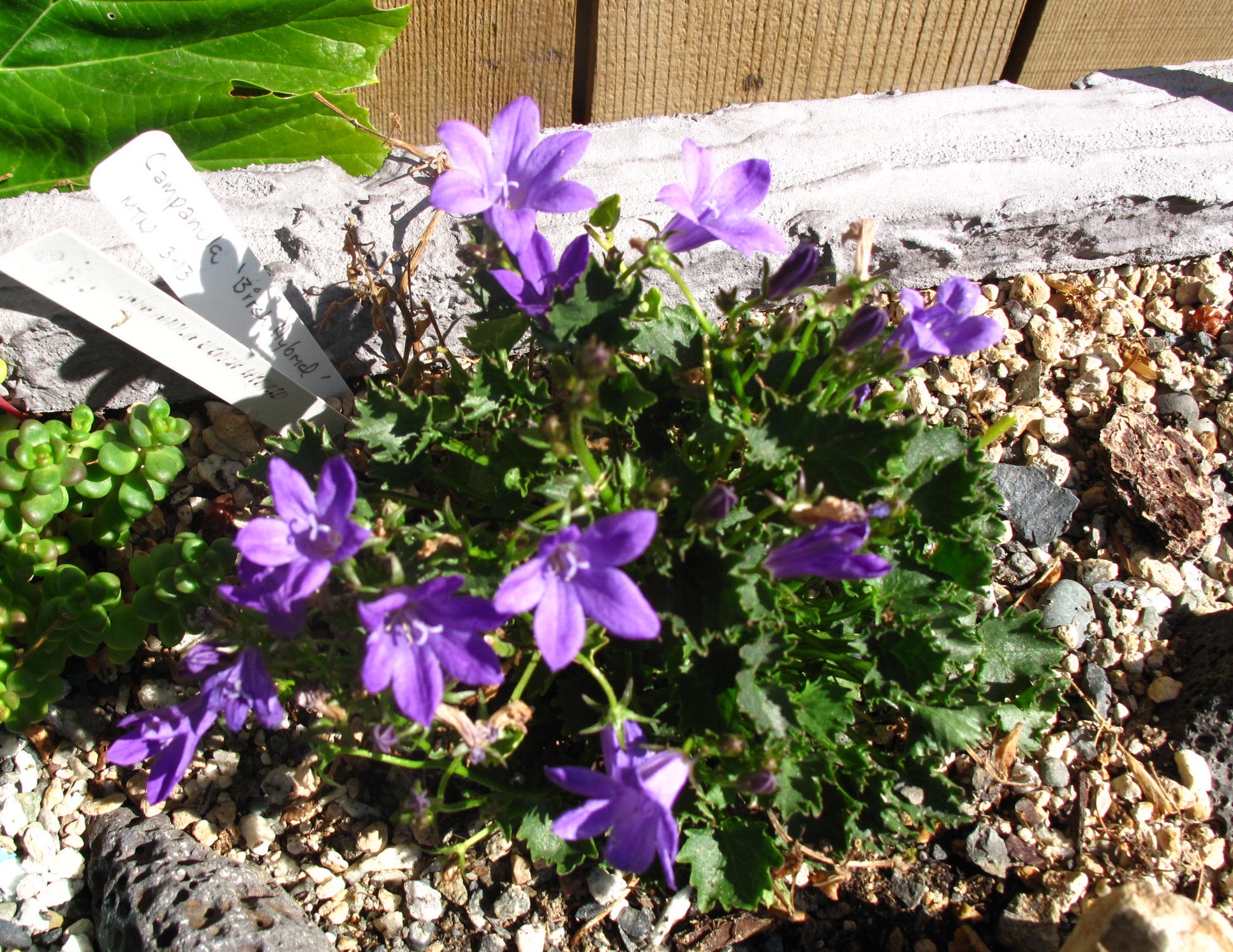
Campanula 'Birch Hybrid reblooming in early August

Campanula ‘Birch Hybrid re-blooming in early August

I’m not sure its news, but — like many herbaceous spring blooming perennials — shearing or deadheading the spent blooms after the initial spring flush often guarantees more blooms later in the summer (though usually not as dense and floriferous as the first round).

Here in Puget Sound near Seattle, this trough, containing Sedums, the Birch Hybrid and alpine Dianthus required daily or even twice daily watering during the hot, unusually rain-free month of July.
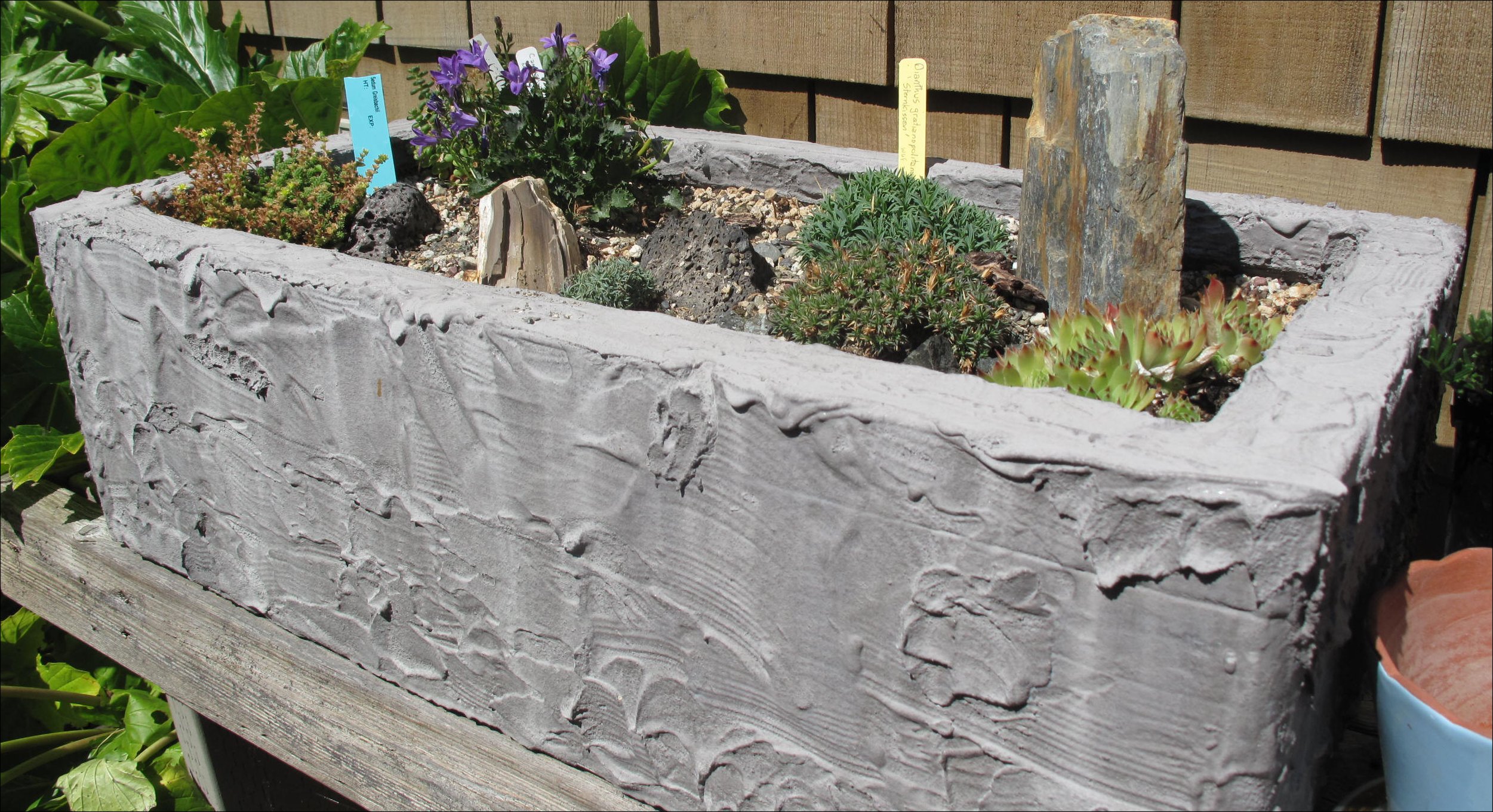
Alpine Trough Sedums, Campanula, Dianthus and Sempervivums

Alpine Trough newly planted with Sedums, Campanula, Dianthus and Sempervivums

Unlike the Dianthus or the Sedums — which don’t seem to rebloom —  the Campanula ‘Birch Hybrid started re-blooming about a week ago. My little specimen, from Mt Tahoma Nursery in Graham WA, probably was propagated by division, and at most is a two year old division.

This European alpine hybrid is credited to, and named for, the Birch Farm Nursery in England.  According to this video from Garden Splendor®, which apparently distributes plants to selected retail nurseries in the northeastern United States, Birch Hybrid makes a fine garden plant.  Check it out on You Tube:

http://www.youtube.com/watch?v=gPv9yi18-lA

Color in the Garden: Erigeron Canary Bird

I’m officially mildly red-green color blind.  As I understand this deficiency is quite common in males and really not much of a disability.  And yes, I can distinguish red and green traffic lights with no problem, the real differences between the red-green color blind and other folks’ color perceptions are more difficult to explain .  That said, I struggle mightily to perceive the green number two hidden in the dots below.

plate with 2I suspect each and every one of us perceives color slightly differently.   But in the fall landscape, especially at a distance, I’ll lose the reddening leaves in the surrounding green.

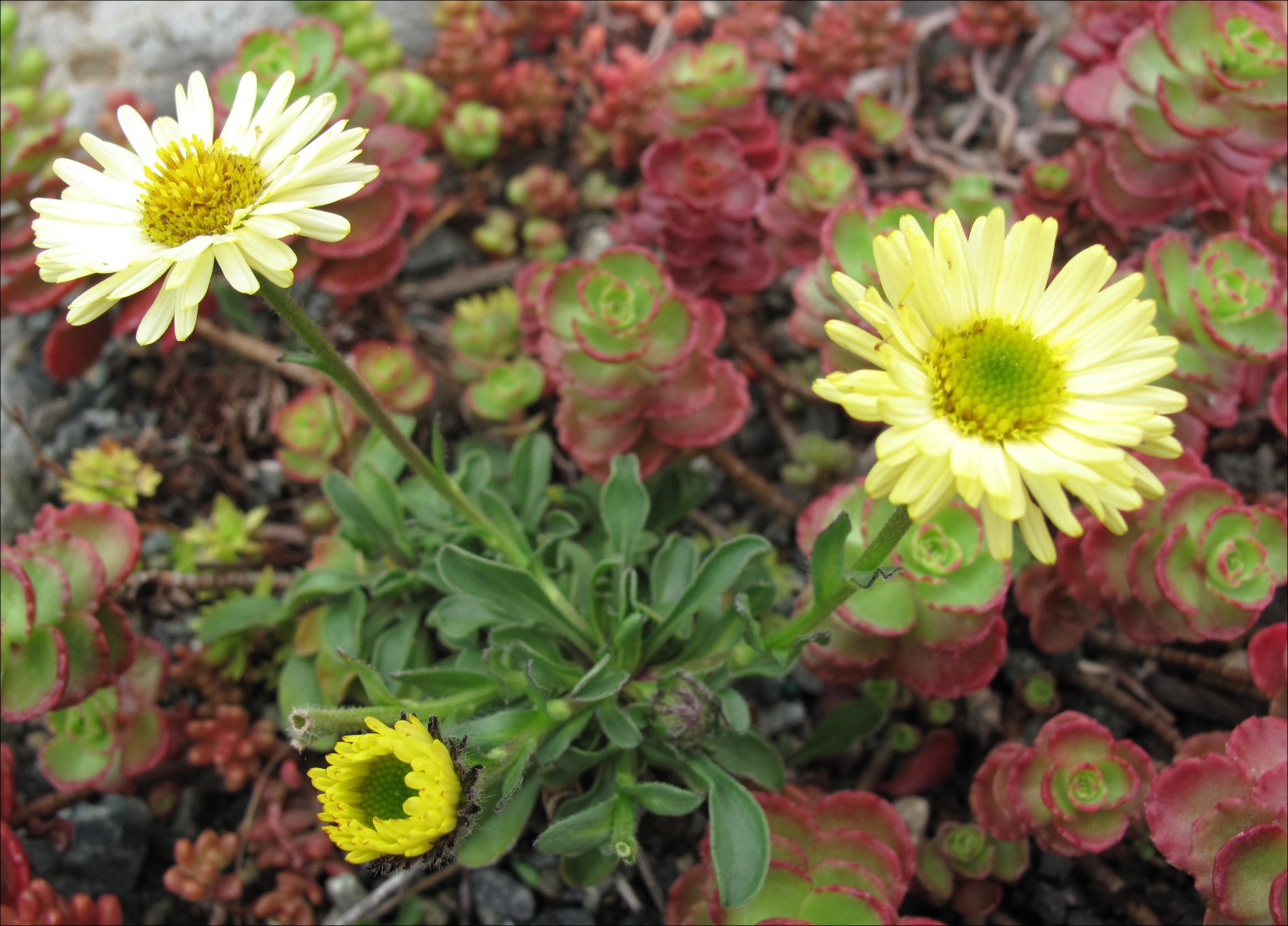
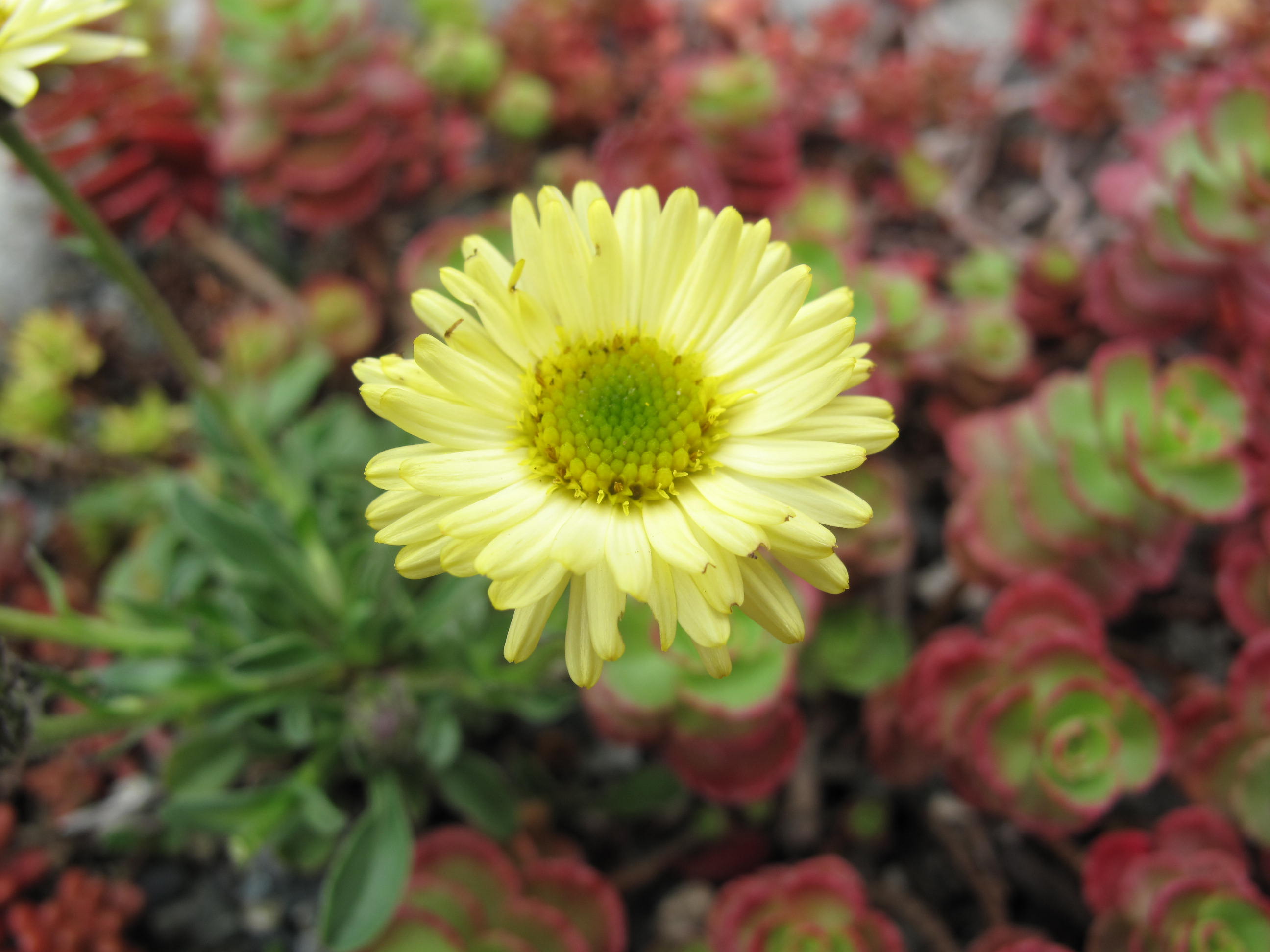
Lately, I’ve been enthralled with yellow.  Plenty of alpine plants, sedums in particular, have stunning yellow blooms. Others, like this little Erigeron ‘Canary Bird’ also make  fine trough plants.

Erigeron Canary Bird

Erigeron ‘Canary Bird’

E canary bird

Erigeron ‘Canary Bird’

The open blooms above are starting to fade, the yellow is less pale when the daisy like flower just opens.  Canary Bird is a “sport” of Erigeron aureus, which is a Washington State native found in and around Mt Ranier and the North Cascades.  Distribution maps show the plant ranging into the Canadian Cascades.

Like many American alpines, British enthusiasts are credited with popularizing this sterile cultivar of Erigeron aureus.  The form Canary Bird appears to me more compact than the species.  Jim Jermyn an alpine enthusiast and author from Scotland has a very interesting post on just who was involved, including two folks with the avian sounding names of “Birdie” and “Drake.”

Rosa rugosa ‘Hansa’ Friend or Foe?

Rosa rugosa hails from the East Asia, a native of a wide region spanning China, Korea and Japan.

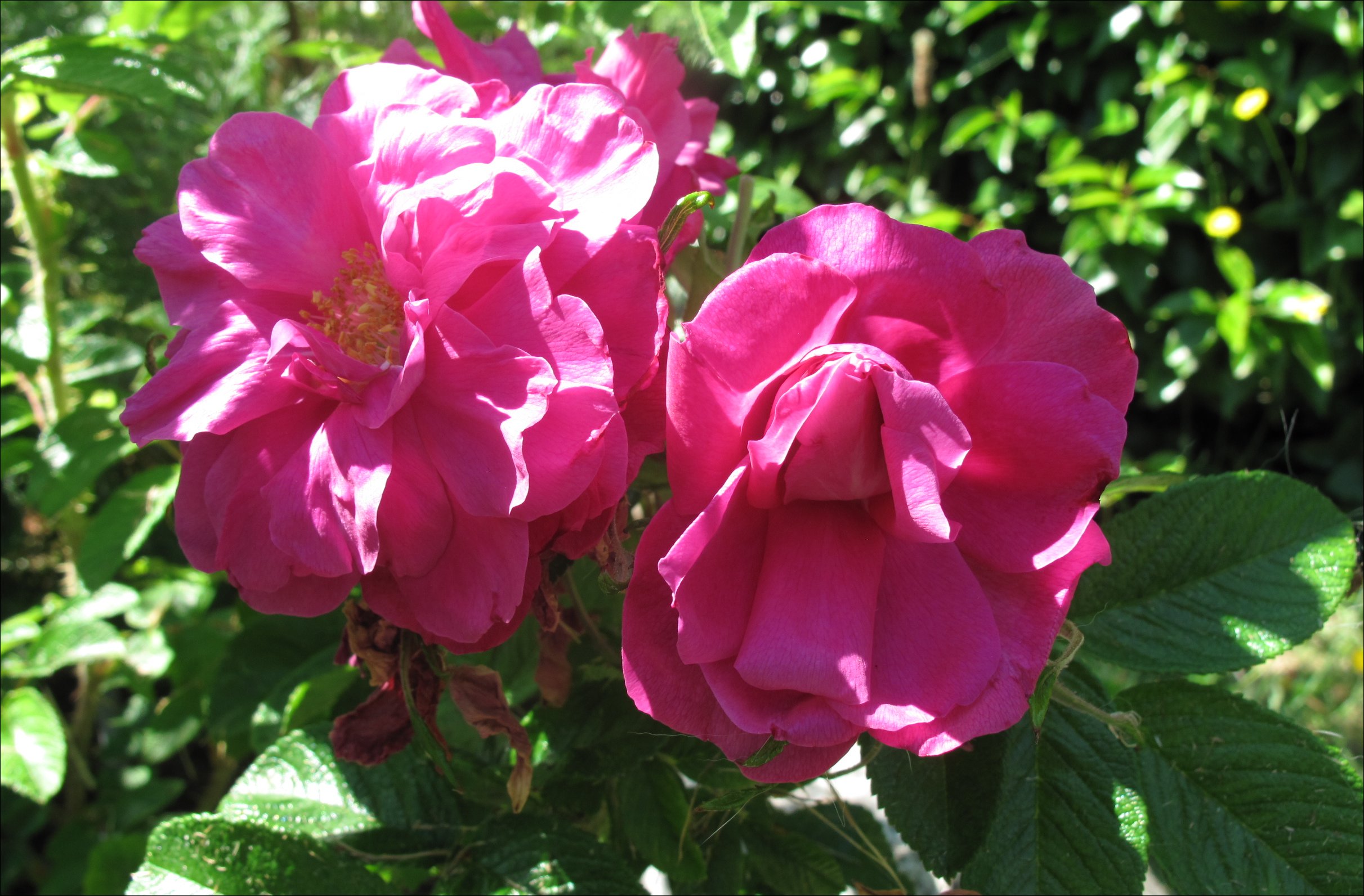
Rosa rugosa 'Hansa'

Rosa rugosa ‘Hansa’

Depending on your perspective, the species and cultivars like Hansa are attractive hardy deciduous shrubs that resist common rose diseases,  bloom profusely with a heavenly scent, require minimal care and naturalize easily, or are invasive plants that disrupt and compete with native plants, especially in sensitive coastal habitats.

I bought four ‘Hansa’ plants in gallon pots sometime in the spring of 2010, never got them in the ground that first year, but did manage to pot them up to larger five gallon plastic pots.  What followed was at least a year or two of neglect, including planting them in a location that required moving and loss of one plant. I moved the three remaining to a new bed early this spring.

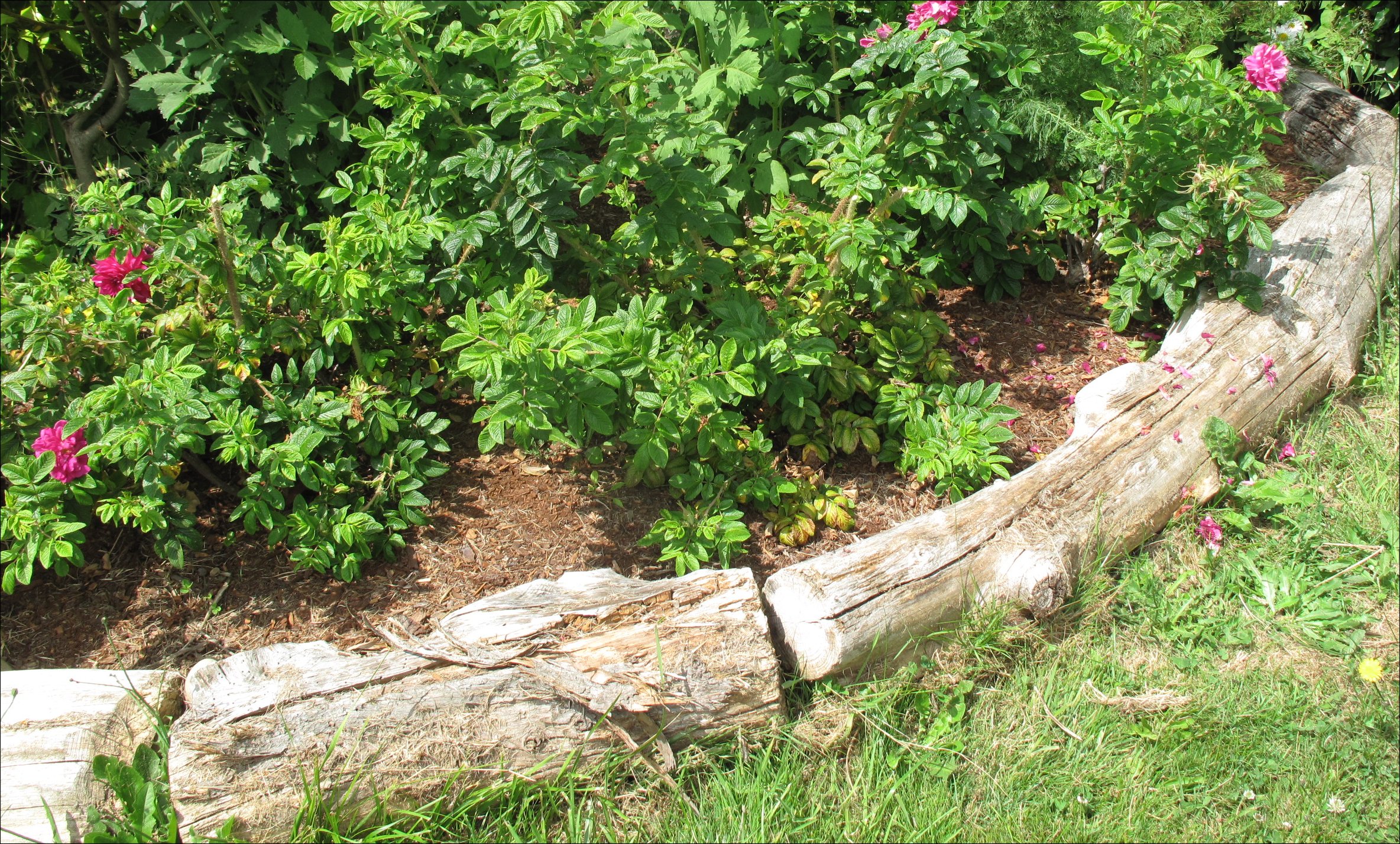
I’m very happy with results, though at the front of the border I’ll probably have to prune fairly hard since their habit is upright and I would like to keep them no higher than three feet.

Hansa  in border

Hansa in border

I have many Washington state natives and don’t see Hansa in danger of taking over in my garden or the surrounding ecosystem.  It appears to be a problem in sandy coastal areas from Maine to New England (where it may have been deliberately planted to mitigate beach erosion) and all over Europe, where it was first introduced in the 18th century.

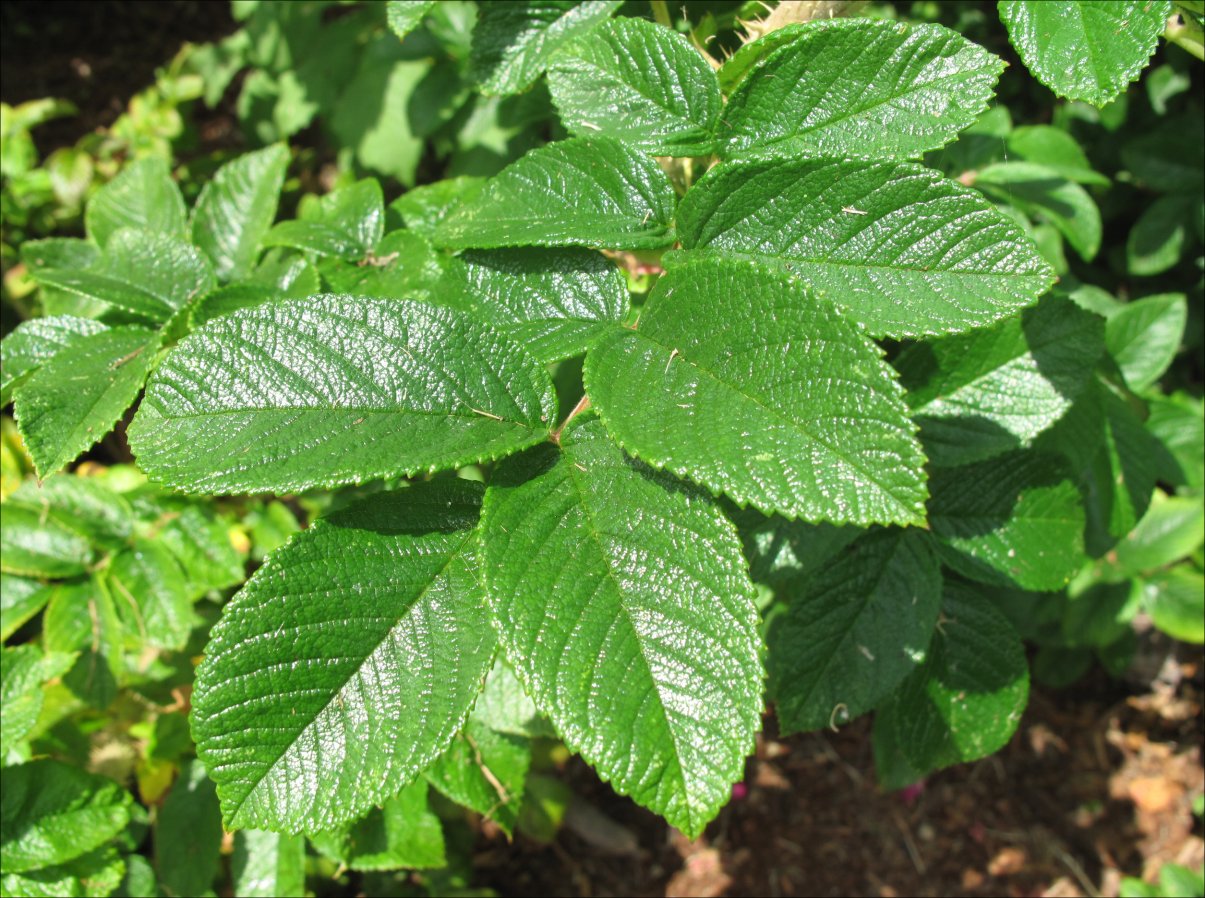
Hansa leaf detail

Leaf detail of Rosa rugosa ‘Hansa’

Besides the wonderful scented blooms, Hansa has such beautiful leaves that never seem to succumb to the myriad of problems other roses suffer in our moist climate.

Here are two references to Rugosa roses and Hansa in particular.  One by photographer/blogger, Alexander Waterhouse-Hayward, which is rather lyrical and provides some information on how the name “Hansa” originated. The other reference is from Denmark, through the Ministry of the Environment and the online database of the European Network on Invasive Alien Species.  It’s a fine summation of the pros and cons of Rugosa roses:

http://blog.alexwaterhousehayward.com/2007/05/rosa-hansa-alexandra-elizabeth.html

http://www.nobanis.org/files/factsheets/Rosa_rugosa.pdf