Lewisia Cotyledon: Bloomerang?

I’ve loved this particular plant for many years and for many reasons, but blooming in October is a first. Lewisia cotyledon is one of the most variable species in the small Genus Lewisia (about 19 species).  It hybridizes readily with most of the others in the genus.
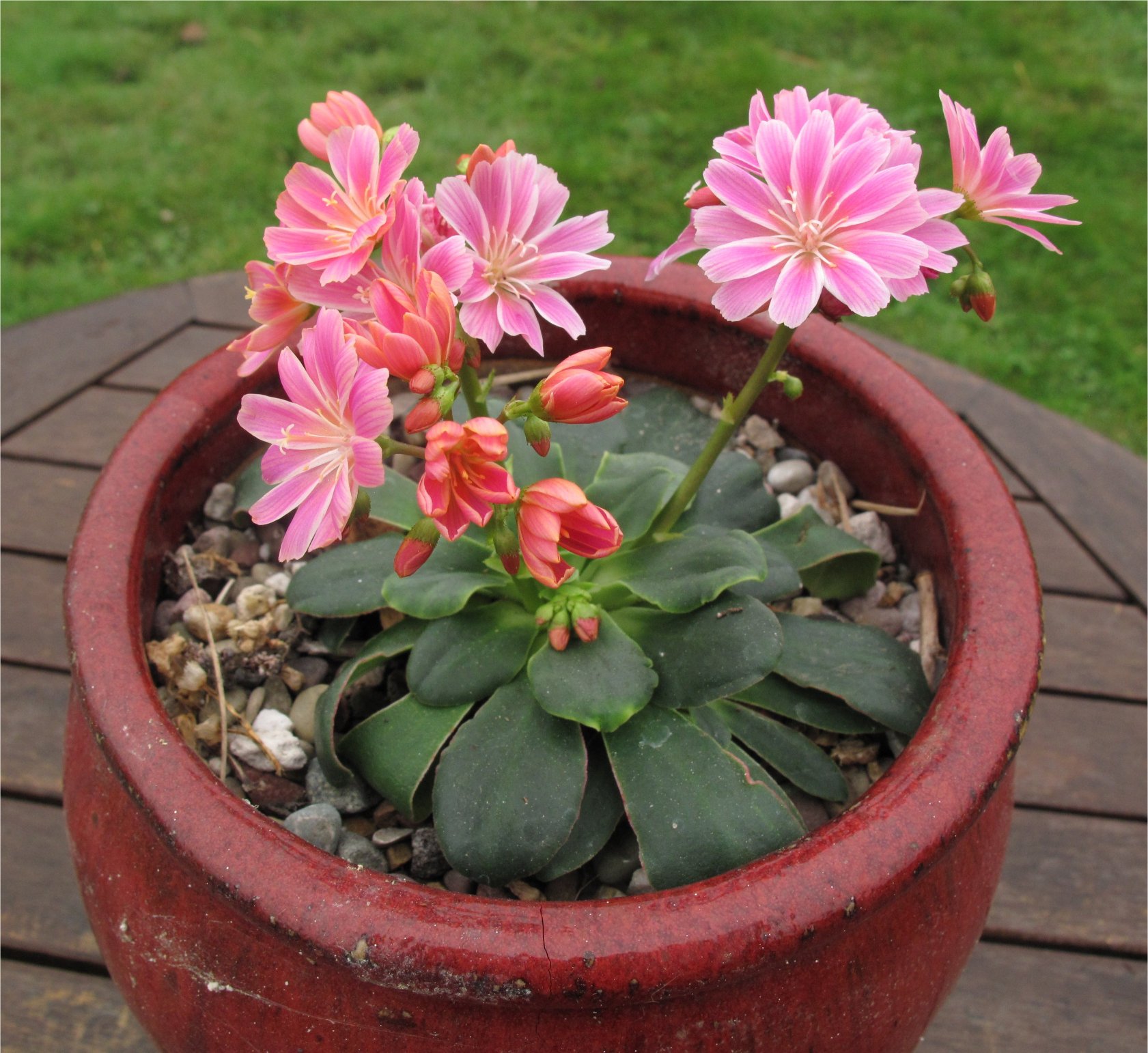
Lewisia cotyledon blooming on October 19th

Lewisia cotyledon blooming on October 19th, 2013

Based on the tight, compact rosette and the lack of serration of the leaf margins, I would say this plant is closely related to L. cotyledon var. purdyi, which is native to the Siskiyou Mountains of southern Oregon, particularly the upper reaches of the Illinois River Basin.

Cotyledon is the species of Lewisia that enabled the plethora of colors and strains of Lewisia seen widely in the nursery trade today. In his Timber Press book on Lewisia, published in 2000, B. Leroy Davidson noted this success:

“A vast range of cultivated variants are now convened [named] merely as cotyledon hybrids (that is to say, hybrids involving L. cotyledon)… Indeed, L. cotyledon has been made so amenable to commercial cultivation and so showy that garden centers now feature big displays of plants in gallon containers, bursting with flowers of strawberry, raspberry, cherry, orange, lemon and lime.”
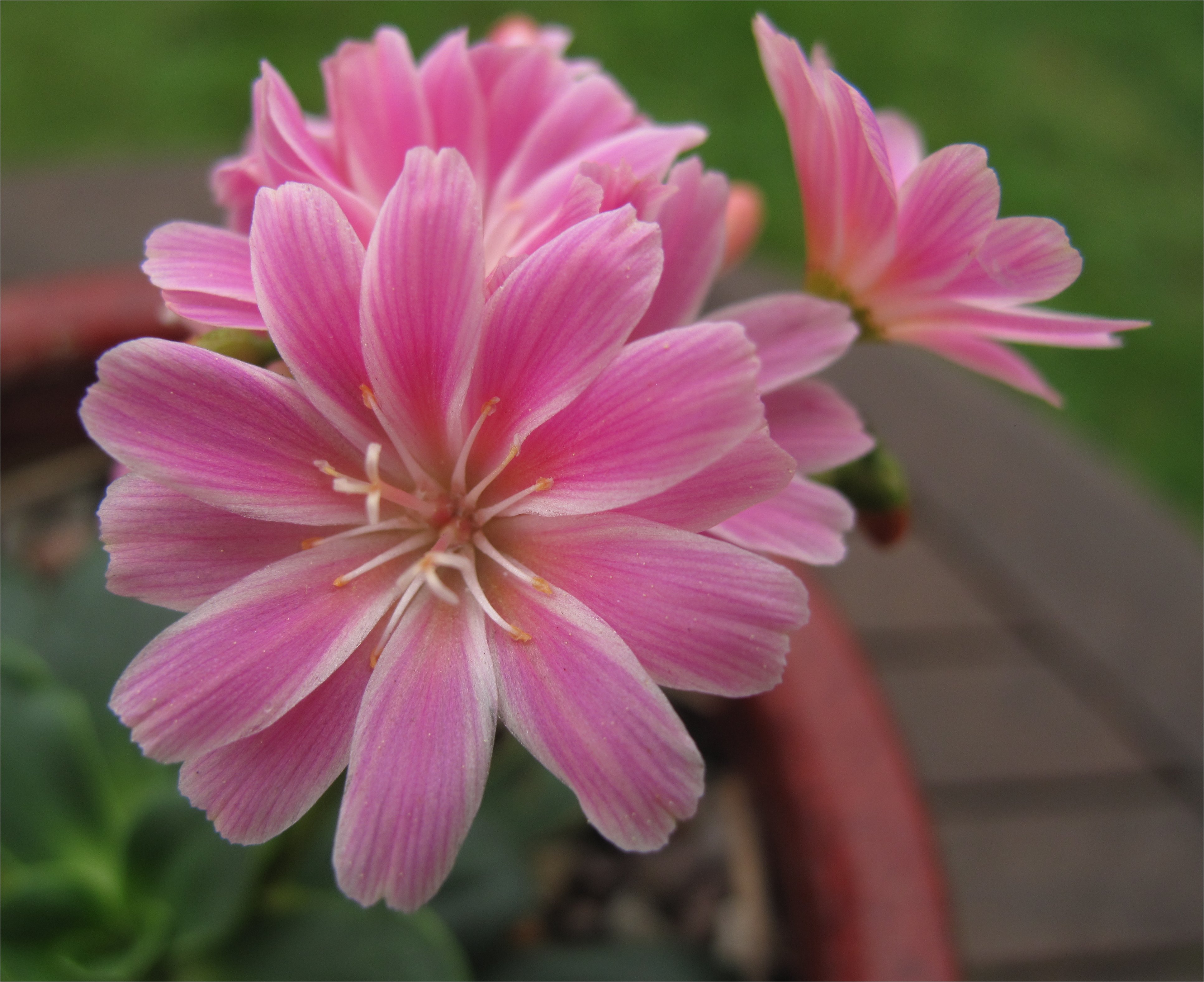
L. cotyledon2The plant blooming now is one of many of my clones;  vegetative propagation is easy from offsets of small rosettes that form off the caudex of the existing plants. I purchased the mother plant in the 1980s from Herb Dickson’s Chehalis Rare Plant Nursery. While not as flashy or spectacular of color as those aforementioned hybrids, it still is a fine specimen.

This cultivar is always a repeat bloomer through the summer.  The trick is to keep the conditions as spring like as possible. Most of my plants are in pots and it’s easy to keep them cool and fairly wet after the initial spring blooming by moving them into shade.  Pulling off the spent flower stalks also encourages multiple rounds of blooming, but never as late (until now) as mid October.

I’ve propagated my collection — currently about 100 plants — from seeds I purchased from Ashwood Nursery in England, offsets, and from natural crosses that occurred between plants on my sand plunge bench.
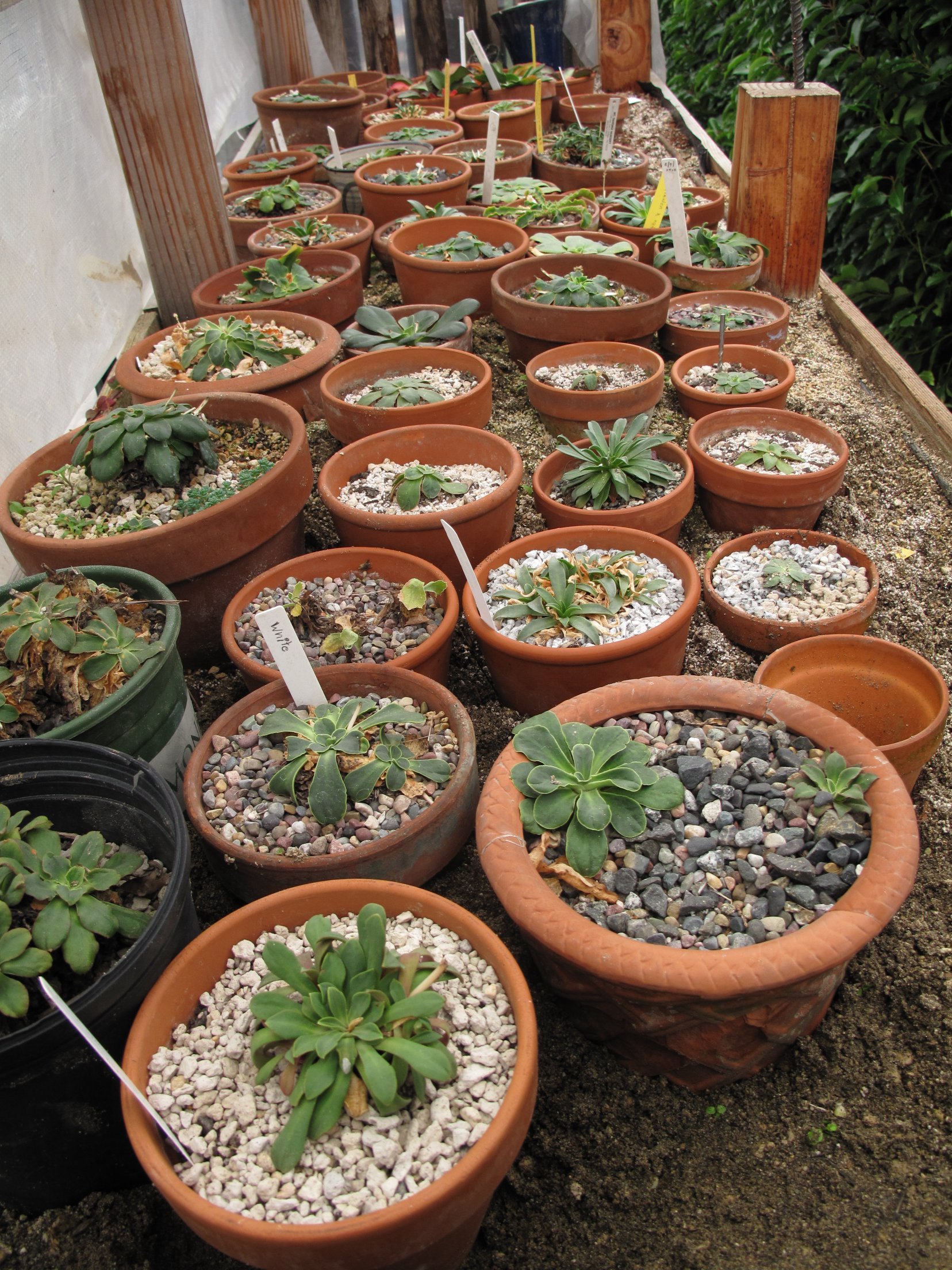
Lewisia Bench

Lewisia Bench

After blooming, the spent flower stalks scattered seeds both in their pots and the surrounding sand. This year it was easy to pluck these random “bench crosses” out for potting up.

L. cotyledon seedlings

2013 Lewisia cotyledon crosses potted up for growing on

I doubt if I’ll see much bloom this coming spring, but some of the seedlings do seem more robust than others and variation in the leaves is already apparent.
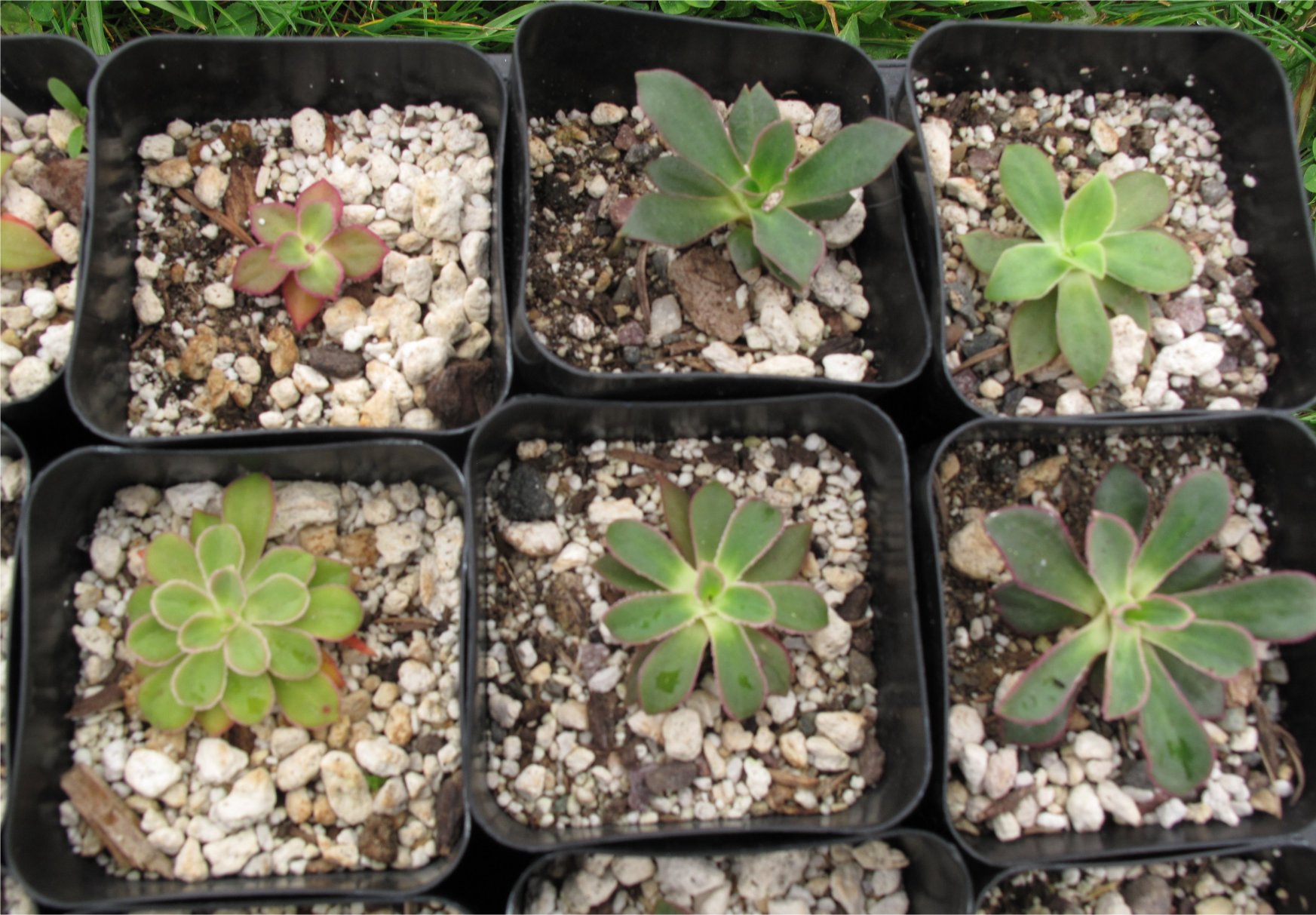
Seedling close upSince about a third of the plants were the “Ashwood” strain from England, which rivals any strain for stunning color, I’m anticipating these crosses may yield some worthy cultivars.

Perhaps the most striking Lewisia is Lewisia tweedyi, which is now taxonomically named Lewisiopsis tweedyi, the sole plant in the new Genus Lewisiopsis and the reason why the Genus Lewisia now numbers nineteen, rather than twenty. Read more about Lewisia tweedyi in this post.
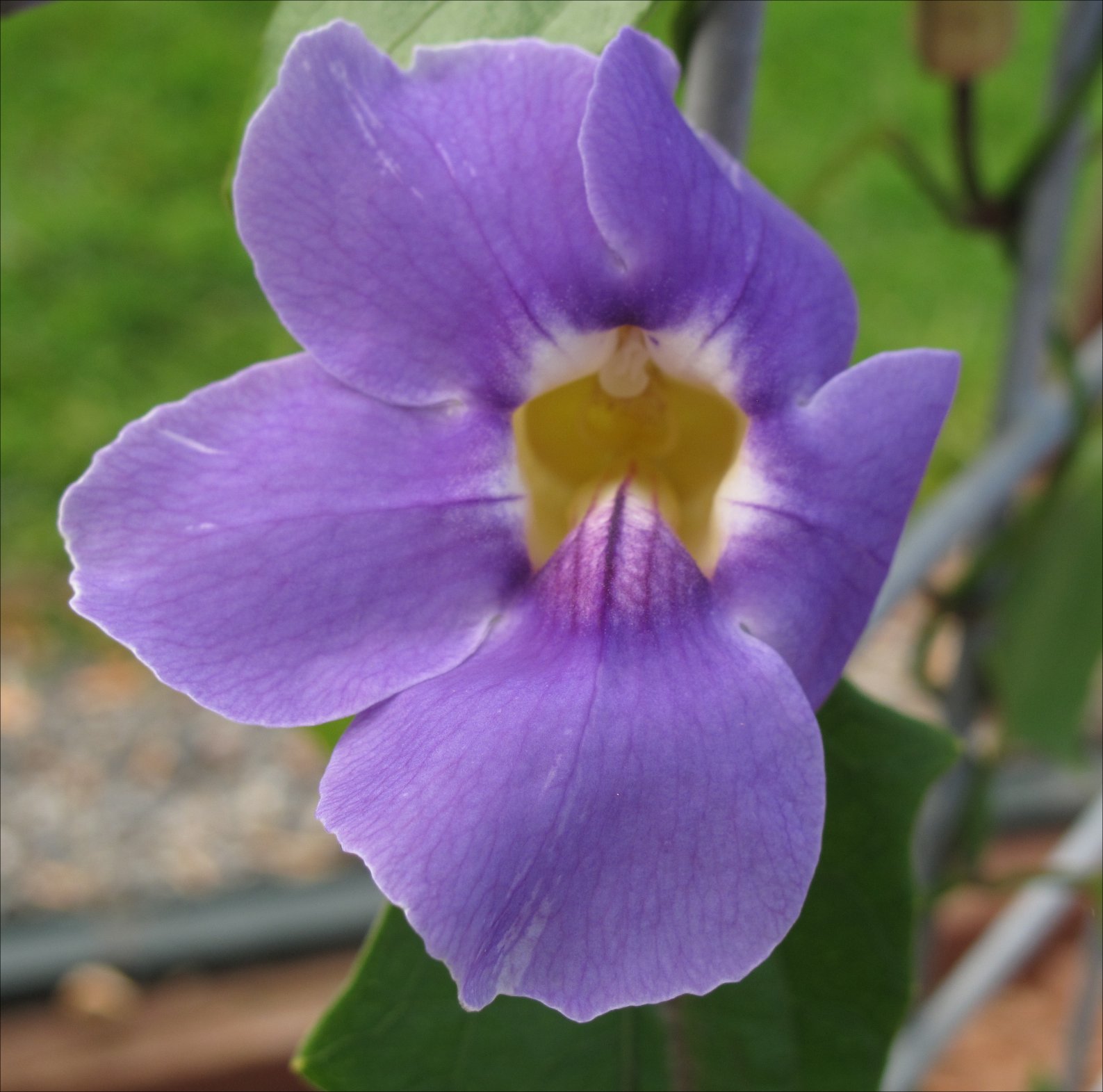
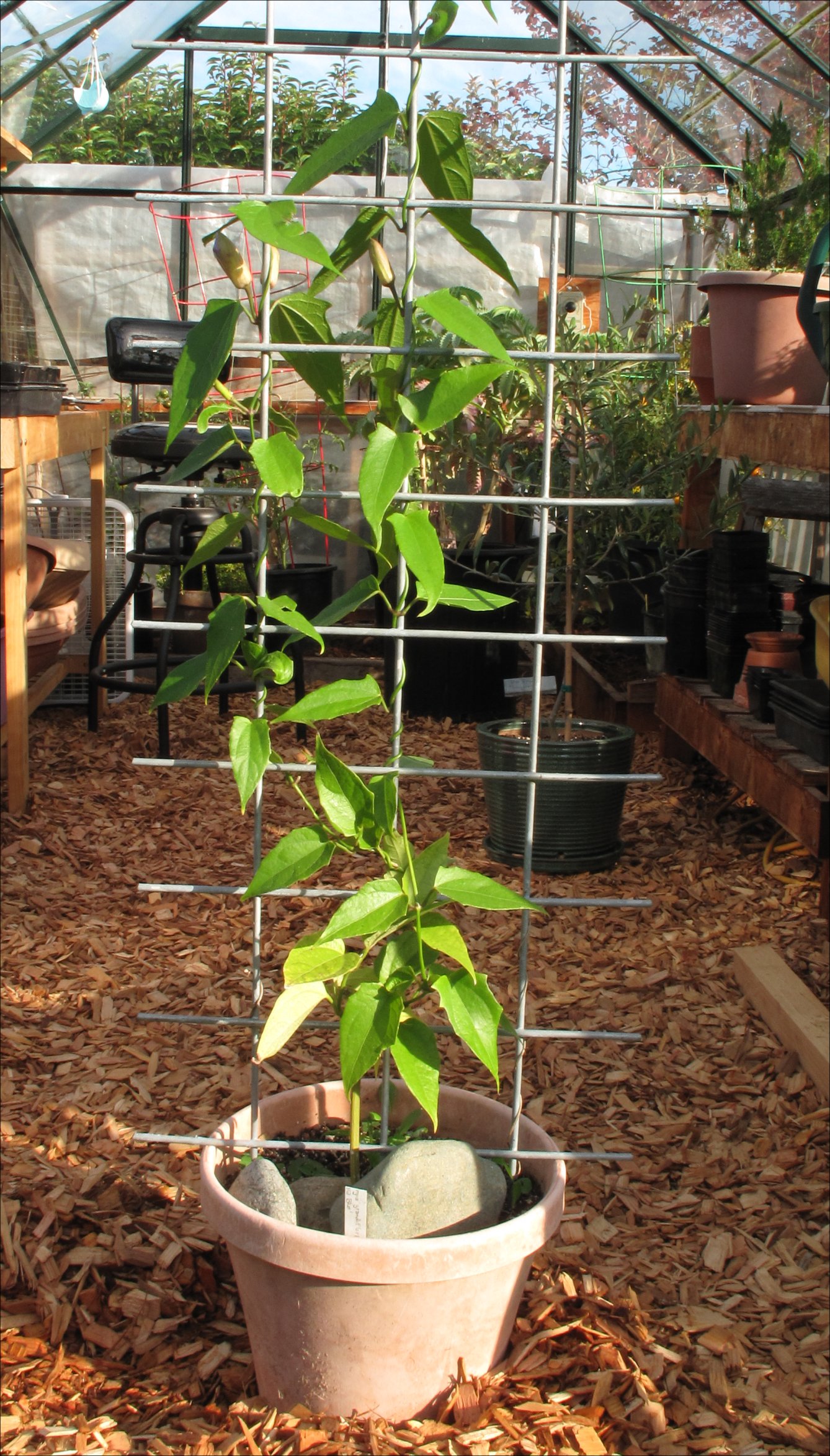
Bengal Clock Vine

Native to northern India, Thunbergia grandiflora, is a vigorous, evergreen climber, especially  when grown in tropical or semi-tropical climates. So if you live in Houston or San Diego you’ve probably seen this covering a fence in its full glory.

Bengal Clock Vine

One of only two blooms on my Bengal Clock Vine aka Blue Sky vine

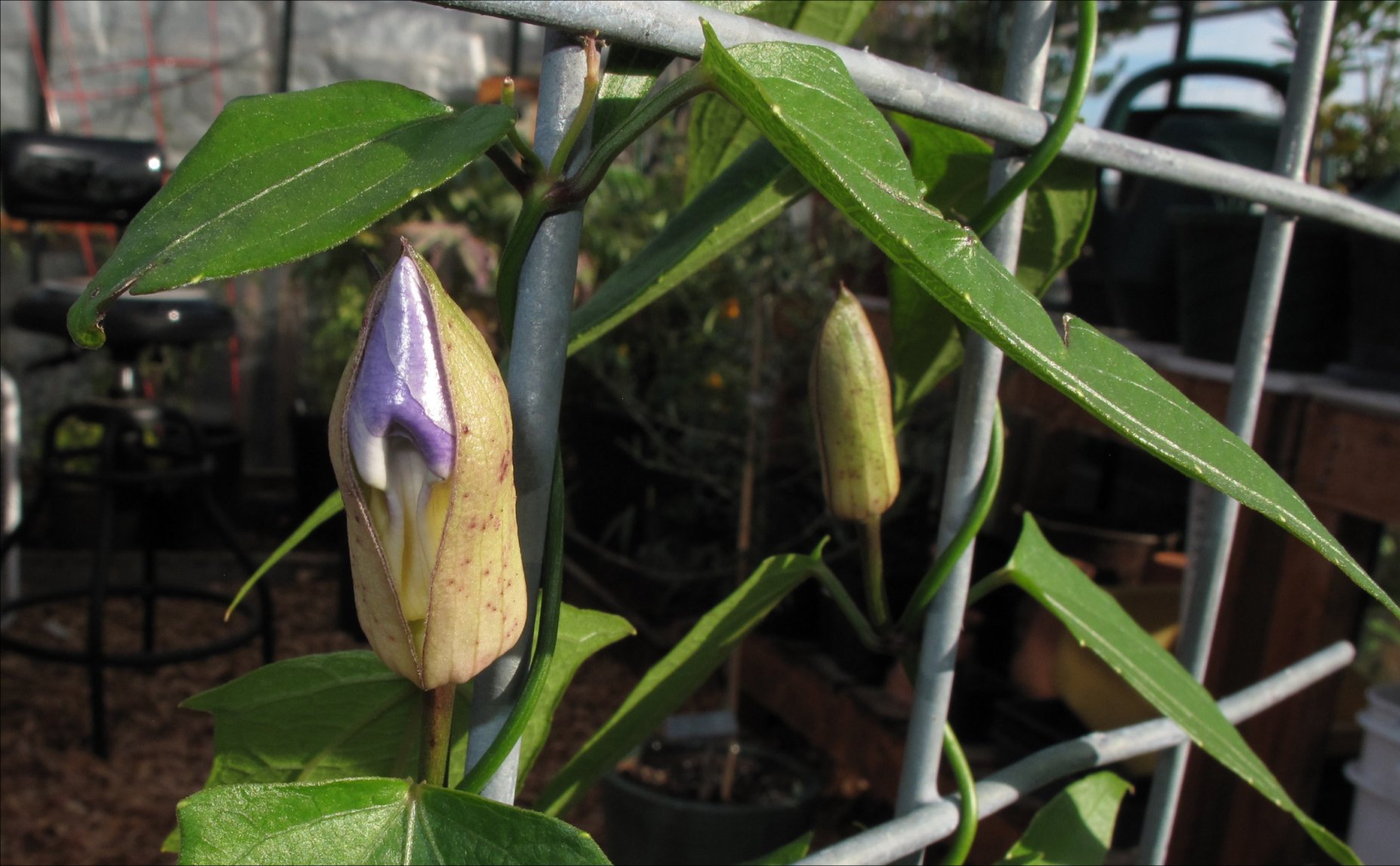
But if you live in Western Washington, growing this vine successfully is a challenge. Here’s my less than vigorous vine getting ready to flower for the first time.

Less than vigorous Bengal Clock Vine

Less than vigorous Bengal Clock Vine

This plant began as small seedling I ordered in May from Kartuz  Nursery. It didn’t do much at all until the weather warmed in July, when I potted it on into a bigger container. Yesterday, two or three buds were getting ready to open.

T. grandiflora bud getting ready to open

T. grandiflora bud getting ready to open

I hope to winter it over in my unheated greenhouse and by next summer have a more dense and flower laden vine. Like another favorite of mine, Orange Clock Vine (Thunbergia gregorii), Bengal Clock Vine twines in a clockwise direction.  Blooms of different cultivars range from blue to light mauve and even white.

Hardiness is generally 32° Farenheit, so even if its roots survive a frost, my guess is the plant would be less likely to recover fully.  My plan is to keep my “cool” greenhouse above freezing all winter to ensure many of my “zonal denial” plants survive.

There is another form of zonal denial that occurs to me.  It’s not as common as the plant envy that drives my desire for the warmer climate’s flora, since it is driven by lack of cold winters.

For example, folks living in the warmest parts of the country often have trouble growing peonies.  Many plants won’t bloom in Spring without sufficient vernalization, which is a requirement for a prolonged period of cold temperatures. Peonies struggle where summers are long and hot and winter dormancy may be short at best. So do gardeners in southern California envy us for our Peonies?

Shades of Red and Green

In an earlier post I wrote about my color perception deficiency, a fairly common mild form of red-green color blindness.  Traipsing around the garden, camera in hand, it dawned on me that much of the fall color on display involved interplay between green and red.

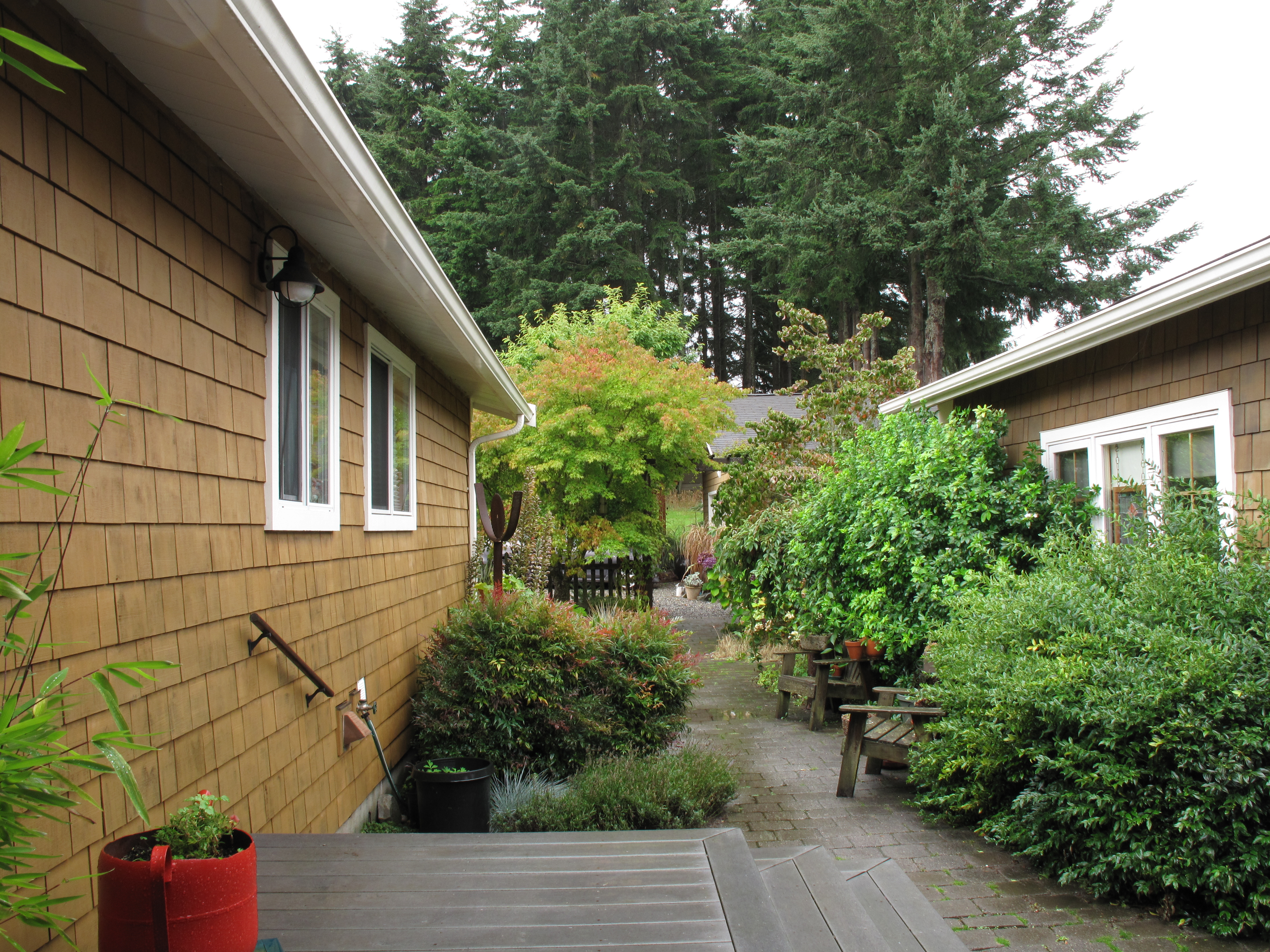
courtyard entrance view

Sarcococca, Nandina, Choysia ternata line the entry courtyard

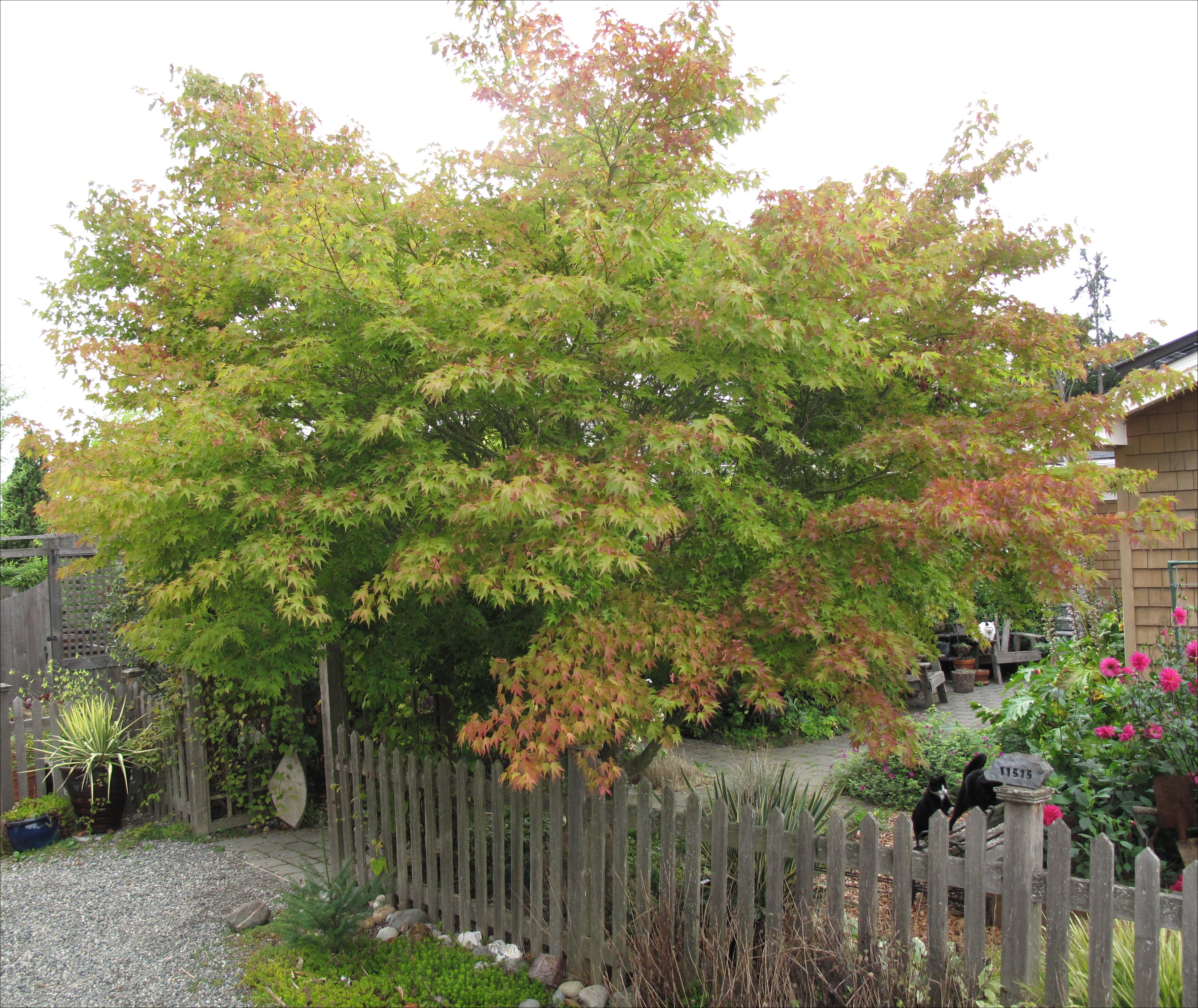
The above view from our front door, which opens on to the courtyard, is typical of the Pacific Northwest. The Maple and Dogwood in the courtyard entrance are just now coloring up. The  Douglas Fir in the distance provide a backdrop and privacy from the nearest road.

maple3

Ornamental Maple at courtyard entrance

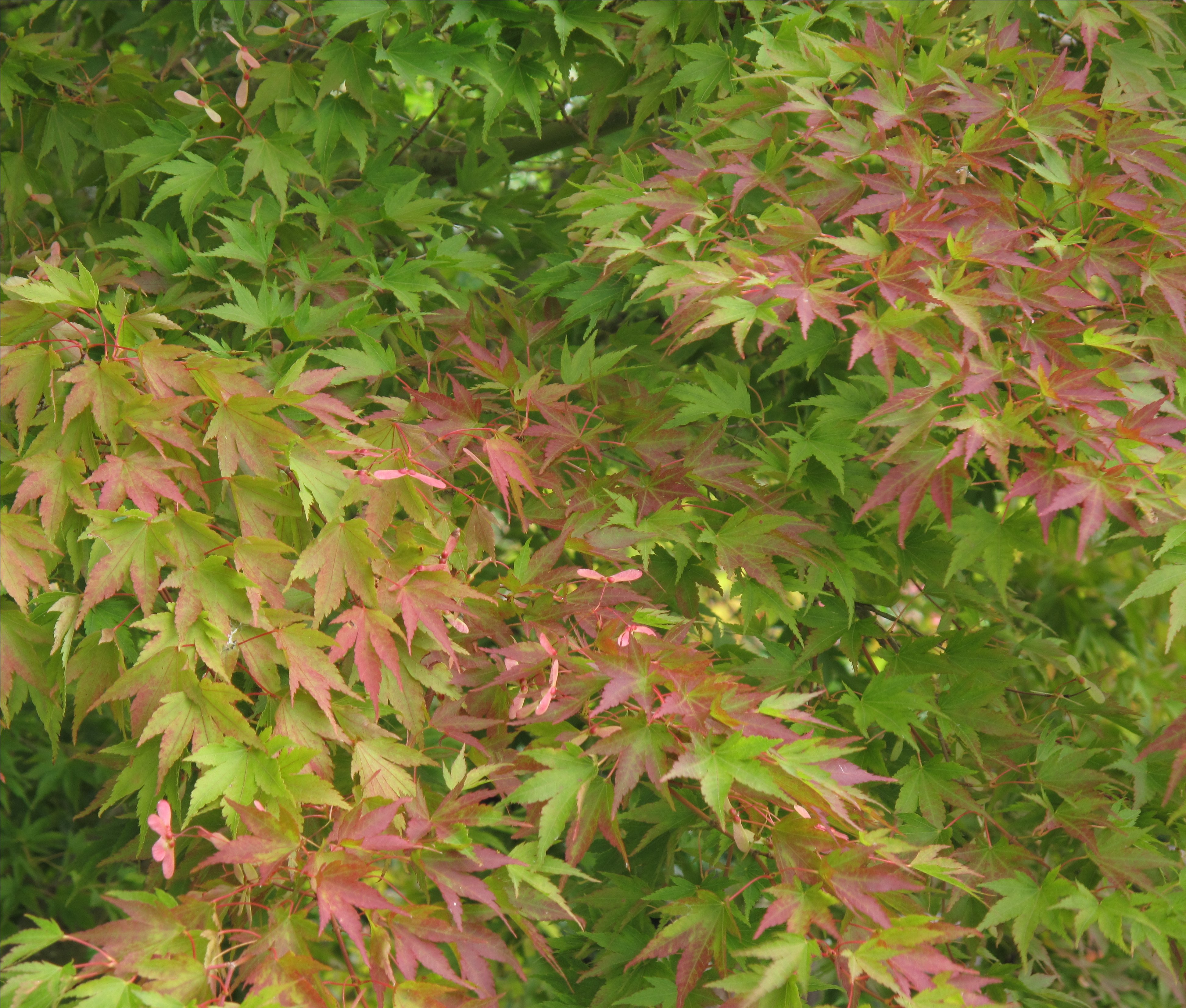
Moving in for a closer look (required for me to notice the reddening leaves) yielded this tighter shot of the maple leaves.

maple2

An unknown species of a small ornamental maple cultivar

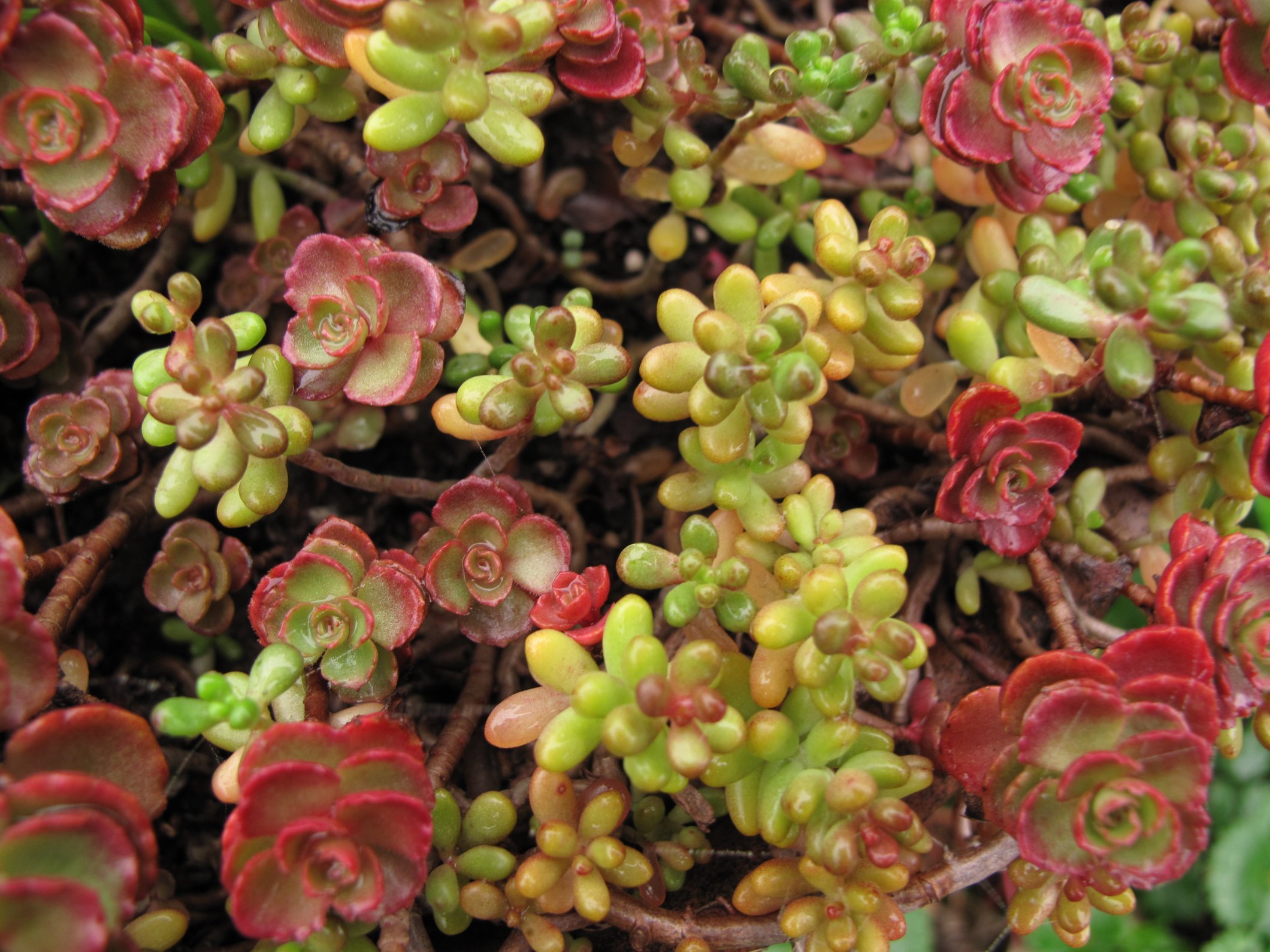
This close up of a pot of Sedums is intense, even to my questionable eye.

sedums

Sedums

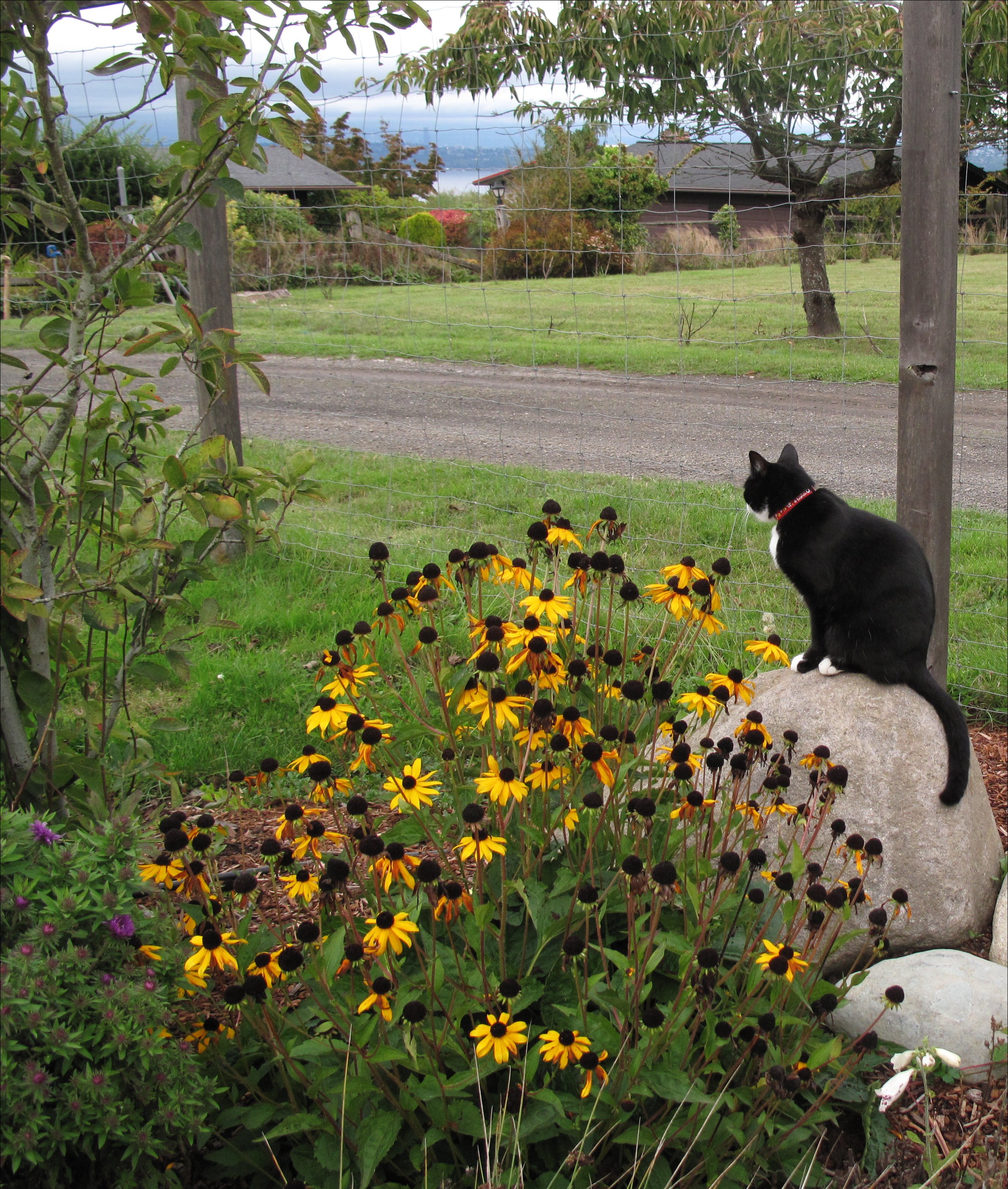
Well, maybe not all the fall color is red and green. Here’s Fletcher contrasting nicely with the waning Rudbeckia blooms.

fletcher rain garden

Fletcher in the rain garden admiring the view

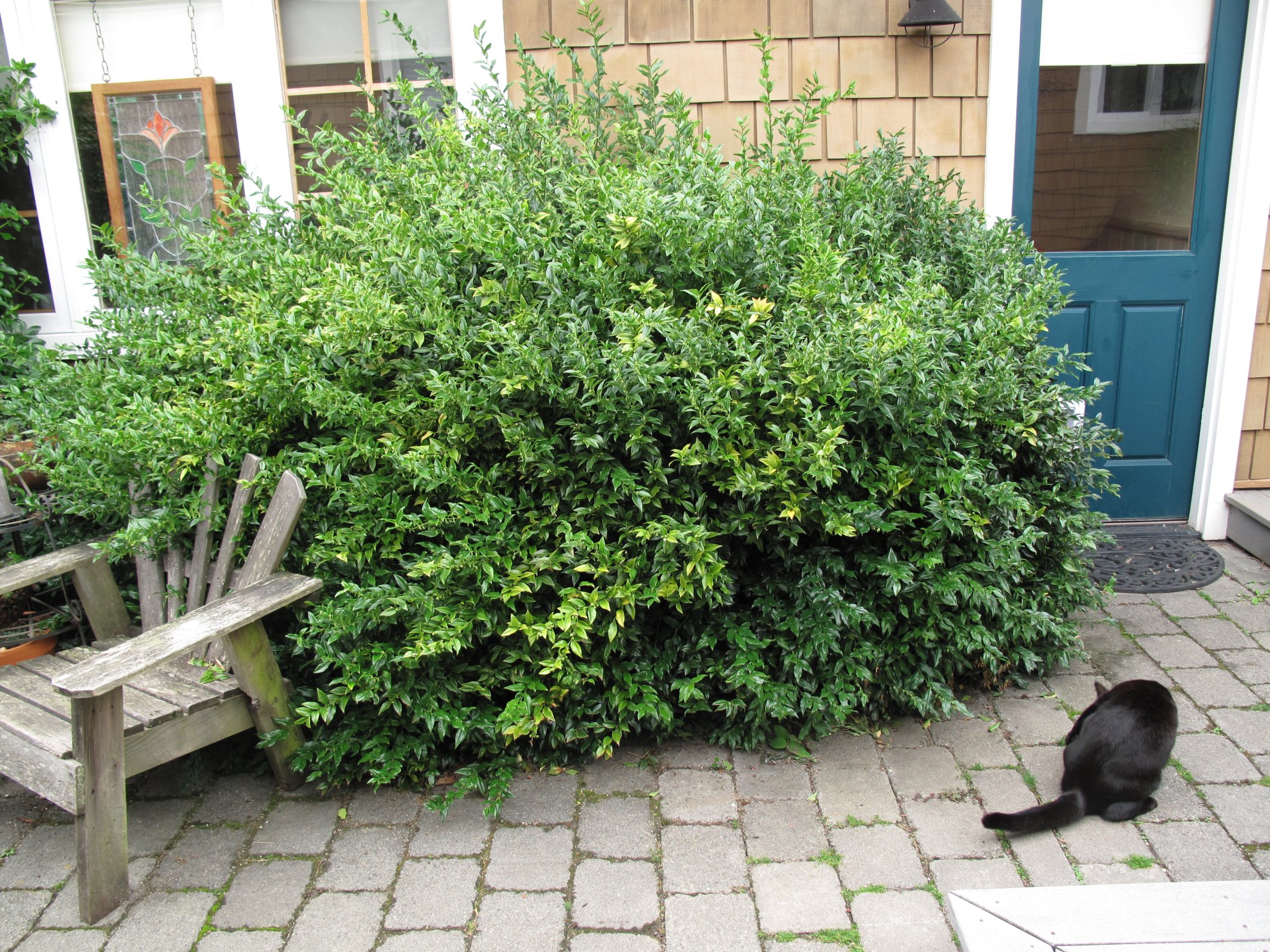
No red color for the reliably evergreen and winter blooming Sarcacooca ruscifolia. But later this winter its tiny white flowers will perfume the air around the entrance to our small detatched “west wing.”  The Sarcocooca blooms are followed by red berries that ripen to black. The west wing, a former garage, and the rest of the courtyard is densely planted with Mexican Orange (Choysia ternata), Nandina, Lavender, Columbines, Euphorbia, a small weeping Cherry, and the Sarcacooca ruscifolia.

sarcacocca

Sarcococca ruscifolia (Fragrant Sweet Box) and Zoe (Felis domesticus)

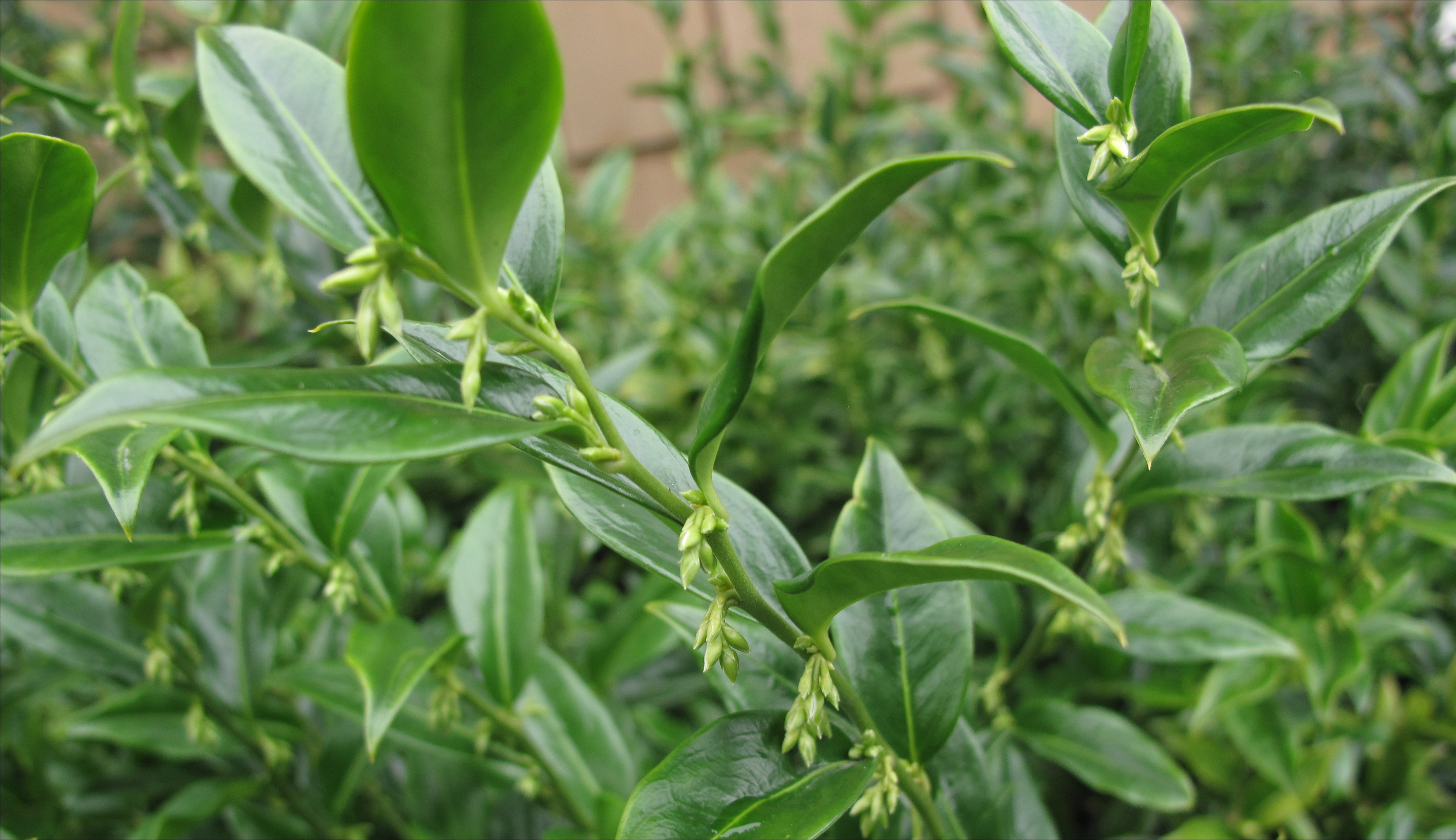
The Sarcocooca’s lateral, tassle-like buds (also called axillary buds) cover the plant right now and will open sometime later this winter. In colder climates bloom is expected in Spring. The glossy evergreen leaves are tough and will thrive in shade or part shade, but the plant is usually listed as hardy only to USDA Zone 7.

sarcacocca-buds

Sarcaccoca ruscifolia buds will open to small scented white flowers

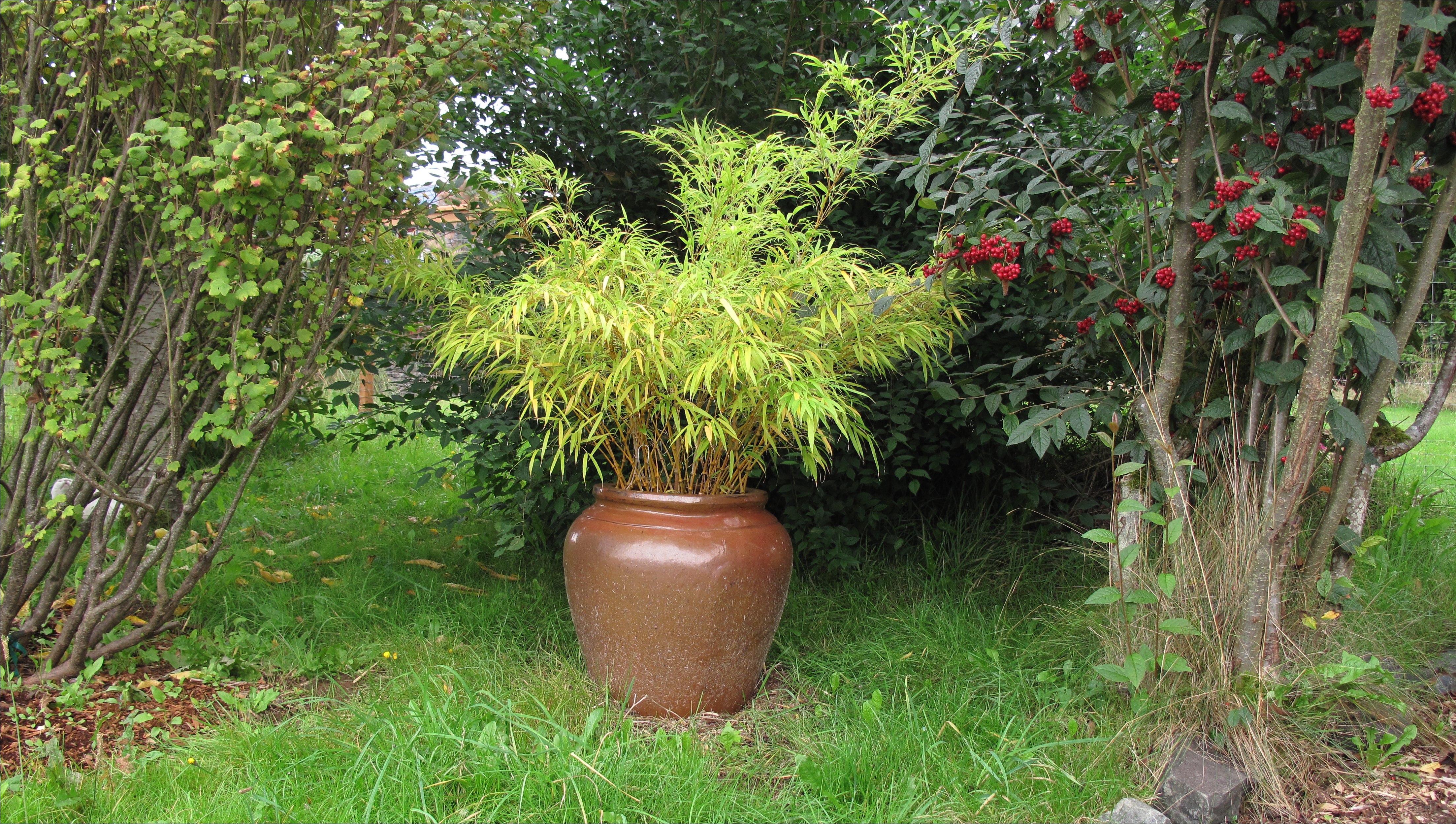
I’ve always fancied a shapely bamboo in a pot somewhere in the landscape. Sadly, I never considered what I would do after the bamboo became pot bound.  Now I wonder how I’ll ever get the bamboo out without destroying the pot!  Lesson learned:  Never plant a bamboo in a pot where the opening’s diameter is narrower than the middle of the pot.

bamboo-red flowering currant - catoneaster

Pot-imprisoned bamboo between Ribies sanguineum (left)  and Cotoneaster rehderi (right)

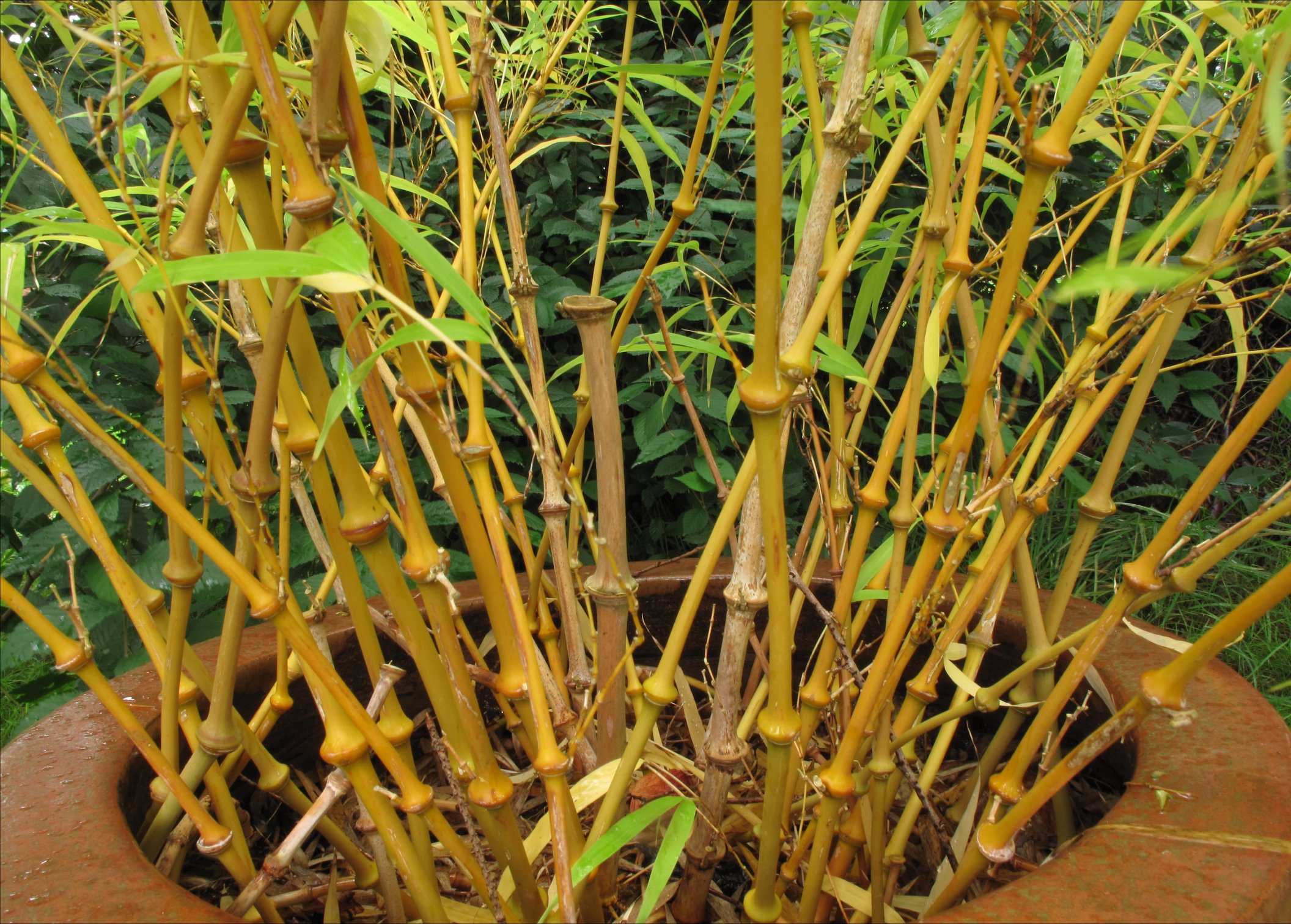
On the plus side, those in the know warn that this bamboo Qiongzhuea tumidissinoda, though slow to establish, will eventually become an aggressive spreader. So for now I don’t have that problem, though I suppose it will eventually burst this pot. Anyone have suggestions how to extricate the plant and preserve the pot?

chinese walking stick

Chinese Walking Stick Bamboo youngish canes but showing the bulging culms

This bamboo, besides the pleasing delicate leaves cascading into a fountain like shape, is culturally important to the province of Szechuan, where for centuries it was made into beautiful canes.

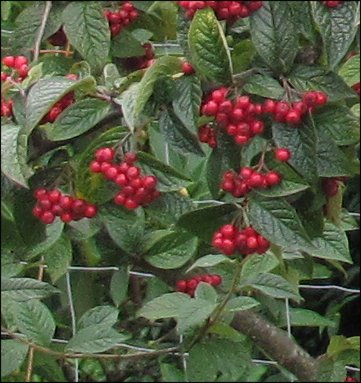
Finally, for fall color contrast I vote for the Cotoneaster rehderi.  Despite my red-green color challenged perception issues, the deep red berries pop against a background of  green, veined leaves.

cotoneaster even closer

Cotoneaster rehderi