Color in the Garden: Erigeron Canary Bird

I’m officially mildly red-green color blind.  As I understand this deficiency is quite common in males and really not much of a disability.  And yes, I can distinguish red and green traffic lights with no problem, the real differences between the red-green color blind and other folks’ color perceptions are more difficult to explain .  That said, I struggle mightily to perceive the green number two hidden in the dots below.

plate with 2I suspect each and every one of us perceives color slightly differently.   But in the fall landscape, especially at a distance, I’ll lose the reddening leaves in the surrounding green.

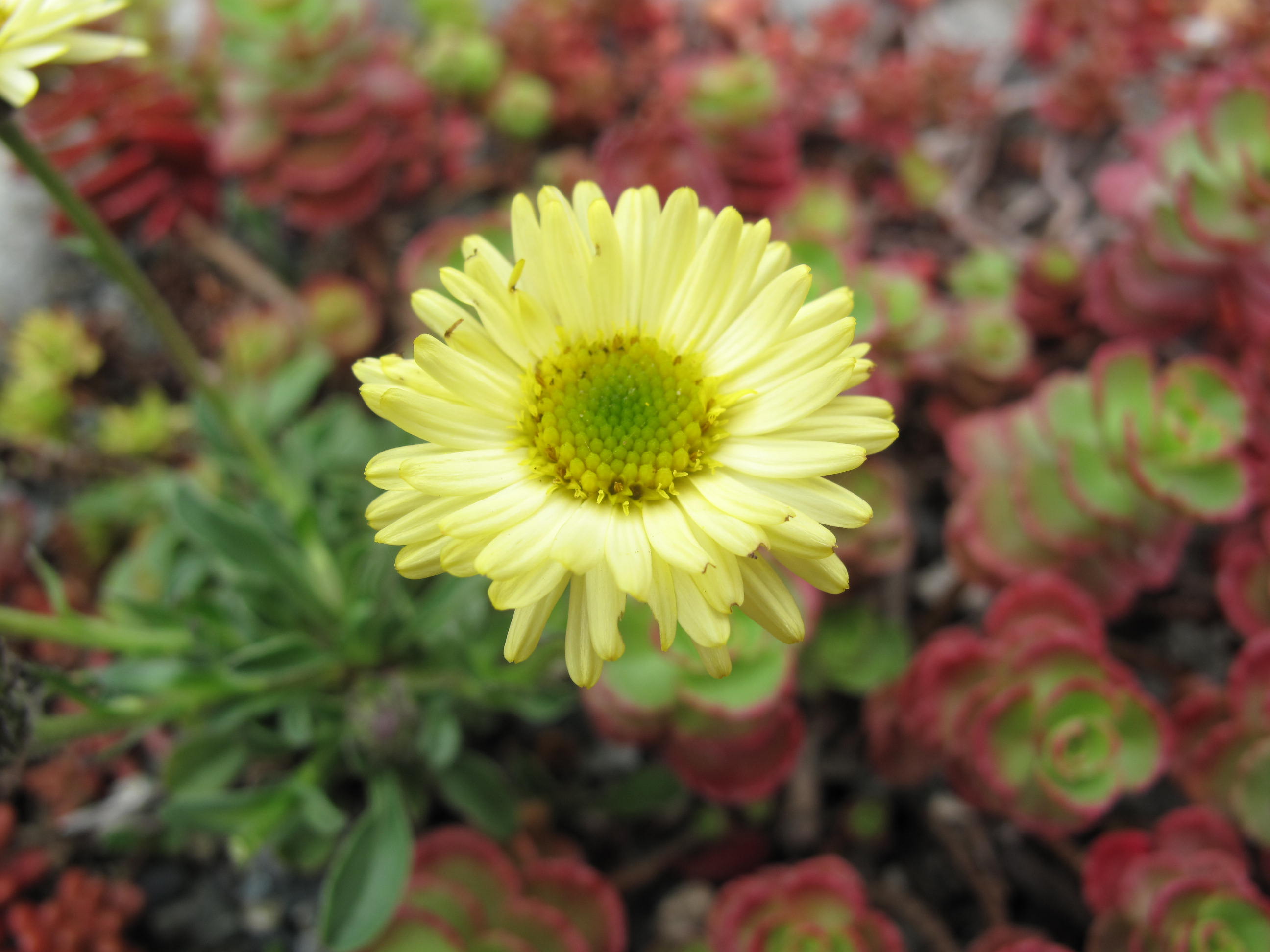
Lately, I’ve been enthralled with yellow.  Plenty of alpine plants, sedums in particular, have stunning yellow blooms. Others, like this little Erigeron ‘Canary Bird’ also make  fine trough plants.
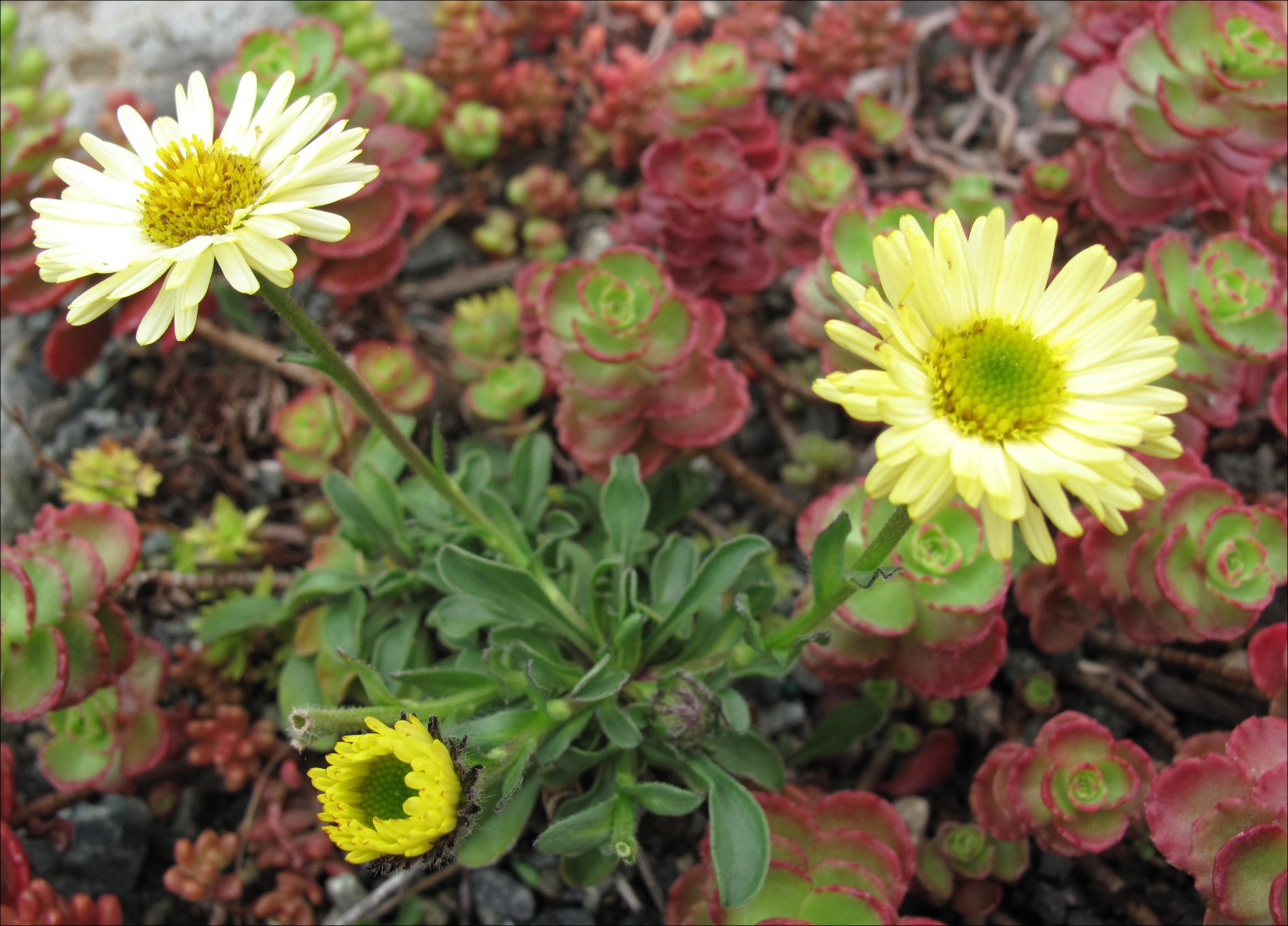
Erigeron Canary Bird

Erigeron ‘Canary Bird’

E canary bird

Erigeron ‘Canary Bird’

The open blooms above are starting to fade, the yellow is less pale when the daisy like flower just opens.  Canary Bird is a “sport” of Erigeron aureus, which is a Washington State native found in and around Mt Ranier and the North Cascades.  Distribution maps show the plant ranging into the Canadian Cascades.

Like many American alpines, British enthusiasts are credited with popularizing this sterile cultivar of Erigeron aureus.  The form Canary Bird appears to me more compact than the species.  Jim Jermyn an alpine enthusiast and author from Scotland has a very interesting post on just who was involved, including two folks with the avian sounding names of “Birdie” and “Drake.”
Old Yeller, Troughs and Alpines

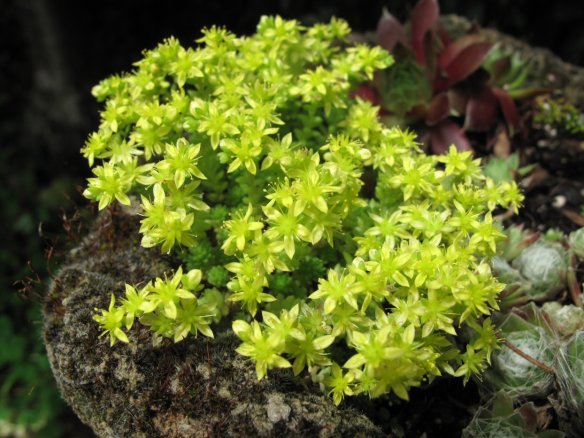
Nope, this is not a post about the Newberry Award winning children’s novel or the Disney movie.  For sure, Sedum grisebachii might be called “old yeller” in Tennessee;  since it is no doubt old (an alpine sedum species endemic to the mountains of Greece and Bulgaria) and as you can see very, very yellow!

Sedum grisbachii sparkling in a trough

Sedum grisebachii sparkling in the morning sun in a hypertufa trough

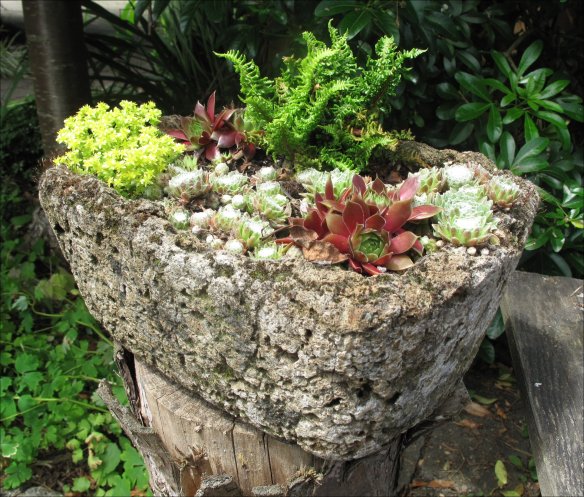
I’ve had this tiny sedum around for years, sometimes in terra cotta pots and lately in this small trough I made about eight years ago.  The trough, pictured below is about a foot long, eight inches wide and five inches deep, making it an alpine world in miniature.

trough bound sedum

A mixed trough home to sedum grisebachii, sempervivums, and a dwarf fern

I love this size trough because it’s so easy to pick and move. Bigger troughs have their appeal, but their weight can introduce some challenges. Many alpines require excellent drainage and resent our relatively warm wet winters here in Puget Sound. So larger heavy troughs require some sort of canopy in months of heavy rain (you can’t just pick it up and put it under an eave or similar rain protected location) as you might with a smaller trough.  Troughs are made of a mixture of mainly Portland cement and various other ingredients in smaller proportions (like perlite, vermeculite, peat moss, sand, fiber mesh, etc.).  Exact recipes abound on the internet.

Obviously cold temperatures are not the problem. In their natural habitat alpine roots reside below layers of snow and ice.  They may have long root runs in rocky scree or are tucked in crevices. Most are in positions where their roots are protected from mushy conditions.  When temperatures warm and water is abundant, the plants begin a new cycle of growth.  Many of these little gems have spectacular flowers rivaling any hybrid.

Online sources, like the British Alpine Garden Society, say the perennial Sedum grisebachii is found in mountainous regions of  Northeastern and Northwestern Greece and at elevations as high as 1000 meters (3,280 feet) in Bulgaria.  For plant hunters in Greece, Mt Athos and Mt Olympus are likely habitats.

Beware of imitations or mislabeled plants in nurseries.  Grisebachii may be mistaken for Sedum flexuosum and similar tiny, yellow-flowered species.  Visually, grisebachii is distinct in that its leaves are crowded toward their tips and have tiny distinct nubbins at each end, which can really only be seen (at least by me) with a hand lens.  These bumps are more properly known as apical hyaline papillae.

As soon as the flowers fade on my plant, I’ll try to update this post with a picture using the Macro setting on my Cannon G10, which is still a point and shoot camera, but might just allow me to get close enough to make out the nubbins.  Stay tuned.

Tweedy’s Bitterroot

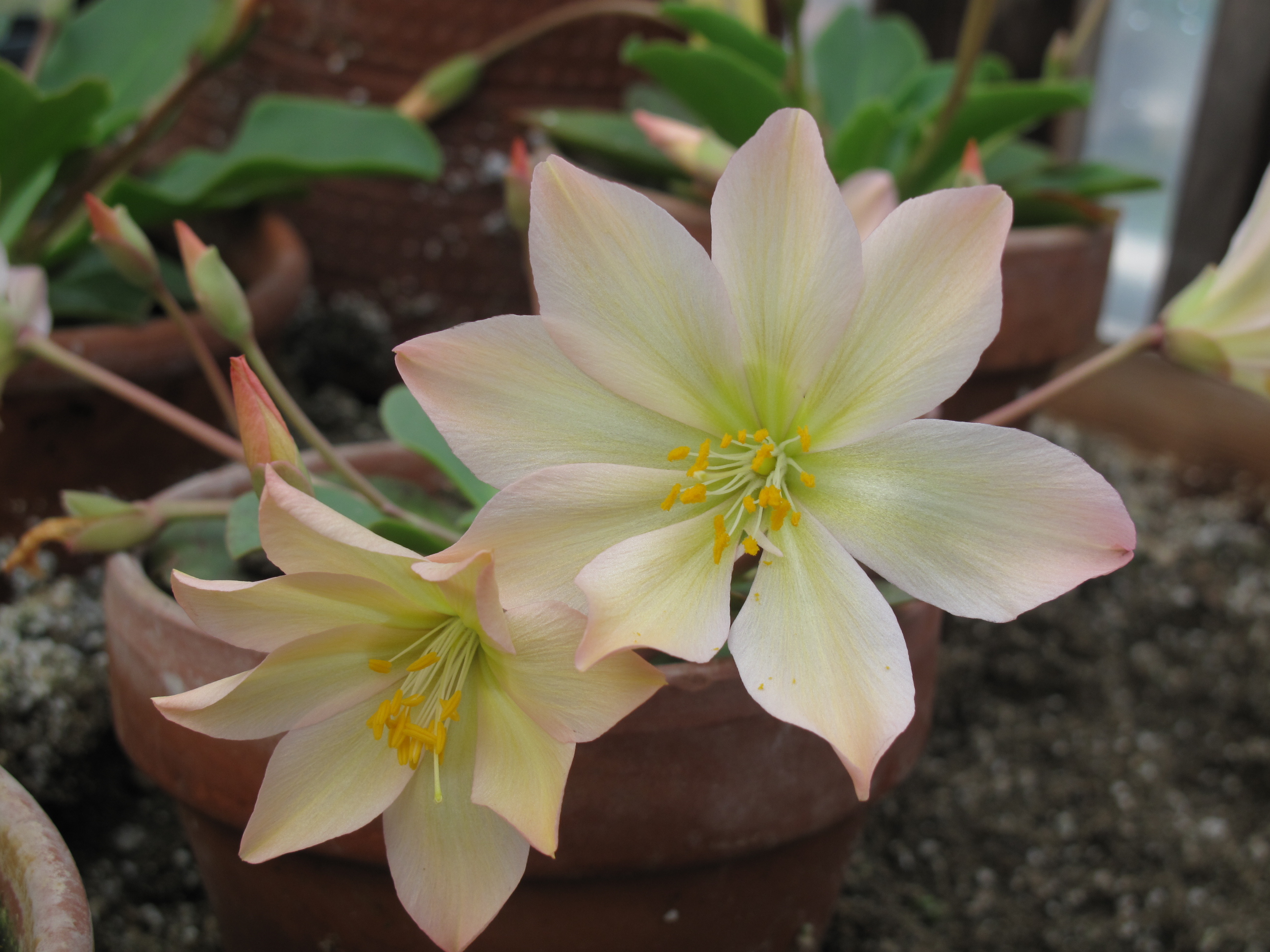
It doesn’t take much to get me to sit down and write a blog post about my favorite Lewisia.  For weeks now I’ve been anticipating the first blooms from plants I started three years ago from seed.

IMG_3196

L. tweedyi blooms from seed sown in Feb. 2010

For years, Tweedy’s Bitteroot  was considered part of the small western North American  genus Lewisia.  These days the researchers and scientists have been shifting it around the taxonomic landscape, first moving to a different Family (out of Portulacaceae and into Montiaceae), grouping it  with Claytonia and the Montia genuses.

Though some of these scholars first assigned it to the genus Cistanthe, as far as I can tell, they’re making the case for a new genus called Lewisiopsis (probably a sop to those of us who see it rightly belonging with the other bitterroots rather than plants with the common name of “pussypaws!”).  The resulting genus of Lewisiopsis  now apparently contains only the former Lewisia ‘tweedyi’.

Lewisias -on-bench

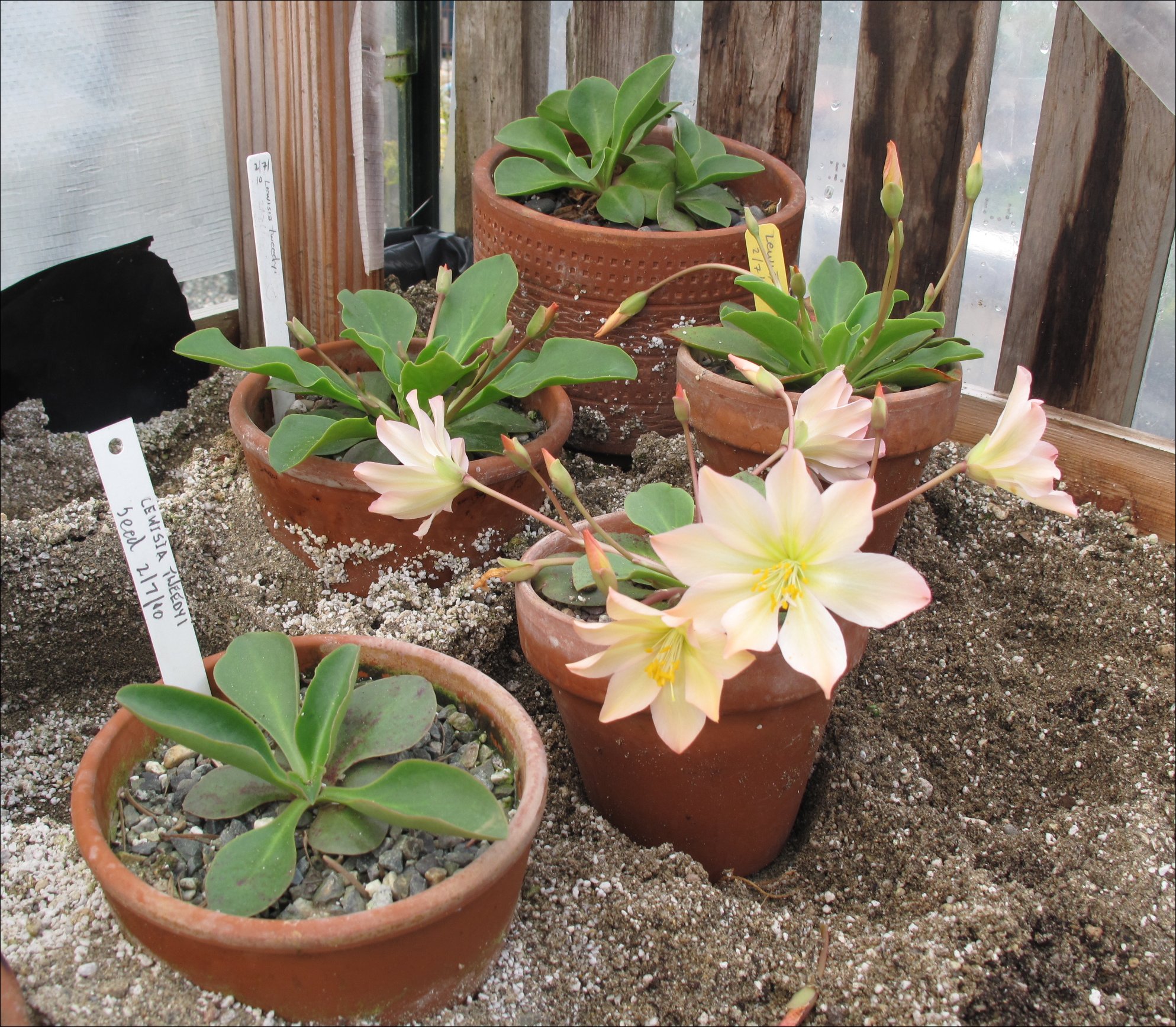
3-year old Lewisia ‘tweedyi’ in clay pots at home on the sand plunge bench

L tweedyi roots

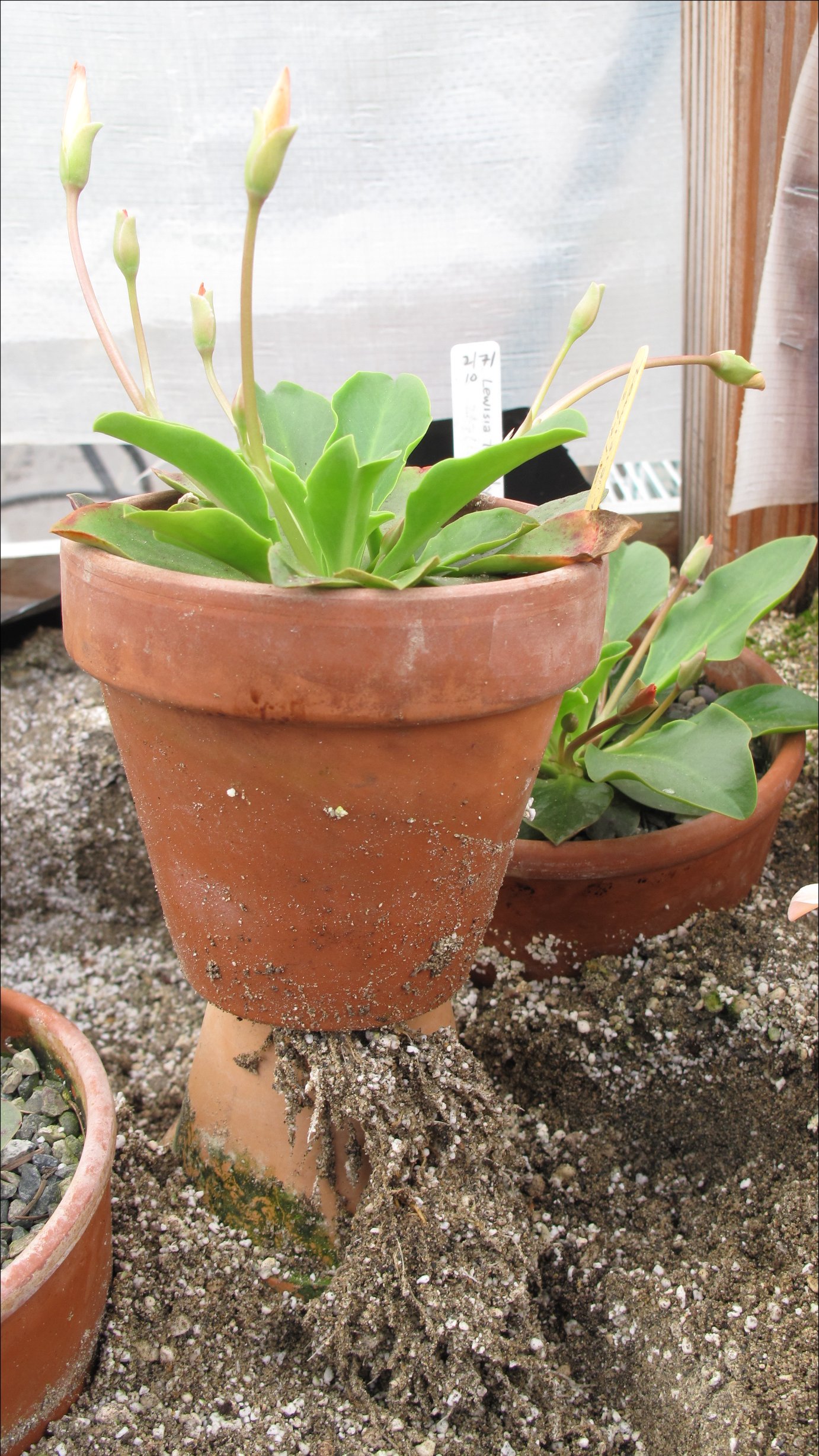
Out of the sand with roots showing

So should any of this be of the slightest concern to rock gardeners and plant lovers?  Probably not, but rest assured I will never refer to this plant as Tweedy’s pussypaws (ugh). One thing is certain, Frank Tweedy — a topographic engineer and plant collector for the USGS — is credited for putting this northwest native on the horticultural map in 1882, when climbed Mt. Stuart near Wenatchee, Washington. For more on Frank Tweedy’s horticultural achievements, read this post.

So if you’ve read this far, check out this picture of tweddyi’s long root system, which ensures this plant its longevity and adaptability to the rocky scree-like soils of its home in the mountains.

Imagine coming across this little beauty while hiking around Icicle Creek Ridge near Leavenworth.  Although I have yet to see it in the wild, this is the first time I can claim to have watched it go from seedling to flower.

My seed came from Alan Bradshaw, proprietor of Alplains (Alpine Plants on the Plains), in Kiowa Colorado.  Alan collected the seed in 2009, while on one of his many far ranging trips around the west. In the 2010 Alplains catalog he remarked on taxonomy, “Some botanists regard this species worthy of its own genus given seed differences and its refusal to cross with other Lewisia species.”

For more on the history of Tweedy’s Bitterroot, see my previous post.