Frank Tweedy

Frank Tweedy is probably best known among alpine plant enthusiasts for the species that bears his name Lewisia tweedyii (now residing in its own genus Lewisiopsis).

Tweedys Bitterroot

Tweedy’s Bitteroot

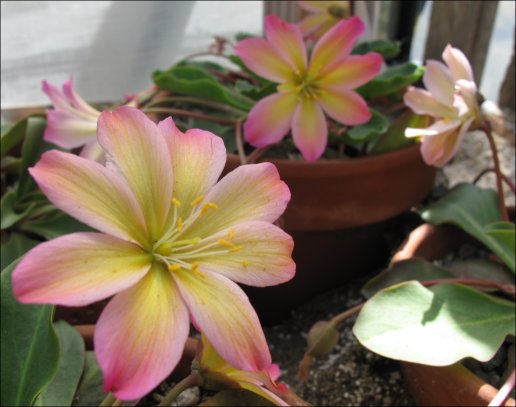
Frank was working for the U.S Government as a railway surveyor on Mt Stuart in the Cascade Mountains near Wenatchee, WA when in 1882 he “discovered” this beauty. Bloom color ranges from stunning deep and pastel pinks with yellowish orange highlights to specimens that have “earned” the epithet rosea, presumably for the deeper red highlights.
Lewisia tweedyii 'rosea'

Lewisia tweedyii ‘rosea’

Two other northwest native species are named for Frank, Calamagrostis tweedyi (Cascade Reedgrass) and Salix tweedyi (Tweedy’s Willow).

In 1886 Frank self published (in conjunction with the Library of the New York Botanical Garden) his “Flora of the Yellowstone National Park,” which I was able to download to my Nook (free of charge) courtesy of Barnes & Noble. You can also view a digitized addition right now courtesy of BHL (Biodiversity Heritage Library).

Frank was apparently quite a modest guy, beginning his preface in a rather self-deprecating tone:

“In the following general notes on the flora of the Yellowstone National Park but little has been attempted beyond an enumeration of the Flowering Plants (Phsenogamia) and Vascular Cryptogams (Pteridophyta).”

Hardly “but little,” since Frank goes on to write that his book is “a collection of 605 species made by the author in the Yellowstone National Park during August and September, 1884; and June, July, August and September, 1885.”

I’ve only just begun delving into the book, but it’s clear Frank was a serious plantsman, naturalist and a keen observer of habitat. He begins his treatise with a description of the various parts of the park.  Here’s a sample:

In the northwest rises the Gallatin Range, culminating in
Electric Peak, 11,000 feet above sea level. On the estern border lie the rigged volcanic peaks of the Absaroka or Yellowstone Range, reaching elevations of 10,800 feet on the north east, and over 11,00 feet on the southeast.

Absaroka is the Indian name of the Crow Nation, whose reservation is on the eastern slope of this range of mountains….

…Yellowstone Lake (7,740 feet), the largest lake at great elevation in North America, has a length and breadth of respectively twenty and fifteen miles, a depth of 300 feet, and an area of 150 square miles.  The shore line, indented by several large bays, is over 100 miles.

The beautiful curves of the sandy beaches and crystal purity of its waters, make it an object of unusual interest. With the exception of the Yellowstone Range, rising from its easter shore, it is surrounded by a generally low, heavily timbered country.

While searching for more information on Frank, I serendipitously stumbled on this lovely post by Julie Ardery, creator of the fabulous blog The Human Flower Project.  Julie, a descendent of Frank,  discovered her botanist  ancestor shortly before a family reunion in 2010. Check it out:  The Botanist Gene.

For more on the plant, see this post: Tweedy’s Bitteroot
Campanula ‘Birch Hybrid’

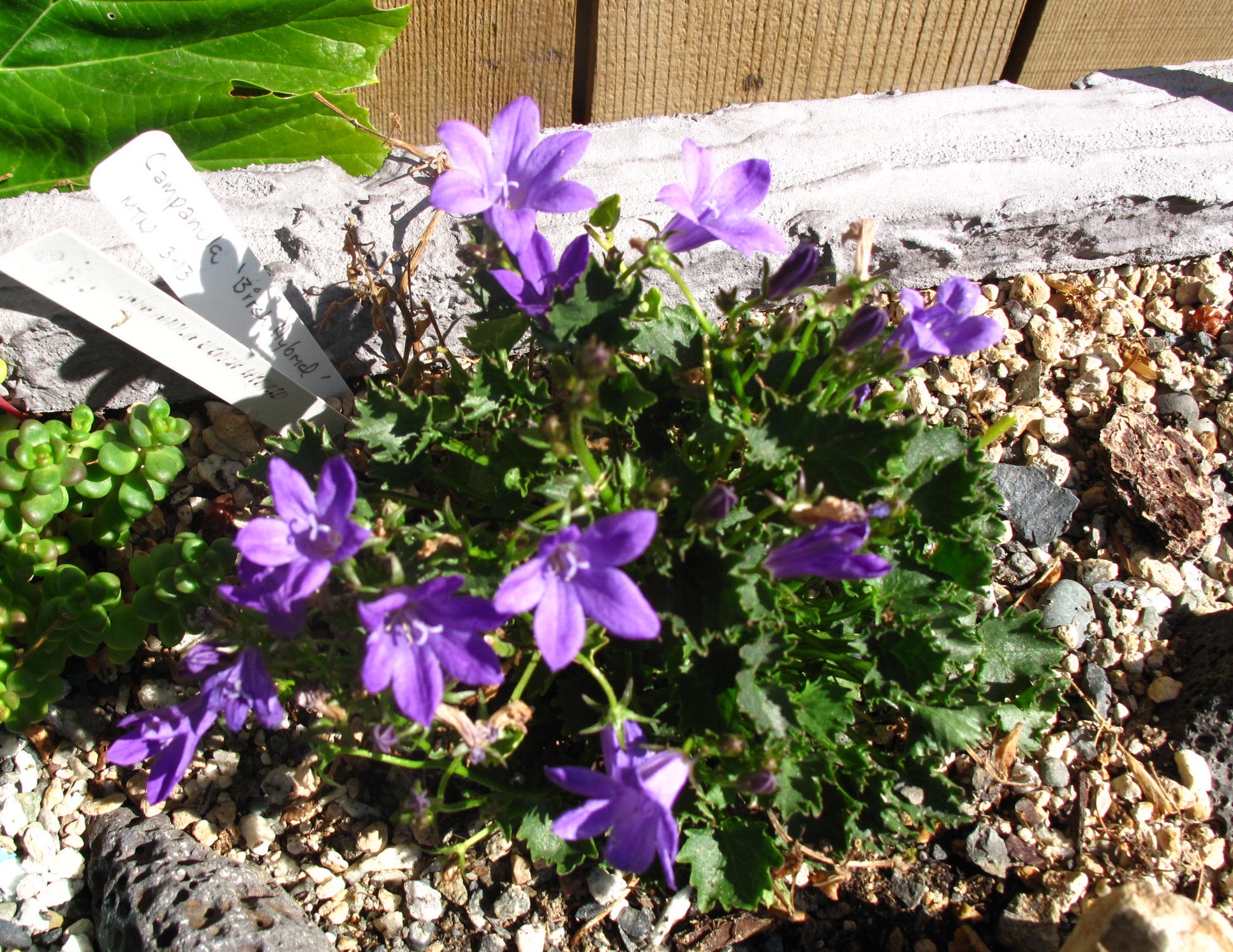
This little hybrid (Campanula portenschlagiana x poscharskyana) makes a fine trough, rock garden or pot specimen.  If your patient, it may reward you by tumbling over a rock wall.  When it first blooms in mid spring the purple flowers profusely cover the plant.

For the impatient gardener, one of its parents, either C. portenshlagiana or C. poscharskyana would probably be a bit more vigorous at cascading over a rock wall.

Campanula 'Birch Hybrid reblooming in early August

Campanula ‘Birch Hybrid re-blooming in early August

I’m not sure its news, but — like many herbaceous spring blooming perennials — shearing or deadheading the spent blooms after the initial spring flush often guarantees more blooms later in the summer (though usually not as dense and floriferous as the first round).

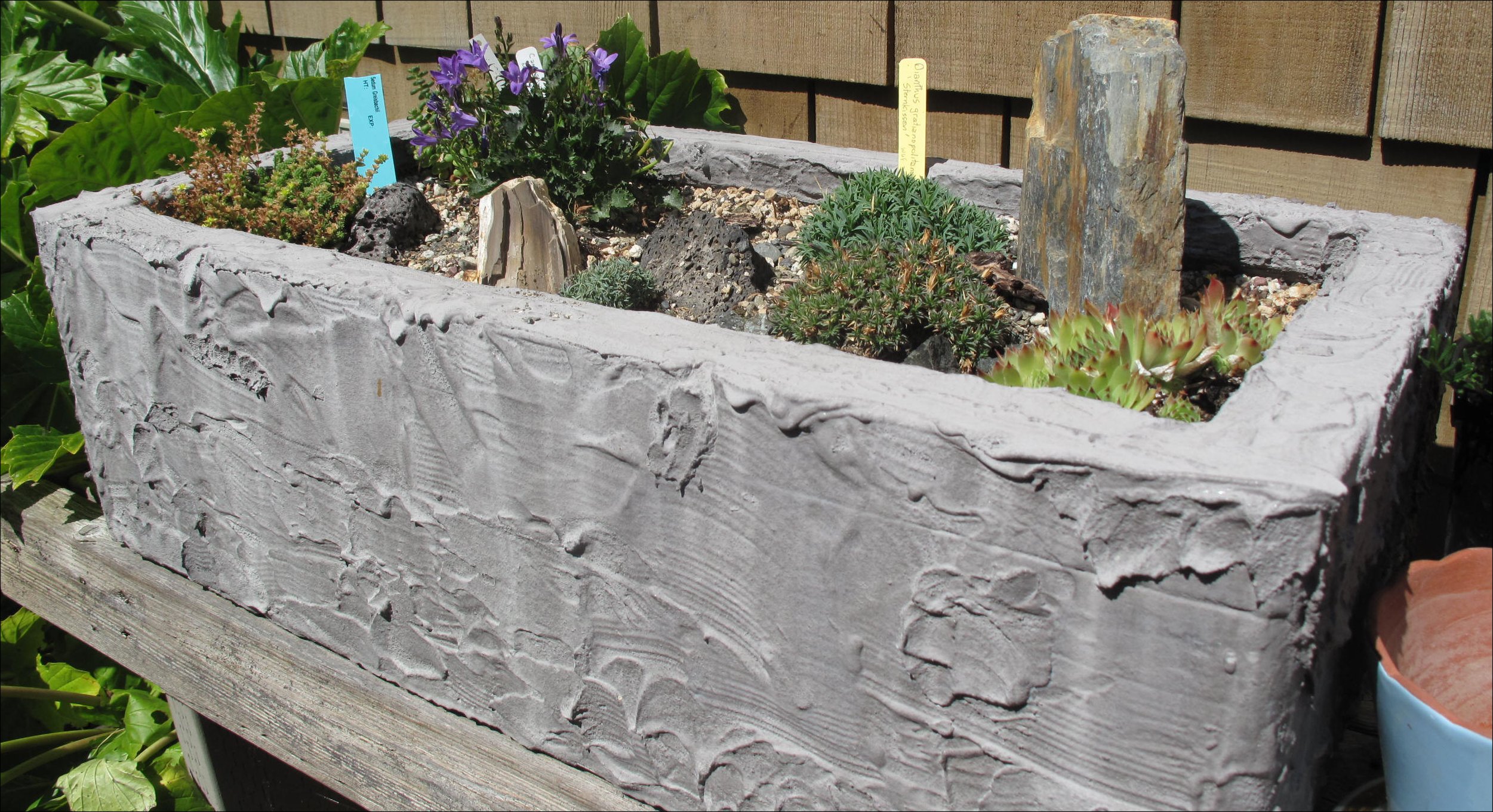
Here in Puget Sound near Seattle, this trough, containing Sedums, the Birch Hybrid and alpine Dianthus required daily or even twice daily watering during the hot, unusually rain-free month of July.

Alpine Trough Sedums, Campanula, Dianthus and Sempervivums

Alpine Trough newly planted with Sedums, Campanula, Dianthus and Sempervivums

Unlike the Dianthus or the Sedums — which don’t seem to rebloom —  the Campanula ‘Birch Hybrid started re-blooming about a week ago. My little specimen, from Mt Tahoma Nursery in Graham WA, probably was propagated by division, and at most is a two year old division.

This European alpine hybrid is credited to, and named for, the Birch Farm Nursery in England.  According to this video from Garden Splendor®, which apparently distributes plants to selected retail nurseries in the northeastern United States, Birch Hybrid makes a fine garden plant.  Check it out on You Tube:

http://www.youtube.com/watch?v=gPv9yi18-lA

European Alpine Primulas

Here’s a post from March that languished in my drafts overlooked.  Spring is long gone and these alpine primulas have long since given up their blooms…

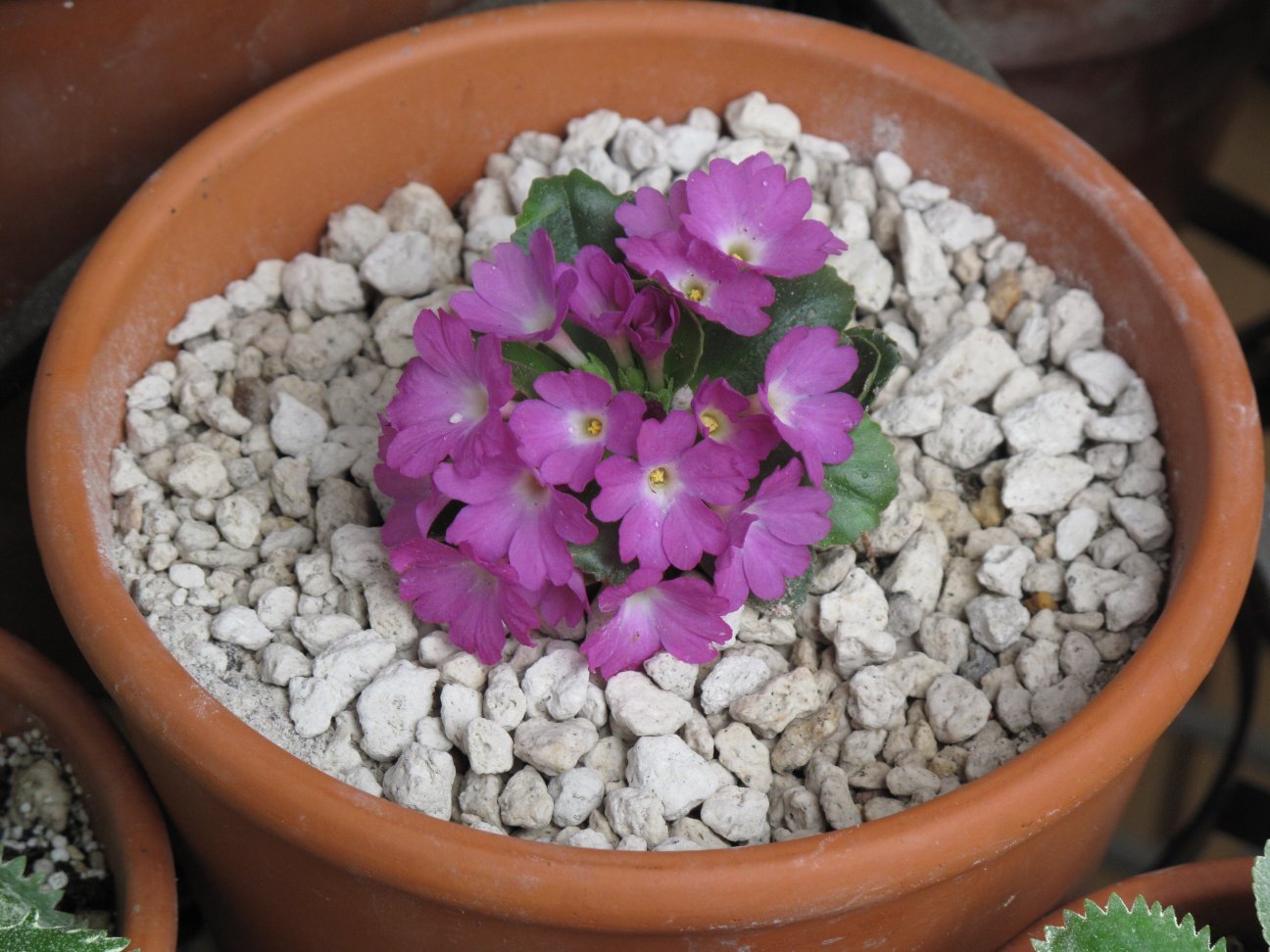
Primula 'Nightingale'

Primula ‘Nightingale’

I’m looking forward to seeing some of our native alpine plants this spring hiking the Cascades. Meanwhile it’s mid-March in Puget Sound and some of my European alpines have begun to flower.

It’s hardly the same as stumbling across them blooming in their native confines, but short of  that, seeing  these plants in cultivation remains a treat.

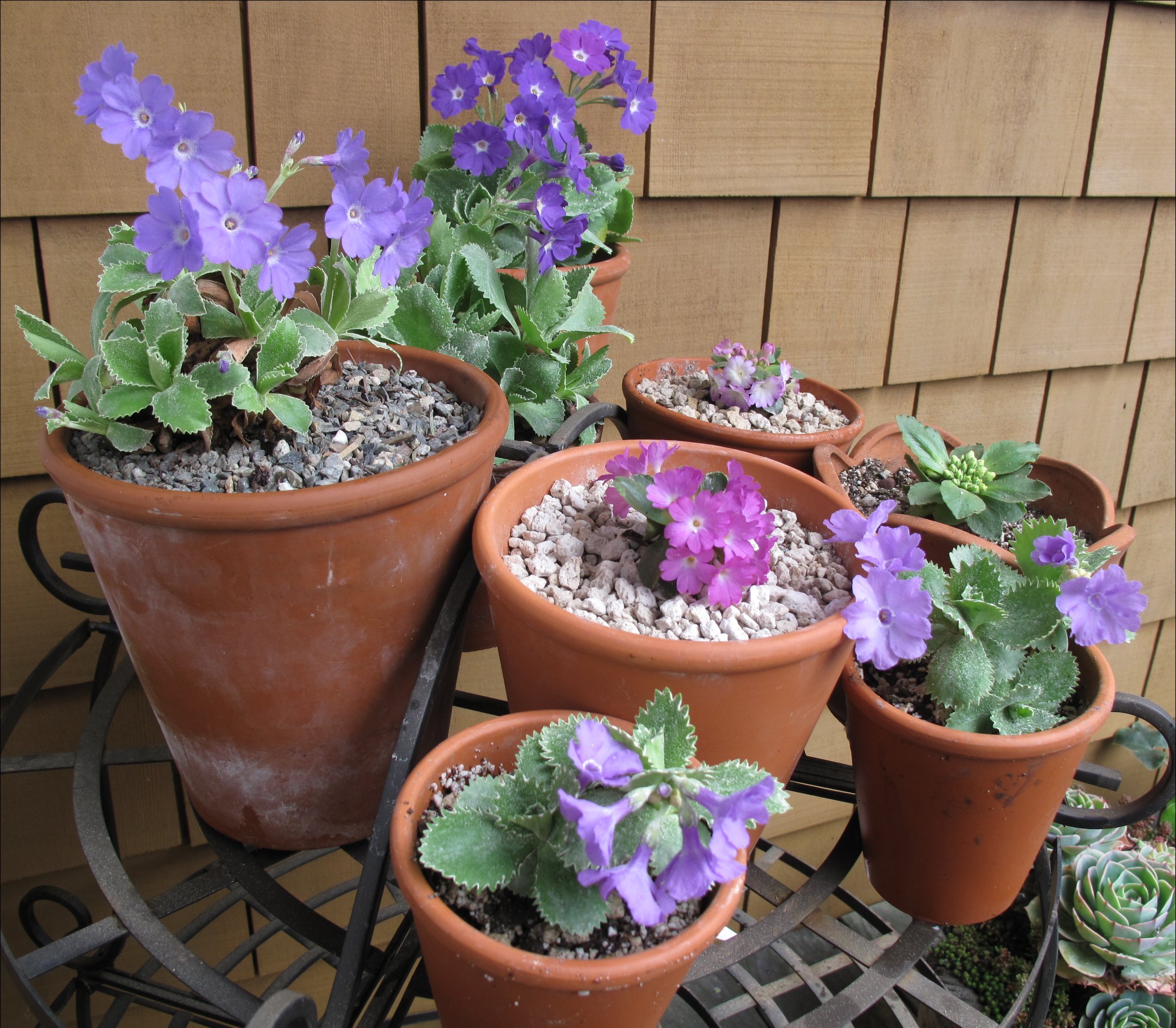
Img_3130

European Alpine Primulas

Img_3133

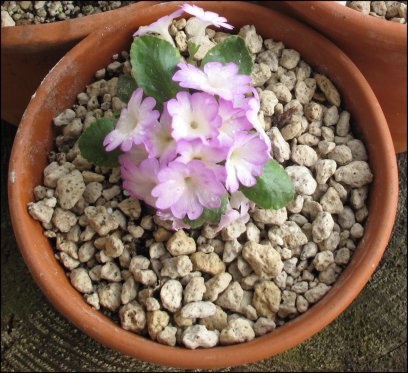
Primula allionii x pubescens hybrid ‘Wharfdale Ling’

The alpine European primulas are tough plants and have been hybridized extensively, probably as far back as the 19th century.  The majority of these species from the tiny P. minima to the well-known P. auricula readily hybridize with each other and have led to the myriad of European hybrids, many named for the region or nursery that’s responsible for the plant.

Hybrids of P. marginata and P. allionii make some remarkable looking pot and trough plants.

Some of the smaller hybrids, probably crosses related to Primula x pubescens  (itself a naturally occurring hybrid between P. auricula and P. hirsuta) are so covered with flowers in the spring you’re hard pressed to see the leaves.

Primula 'Broadwell Milkmaid'

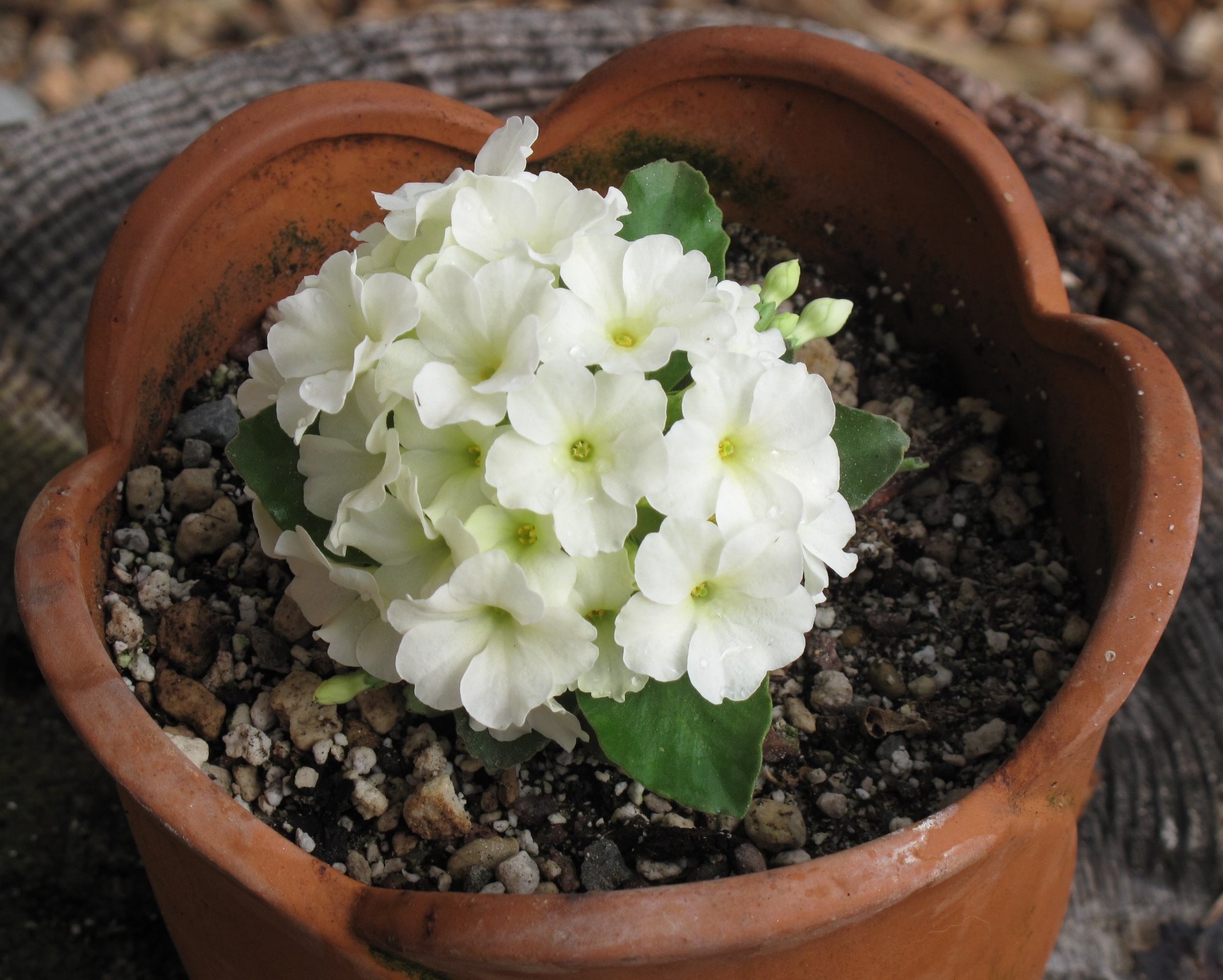
Primula ‘Broadwell Milkmaid’