Rain Garden Project

A rain garden is a planted depression designed to take as much excess rain run-off from a house or other building. It’s critical that a rain garden site be designed to provide sufficient drainage to handle the expected volume of water.

Rain gardens are emerging as an especially important element  in urban design by replacing hard paved surfaces with plants and vegetation, helping to ensure a more sustainable environment by returning rain water to the aquifer, rather than have millions of gallons overload storm sewers and go directly into our rivers and other bodies of water.

Wherever implemented (urban or rural), rain gardens encourage biodiversity, are good for wildlife, reduce flooding, ameliorate pollution problems and provide humans with aesthetic pleasing habitats.
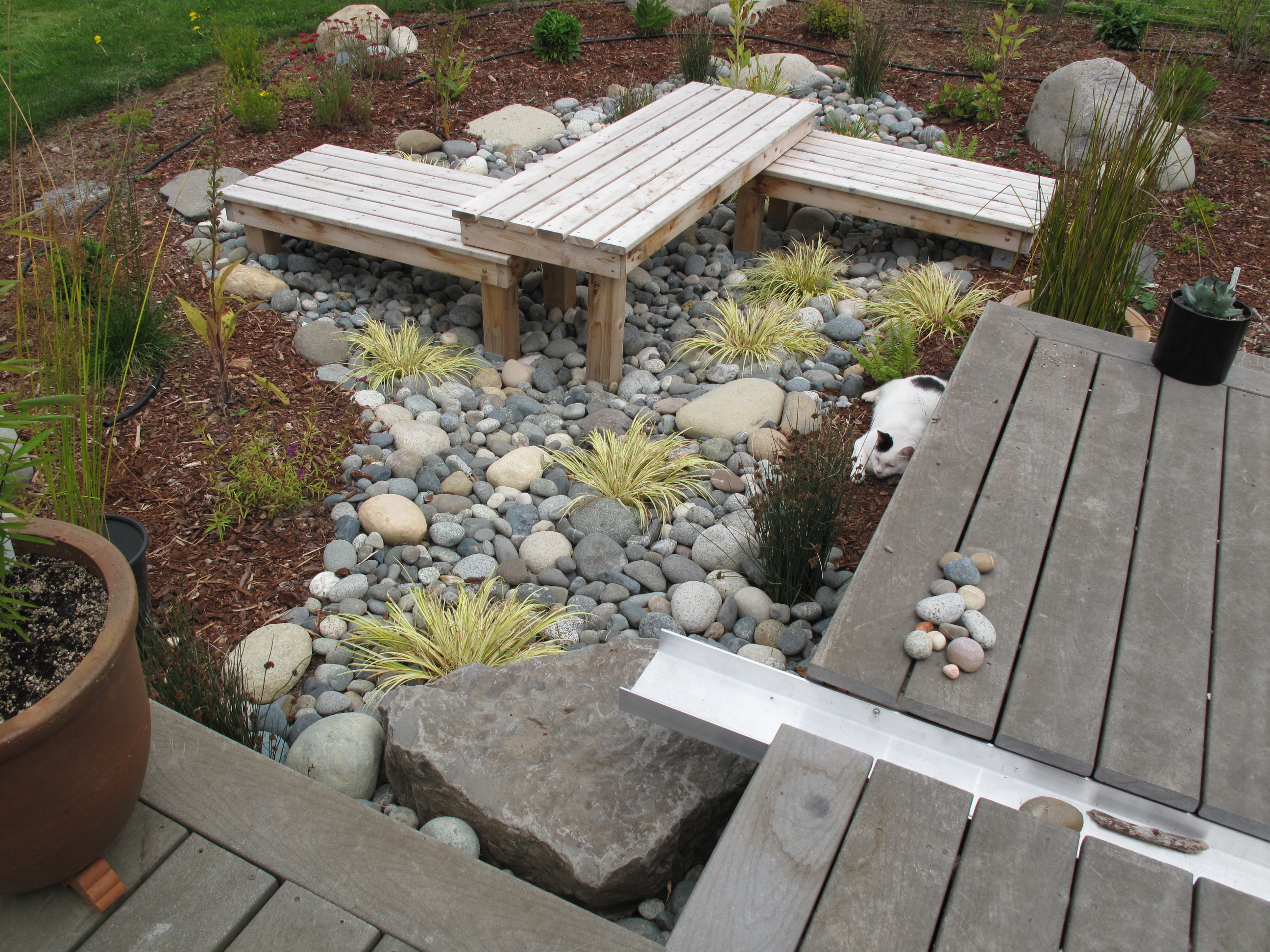
Our new small rain garden (established May 2012) uses a rain chain to divert our roof run-off into two 65-gallon rain barrels. The rain chain replaced a downspout that previously connected to our foundation drains. Two rain-barrels feed a rill that crosses our deck and spills into the newly planted rain garden.
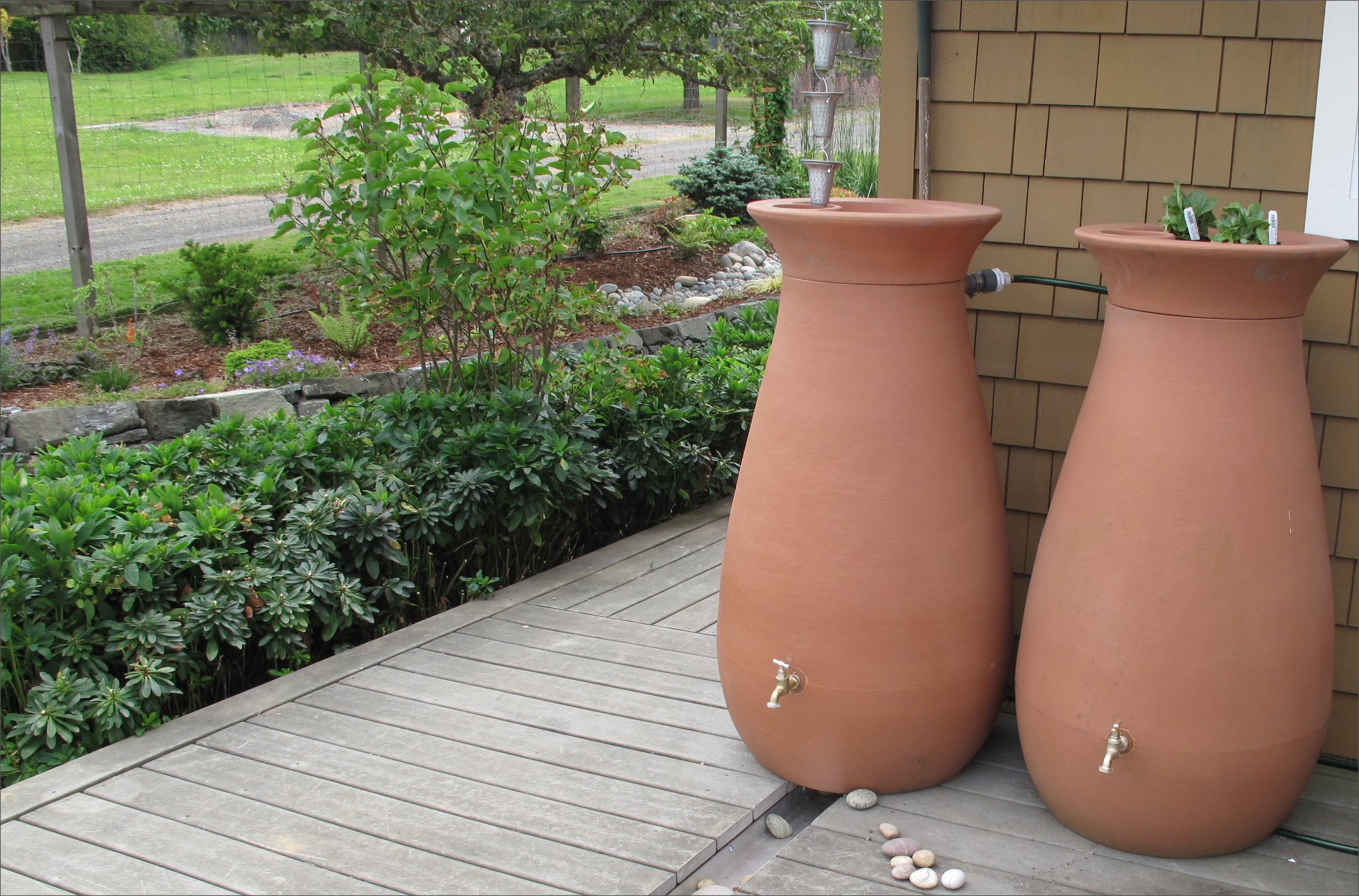
So far there is no indication of the garden not being able to handle the roof run off.  But if needed, we can simply take the overflow hose from the first rain barrel (normally it goes to fill the second rain barrel) and divert it back to the foundation drain.
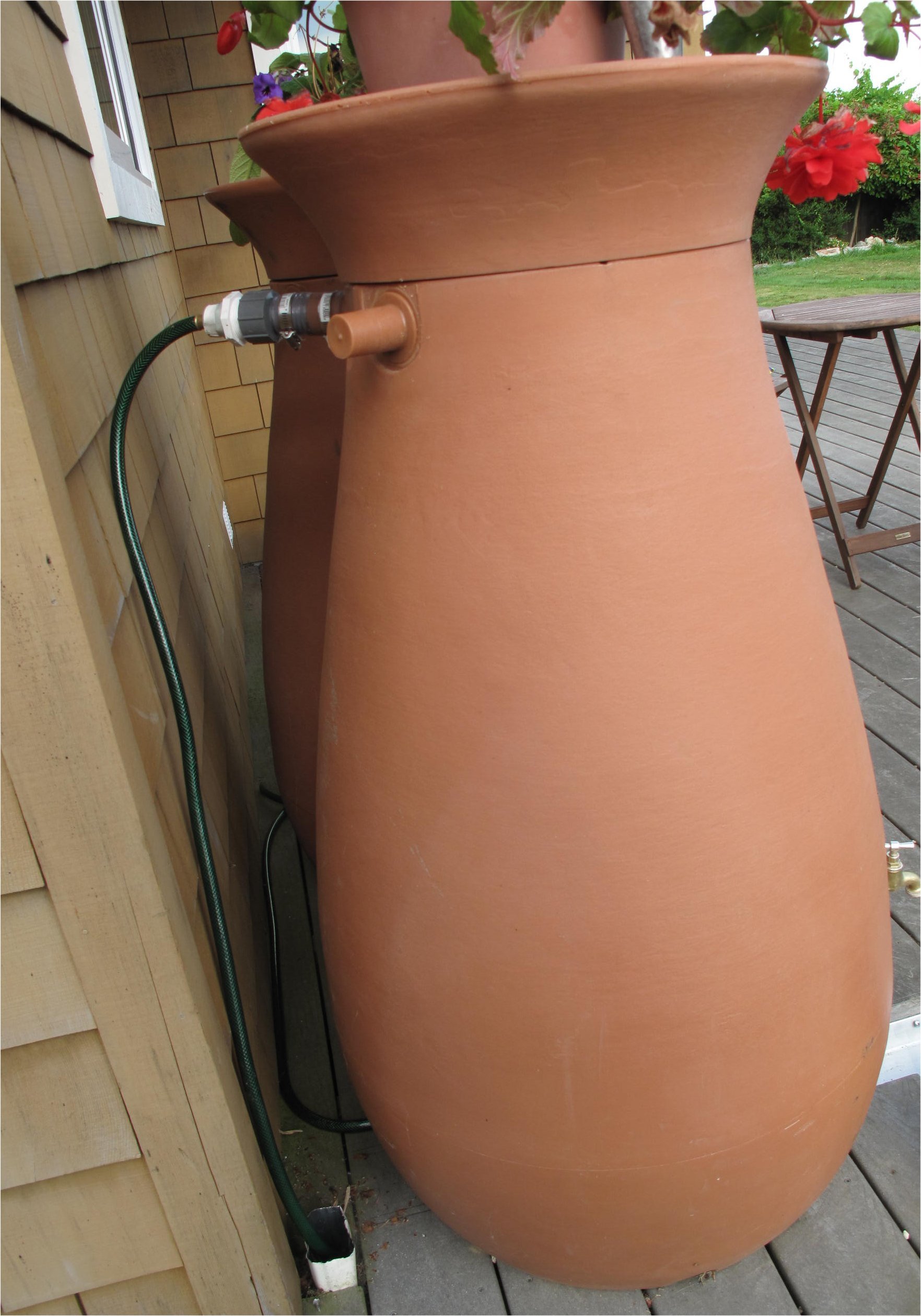
Overflow hose diverted back to downspout leading to foundation drains

Future plans call for adding more rain barrels to increase our storage capacity.
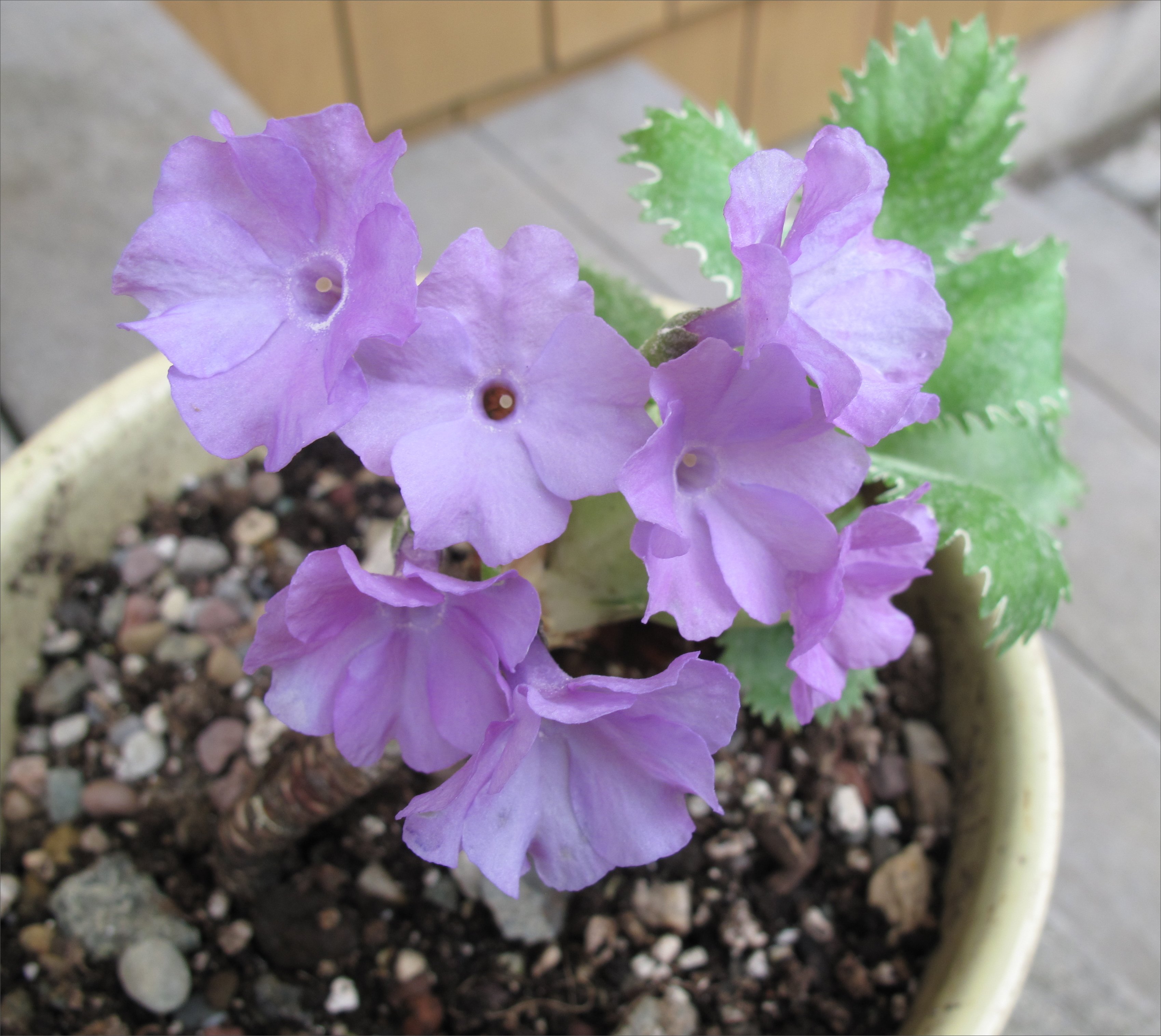
Primula marginata

Is this the species that started it all?  Can the popularity of those ubiquitous supermarket and convenience store primulas that show up in early spring be traced to this amazing little alpine?

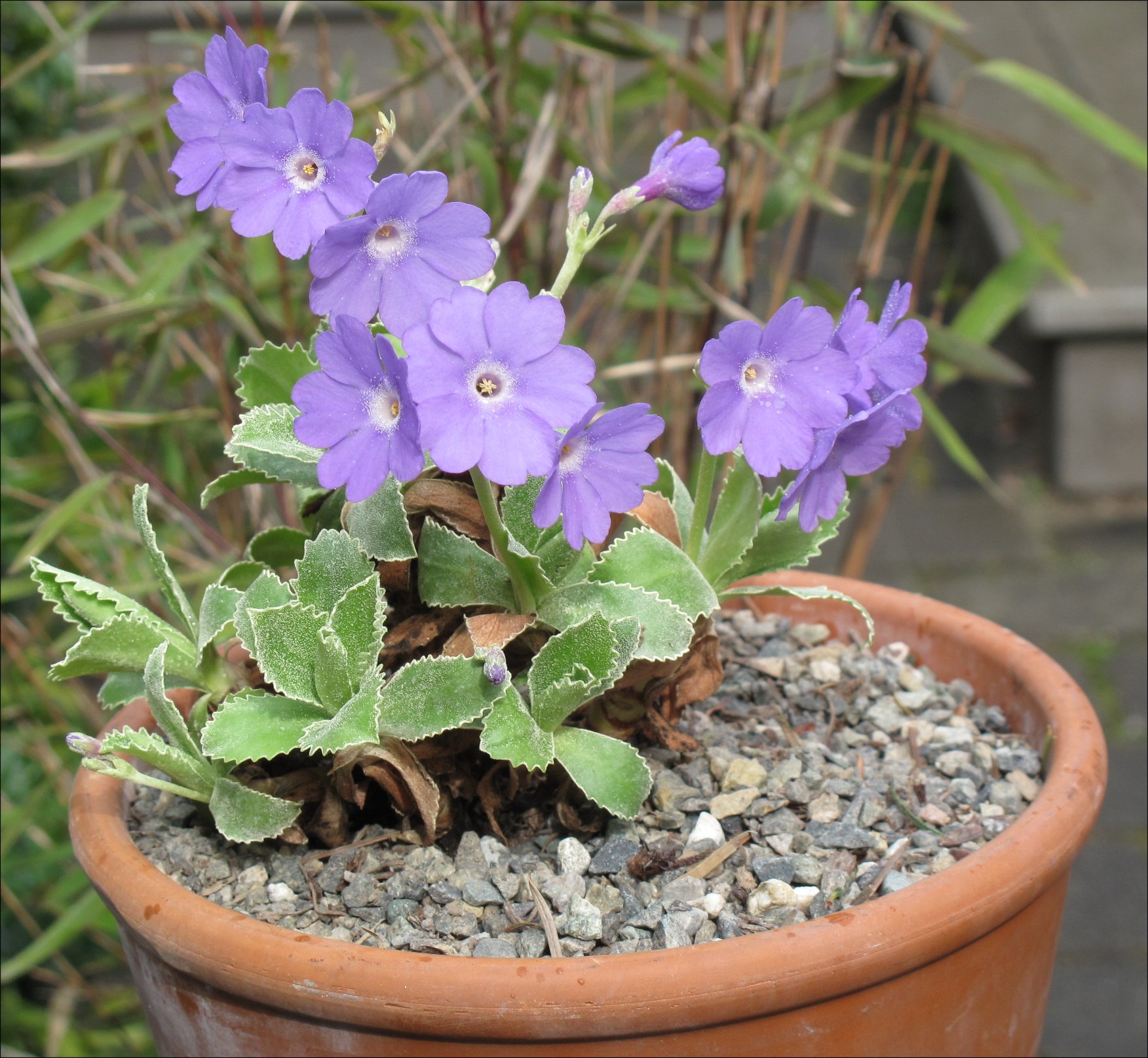
Primula marginata

Primula marginata was first described in cultivation sometime between 1777 and 1781. The species is primarily found on shady limestone cliffs in the Maritime and Cottian Alps, which are located on the border between Italy and France.

P. marginata is prized both for the beauty of its serrated and powdered leaves (the powder is properly called farina), and its blue flowers.

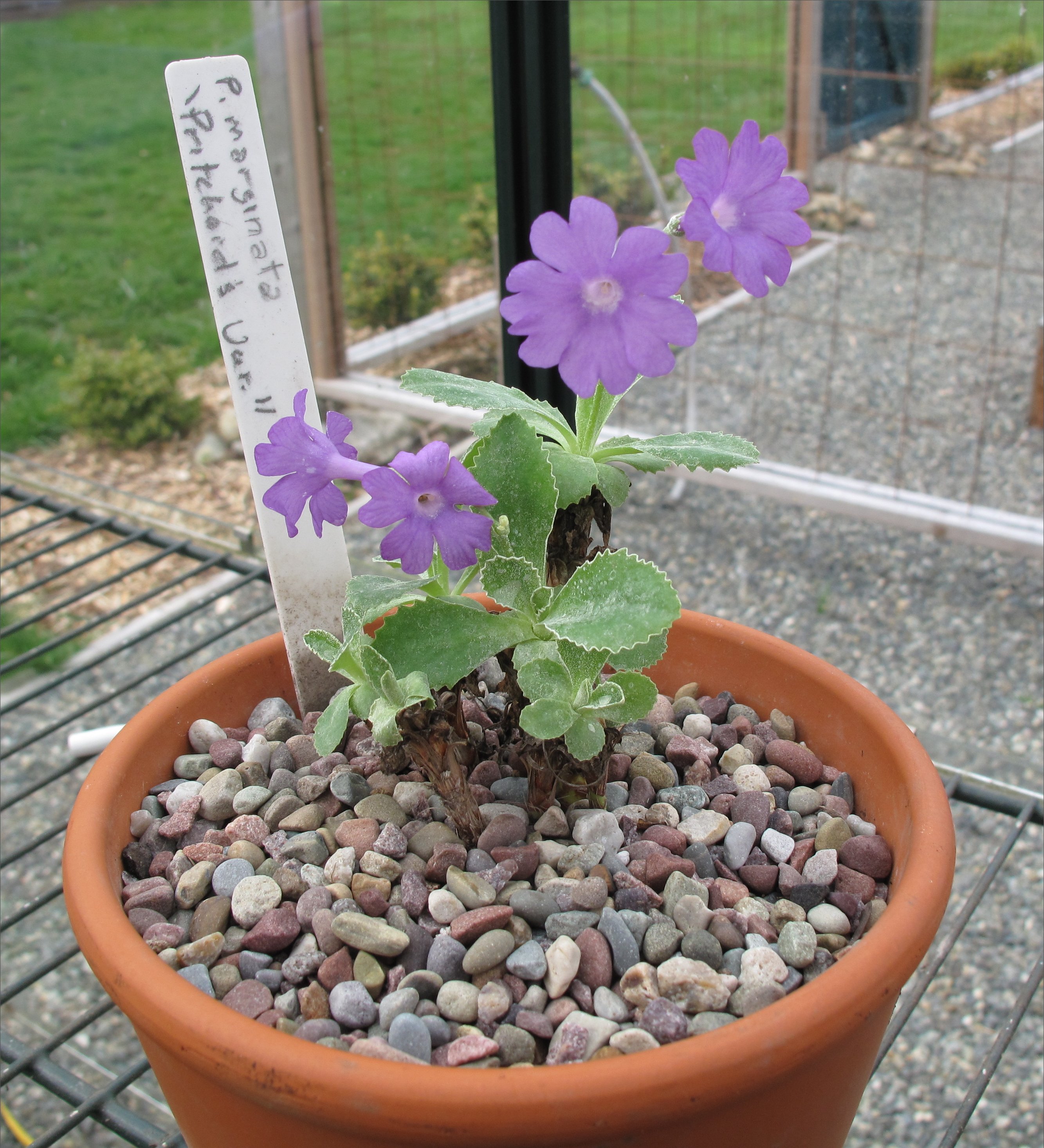
 P. marginata ‘Pritchard’s Variety’

The plant, both in the wild and in cultivation, is highly variable in shades of the blue flowers and also the size of the jagged teeth at the leaf edges.  Many hybrid cultivars exist.

P marginata 'Herb Dickson'

P. marginata ‘Herb Dickson’

Primula marginata belongs to a subsection of  the Primula genus called Auricula. The  auricula species was known to central Europeans possibly four or even five centuries ago as the “yellow bears ear.”  It’s the wild plant that gave rise to the garden and show auriculas prized by the British.

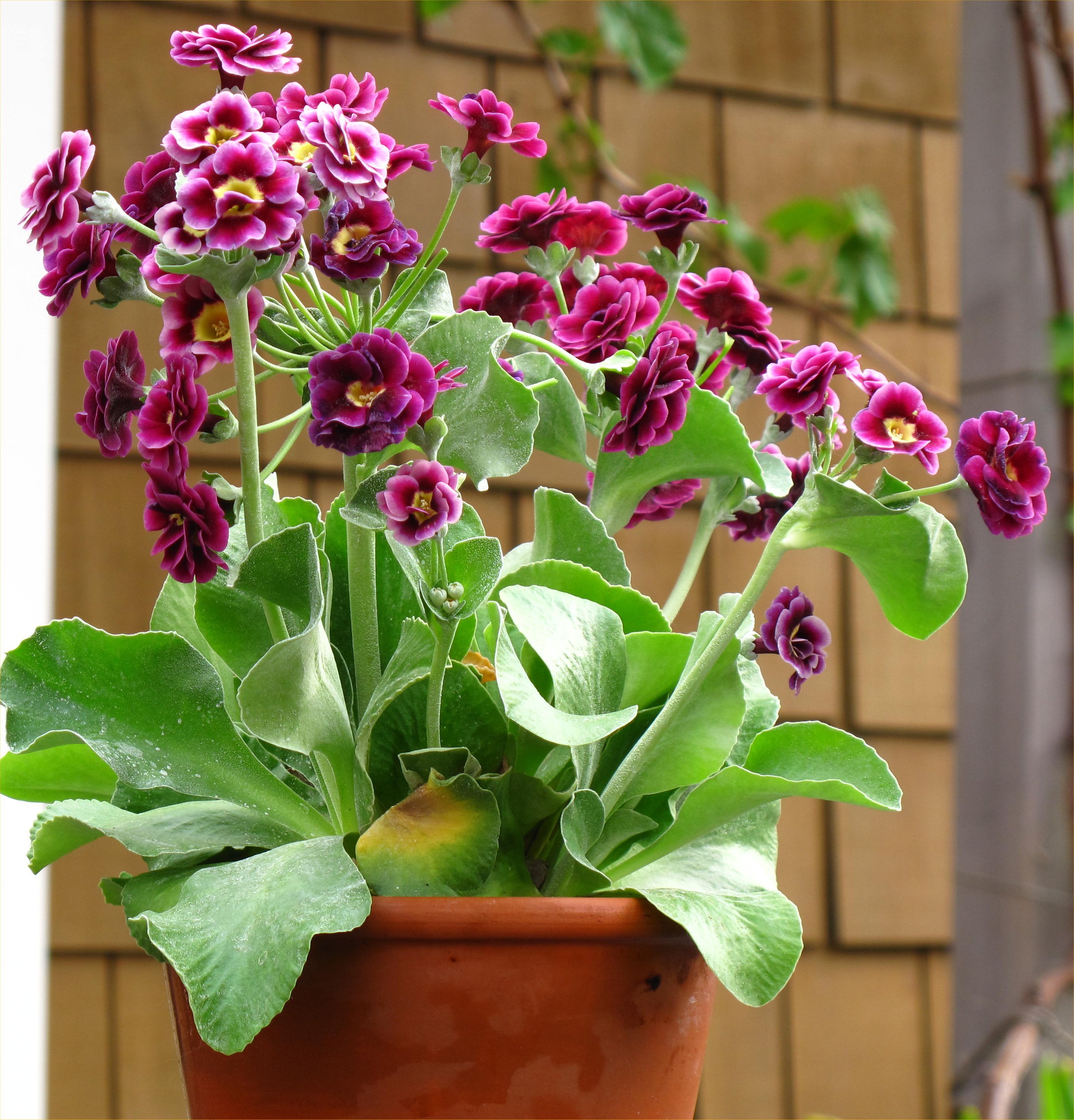
P. auricula ‘Purple Rain’

Garden auriculas do not have the serrated “toothed” leaves that P. marginata displays, but clearly the two species hybridize readily.  The flowers of Primula marginata cultivar ‘Mauve Mist’ shown below are probably the result of a cross between P. marginata and an auricula primrose cultivar.

P. marginata ‘Mauve Mist’

According to John Richards, in his seminal work, Primula  (published by Timber Press, Portland, Oregon,1993), P. auricula has been a popular garden plant for at least five centuries, and indeed was one of the first decorative plants to be cultivated in Europe. The social life of the Lancashire mill towns in the Victorian era often revolved around  Auricula societies and their shows, where considerable sums of money could be won for a prized plant!

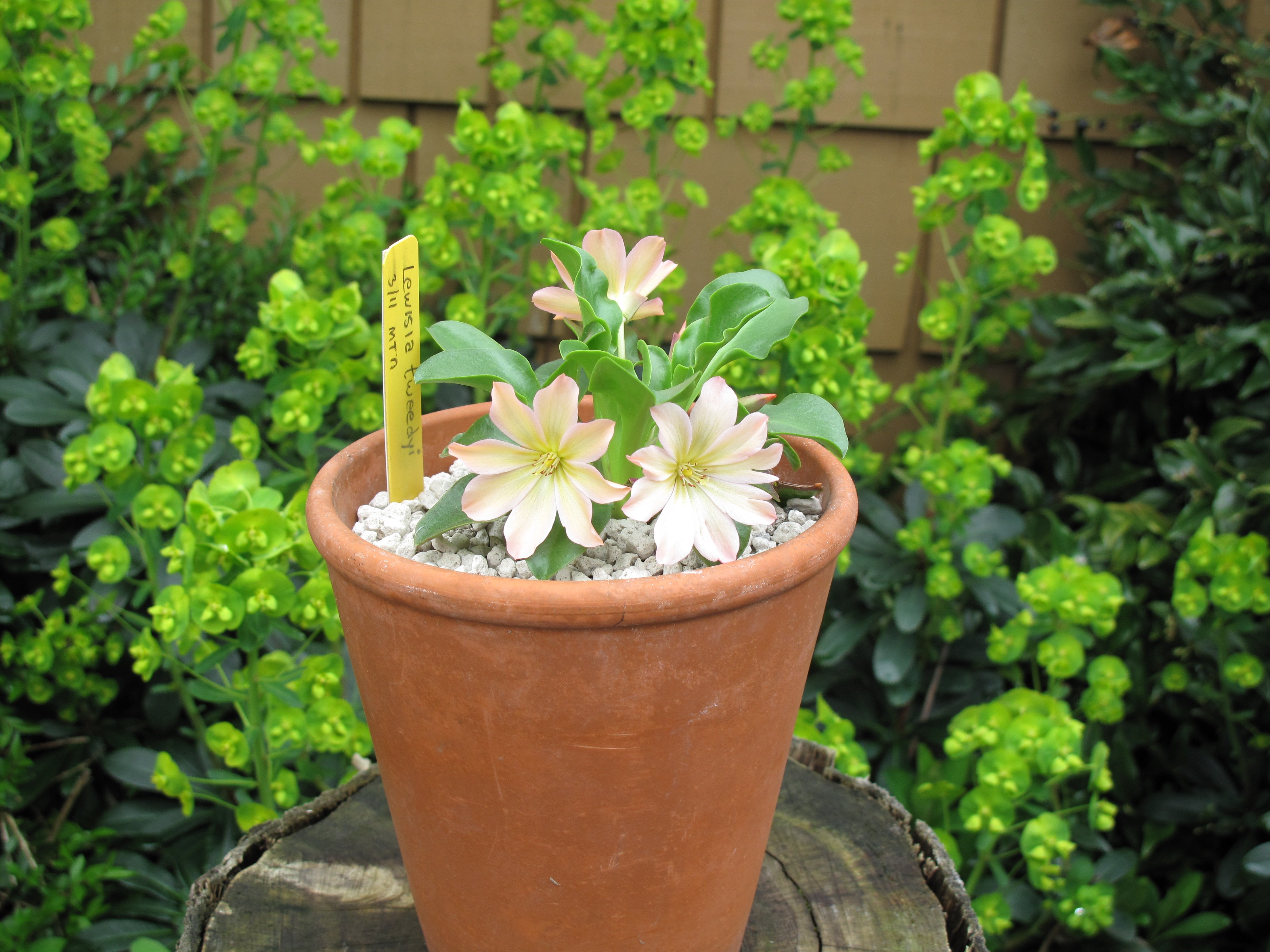
Lewisia tweedyi: Queen of the Genus

Frank Tweedy, the eponymous discoverer of Lewisia tweedyi, collected plants while working for the US Geological Survey in Montana, Idaho and Washington. He’s reputed to have collected the Lewisia that bears his name while working on a railroad survey near Mt. Stuart in the Wenatchee mountains.

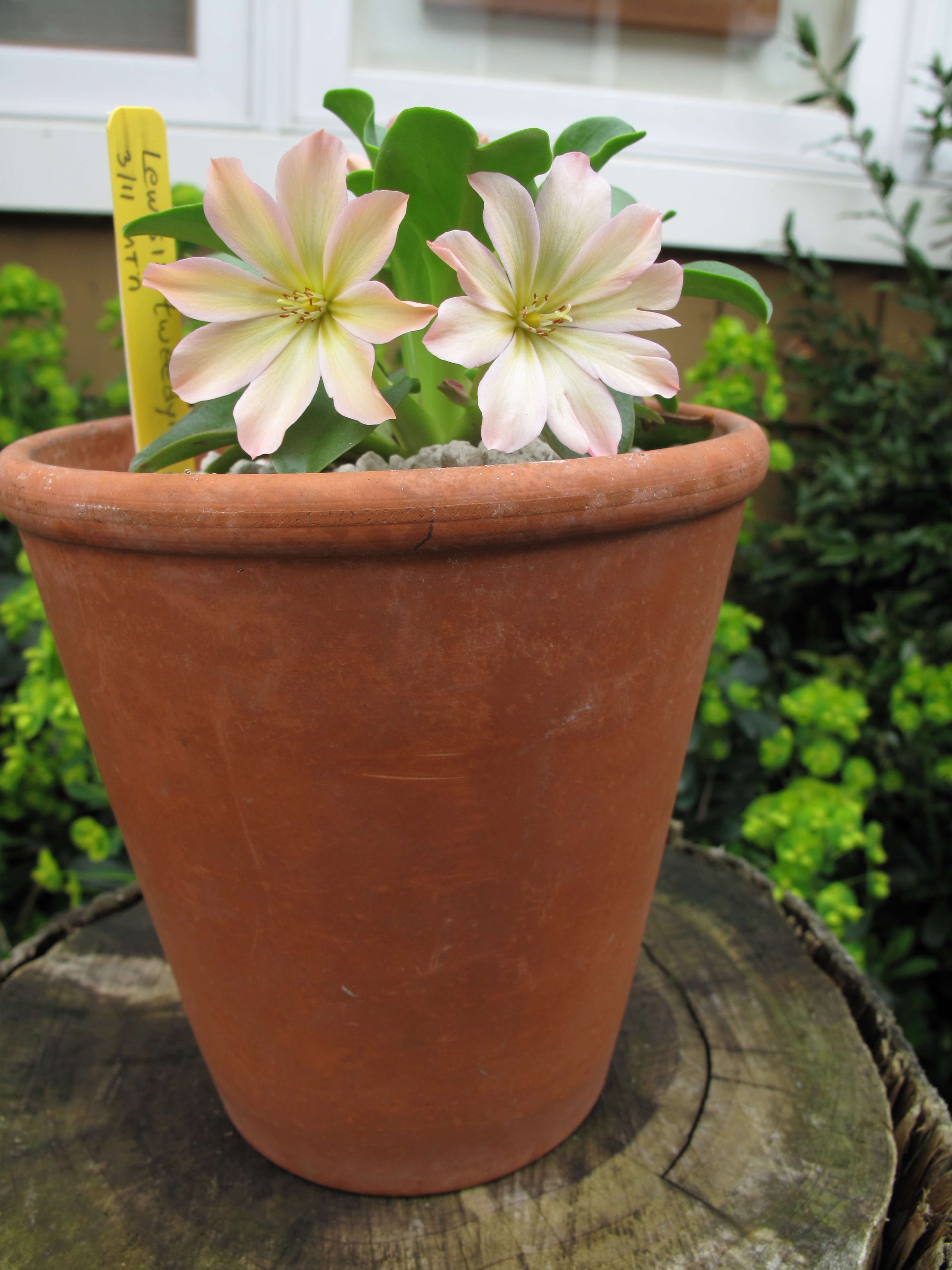
The tweedyi bloom — far more subdued than the rich (some might even say gaudy) colors of the various Lewisia cotyledon hybrids found in the nursery trade — ranges from pastel shades of peachy pink peach to a deep rich pink contrasting with shades of orange yellowish apricot.

While nothing compares to stumbling on this beauty in its natural habitat while hiking in the mountains around Leavenworth, Washington; a close second may be enjoying the bloom daily on a specimen in a clay pot.

Seattle plantsman, alpine authority and author, Roy Davidson, writing in the 1970’s described the color range eloquently, especially the variations found in the wild:

“this is almost invariably a lovely pastel peach color, the result of a pink wash of pigmentation over a basic background of soft lemon-yellow; often variable in the same flower over its life span of a few days, usually deepening appreciably.  Sometimes the blush is evident only concentrated on the margins, thus leaving a lemon or quite greenish star or eye effect in the center of the blossom with a fluff of yellow stamens in its center, but on occasion, in wild plants the pink fails to develop, and the result is, of course, a fragile beauty in crisp lemony-citron, with yellow boss to match. Now, in cultivation, has emerged the other extreme, those with none of the minimum of the yellow basic color, so that the total effect is a pastel pink of great beauty.”

(noted in the Bulletin of the Alpine Garden Club of British Columbia, February 1973)

Cultivation

Whether it’s reputation for being difficult to manage in cultivation is deserved or not, it’s toughness, like most mountain dwelling plants, is a startling fact. Years ago, I had one in a clay pot under an eave and lost track of it for at least 18 months.

Discovering it in a shriveled state under some brush in early in spring I revived it with a deep watering.  It recovered and made a single weak looking bloom that year.  With some minimal care, it continues to bloom nicely every spring.  A critical key to pot cultivation is letting it dry out after blooming subsides, keeping it dry all summer and relatively dry all winter.