Soil Blocks Save Money and Speed Transplants

Instead of direct seeding followed by thinning, which wastes viable seedlings; or the use of plastic, peat or makeshift pots; why not bite the bullet and purchase a soil block maker?  Presto!  You’ve eliminated  that motley collection of yoghurt containers, egg cartons and other detritus.
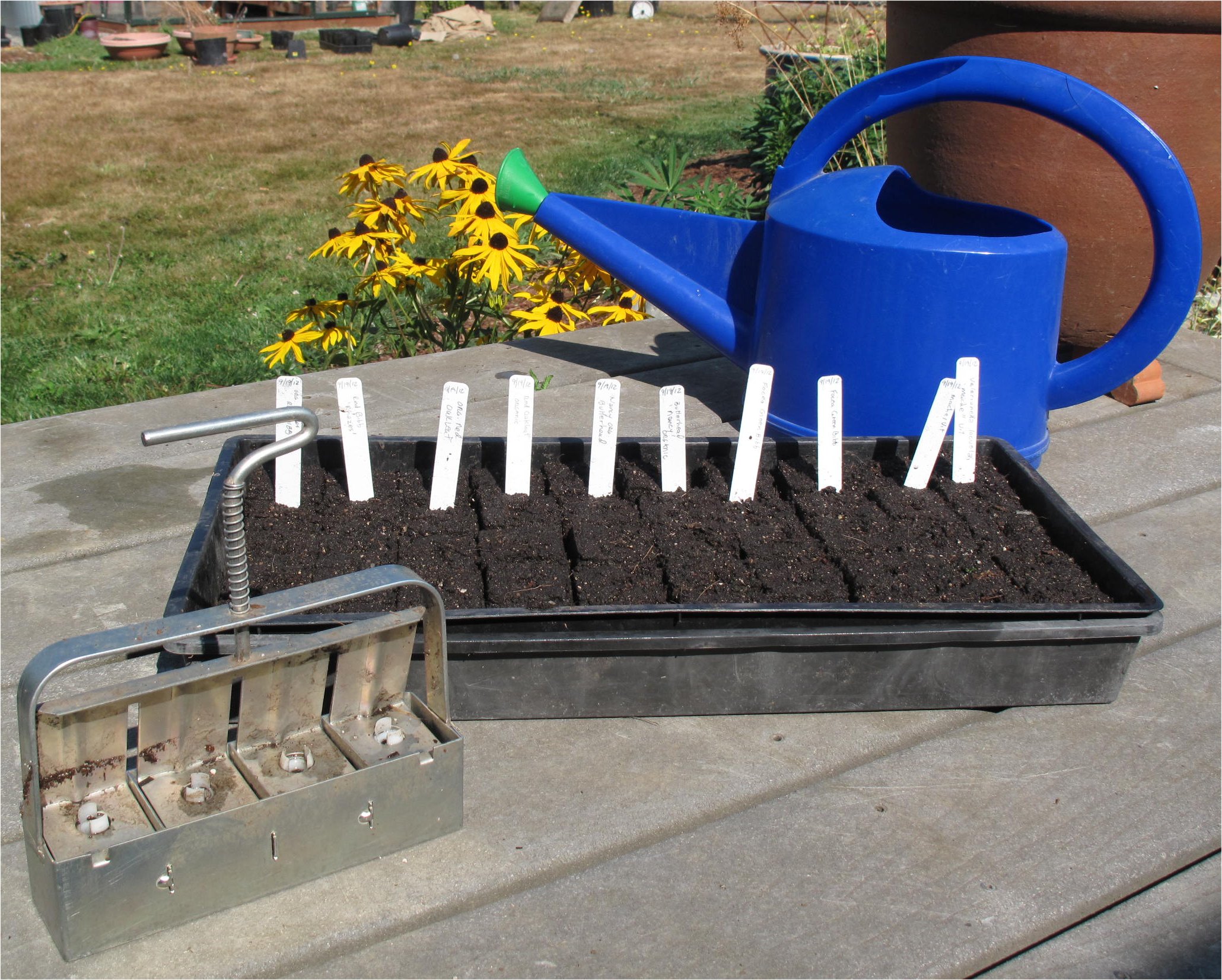
  • Saves seed (no waste)
  • Eases or eliminates transplant shock
  • Increases yield
  • Saves money (after initial block maker purchase)
  • Reduces the clutter, cleaning and storage of plastic or peat pots

The soil blocks can be potted on in bigger soil blocks or put directly in the ground when ready.  Magically, roots wait patiently at the margins of the soil block rather than becoming pot bound. When placed in the ground (or a bigger block) they expand naturally into the adjacent soil.

I’ve been experimenting with seedlings known for resenting transplantation: For example, instead of spreading the entire contents of a radish seed packet in a bed and then thinning the tiny seedlings, I put 10 seeds of the heirloom radish Saxa II into soil blocks.
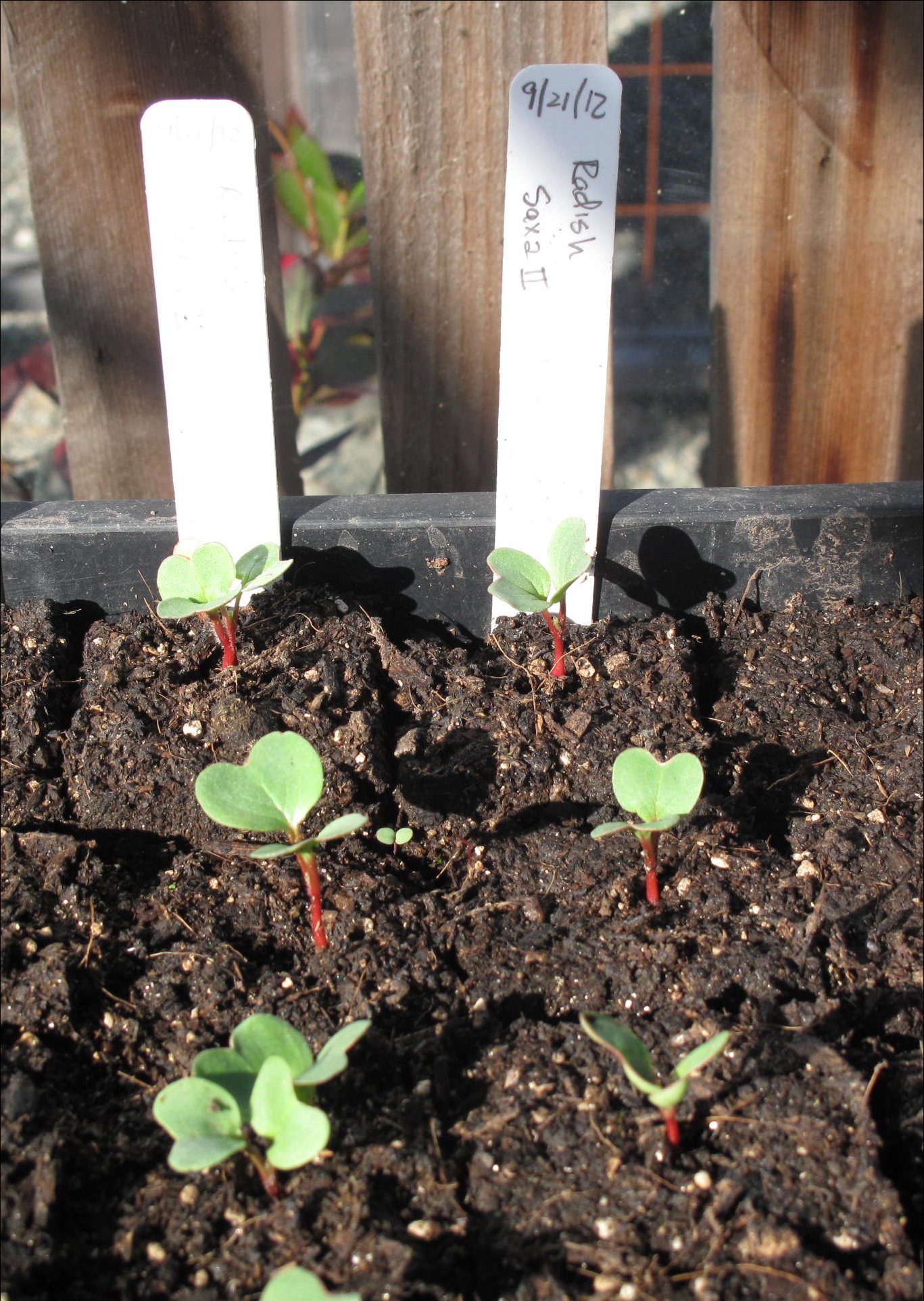
Every ten days I’ll start another ten soil blocks until the packet is finished.  When filled with roots I’ll transplant each soil block into my raised beds covered with greenhouse fabric.

These raised beds are filled with cold tolerant greens  (lettuces, mache, mizuna, etc.) for winter salad harvest.
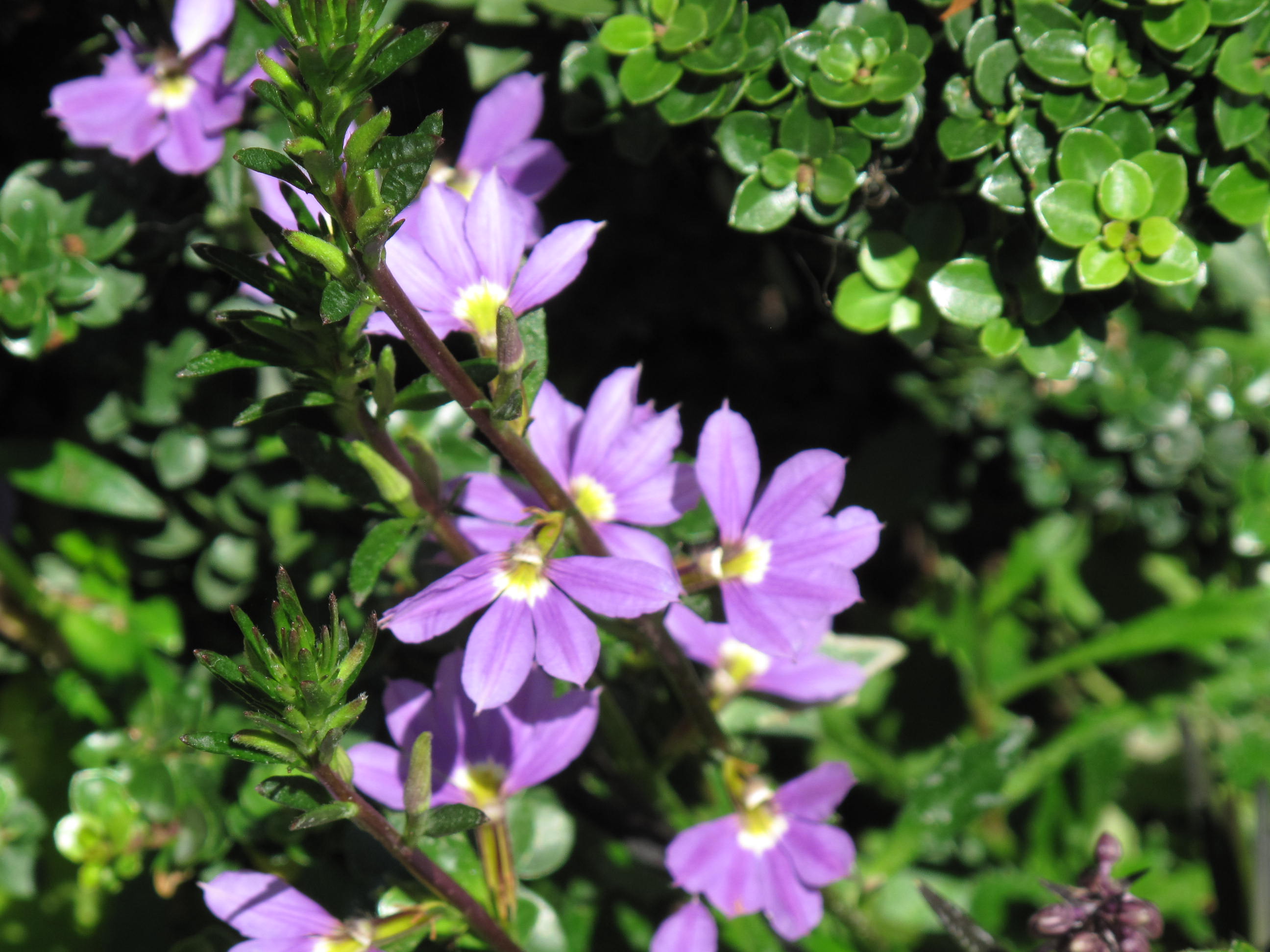
Scaevola aemula (Fan Flower)

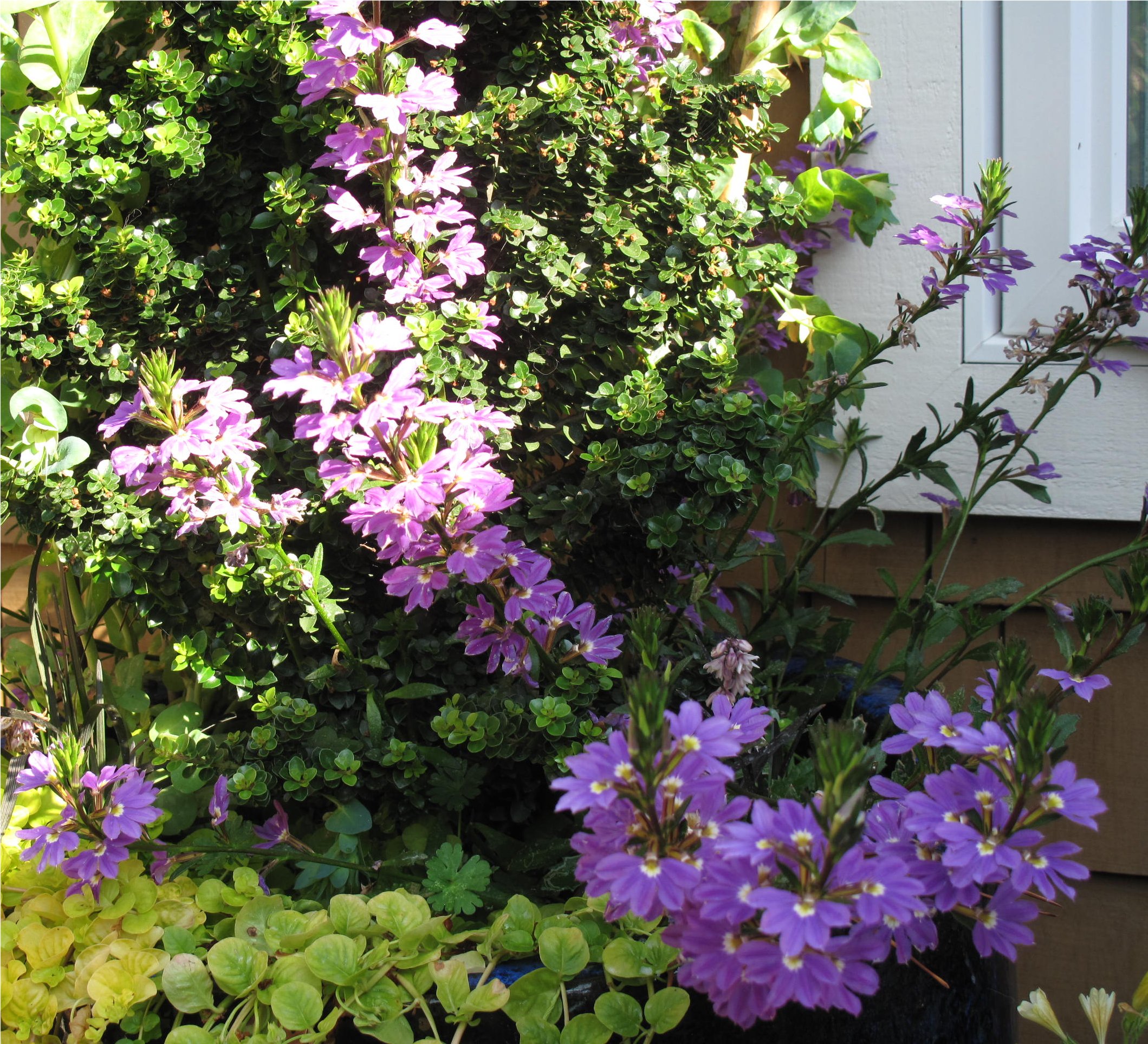
Fan flower hales from Australia and is usually sold and treated as an annual in the Pacific Northwest.  Common names abound:  Fairy Fan Flower;  Common Fan Flower, Escabola;  Blue Wonder (clearly an epithet based on this plant’s dependable, long lived and persistent blooms).

Scaevola aemula ‘Blue Wonder’ with Ilex crenata ‘Dwarf Pagoda’

In its native Australia, fan flower is a sprawling evergreen perennial with ascending, slightly arching or procumbent (trailing) stems.  It thrives in hot, humid climates where it produces a non-stop bloom of dark blue fan-shaped flowers in the leaf axils throughout summer to first frost. As the stem elongates new flowers open, but the remarkably long-lived flowers lower down on the stem remain vibrant.

I’m growing mine in a large pot with the dwarf conifer Ilex crenata ‘Dwarf Pagoda’ as the centerpiece. The stems of my Fan Flower seem to arch more than trail, though some of that habit may be due to the support of the Ilex.

It may take some searching local nurseries to turn up a plant.  I’m not sure why, but most plant buyers don’t seem to have it on their radar.  It’s best to look when annuals first arrive in the nurseries.

I’ll be taking cuttings this fall and will also try to winter over the “Mama Plant,” either in my “cold” greenhouse or simply dragging into the garage during prolonged frosts. Conventional wisdom says it’s hardy to around 30°  but that’s clearly in the ground and not in a pot.  (Indeed, those cold hardy numbers on the plant tags aren’t referring to potted plants, nor are they necessarily accurate for plants in the ground, rather they are notorious for stretching credulity in favor of sales).

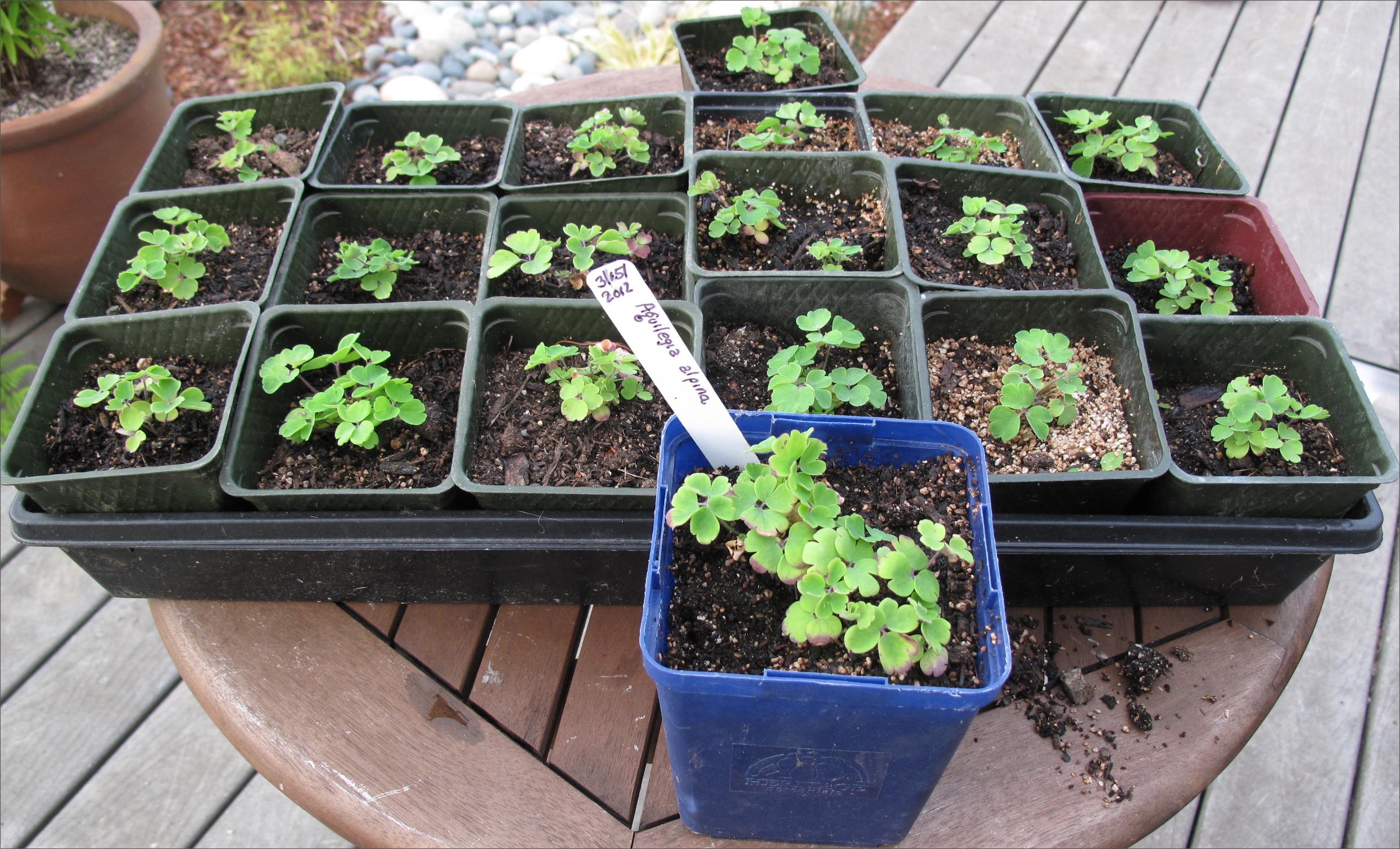
Aquilegia alpina

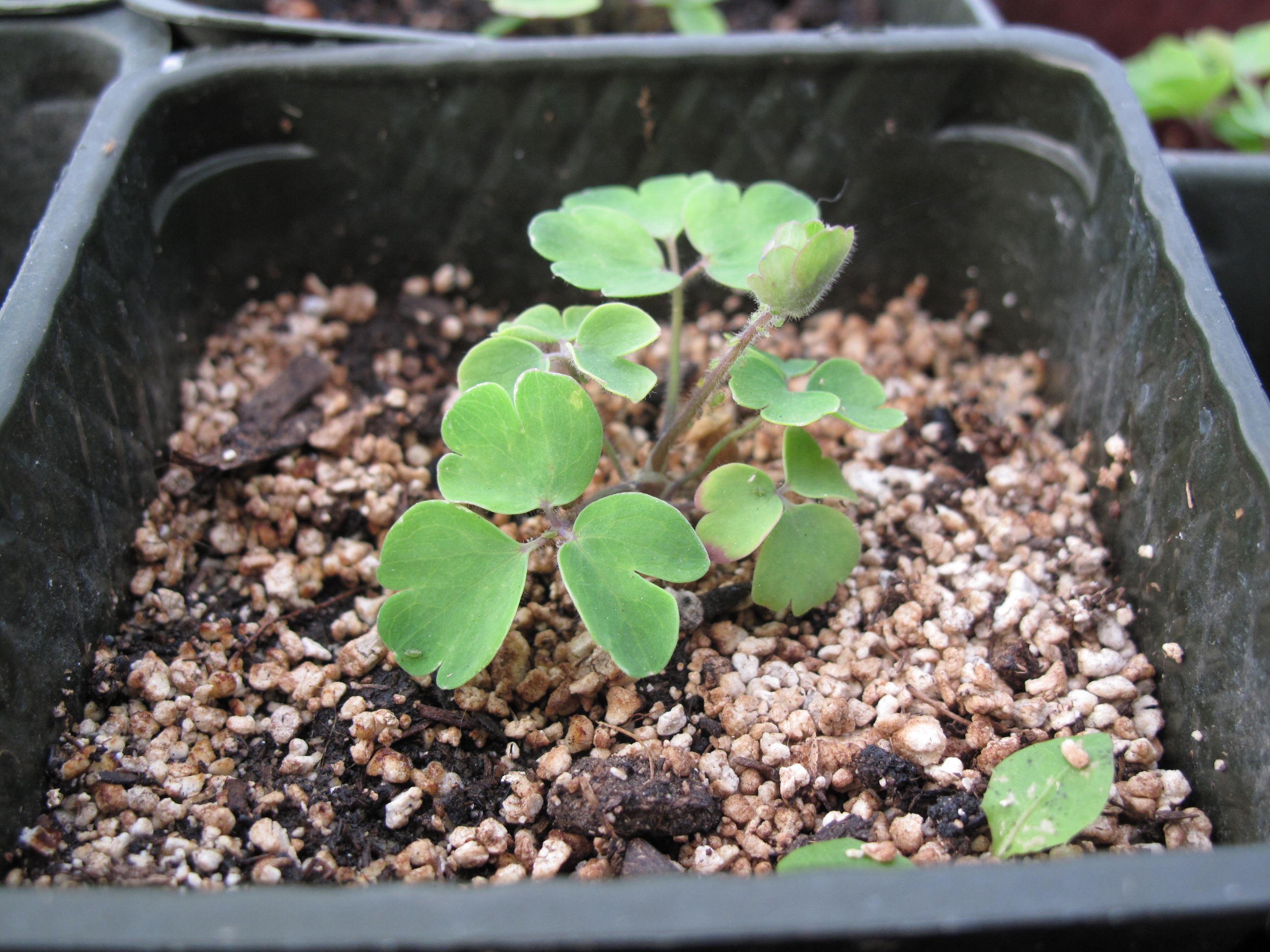
These Aqulegia alpina seedlings were started on March 15, 2012 and probably won’t bloom this year. This European native hails from the Swiss Alps and Norther Apennines. My seed came from J.L. Hudson, Seedsman of La Honda, CA.

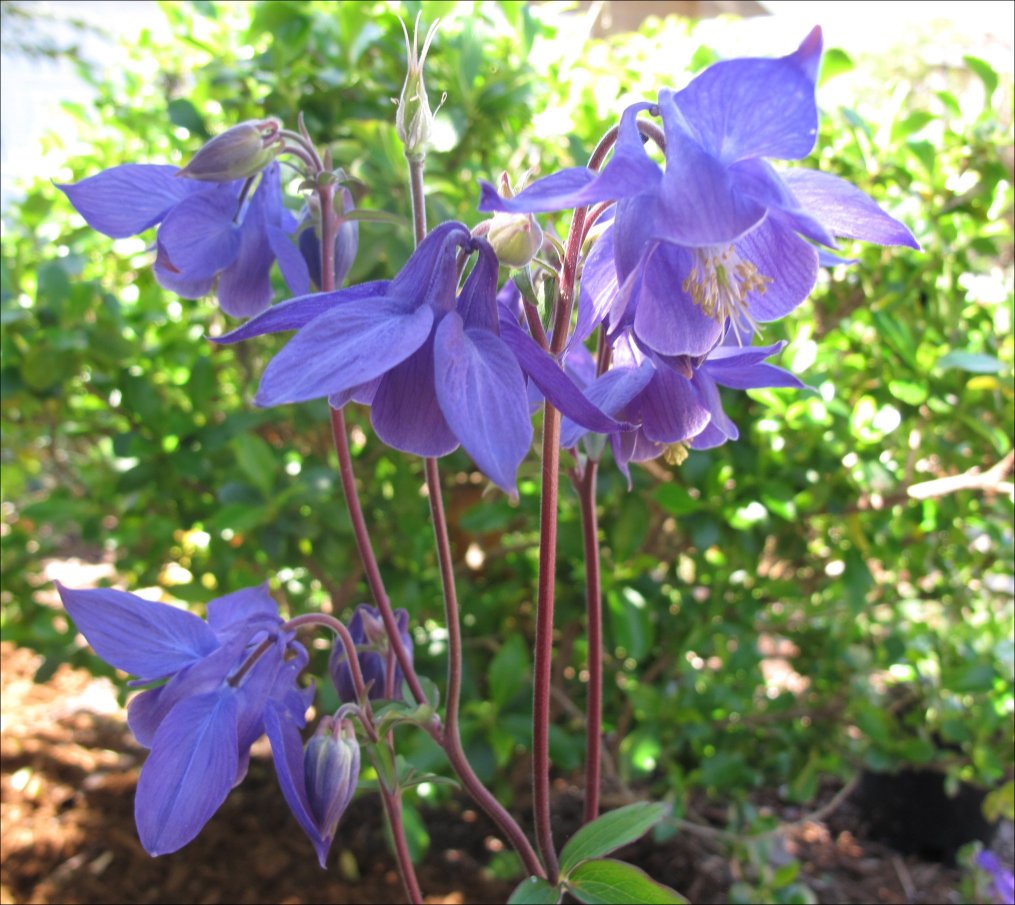
This species deep blue flowers rivals any hybrid cultivar.

A alpina detail

Since the genus Aquilegia readily re-seeds itself, the possibility of nearby seedlings self-hybridizing into different shades exists, especially if you have other Aquilegia species and cultivars nearby. If you want to preserve the true-blue species try to keep a clump far away from other columbines. For example, our Washington native columbine, Aquilegia formosa, which tends to reddish pink, will be happy to oblige!

Aquilegia alpina is endemic to the European Alps extending into central Italy and is found in Austria, France, Italy, Liechtenstein and Switzerland.

According to the Cambridge, UK-based International Union for Conservation of Nature (IUCN), Aquilegia alpina has “stable populations and is fairly common in parts of its range. There are few threats such as collection and intensive grazing that affect this species but they are not likely to lead to significant declines in the near future. It is also included in protected areas throughout its range. Therefore, this species is assessed as Least Concern.”

The IUCN reports that In France it is on the national list of protected plant species and can be found in protected habitats (Parc Nationaux de Vanoise, Mercantour, Ecrins, Forets Domaniales, that it has regional protection and is partially included in protected areas in Italy; that it is classed as “near threatened” in Austria and protected in Voralberg; is also “near threatened” in Switzerland and protected nationally, and finally In Liechtenstein it is protected and listed as endangered.