Crimson River Lilly ‘Oregon Sunset’

Many interesting plants for the garden share desirable characteristics of bloom, habit, ease of cultivation and a host of other attractive attributes — after all, that’s why they have reputations as choice plants.
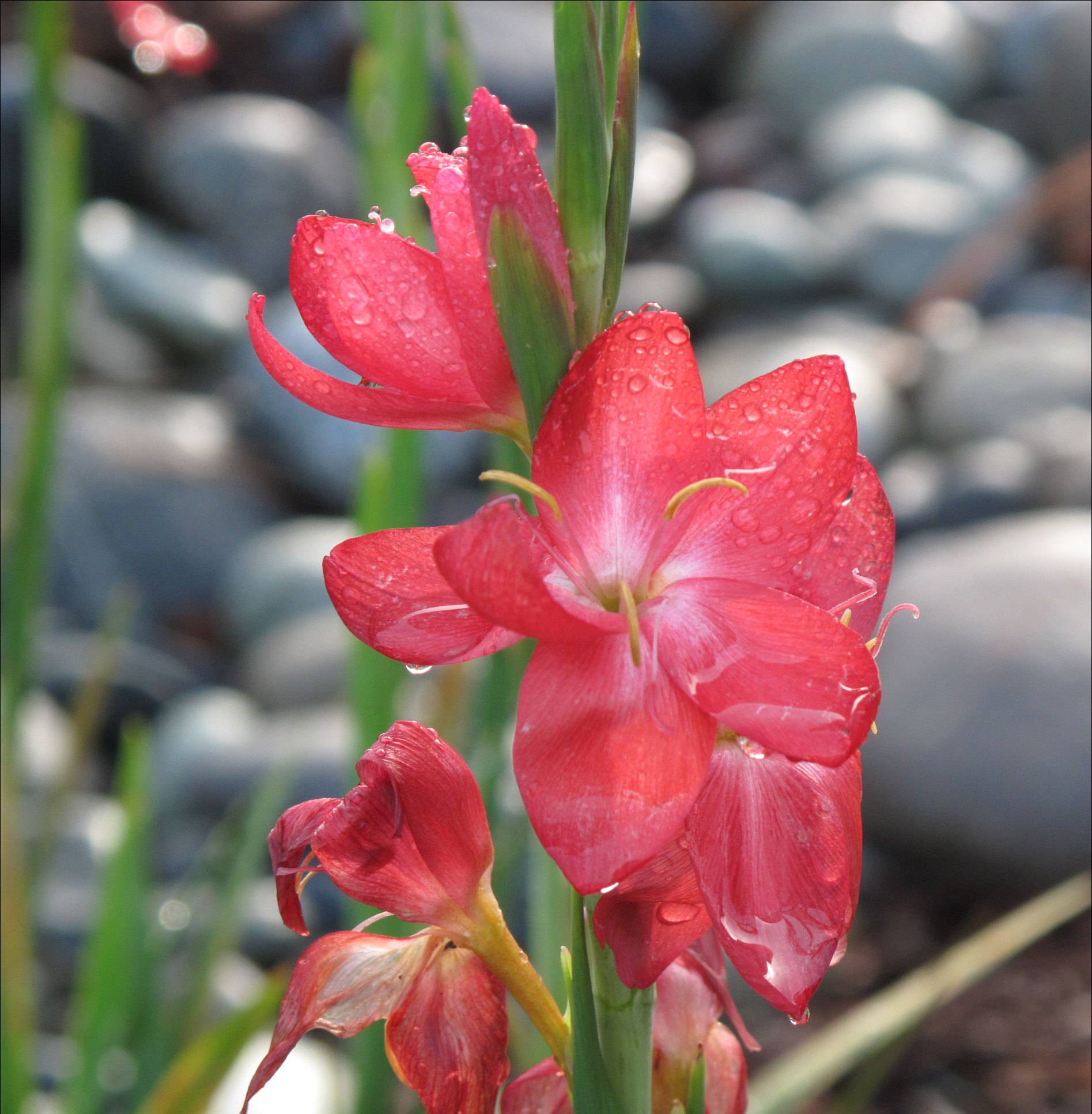
Crimison river Lilly Oregon Sunset2

Here’s a worthy garden plant for the Pacific Northwest whose two most salient characteristics are prominent winter blooms of stunning crimson flowers and a history of confusing and (in one case) a downright offensive name.

This relative of the gladiola started blooming for me in late summer and continues to this day (late January 2013), even after night time temperatures dropped below 32° for four or five consecutive days a earlier in the month.

The six mature clumps shown below were started from four inch pots last May, probably propagated from divisions; the starter plants were only just poking out of the top of the pot by about 3 inches.  More than seven month later new shoots at the base of each clump are visible and will probably make it easy to propagate new clumps.
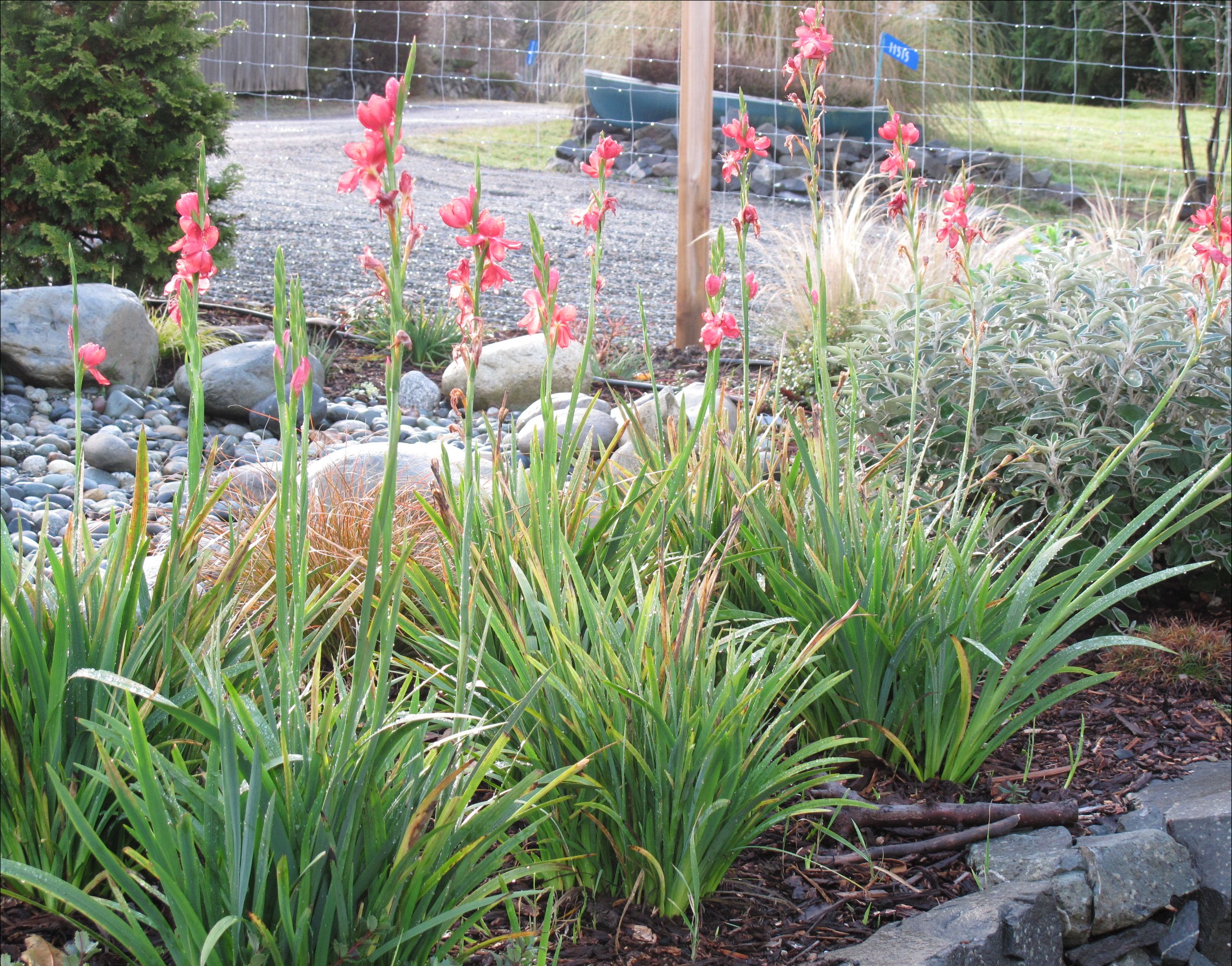
Img_3070

Now for the naming issues. Botanists have recently settled on Hesperantha coccinea, but in the nursery trade, Schizostylis coccinea predominates.
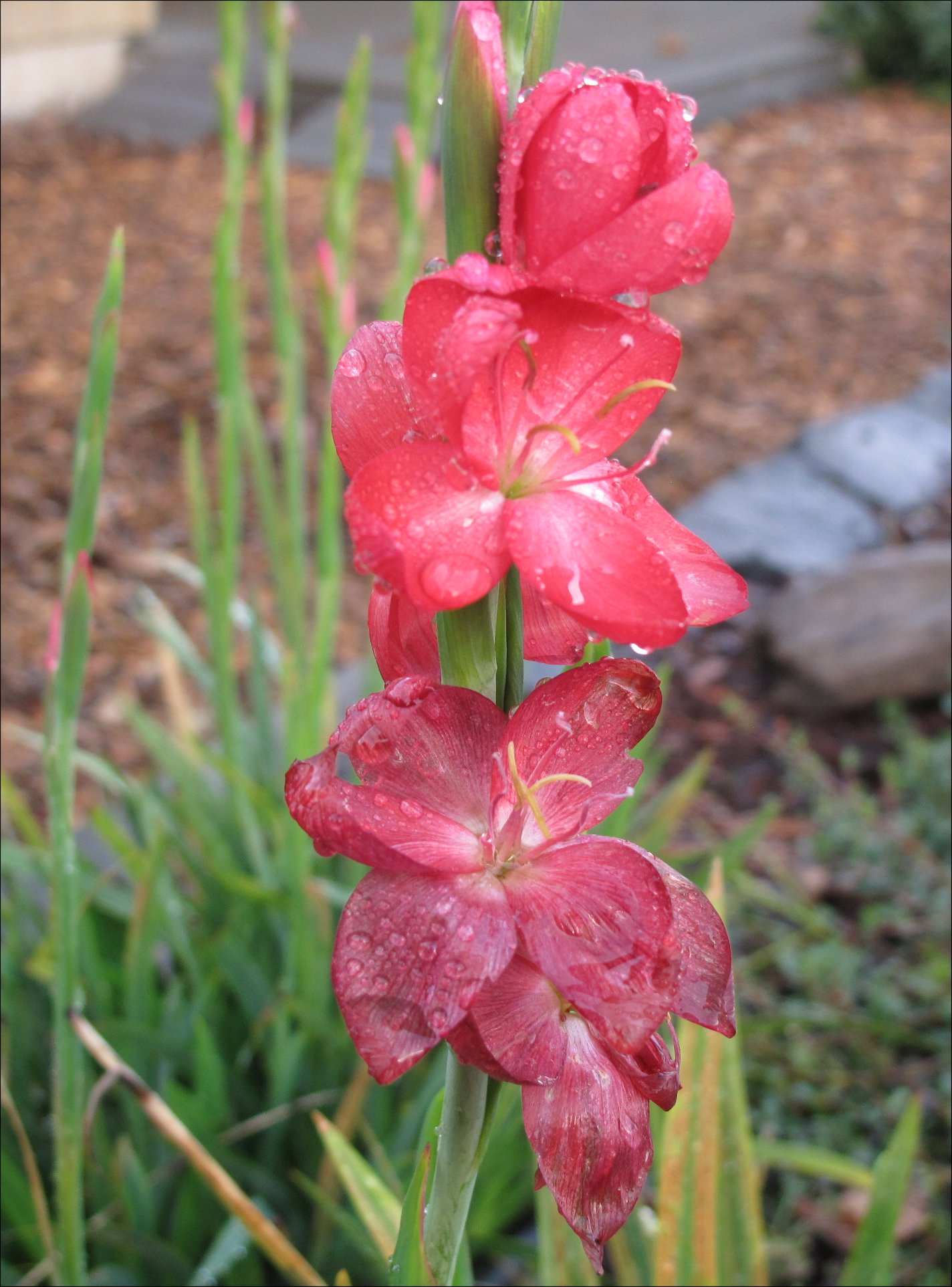
Hesperantha coccinea ‘Oregon Sunset’ on a wet January day

There is, of course, the usual confusion with genus and species names, mostly due to ongoing botanical research using newer molecular techniques such as DNA sequencing. But even before that research, plant biologists were constantly coming up with new classifications based on the visible characteristics. For that matter, relationships between plant populations has never been an exact science, since nature constantly surprises. It is the common name where this plant’s story becomes uncommonly interesting.

Here in the Untied States and in the nursery trade it’s best known as the “Kaffir” lilly.  No doubt many using that name are unaware of it’s modern meaning in South Africa, where the species originates.  The Oxford English Dictionary succinctly defines it this way:   “Since the early 20th century extremely offensive in South African contexts, and widely avoided elsewhere.”

The origins of the term apparently originate in the antecedents of the Arabic language, where its root letters acquired the meaning of to cover or to hide. Later, “kafir” was used to describe unbelievers, or those who rejected the Islamic faith.  By the 15th century the term was used to describe non- Muslim African natives.  Apparently by the  20th century the word had morphed into a racial slur, equivalent to the American “N” word.  Other common names used in lieu of Kaffir Lilly are Crimson Flag and Crimson River Lilly.

Hesperantha coccinea belongs to the Iridaceae family, which also includes gladiolas.  The rhizomatous perennials of the genus Hesperantha have sword shaped leaves and starry, often cup shaped flowers borne on tall spikes.  A mature clump’s height varies from about 15 to 36 inches.

The South African species hails from a summer rainfall area, which is widely distributed throughout the eastern provinces of the country. The species name coccinea means ‘scarlet’ and refers to the bright red flowers. Until fairly recently this species was known by its old name Schizostylis coccinea.

Hesperantha coccinea is a water- loving, bulbous perennial that adapts nicely to our cold wet climate. It occurs naturally growing in full sun on saturated soils often associated with stream banks.   Although the flowers are normally bright red, there are also pink and white forms within the genus, which consists of about 65 different species. The color of the cultivar Oregon Sunset closely resembles the species.
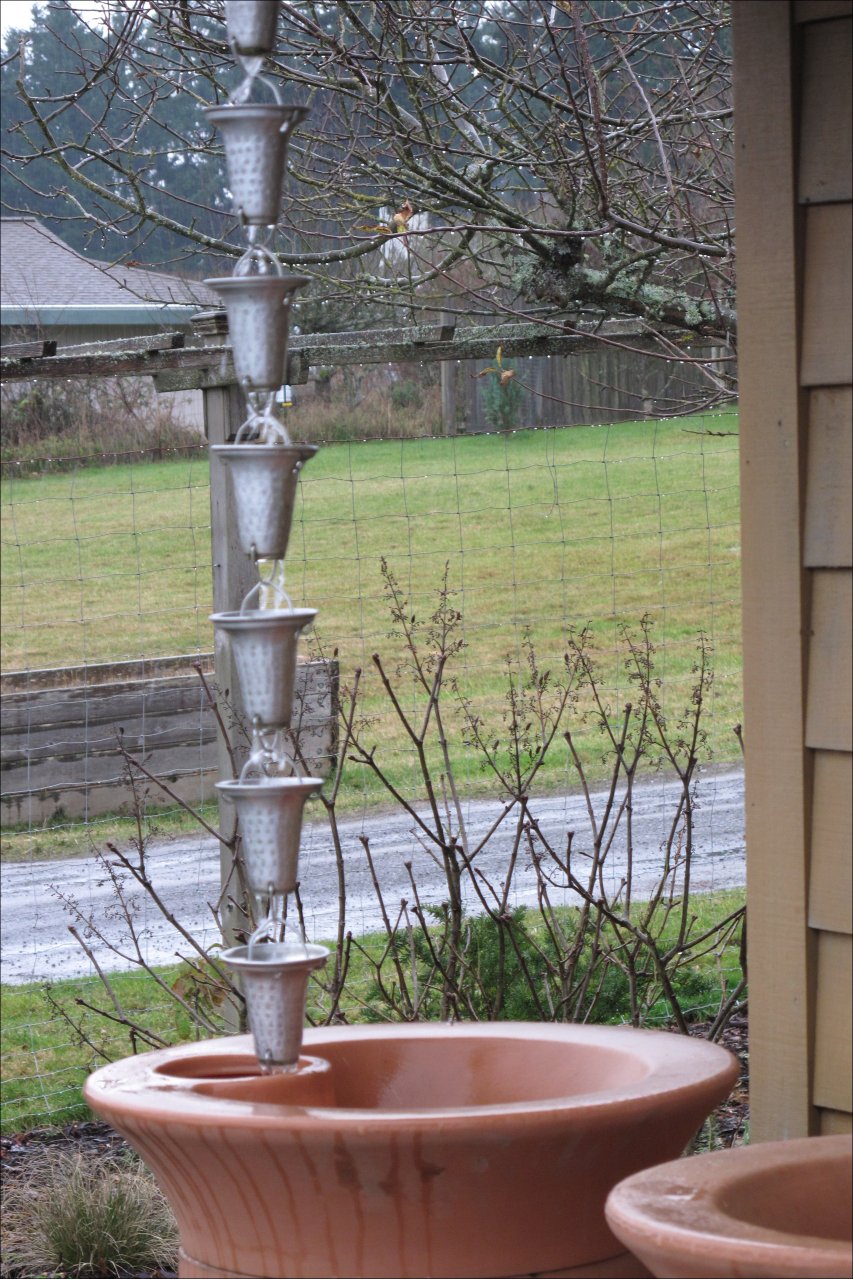
Rain Garden Update Winter 2012-2013

The rains came as expected this winter. October, November and December were wet and generally milder (above average temps). The rain garden performed exceptionally well.

rainchain1

It was a pleasure to watch the torrent of rain cascading down the rain chain. The barrel filled so quickly during the rainiest of days that I frequently opened the spigot and let the rill carry water to the garden.  I can think of only one day when I even noticed a bit of “pooling” in the center depression of the garden, but that quickly receded within an hour or two after the deluge ceased.

It really wasn’t necessary to direct any overflow from the barrels to the foundation drain.  Instead I just opened the spigot in heavy downpours and let the rain garden handle all the flow.

Improvements to the low area on the west of the house  — where heavy rains used to result in the foundation drain creating a small pool  —  were noticeable.

The following original plant list reflects just those plants established with the rain garden. As each plant reaches its bloom season common names in the list will be a link to a picture.  Plants under propagation or planned for adding this spring are indicated by delta symbol.

Initial Plantings (2012)    

northwest native;  Δ to be added spring 2013

  • Amelanchier x grandiflora  ‘Autumn Brilliance’   (Serviceberry)
  • Iris tenax   (Oregon Iris)  
  • Rudbeckia fulgida  ‘Goldstrum’  (Black Eyed Susan)
  • Lupinus poltphyllus  (Large Leaf Lupine)
  • Aster subspicatus  (Purple Dome Douglas Aster)
  • Penstemon x mexicanus ‘Pikes Peak Purple‘  (Pike’s Peak Beardtongue)
  • Digitalis purpurea ‘Foxy’   (Foxglove)
  • Solidago rugosa  ‘Fireworks’  (Solidago ‘Fireworks)
  • Aquilegia alpina   Δ   (Alpine Columbine)
  • Aquilegia formosa    (Western Columbine)
  • Coreopsis verticella ‘Zagreb’  (Zagreb Tickseed)
  • Achillea
  • Camassia quamash (Small Camass)
  • Juncus patens ‘Elk Blue’  (Taper-Tipped Rush
  • Deschapsia cespitosa ‘Pixie Fountain’  (Dwarf Tufted Hairgrass)
  • Acorus gramineus ‘Ogon’   (Variegated Sweet Flag)
  • Polistichum minutum  (Sword Fern)
  • Sysyrinchium idahoense  (Idaho Blue-eyed grass)
  • Fragaria chiloensis  (Beach Strawberry)
  • Arctostaphylos uva-ursi  (Kinnikinnick)

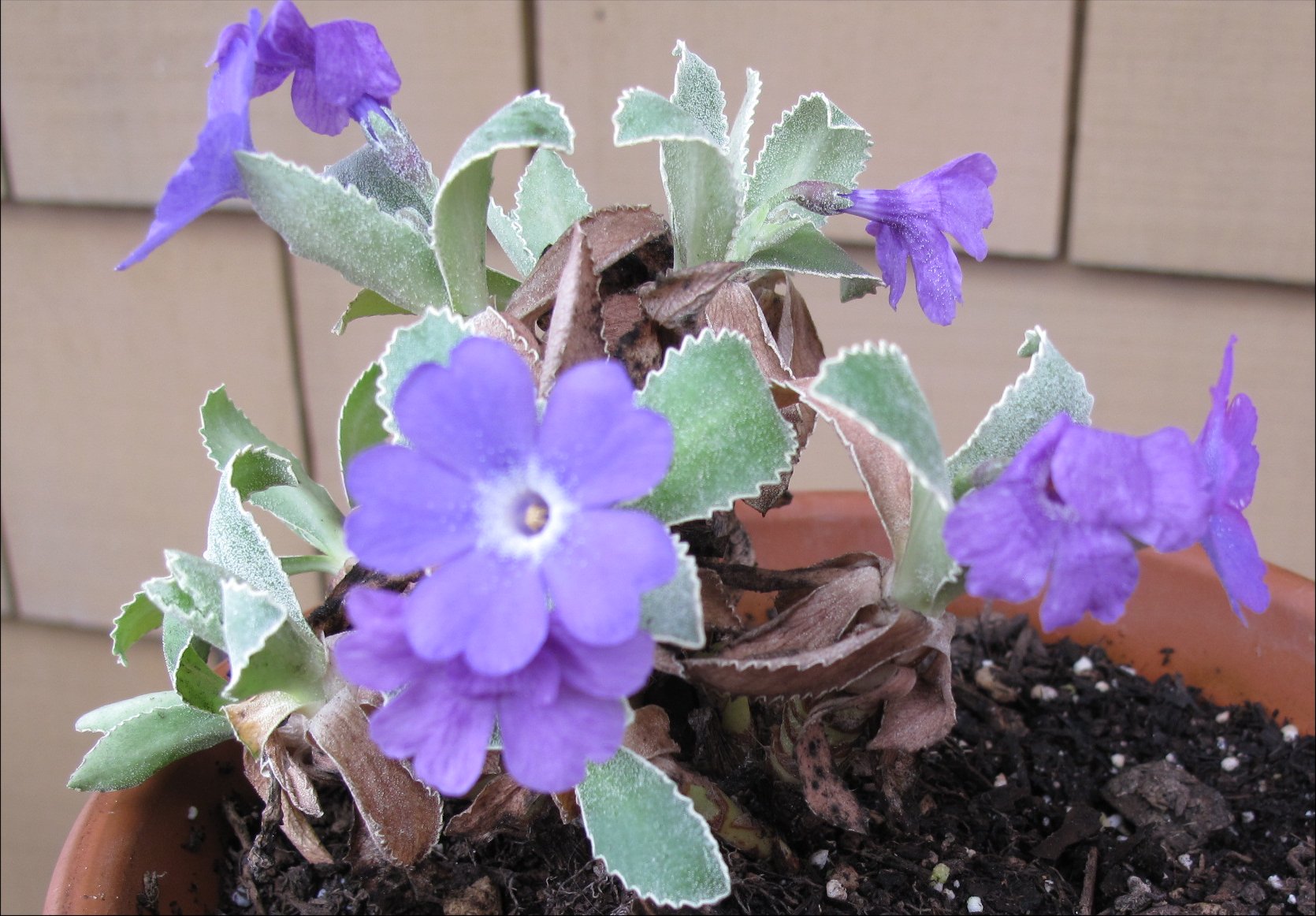
Primula marginata ‘Herb Dickson’

P marginata Herb Dickson

P. marginata ‘Herb Dickson’

I first became interested in alpine plants in the spring of 1979 while hiking in the north cascades, seeing first hand some of our native alpines in glorious bloom.  I had just moved to the Pacific Northwest from an apartment in Washington, D.C.  A few house plants were my only previous horticultural experience.

Soon after moving I joined some local plant the groups, the northwest chapter of the North American Rock Garden Society (NARGS) and the local chapter of the American Primrose society. It was at one group meeting when I first heard about Herb Dickson’s enormous collection of Lewisias and Primula about 85 miles south of Seattle at his Chehalis Rare Plant Nursery.

A few years later I found some time to make the trip down to Chehalis.  Herb was recently widowed, living alone, but graciously invited me into his home and showed me around the nursery.  I left with a few plants, mostly Lewisias.  I don’t recall leaving with any plant bearing Herb’s name — and certainly not a Primula marginata.  Last spring, more than 30 years later, I stumbled on the cultivar bearing his name while browsing the online catalog of the Sequim Rare Plants nursery.

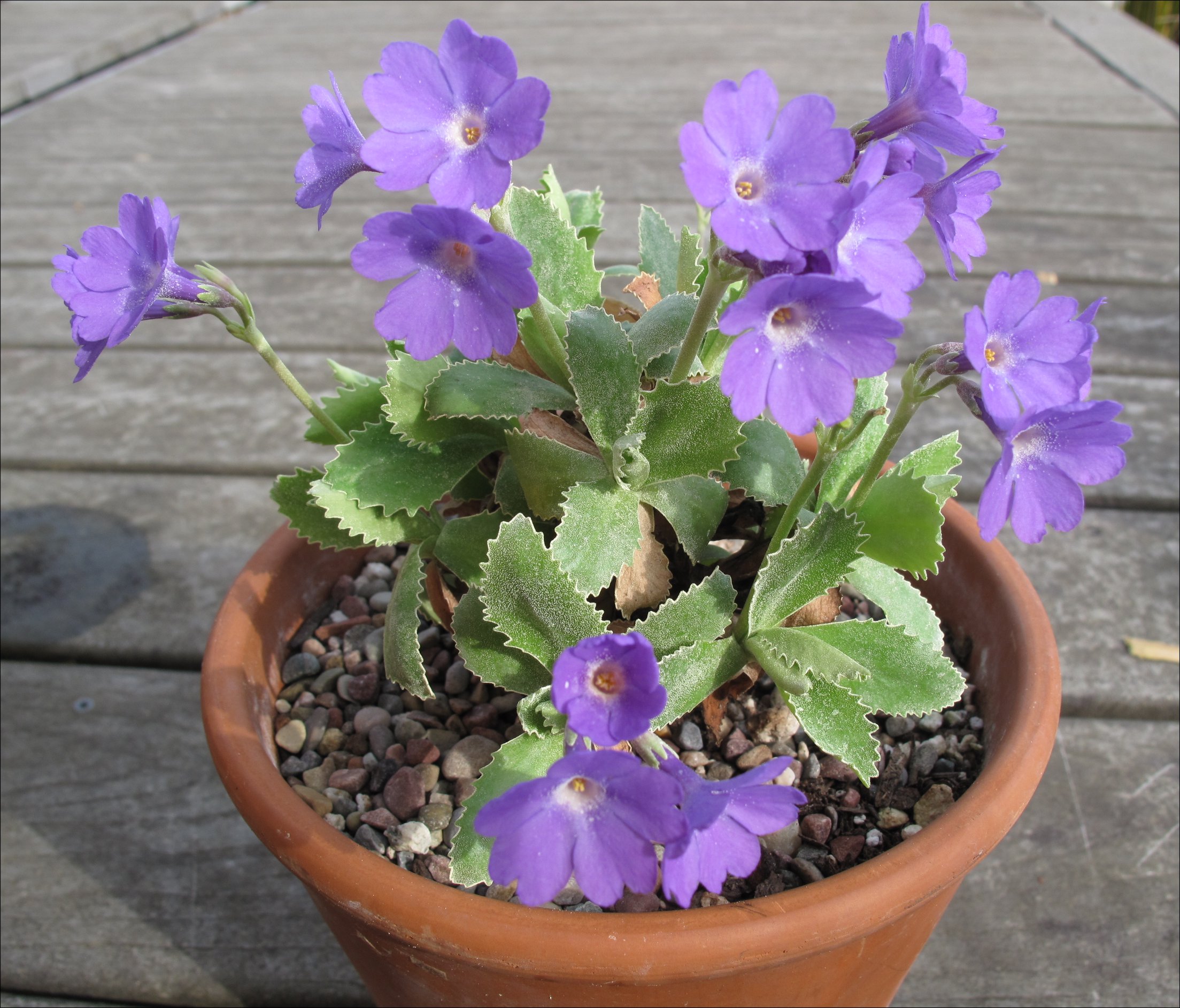
P marginata Herb Dickson2

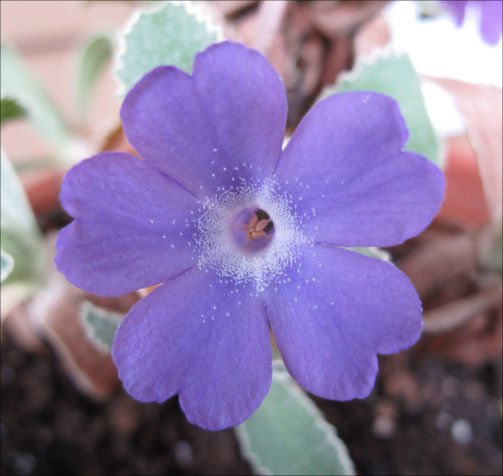
P. marginata ‘Herb Dickson’  blooming in January 2013

        The plant pictured above surprised me by blooming early this January.  It was mistakenly left outside in its pot (rather than under cover from excessive wet) most of October, November and December — months which were very wet and mild.  The plant was apparently fooled into thinking spring was at hand.  When I discovered it blooming I immediately provided shelter from the wet conditions.  Overnight temperatures dropped in mid January, so some of the leaves are still quite messy from the cold and wet, but the blooms continue.  For more info on P. marginata history and culture see this post.

Update March 2013

The same plant, with healthier looking leaves and still blooming, more than two months later.

p-marginata-herb dickson2

Primula marginata ‘Herb Dickson’