Red Flowering Currant

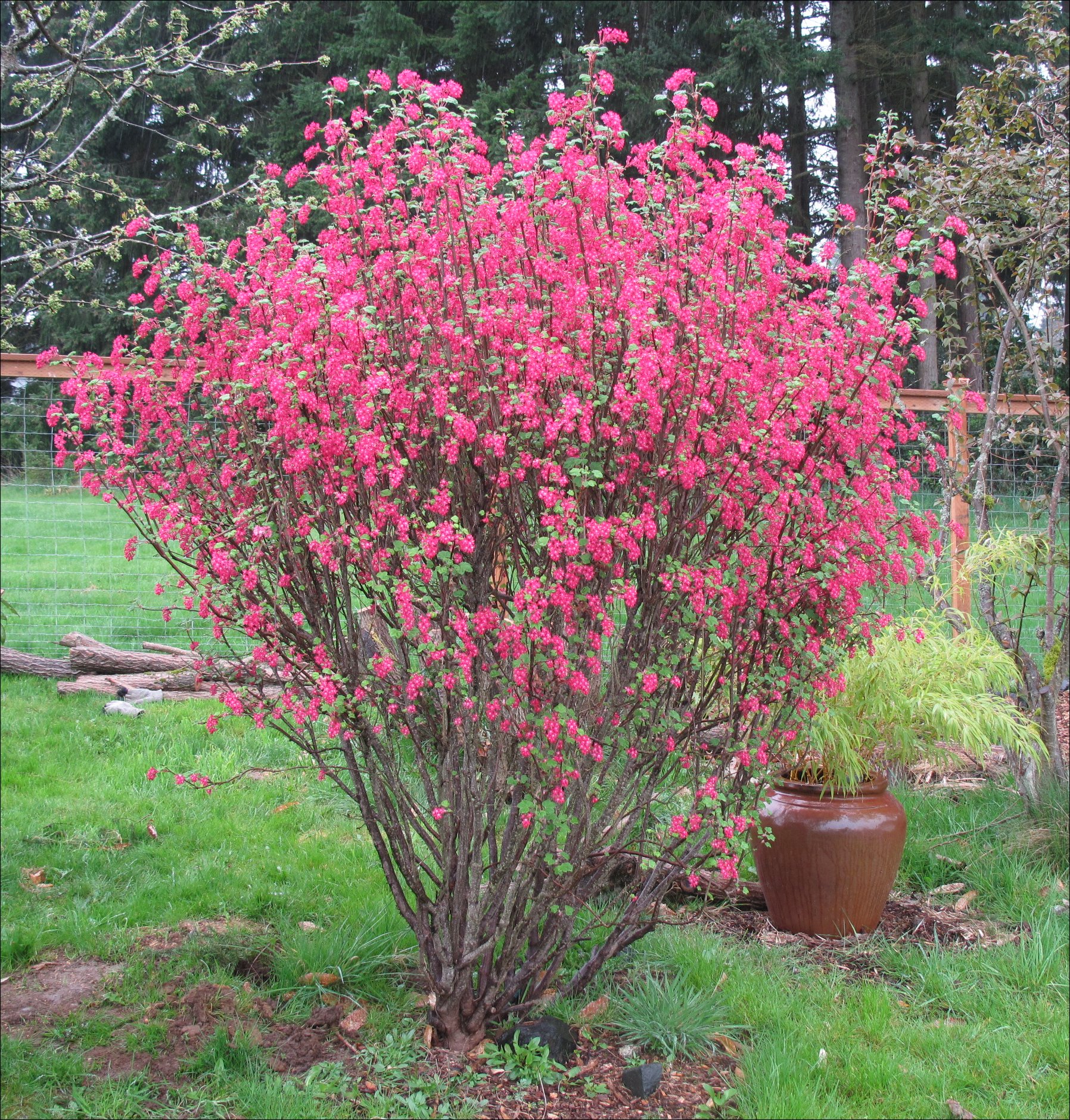
King Edward VII

Ribes sanguineum ‘King Edward VII blooming on a rainy day

As near as I can tell, this western North American native woody shrub (“discovered” in 1793 by Archibald Menzies, who traveled with Captain George Vancouver’s expeditions to explore the Pacific Northwest’s coastal regions) made its way across the Atlantic and returned decades later with smaller deeper pink flowers, an altered growth habit and numerous named cultivars, including a white form and the ubiquitous King Edward VII.

Ribes sanguineum  can’t be missed around the Pacific Northwest this time of year.  Gardners, humingbirds, hikers, homeowners and landscape professionals all are devotees of this deciduous beauty — whether the species or named varieties — even hungry deer have “appreciated” my King Edward VII cultivar!

In 1825, Scottish botanist David Douglas brought Ribes sanguineum  to the attention of the British horticultural heavyweights. Douglas was working for the newly founded Royal Horticultural Society when he was dispatched to the Pacific Northwest to collect plants for the RHS gardens in Chiswick, a village west of London. The plant Douglas popularized might have looked like the one pictured below blooming in my garden.
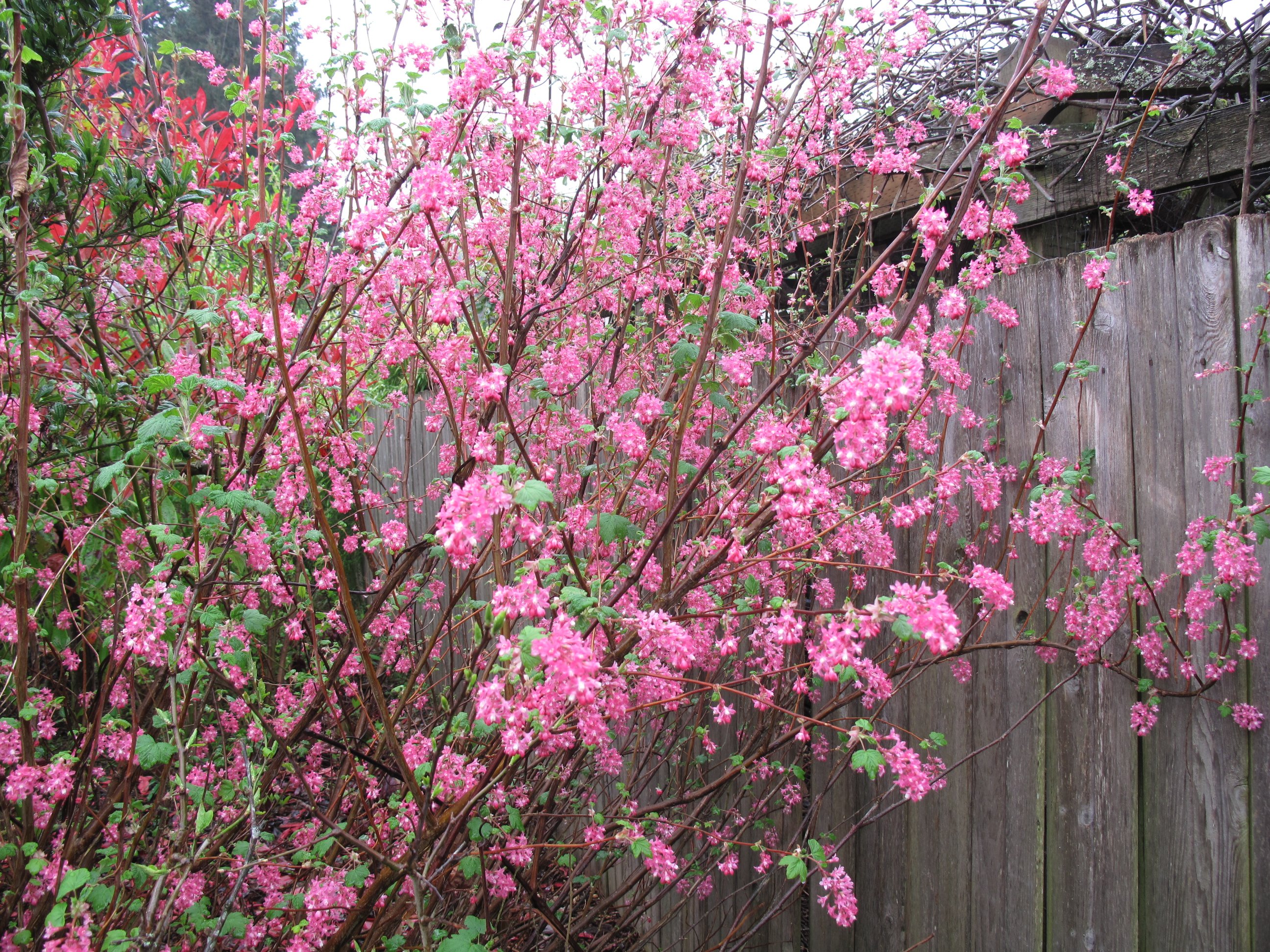
R. sanguineum

Northwest native Red Currant thriving on Vashon Island

According to Monty Don, writing in the online version of the UK’s Daily Mail, Douglas made a number of trips to the northwest, each involving clashes with Native Americans. However, Douglas’ death on his last trip did not come by the hands of Native Americans.  He fell into a pit set to trap wild cattle and was gored to death by an animal already captured and waiting below .

Bloom color in the following close-ups of King Edward VII and the species are similar,  the parentage is unmistakable.  For sure, King Edward has a less sprawling habit than the species, but to my eye both are early spring wonders.
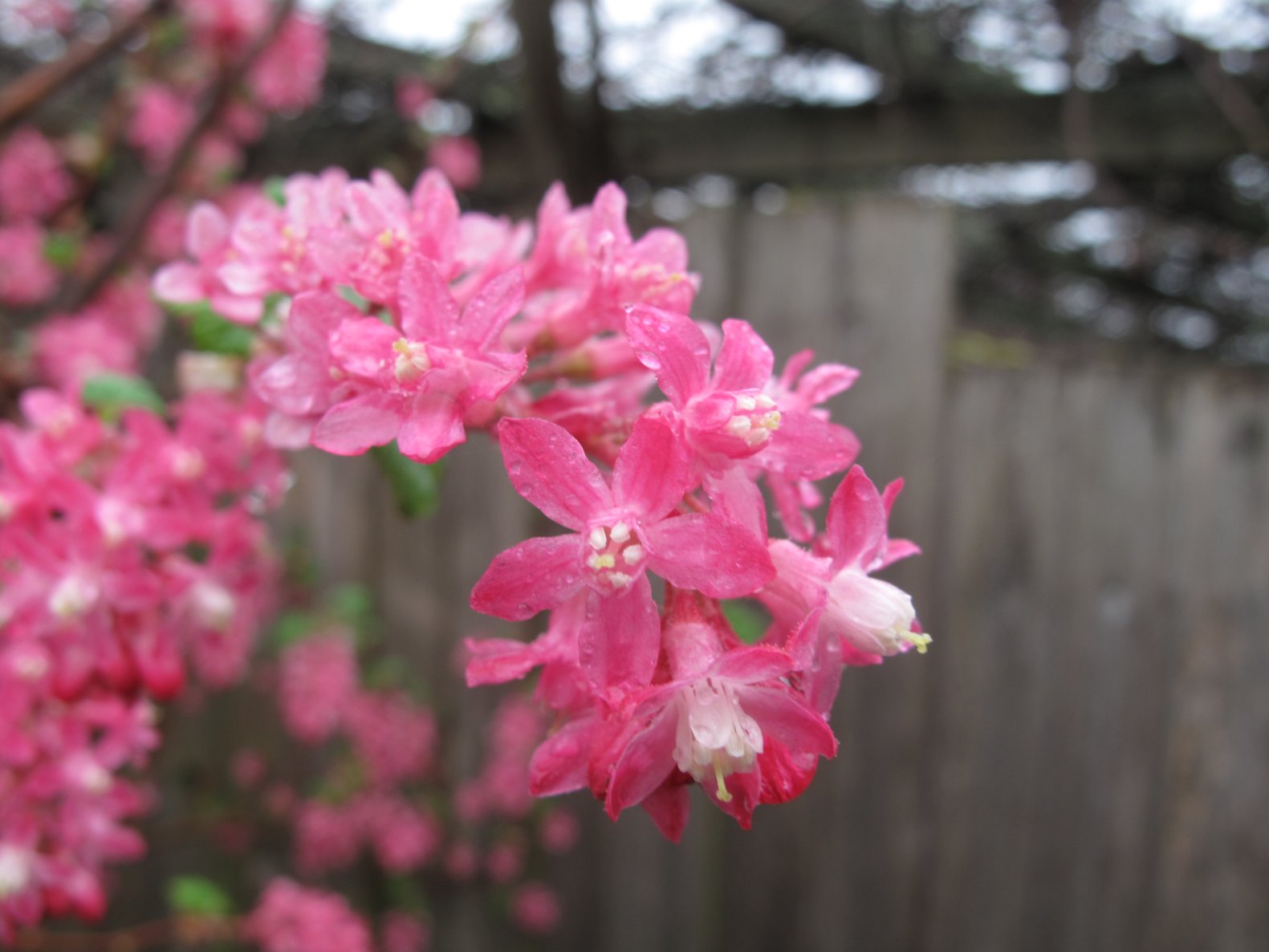
detail species R sanguineum

R. sanguineum bloom detail- click image for viewer

detail R.sanguineum King Al VII

King Edward VII bloom detail – click image for viewer
If you’re intrigued by red flowering current and would like a succinct and compelling roundup of some garden worthy plants in the genus Ribes, check out this excellent  blog post by the garden writer Ketzel Levine.

Choosing Plants for the Rain Garden

In choosing and placing plants for a rain garden one must remember that a rain garden is not a single garden (like a bog, pond or woodland), but rather a many zoned depression that provides habitat for a wide range of plants. For example, in the wettest central depression area,  it’s wise to select plants whose root systems don’t mind wet feet.

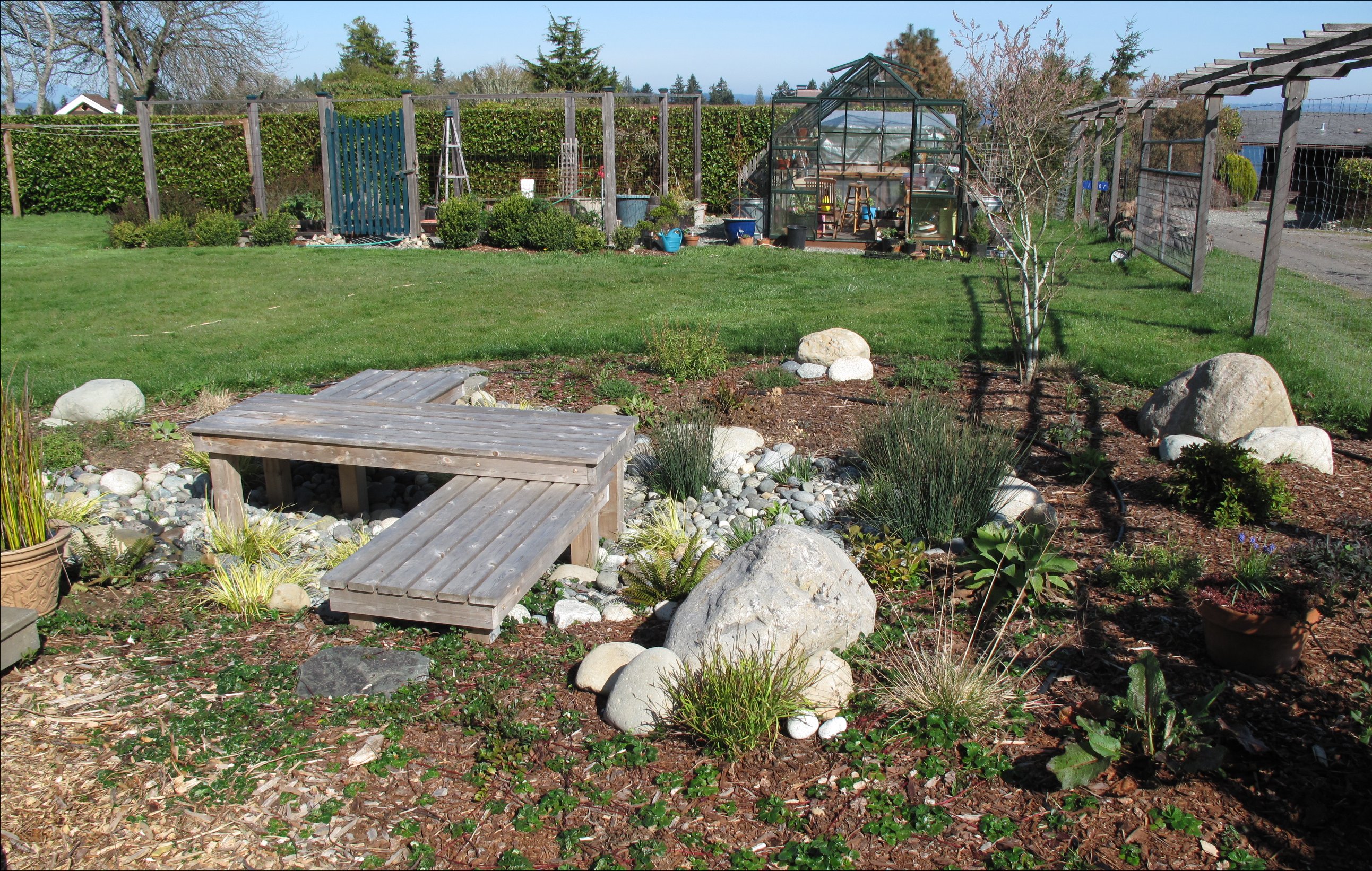
raingarden early spring

Rain Garden in early Spring with most herbaceous perennials still dormant

Even if your particular rain garden is on the level side, or narrow and sloping — during your rainiest times of the year roots must enjoy the moisture.  That said, if you pay attention to drainage and your garden is designed with higher drier perimeter areas, you could include more xeric plants that require very little or no extra watering!

I would go so far with this concept to suggest that selecting plants for a rain garden, especially with respect to drainage, is similar to the process that rock gardeners go through when designing places for their alpine and sub alpine plants. Like a rock garden environment, a rain garden must by design requirements provide excellent drainage.

The following original plant list reflects just those plants established with the rain garden in the spring of last year. As each plant reaches its bloom season common names in the list will be a link to a picture.  Plants under propagation or planned for adding this spring are indicated by the delta symbol.

Initial Plantings (2012)    

northwest native;  Δ to be added spring 2013

  • Amelanchier x grandiflora  ‘Autumn Brilliance’   (Serviceberry)
  • Iris tenax   (Oregon Iris)  
  • Rudbeckia fulgida  ‘Goldstrum’  (Black Eyed Susan)
  • Lupinus poltphyllus  (Large Leaf Lupine)
  • Aster subspicatus  (Purple Dome Douglas Aster)
  • Penstemon x mexicanus ‘Pikes Peak Purple‘  (Pike’s Peak Beardtongue)
  • Digitalis purpurea ‘Foxy’   (Foxglove)
  • Solidago rugosa  ‘Fireworks’  (Solidago ‘Fireworks)
  • Aquilegia alpina   Δ   (Alpine Columbine)
  • Aquilegia formosa    (Western Columbine)
  • Coreopsis verticella ‘Zagreb’  (Zagreb Tickseed)
  • Achillea
  • Camassia quamash (Small Camass)
  • Juncus patens ‘Elk Blue’  (Taper-Tipped Rush)
  • Deschapsia cespitosa ‘Pixie Fountain’  (Dwarf Tufted Hairgrass)
  • Acorus gramineus ‘Ogon’   (Variegated Sweet Flag)
  • Polistichum minutum  (Sword Fern)
  • Sysyrinchium idahoense  (Idaho Blue-eyed grass)
  • Fragaria chiloensis (Beach Strawberry)
  • Arctostaphylos uva-ursi  (Kinnikinnick)

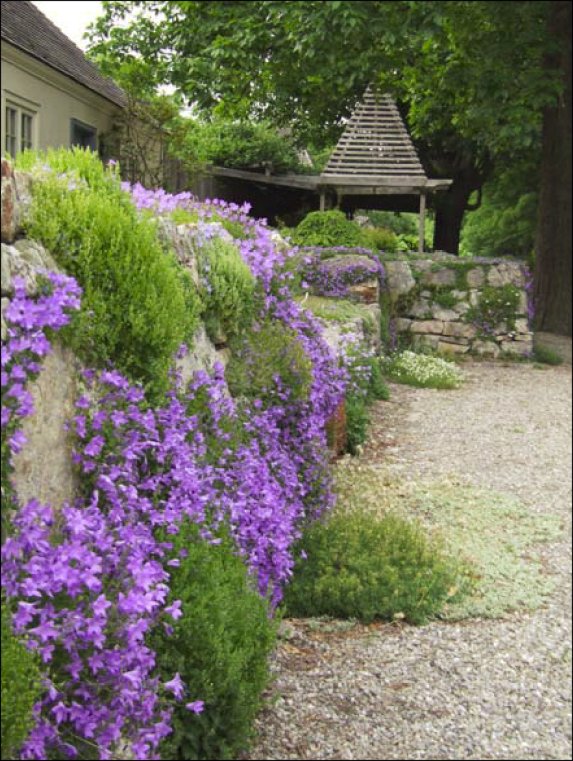
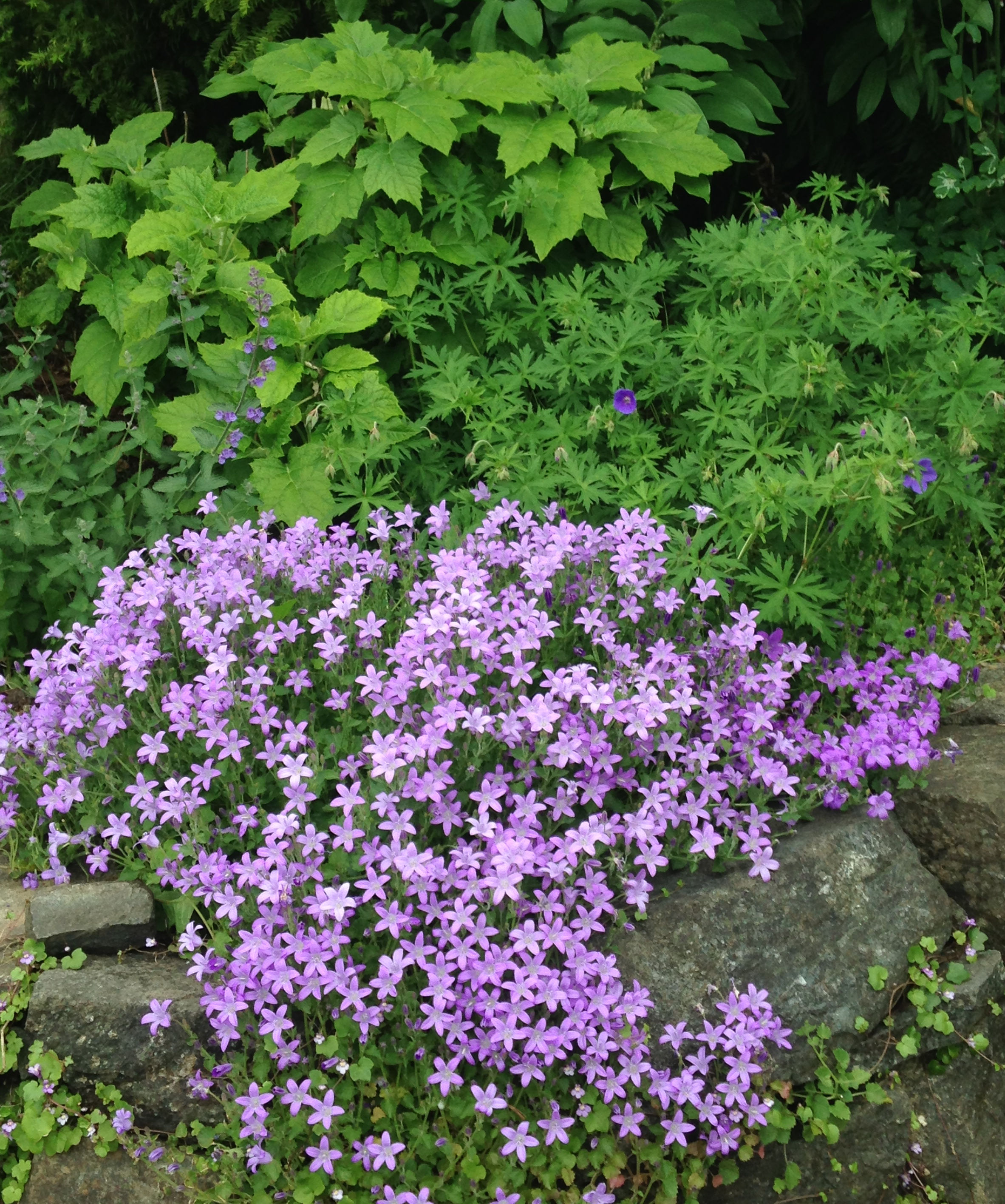
Dalmation Bellflower

Campanula portenshlagiana at Stonecrop Gardens in near Cold Springs, N.Y.

Campanula portenshlagiana blooming at Stonecrop Gardens near Cold Springs, N.Y.

Who among plant lovers (and if your reading this blog you are undoubtedly one) do not struggle with the unattainable standards fostered by certain spectacular plant photos in garden books and magazines!

Like a song melody that constantly pops into your head, a certain plant photo can seem almost tyrannical in its single-minded effort to invade your consciousness. However, while these kinds of photos aim to capture perfection, they  leave out all the “sturm und drang” that goes into that perfect plant moment.

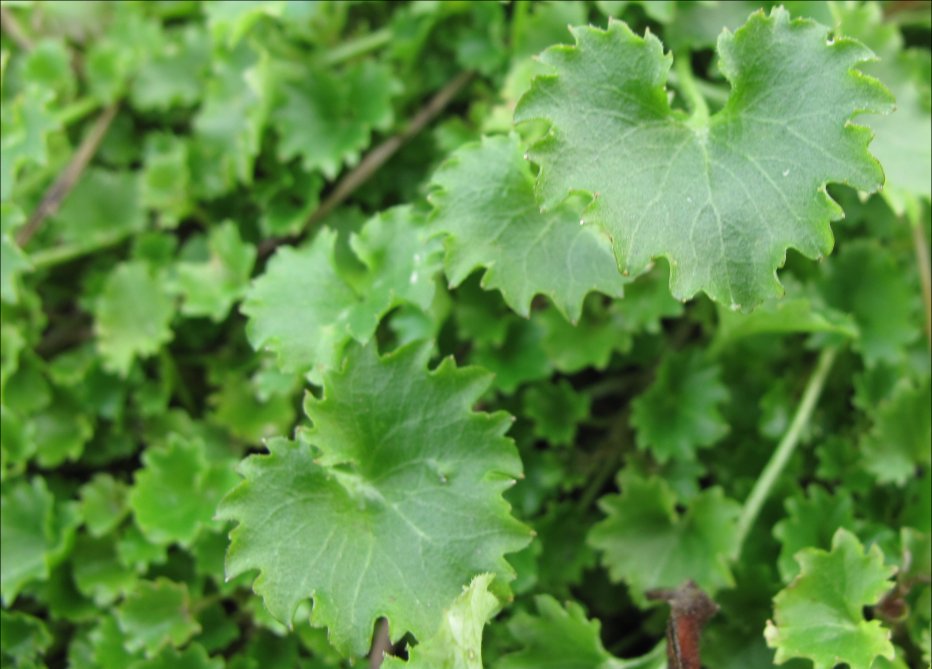
C.portenshlagiana-leaf detail

Leaf detail C. portenschlagiana

So even though the above photograph was hardly remarkable as a work of art — a rather typical stone wall covered with blooming Dalmation Bellflower — the image would, from time to time (unexpectedly), pop into my head.

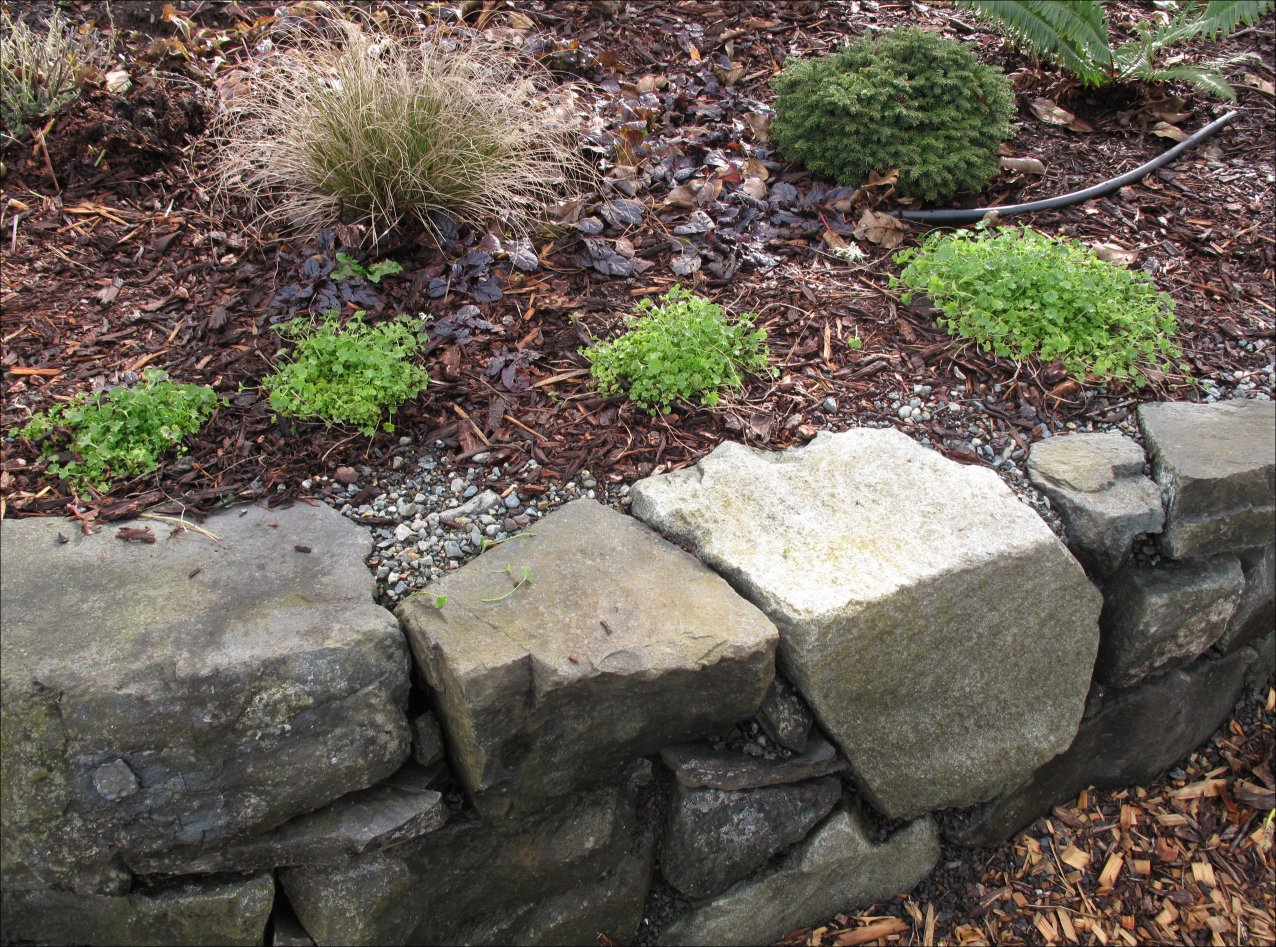
Then, about three years ago I finally ordered four Campanula protenschlagiana plants and established them on my own (albeit quite smaller) stone wall.  Here they are in their third season, nice clumps of serrated green leaves doing quite nicely after our mostly mild and, of course, wet winter.

Img_3082

Four clumps of Campanula portenschlagiana waiting for Spring

Soon after, purchasing the 4″ pots of Dalmation Bellflower,  I visited Stonecrop Gardens (the source of the photograph) in the Hudson River Valley near Cold Springs, NY.  Unfortunately, it was in September of 2011 and blooming was apparently long finished. And, I don’t recall finding that particular stone wall, though the remarkable garden and a fine alpine house were inspiring.

So even if tyranny is defined as “an arbitrary or unrestrained exercise of power,”  we can’t deny those carefully chosen images don’t inspire us nonetheless.  I’m hoping this is the spring and summer that these four clumps finally make it over the edge of the modest rock wall and tumble toward the wood chip path.  Stay tuned for a picture later this summer.  Who knows, it may just be an image that sticks in your head.

Update July 13, 2013

Hmmm…

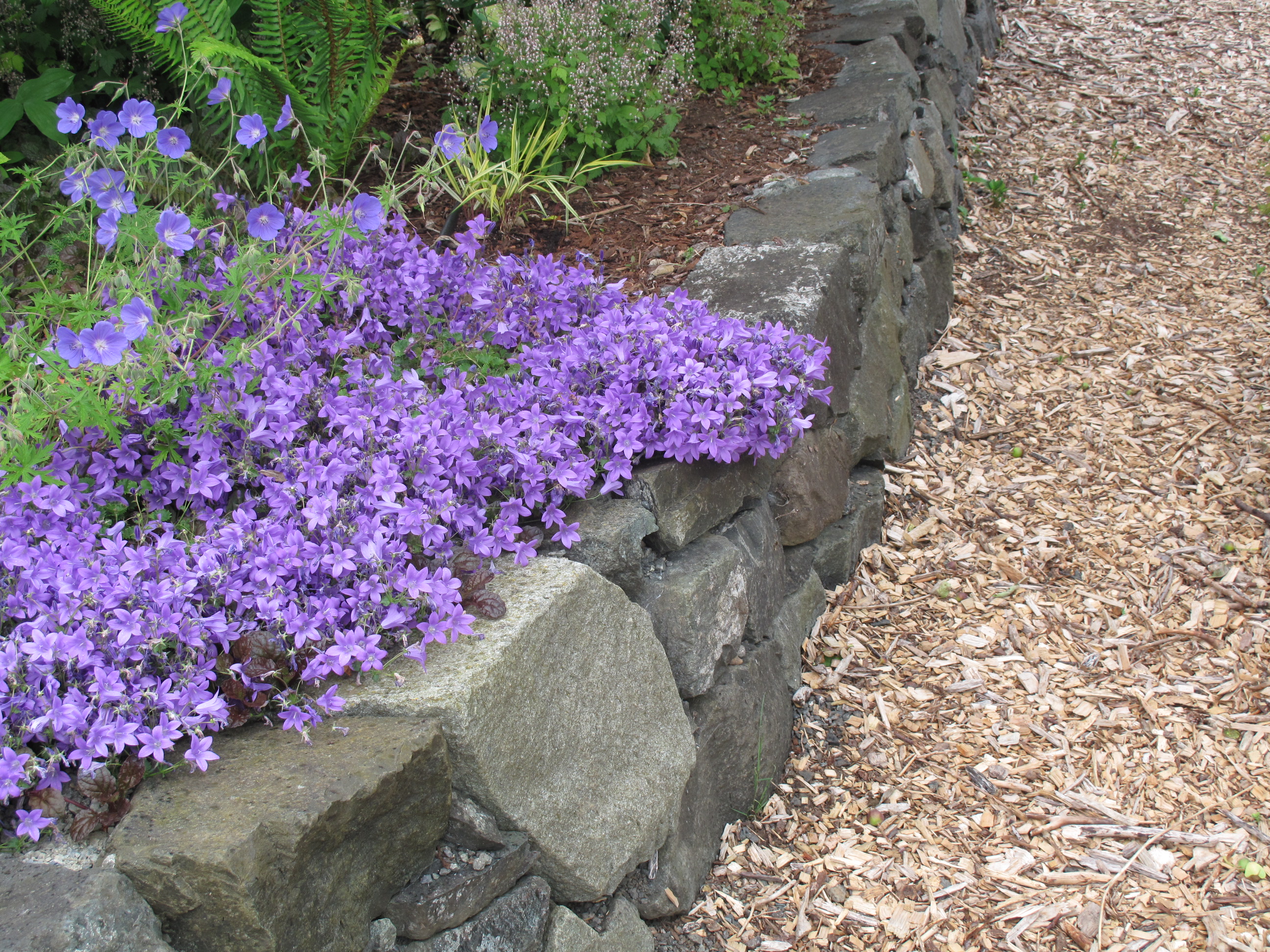
Despite reading in a Campanula book first published in England that this species spreads vigorously, my four plants barely made it over the wall  —  and this is their third year in this spot!

IMG_3419

Campanula portenschlagiana (Dalmation Bellflower) in mid June

Jason at Garden in a City blog calls it a kind of plant “delusion of grandeur,” although he was inspired by an actual visit, rather than a photo. Here’s a link to his post:  Delusions of Grandeur?

IMG_3420

Dalmatian Bellflower flirting with the wall’s edge

Update May 30, 2017