Rosa rugosa ‘Hansa’ Friend or Foe?

Rosa rugosa hails from the East Asia, a native of a wide region spanning China, Korea and Japan.

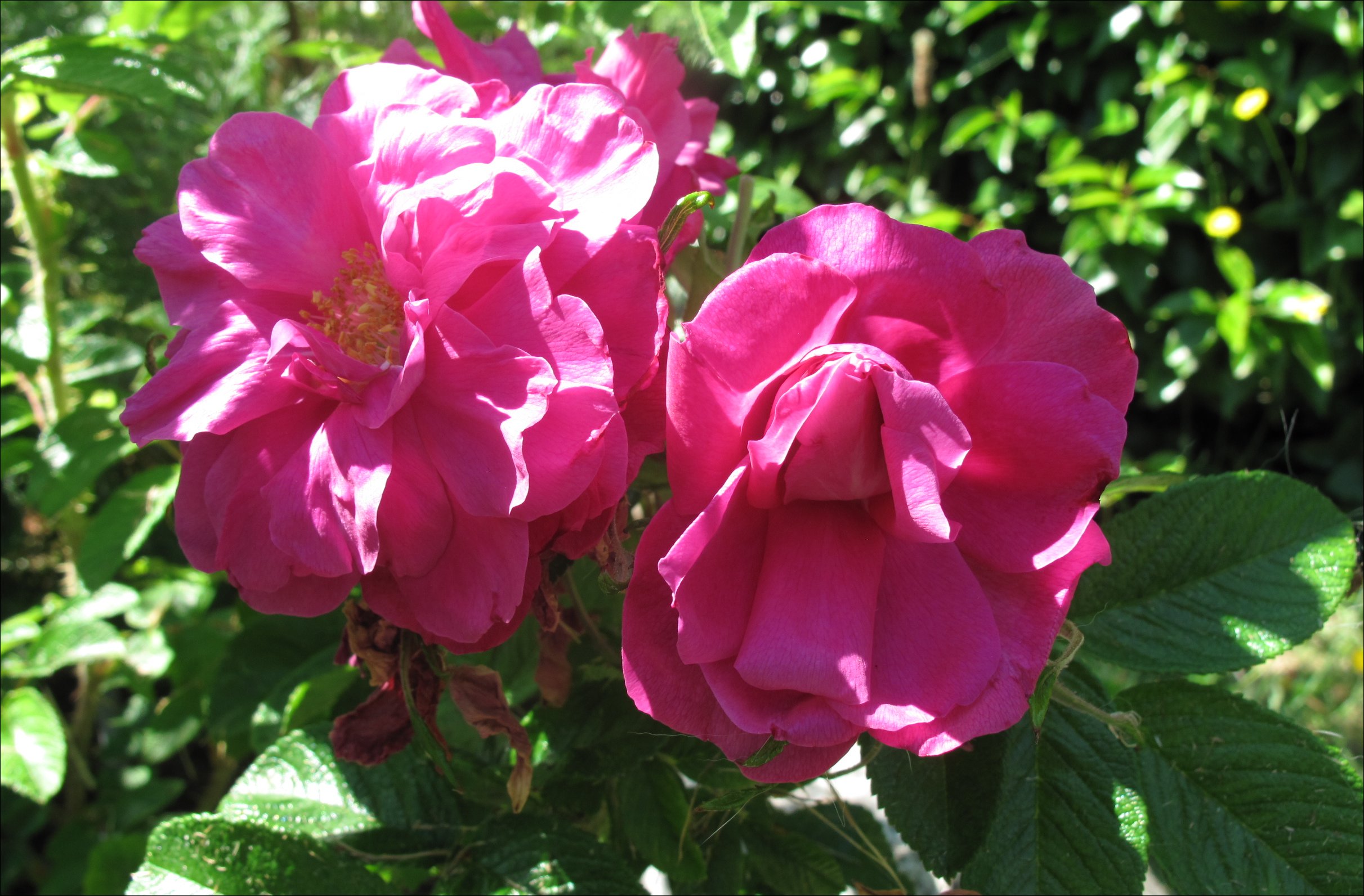
Rosa rugosa 'Hansa'

Rosa rugosa ‘Hansa’

Depending on your perspective, the species and cultivars like Hansa are attractive hardy deciduous shrubs that resist common rose diseases,  bloom profusely with a heavenly scent, require minimal care and naturalize easily, or are invasive plants that disrupt and compete with native plants, especially in sensitive coastal habitats.

I bought four ‘Hansa’ plants in gallon pots sometime in the spring of 2010, never got them in the ground that first year, but did manage to pot them up to larger five gallon plastic pots.  What followed was at least a year or two of neglect, including planting them in a location that required moving and loss of one plant. I moved the three remaining to a new bed early this spring.

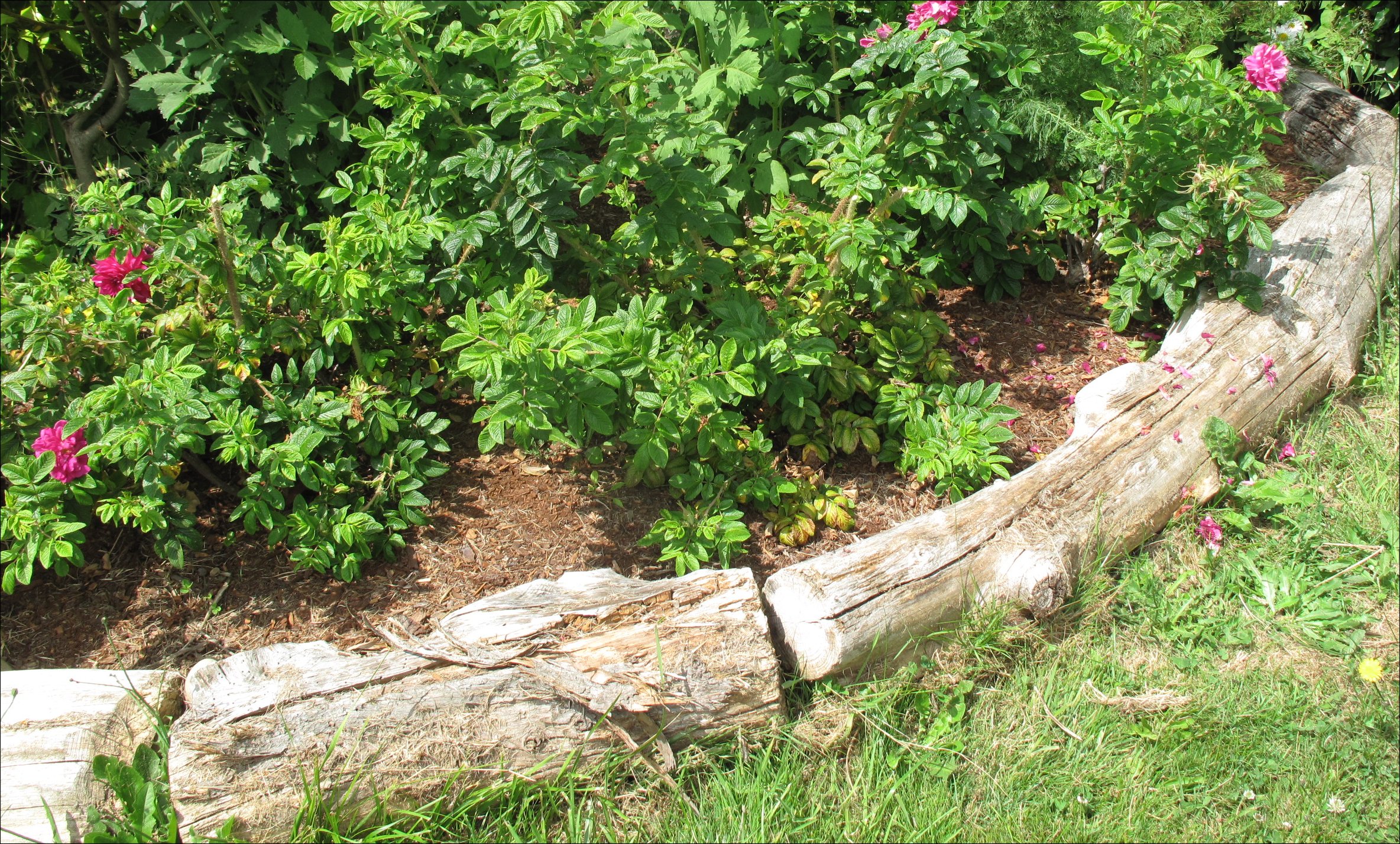
I’m very happy with results, though at the front of the border I’ll probably have to prune fairly hard since their habit is upright and I would like to keep them no higher than three feet.

Hansa  in border

Hansa in border

I have many Washington state natives and don’t see Hansa in danger of taking over in my garden or the surrounding ecosystem.  It appears to be a problem in sandy coastal areas from Maine to New England (where it may have been deliberately planted to mitigate beach erosion) and all over Europe, where it was first introduced in the 18th century.

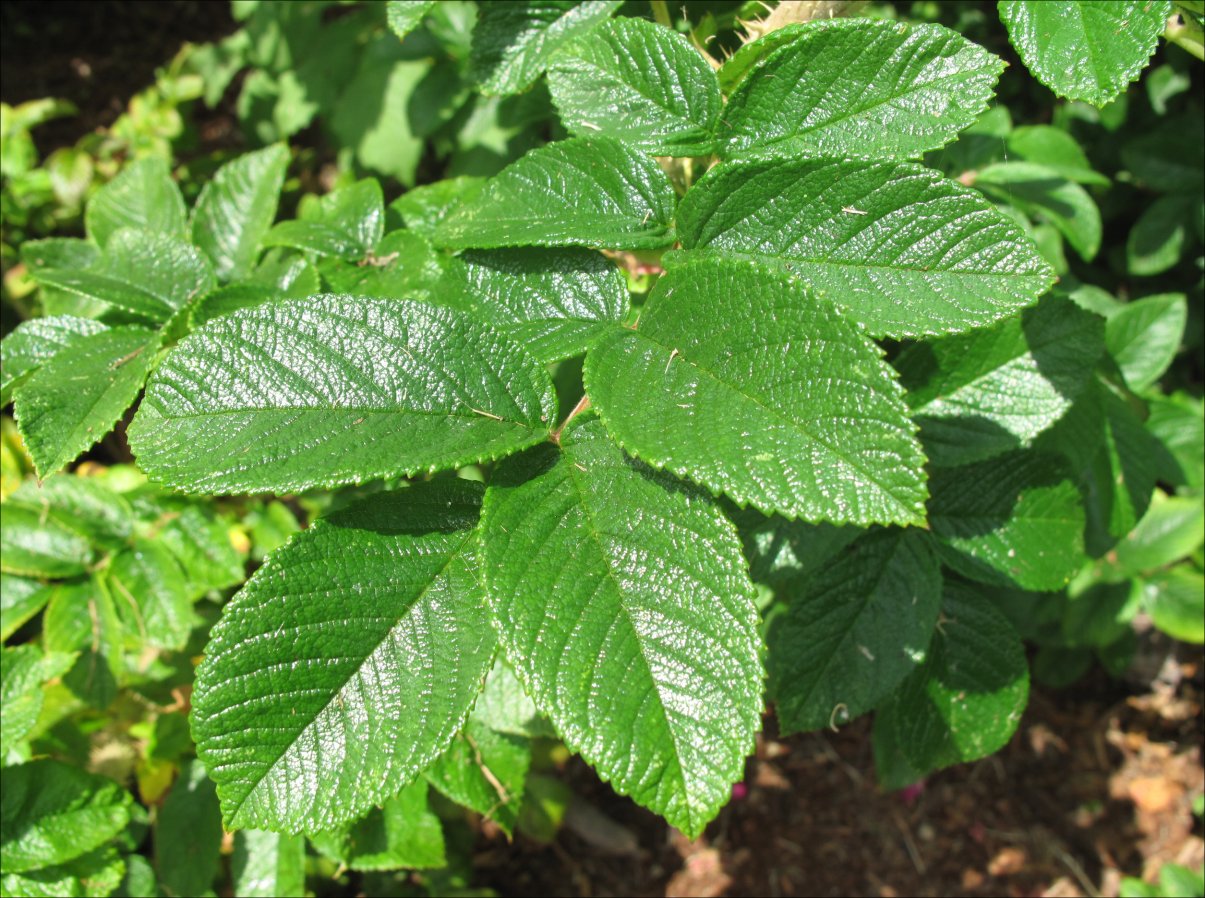
Hansa leaf detail

Leaf detail of Rosa rugosa ‘Hansa’

Besides the wonderful scented blooms, Hansa has such beautiful leaves that never seem to succumb to the myriad of problems other roses suffer in our moist climate.

Here are two references to Rugosa roses and Hansa in particular.  One by photographer/blogger, Alexander Waterhouse-Hayward, which is rather lyrical and provides some information on how the name “Hansa” originated. The other reference is from Denmark, through the Ministry of the Environment and the online database of the European Network on Invasive Alien Species.  It’s a fine summation of the pros and cons of Rugosa roses:

http://blog.alexwaterhousehayward.com/2007/05/rosa-hansa-alexandra-elizabeth.html

http://www.nobanis.org/files/factsheets/Rosa_rugosa.pdf

Old Yeller, Troughs and Alpines

Nope, this is not a post about the Newberry Award winning children’s novel or the Disney movie.  For sure, Sedum grisebachii might be called “old yeller” in Tennessee;  since it is no doubt old (an alpine sedum species endemic to the mountains of Greece and Bulgaria) and as you can see very, very yellow!

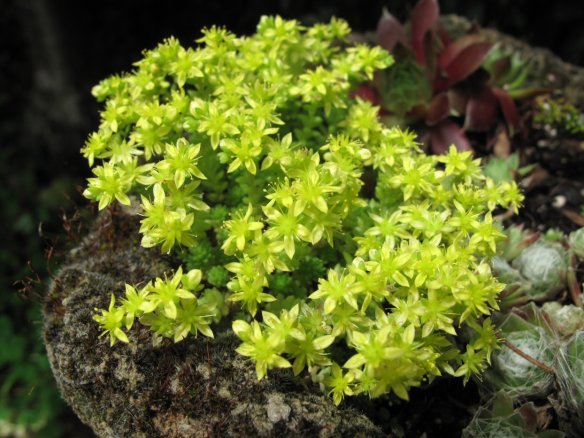
Sedum grisbachii sparkling in a trough

Sedum grisebachii sparkling in the morning sun in a hypertufa trough

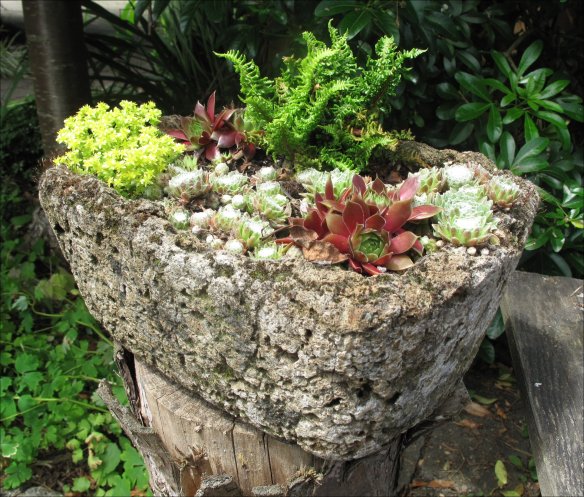
I’ve had this tiny sedum around for years, sometimes in terra cotta pots and lately in this small trough I made about eight years ago.  The trough, pictured below is about a foot long, eight inches wide and five inches deep, making it an alpine world in miniature.

trough bound sedum

A mixed trough home to sedum grisebachii, sempervivums, and a dwarf fern

I love this size trough because it’s so easy to pick and move. Bigger troughs have their appeal, but their weight can introduce some challenges. Many alpines require excellent drainage and resent our relatively warm wet winters here in Puget Sound. So larger heavy troughs require some sort of canopy in months of heavy rain (you can’t just pick it up and put it under an eave or similar rain protected location) as you might with a smaller trough.  Troughs are made of a mixture of mainly Portland cement and various other ingredients in smaller proportions (like perlite, vermeculite, peat moss, sand, fiber mesh, etc.).  Exact recipes abound on the internet.

Obviously cold temperatures are not the problem. In their natural habitat alpine roots reside below layers of snow and ice.  They may have long root runs in rocky scree or are tucked in crevices. Most are in positions where their roots are protected from mushy conditions.  When temperatures warm and water is abundant, the plants begin a new cycle of growth.  Many of these little gems have spectacular flowers rivaling any hybrid.

Online sources, like the British Alpine Garden Society, say the perennial Sedum grisebachii is found in mountainous regions of  Northeastern and Northwestern Greece and at elevations as high as 1000 meters (3,280 feet) in Bulgaria.  For plant hunters in Greece, Mt Athos and Mt Olympus are likely habitats.

Beware of imitations or mislabeled plants in nurseries.  Grisebachii may be mistaken for Sedum flexuosum and similar tiny, yellow-flowered species.  Visually, grisebachii is distinct in that its leaves are crowded toward their tips and have tiny distinct nubbins at each end, which can really only be seen (at least by me) with a hand lens.  These bumps are more properly known as apical hyaline papillae.

As soon as the flowers fade on my plant, I’ll try to update this post with a picture using the Macro setting on my Cannon G10, which is still a point and shoot camera, but might just allow me to get close enough to make out the nubbins.  Stay tuned.

Zonal Denial, Garden Thugs and Me

Two apt gardening terms epitomize my sometimes self destructive plant selection process. I clearly practice the art of  “zonal denial,” which I define as a compulsive attraction to plants at the edge of my zone, best described as Sunset Zone 5 ½ or  USDA Zone 8b.  (At 370 feet above sea level and enjoying close proximity to the moderating influence of Puget Sound,  I figure I’m actually somewhere in between Sunset Zone 5 and Oregon’s Willamette Valley Sunset Zone 6, hence the one-half.)
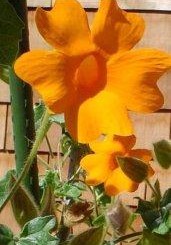
Thunbergia gregorii - Orange Clock Vine - Hardy to USDA Zone 9

Thunbergia gregorii, Orange Clock Vine, Hardy to USDA Zone 9

The Sunset Magazine zones, unlike the USDA hardiness scheme, take account summer high temperatures, regional micro climates and other factors, rather than simply winter maximum recorded low temps.

As much as I would like to take credit, I can’t claim to have coined the term zonal denial.  I first saw the term on a sign at Cistus Nursery in Portland Oregon.

The time of year was late fall, and in a section of the nursery defined by a lath house-like structure, a small sign announced that the plants inside were of the “zonal denial” persuasion!  I bought three or four of these beauties in gallon pots.

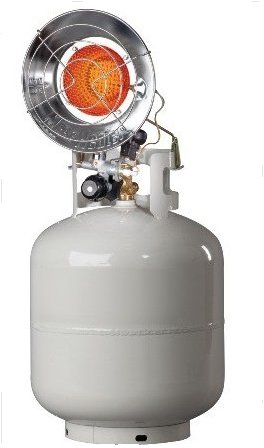
heater

— Zonal denial mitigation tool —

I should have paid closer attention to the outdoor propane heater atop a typical 20 gallon LP tank pointed directly at my purchases.

Many of my zonal denial plants — in anticipation of a major winter cold snap — are consigned to pots, moved into a crammed 8 X 14 foot greenhouse or covered in mulch, burlap and other sundry protective improvisations. Many others are long since gone.

When not buying plants or seeds better suited to San Diego or the Willamette Valley in Oregon, I’m guilty of planting aggressive spreaders that refuse to coexist with other less robust plants.  These thuggish plants are often attractive, but are lousy at harmonizing with their more well mannered neighbors.

Actually that’s not entirely accurate.  Initially many aggressive spreaders seem okay, filling in nicely and covering empty space. Later on when they exceed their boundaries, overwhelm neighboring plants, and require endless trimming, yanking and composting do the consequences become clear.

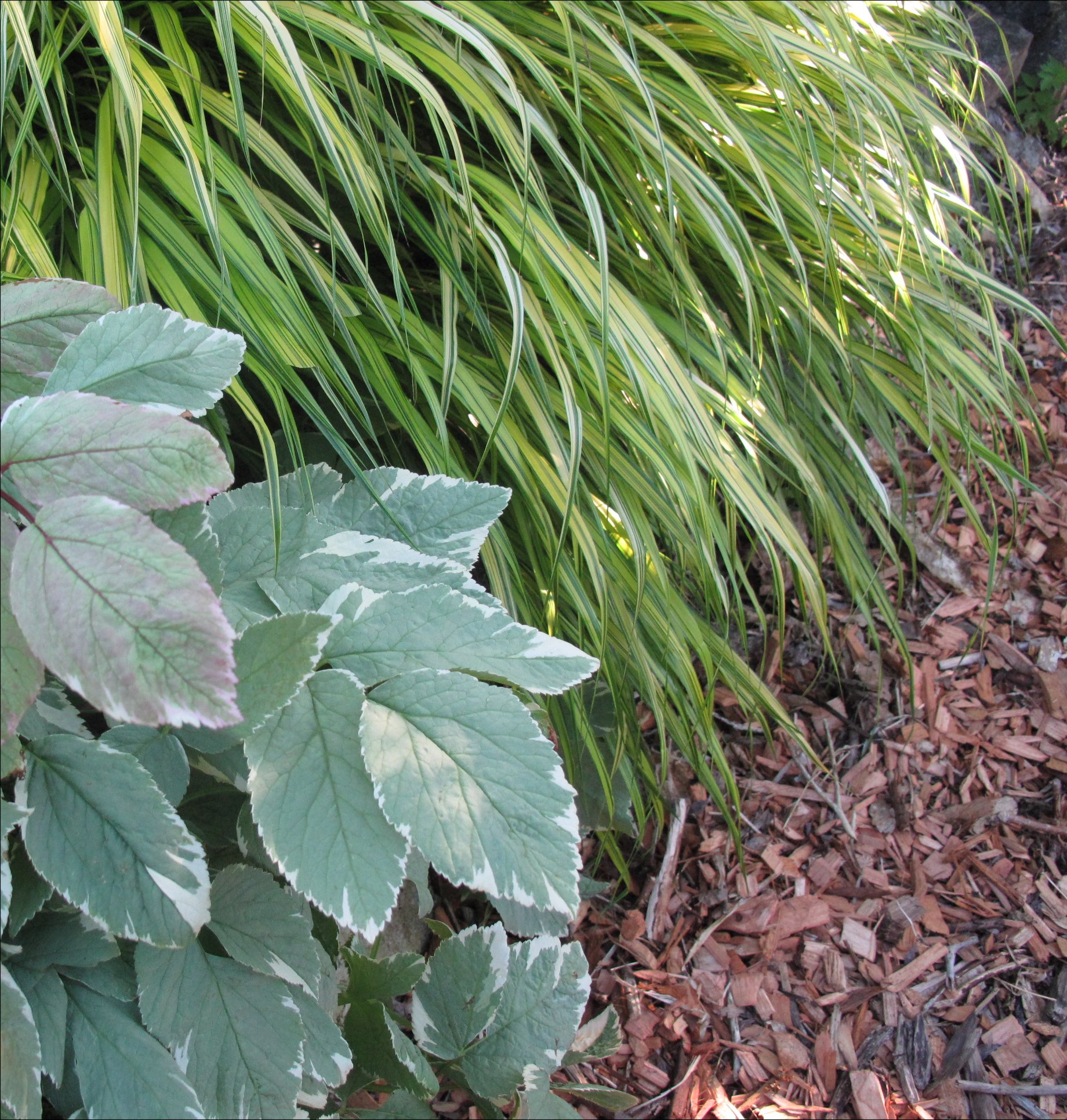
Here’s just one example of one of my endless struggles,  a variegated ground elder vs. Japanese Fountain Grass (Hakonechloa macra ‘Aureola’).
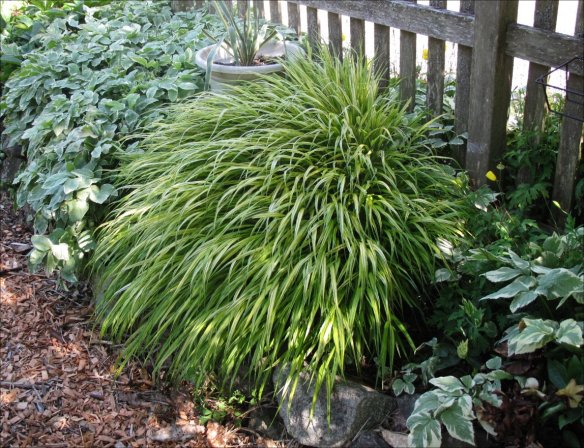
hakonokloa ground elder

Japanese Fountain Grass and Aegopodium podagraria ‘variegatum’

The above photo gives the impression these two handsome plants are getting along side by side. What you might not guess is the aggressive ground elder when left to its own devices will completely overwhelm the slow growing Japanese fountain grass.
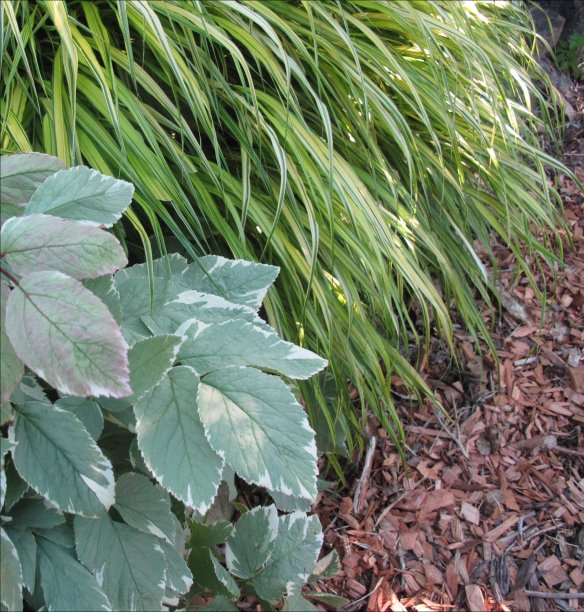
hakonokloa ground elder2

Aegopodium podagraria ‘variegatum’ aka ground elder, bishop’s weed

In fact, I’ve spent more time than I care to admit picking this tenacious spreader out of the Japanese Fountain Grass, not to mention from the wood chip path.

ground elder roots

Ground Elder proudly displaying its metastatic root

The Royal Horticultural Society doesn’t mince words:   “Aegopodium podagraria, ground elder  is a fast-growing, invasive, perennial weed that can spread quickly to form a carpet of foliage that will crowd out less-vigorous plants in beds and borders…It spreads via rhizomes (underground stems), which can regenerate from a just a tiny fragment left in the ground.”

So how did a savvy plant guy like me introduce this thug to my garden?

Four years ago I bought a few four inch pots along with some annuals to decorate the base of our son’s “Chuppa” or marriage canopy.  It was an October wedding, annuals were not in great supply and the variegation was attractive.

After the wedding, not wanting to waste this lovely variegated ground cover, I planted the leftovers without bothering to investigate the plant’s questionable habit. I soon learned this “energetic” perennial would keep my as busy as the Euphorbia amygdaloides var. robbiae (Mrs. Robb’s bonnet) that likewise has a rhizomatus root system that can only be described as invasive.
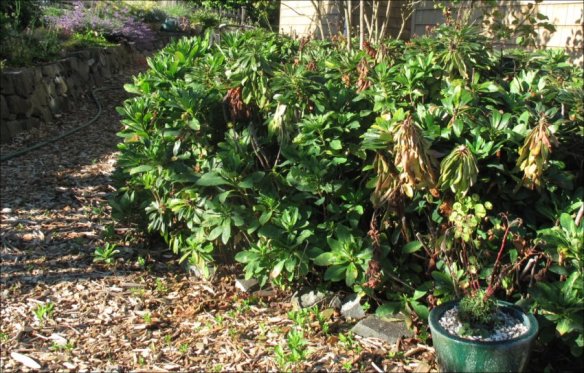
euphorbia

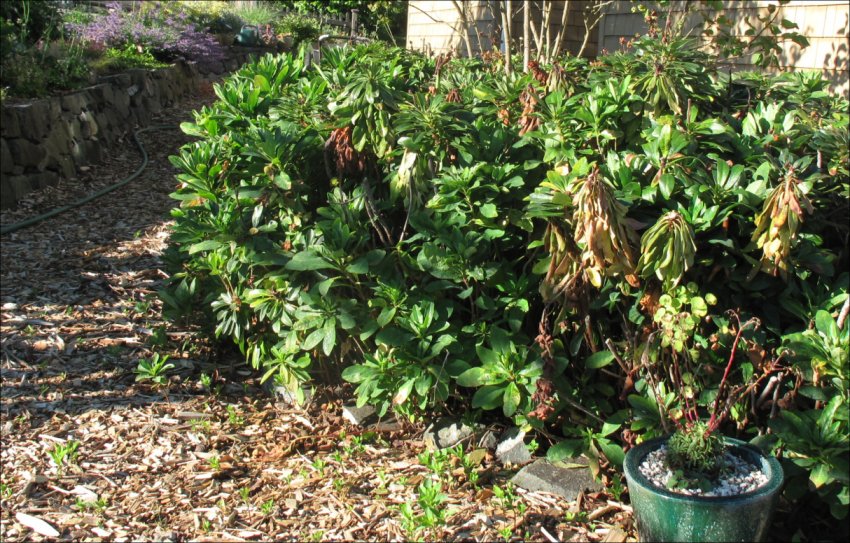
— Mrs. Robb’s Bonnet beside (and invading) a wood chip path —

In the Euphorbia’s case, what I wanted was to quickly establish a large single swath of plants in a defined border.  The euphorbia obliged and I’ve been an energetic weeder ever since.