Campanula ‘Birch Hybrid’

This little hybrid (Campanula portenschlagiana x poscharskyana) makes a fine trough, rock garden or pot specimen.  If your patient, it may reward you by tumbling over a rock wall.  When it first blooms in mid spring the purple flowers profusely cover the plant.

For the impatient gardener, one of its parents, either C. portenshlagiana or C. poscharskyana would probably be a bit more vigorous at cascading over a rock wall.
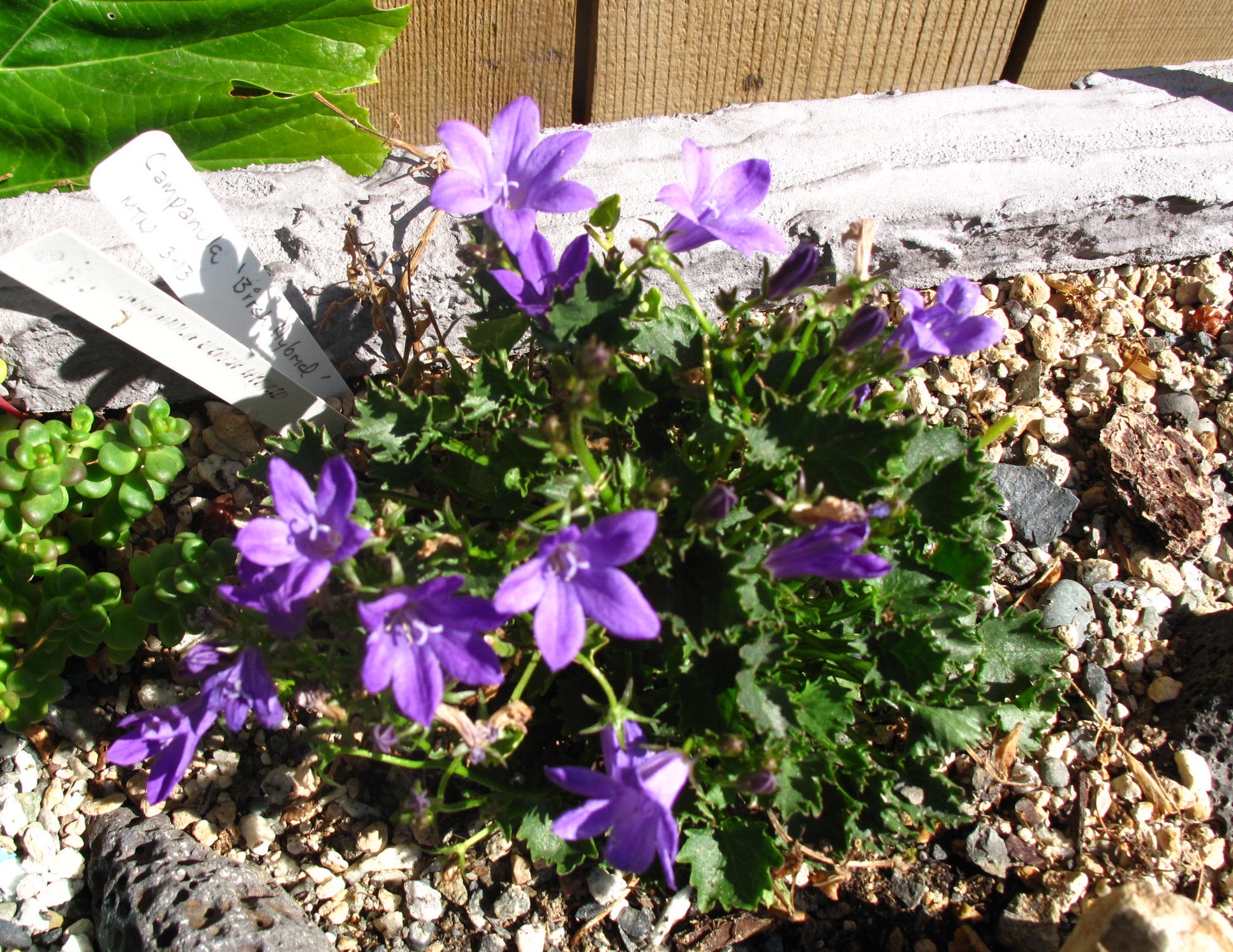
Campanula 'Birch Hybrid reblooming in early August

Campanula ‘Birch Hybrid re-blooming in early August

I’m not sure its news, but — like many herbaceous spring blooming perennials — shearing or deadheading the spent blooms after the initial spring flush often guarantees more blooms later in the summer (though usually not as dense and floriferous as the first round).

Here in Puget Sound near Seattle, this trough, containing Sedums, the Birch Hybrid and alpine Dianthus required daily or even twice daily watering during the hot, unusually rain-free month of July.
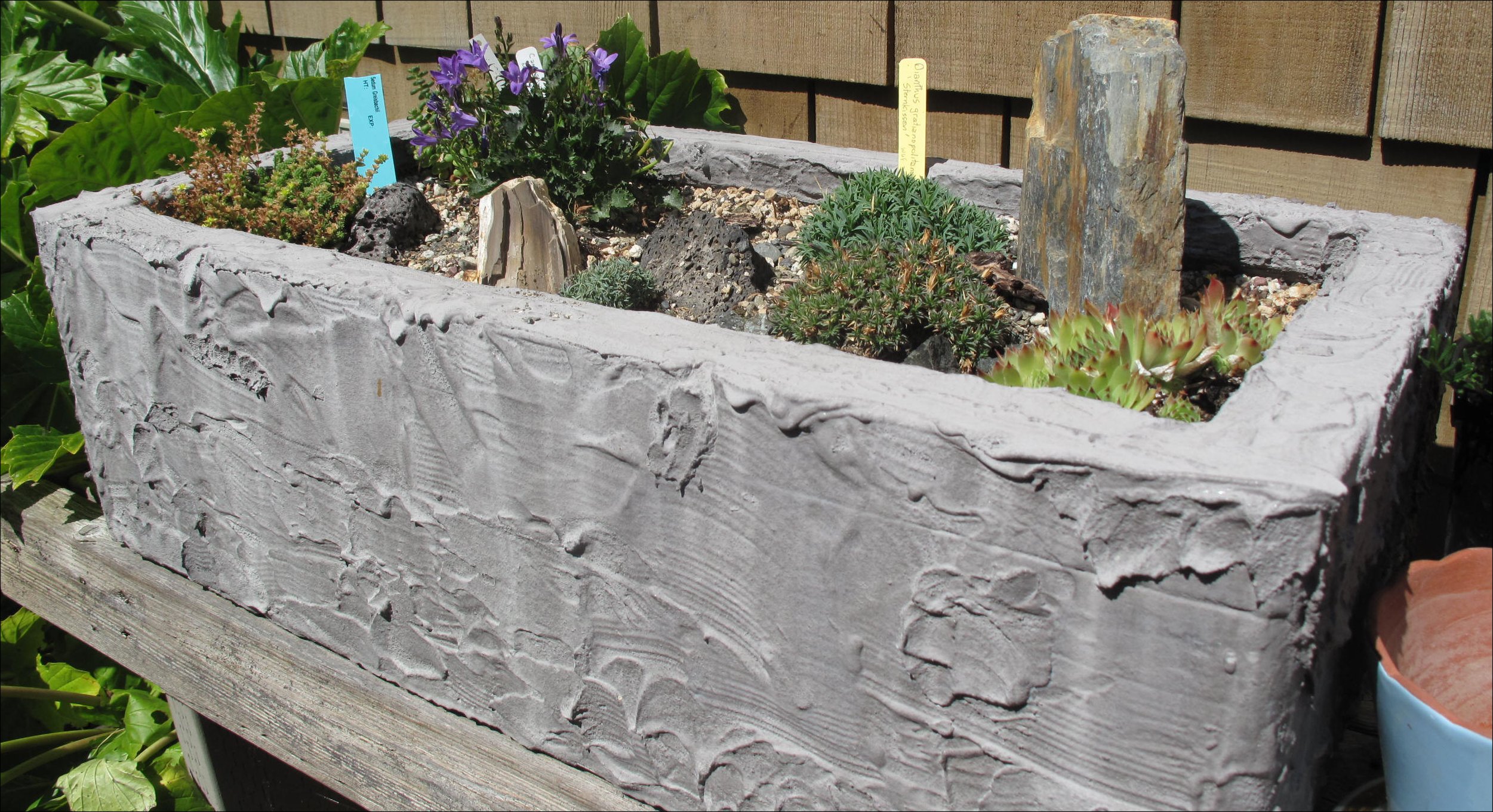
Alpine Trough Sedums, Campanula, Dianthus and Sempervivums

Alpine Trough newly planted with Sedums, Campanula, Dianthus and Sempervivums

Unlike the Dianthus or the Sedums — which don’t seem to rebloom —  the Campanula ‘Birch Hybrid started re-blooming about a week ago. My little specimen, from Mt Tahoma Nursery in Graham WA, probably was propagated by division, and at most is a two year old division.

This European alpine hybrid is credited to, and named for, the Birch Farm Nursery in England.  According to this video from Garden Splendor®, which apparently distributes plants to selected retail nurseries in the northeastern United States, Birch Hybrid makes a fine garden plant.  Check it out on You Tube:
http://www.youtube.com/watch?v=gPv9yi18-lA

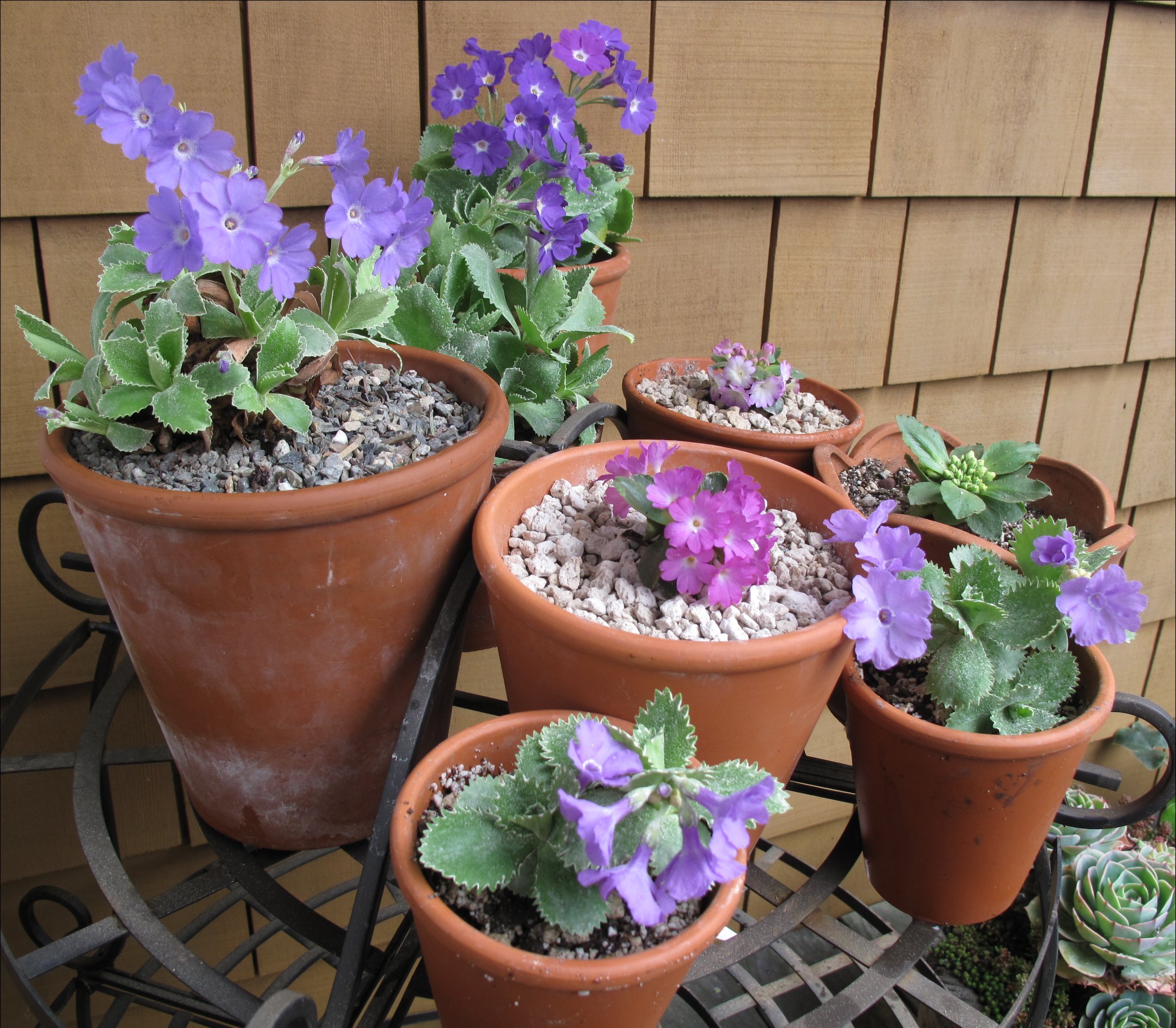
European Alpine Primulas

Here’s a post from March that languished in my drafts overlooked.  Spring is long gone and these alpine primulas have long since given up their blooms…

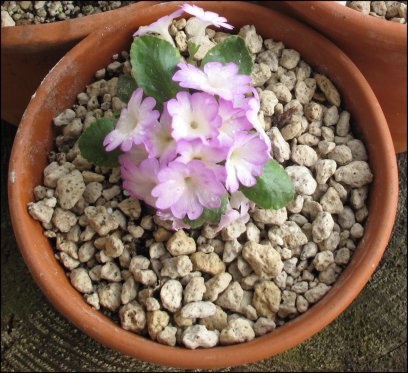
Primula 'Nightingale'

Primula ‘Nightingale’

I’m looking forward to seeing some of our native alpine plants this spring hiking the Cascades. Meanwhile it’s mid-March in Puget Sound and some of my European alpines have begun to flower.

It’s hardly the same as stumbling across them blooming in their native confines, but short of  that, seeing  these plants in cultivation remains a treat.

Img_3130

European Alpine Primulas

Img_3133

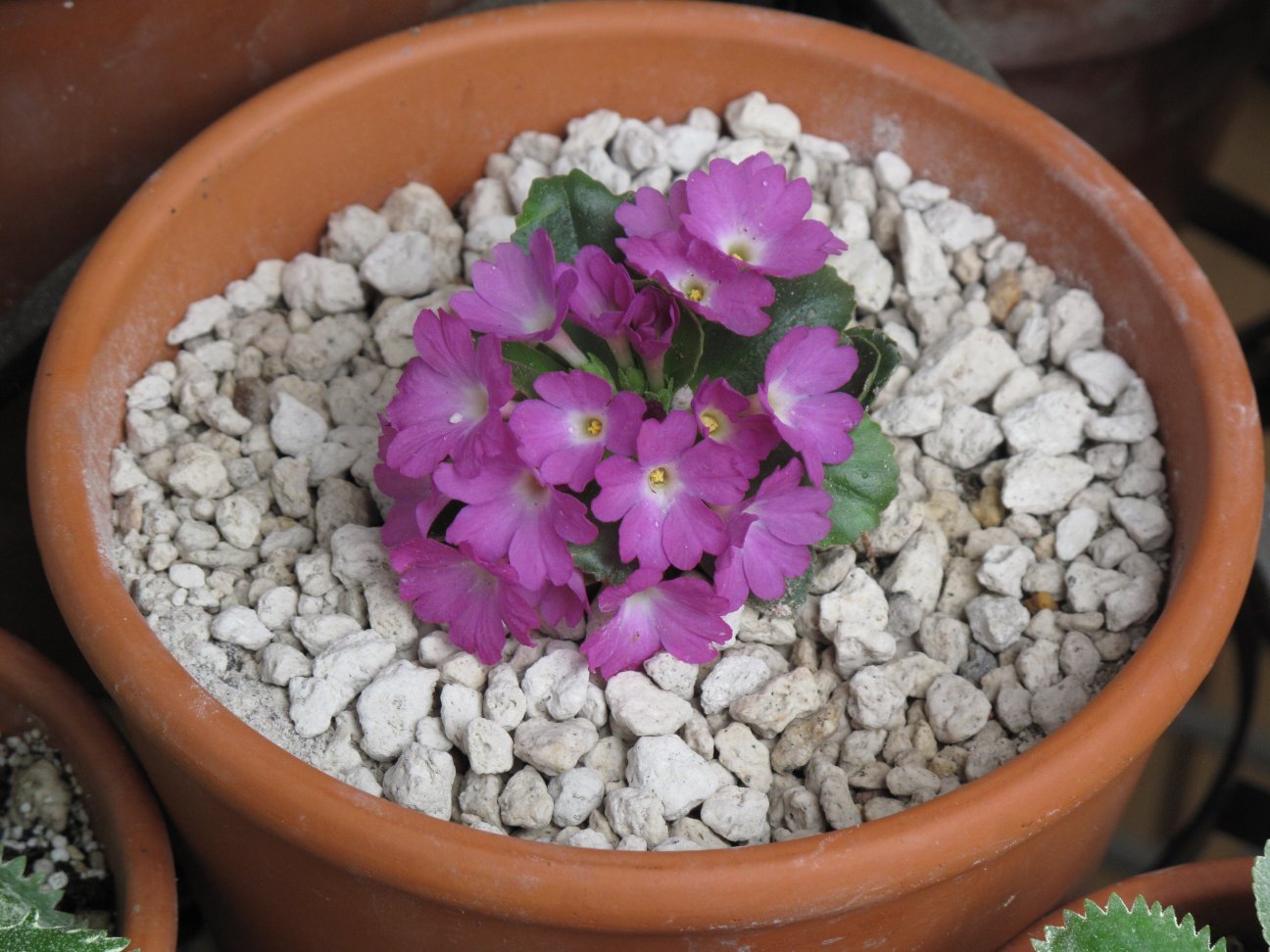
Primula allionii x pubescens hybrid ‘Wharfdale Ling’

The alpine European primulas are tough plants and have been hybridized extensively, probably as far back as the 19th century.  The majority of these species from the tiny P. minima to the well-known P. auricula readily hybridize with each other and have led to the myriad of European hybrids, many named for the region or nursery that’s responsible for the plant.

Hybrids of P. marginata and P. allionii make some remarkable looking pot and trough plants.

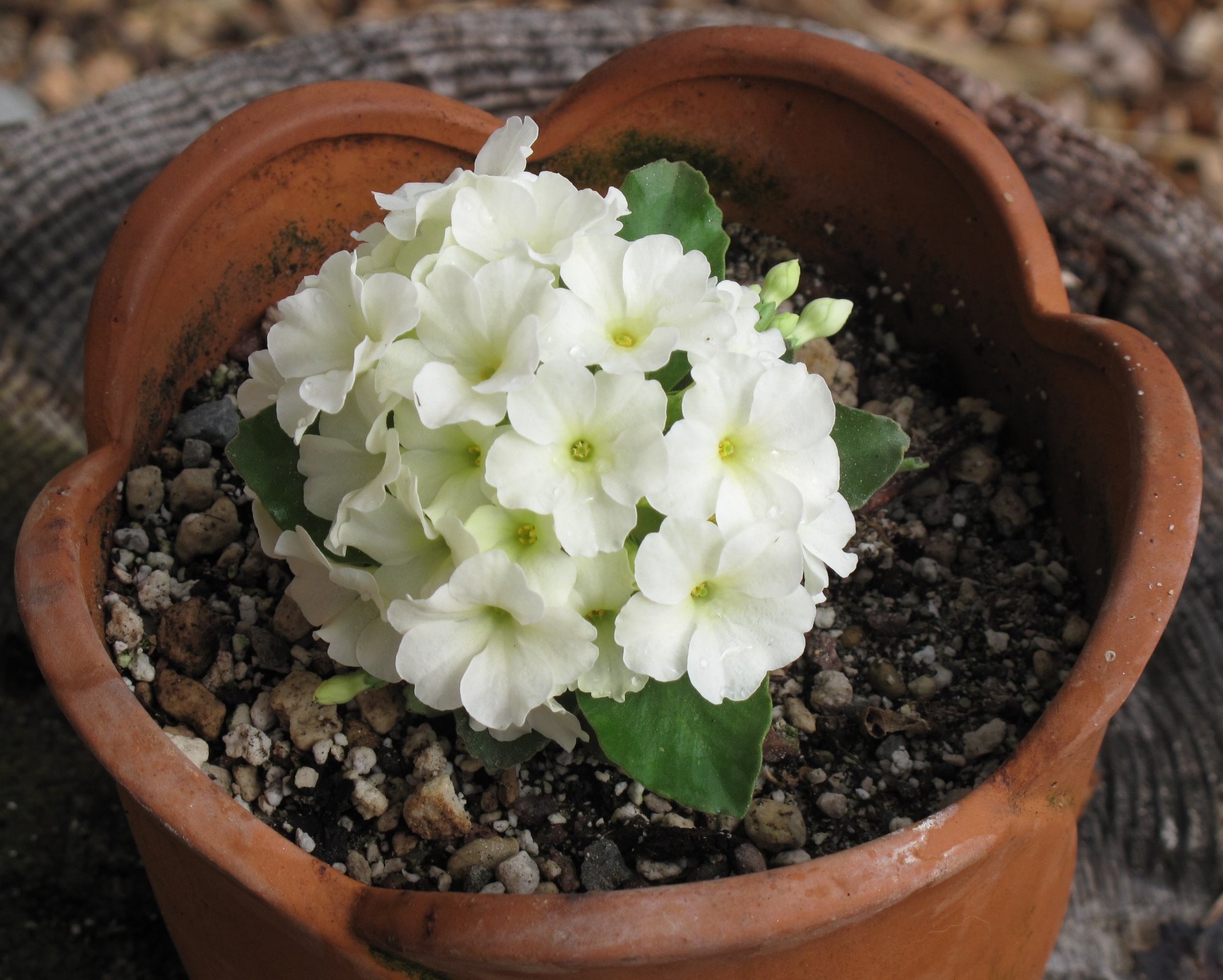
Some of the smaller hybrids, probably crosses related to Primula x pubescens  (itself a naturally occurring hybrid between P. auricula and P. hirsuta) are so covered with flowers in the spring you’re hard pressed to see the leaves.

Primula 'Broadwell Milkmaid'

Primula ‘Broadwell Milkmaid’

Color in the Garden: Erigeron Canary Bird

I’m officially mildly red-green color blind.  As I understand this deficiency is quite common in males and really not much of a disability.  And yes, I can distinguish red and green traffic lights with no problem, the real differences between the red-green color blind and other folks’ color perceptions are more difficult to explain .  That said, I struggle mightily to perceive the green number two hidden in the dots below.

plate with 2I suspect each and every one of us perceives color slightly differently.   But in the fall landscape, especially at a distance, I’ll lose the reddening leaves in the surrounding green.

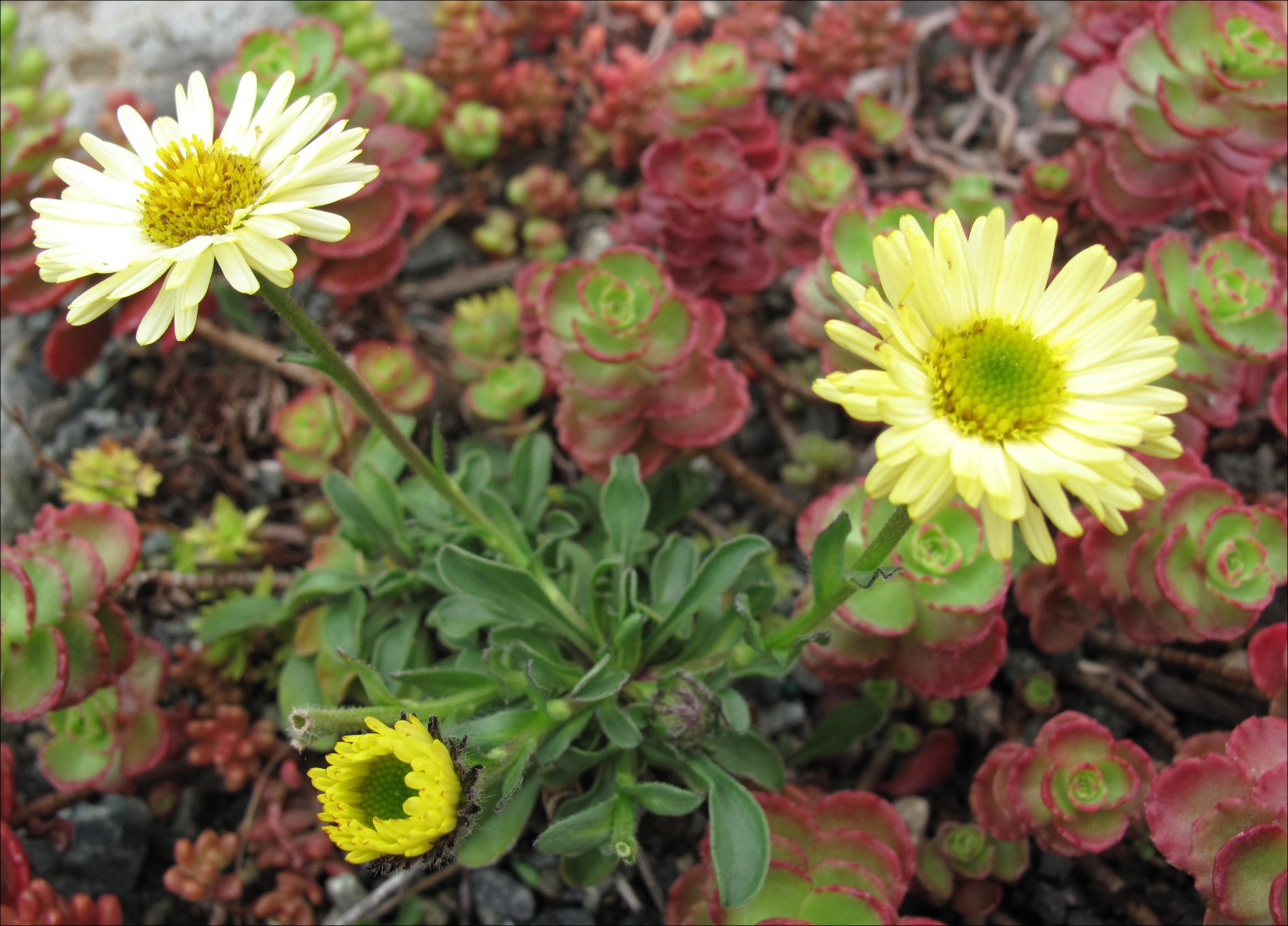
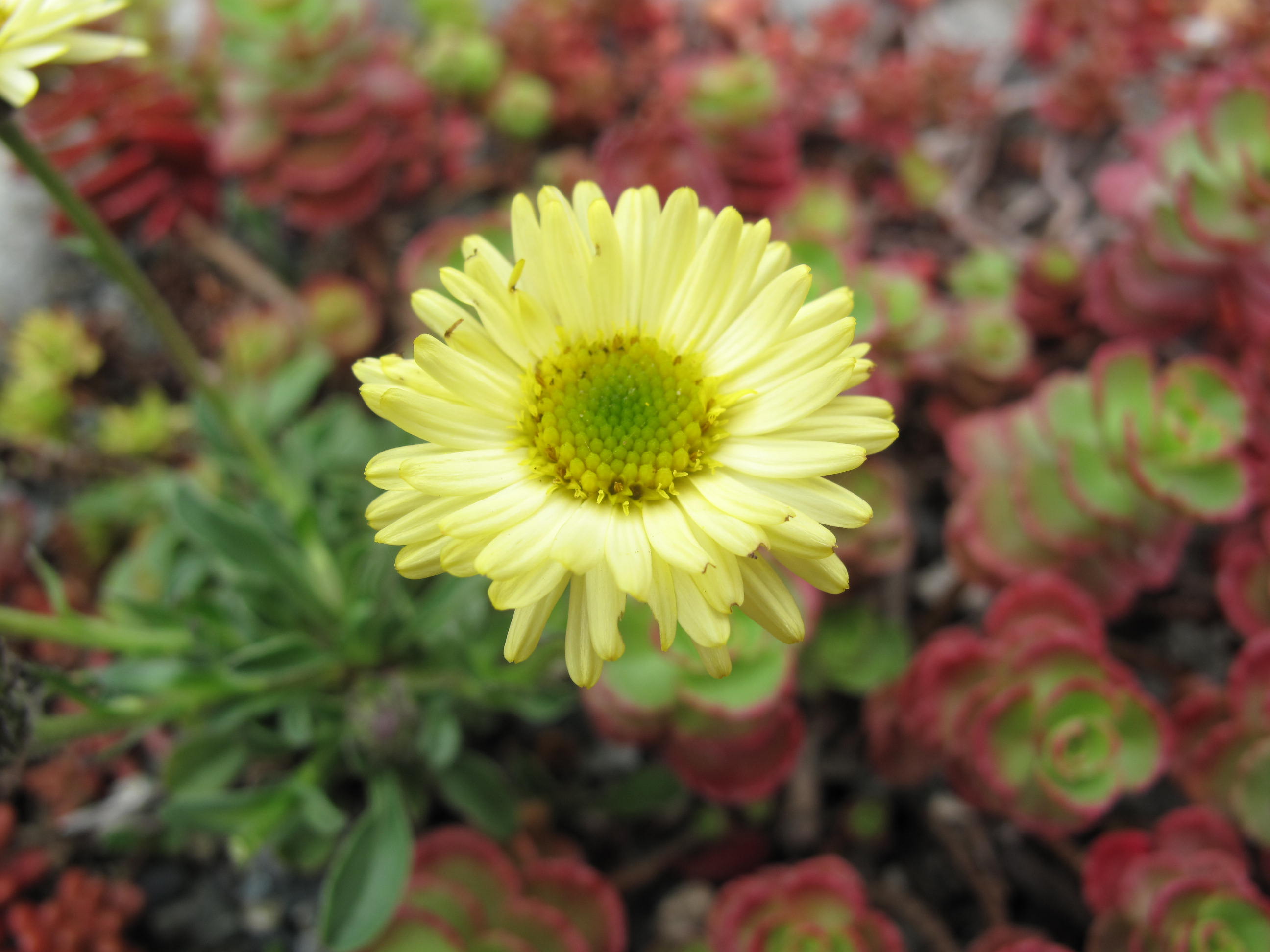
Lately, I’ve been enthralled with yellow.  Plenty of alpine plants, sedums in particular, have stunning yellow blooms. Others, like this little Erigeron ‘Canary Bird’ also make  fine trough plants.

Erigeron Canary Bird

Erigeron ‘Canary Bird’

E canary bird

Erigeron ‘Canary Bird’

The open blooms above are starting to fade, the yellow is less pale when the daisy like flower just opens.  Canary Bird is a “sport” of Erigeron aureus, which is a Washington State native found in and around Mt Ranier and the North Cascades.  Distribution maps show the plant ranging into the Canadian Cascades.

Like many American alpines, British enthusiasts are credited with popularizing this sterile cultivar of Erigeron aureus.  The form Canary Bird appears to me more compact than the species.  Jim Jermyn an alpine enthusiast and author from Scotland has a very interesting post on just who was involved, including two folks with the avian sounding names of “Birdie” and “Drake.”