Crimson River Lilly Redux

Since I’m new to blogging about plants (only 27 published posts) and currently enjoying a tiny readership, you might be wondering why I would choose to write a second post about the Crimson River Lilly.  Well, my clump of the cultivar ‘Oregon Sunset’ continues to impress.
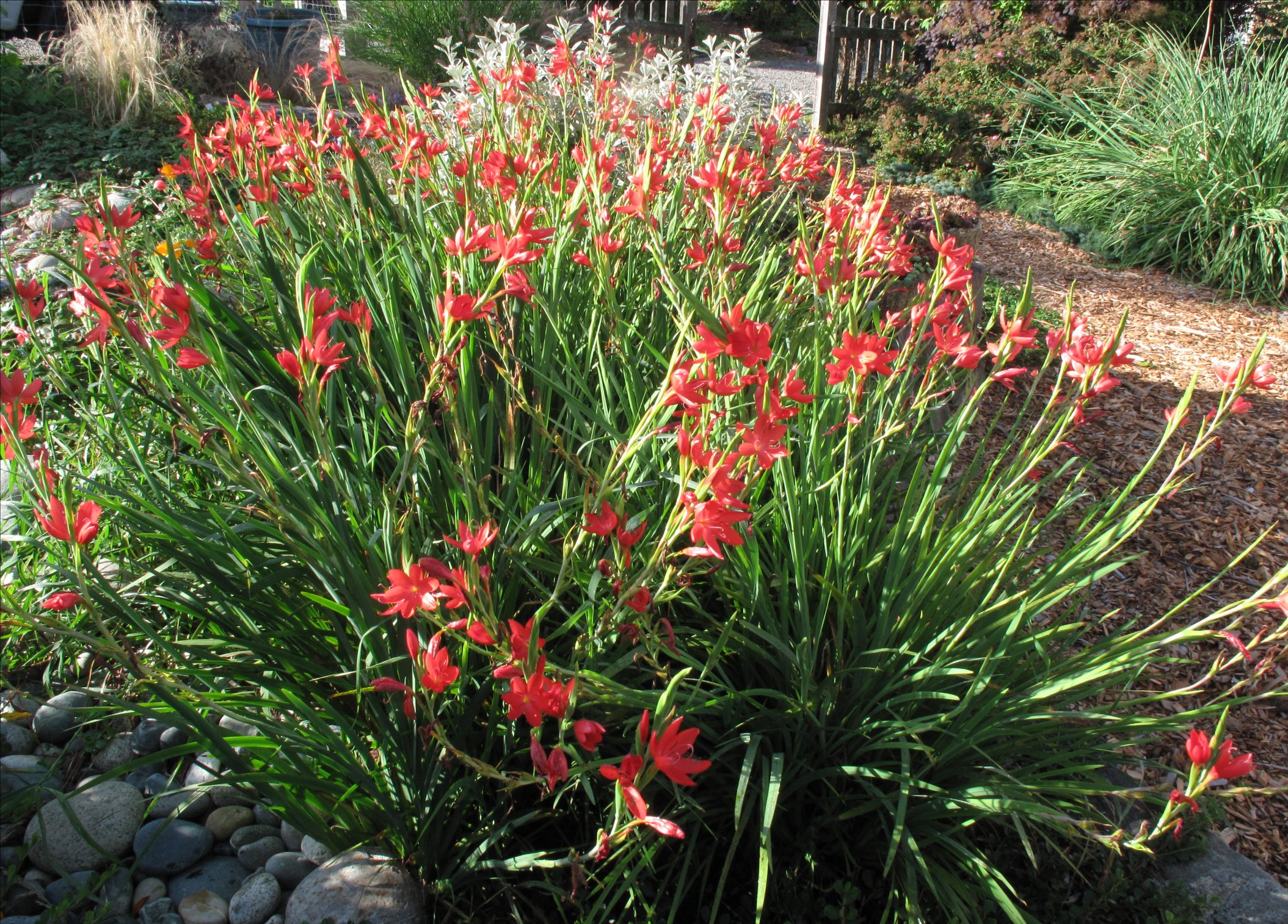
Hesperantha coccinea-Oregon Sunset Clump

Clump of Hesperantha cocinnea covered with new bloom early September 2013

When I first wrote about this plant in January of this year, my clump had been stellar, blooming through the fall of 2012 and well into January.  Sporadic blooming continued in February and March and was followed by a very dry summer when flowering stopped.  Nevertheless the strap-like leaves were a nice foil to summer bloomers.

A new cycle of fall blooms began about four weeks ago as flowering stems began to make an appearance.  I responded with a bit more watering (our late summer was exceedingly dry) and by late August and early September much needed rainfall made an appearance.
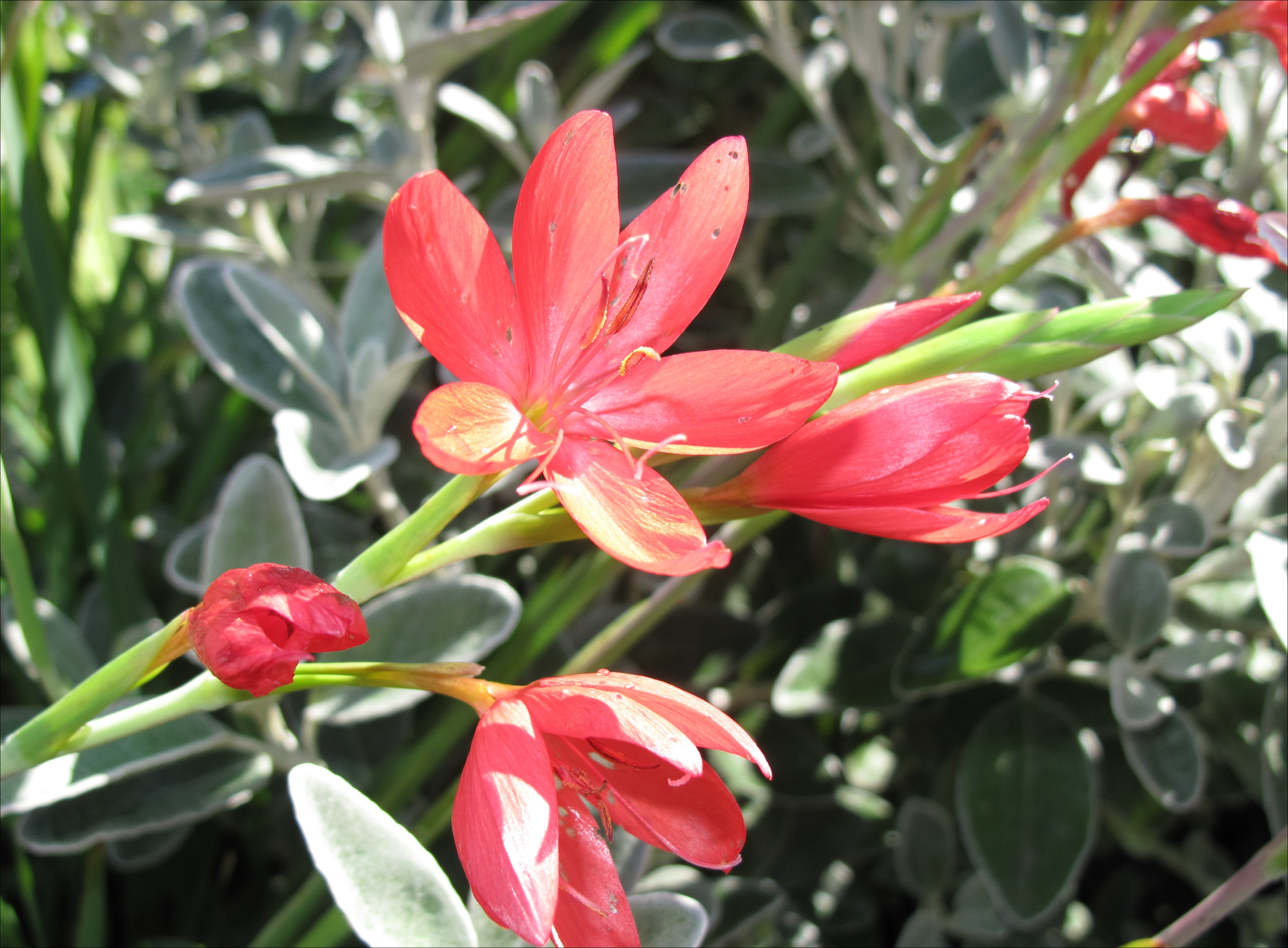
H coccinea stem

Click above photo to see image details in a new window

New blooms on each stem open from the bottom up so it’s easy to clean up older stems by simple deadheading the spent flowers at the bottom of the stalk followed by snipping out the spent stems.

If you choose, you can easily skip deadheading and periodically spend a few minutes culling out the stems that are done.  I’m convinced the clump responds by sending up new flowering stems.

Oh yes, why use redux in the title of this post rather than simply calling the post “Crimson River Lilly Revisited?”   Well, at the risk of appealing to the literati:  Redux comes from the Latin  “reducere,” which is often translated as brought back or restored.  Since the word is now most often associated with literature (John Updike’s Rabbit Redux), movies (Francis Ford Copola’s Apocalypse Now Redux) and music, I thought it might be nice to expand the usage to plant blogs.  We plant folk often learn a bit of Latin ourselves as we struggle to understand the Latin (and Greek) binomials.  Let’s not forget that those Genus and Species name do tell us a bit about the plants characteristics.

For more on Hesperantha coccinea, aka “Kaffir Lilly,” see my previous post.
Explorer’s Gentian and Lewis’ Monkey Flower on Mt Rainier

In an earlier post I wrote about some of the most common wildflowers found in the Cascade mountains of the Pacific Northwest, especially how they make fine subjects for close up photos (Pacific Northwest Natives Up Close).  On that trip, wildflowers hugged the trail up Sauk Mountain; it was hardly ever necessary to leave the trail to find a suitable subject.

Earlier this week I made a quick trip to Mt Rainier, hoping to photograph more wildflowers.

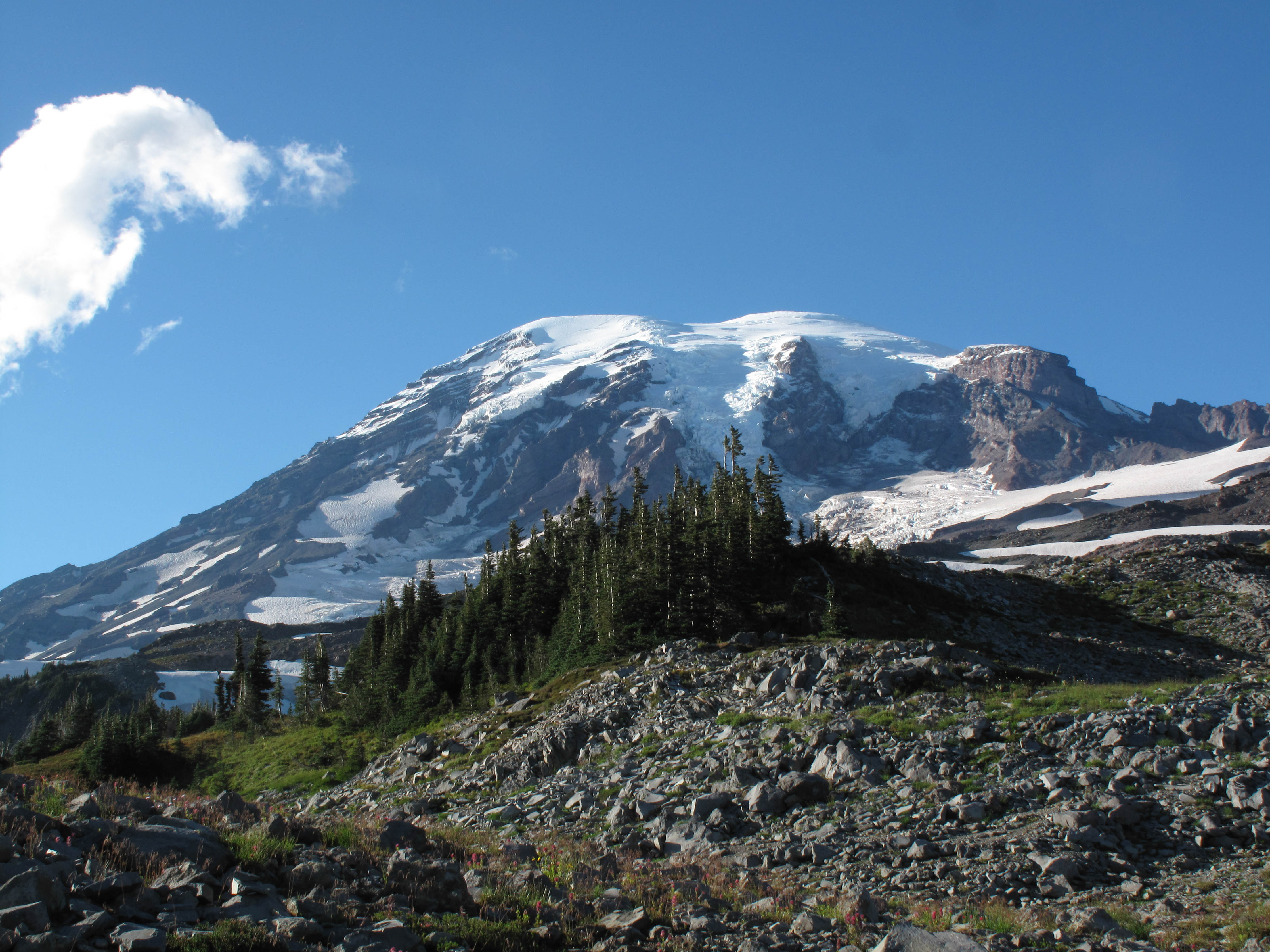
Mt Rainier

View of Mt Rainier from hike near Paradise (after morning clouds parted)

The trails around Paradise are well maintained for the hordes of tourists that flock to the mountain. Visitors are implored not to leave the trail and respect the sensitive surrounding  meadows.

IMG_4074

Meadow near Paradise on Mt Rainier

I did manage to find a meadow, a bit further afield, where I could safely get closer to two plants, Gentiana calycosa and Mimulus lewisii.

Gentianacaslycosa

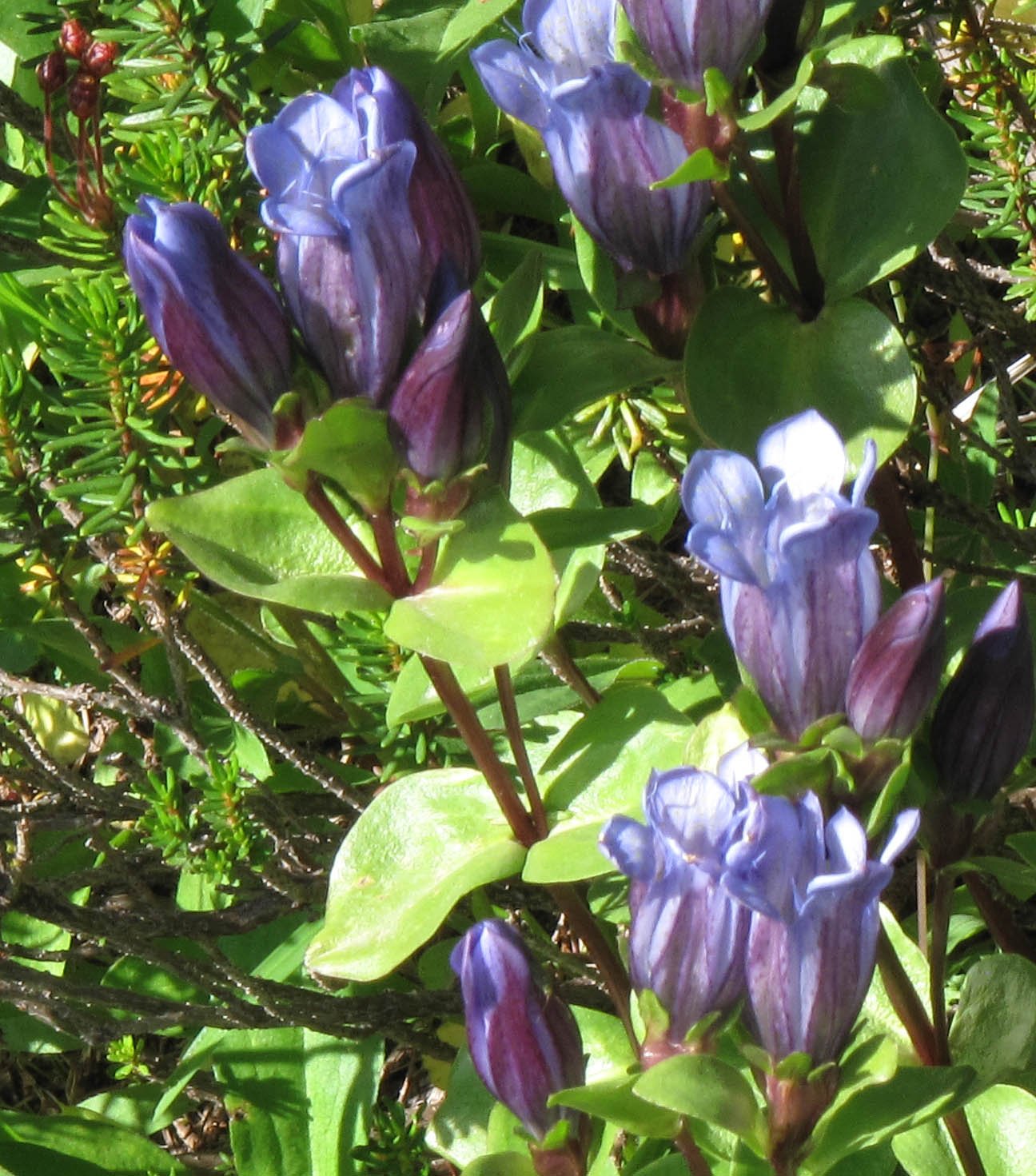
Gentiana calycosa (Explorer’s Gentian)

The Explorer’s Gentian, aka Mountain Bog Gentian, has upward pointing flowers of a lovely shade of blue with some yellow spots in the throat.

This species tends to be found in the wetter parts of meadows. It’s definitely a common sight in late summer or early autumn near stream banks, alpine meadows and other wetter sub-alpine habitats. It ranges from the Sierra Nevada and Klamath Mountains in Northern California into the Cascades and a bit of the Coast Range of Oregon and continues throughout the Cascades and Olympics of Washington State.

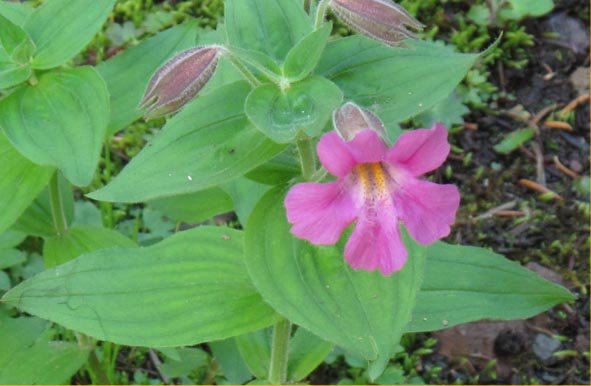
Another common wildflower, Mimulus lewisii, sometimes called Lewis’s monkeyflower, has flowers that range from pink to a bright rose with yellow splashes in the throat.

Mimulus lewisii

Mimulus lewisii (Lewis’s Monkeyflower)

Mimulus lewisii also grows in wet areas alongside stream banks and meadows.  It’s a wide ranging and very common western native alpine, which is also found in sub-alpine and forest areas in and adjacent to the Rockies, Sierra Nevada mountains and throughout the Cascade and Olympics of Washington State.

The pink flowers may range in color from lighter shades to deep pink  and magenta. Its also one of the many species (and a single genus) bearing the name of Meriwether Lewis, who certainly qualifies as an “explorer,” while the Genus Gentiana is named for King Gentius of Illyria, who lived around 500 B.C.

According to Mark Turner and Phyllis Gustafson’s Wildflowers of the Pacific Northwest, King Gentius is alleged to have discovered medicinal uses for Gentiana lutea, from which a tonic of bitters is still made.

Blue Pimpernel

I don’t buy or raise many true annuals, given a relatively mild Puget Sound winter climate.  Instead I favor plants in the “Zonal Denial” category, which I try to winter over in my small 8 X14 greenhouse.

Anagallis monellii 'Skylover'2

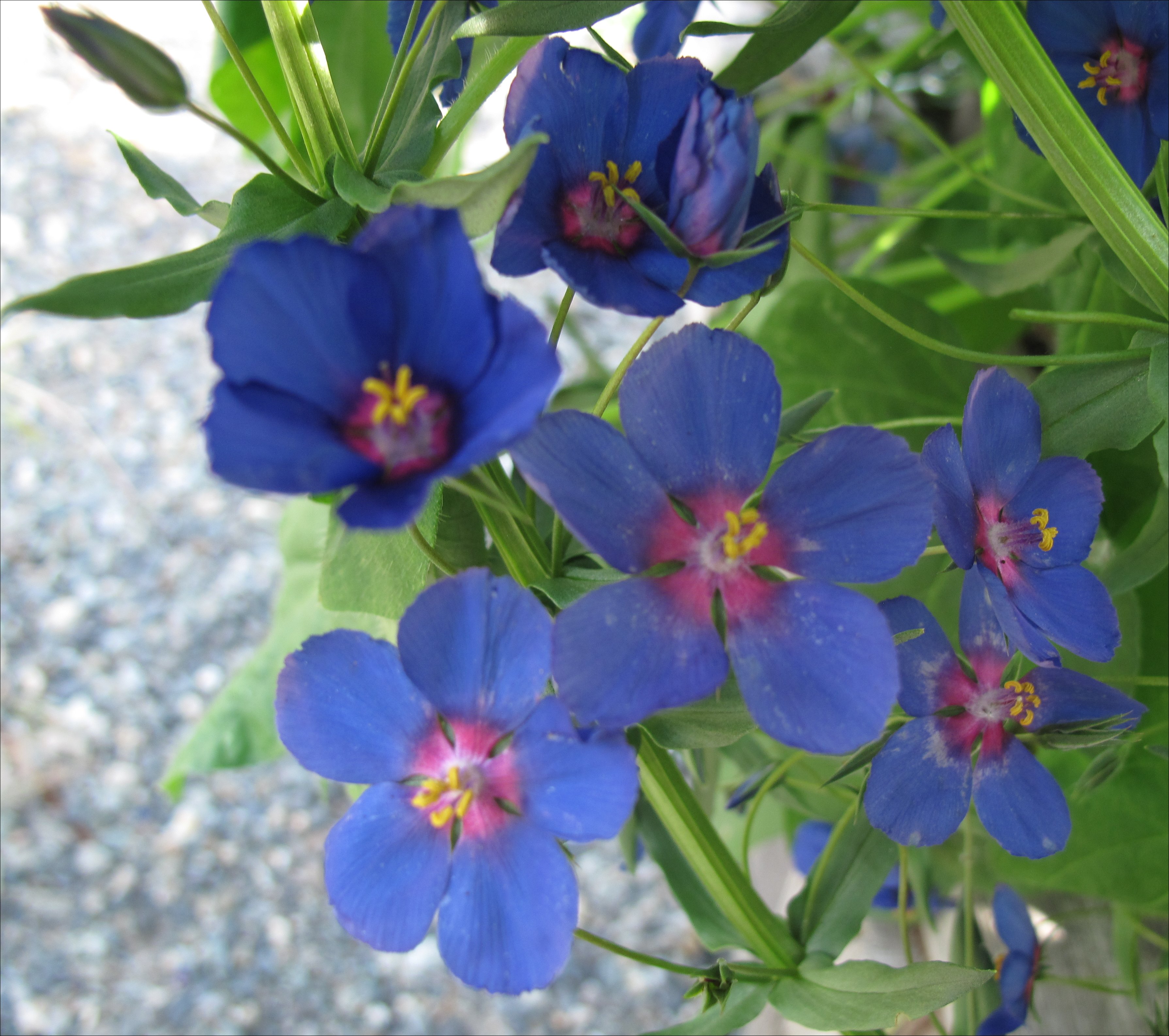
Anagallis ‘Skylover’ (Blue Pimpernel)

Others I keep in pots and drag them into a cold garage to protect from the dangerous temps in the mid twenties that sometimes linger for a few days in our generally mild winters.

This year I did buy Anagallis monellii ‘Skylover,’ sold on the annual table at my local Vashon Nursery, DIG.

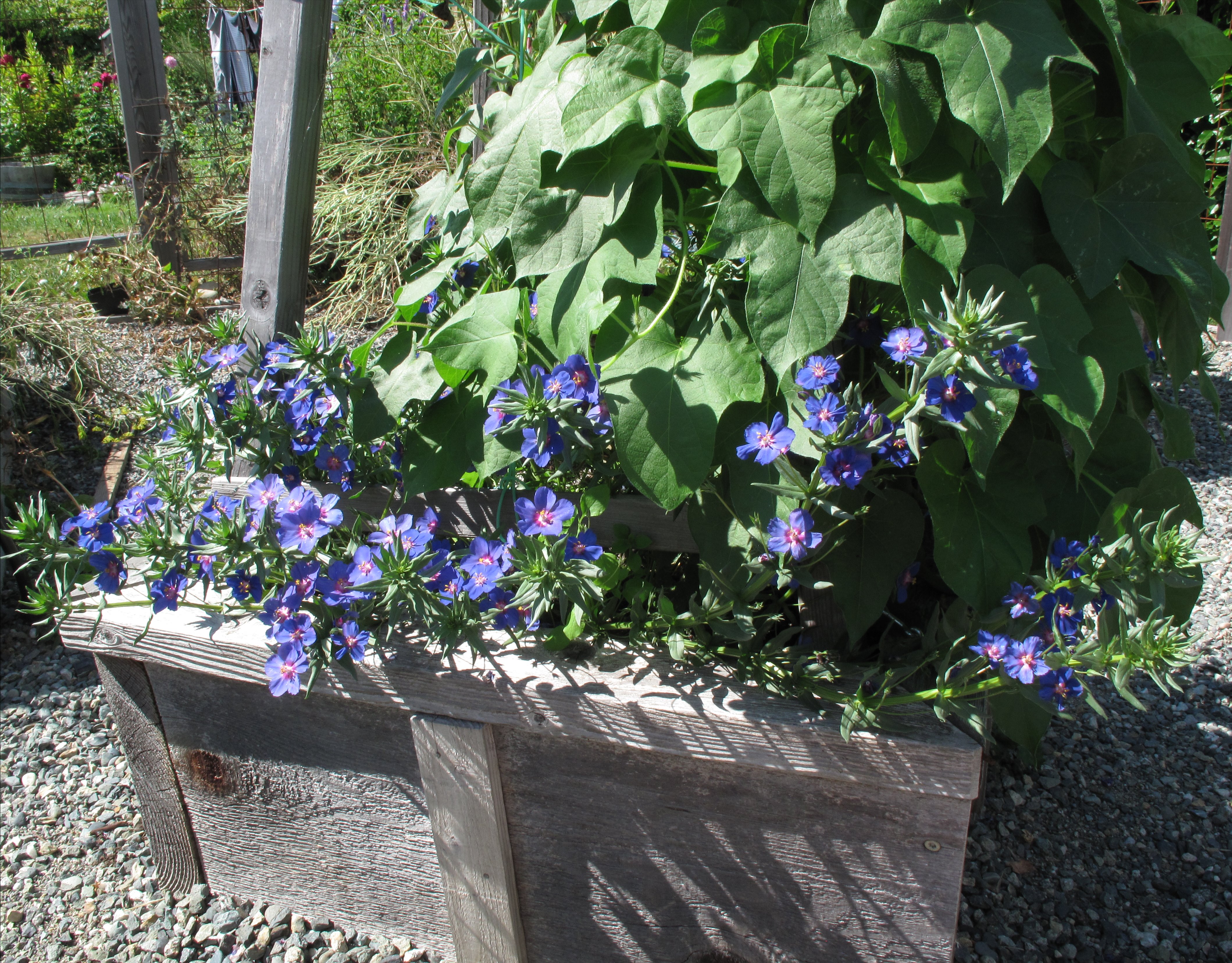
Here it is at the bottom of an obelisk I built for the center of our potager/kitchen garden raised beds.

Anagallis monellii 'Skylover' in base of Wooden Obelisk

Anagallis monellii ‘Skylover’ and Ipomea leaves in base of wooden obelisk

Before the two annuals (an Ipomea, whose leaves are above the Pimpernel in the above image) and the Skylover were planted in June, sugar snap peas graced the obelisk.

Oh yes, I couldn’t complete this post without looking up the origin of the name Pimpernel, which, according to the Oxford English Dictionary comes from the Old French word Pimpernelle:

…late Middle English (denoting the great burnet and the salad burnet): from Old French pimpernelle, based on Latin piper ‘pepper’ (because of the resemblance of the burnet’s fruit to a peppercorn).

I’m still looking for the Scarlet Pimpernel plant in nurseries around town.  I did find the play written by the Baroness Emmuska Orczy at my local library.