Berry Beautiful

The two cotoneaster shrubs in my garden are always interesting no matter the season.   Stunning green leaves with deep veining, creamy white flowers in spring (sometimes slightly pinkish) followed by red berries that persist long after the leaves have dropped for the winter and an arched upright branching habit.
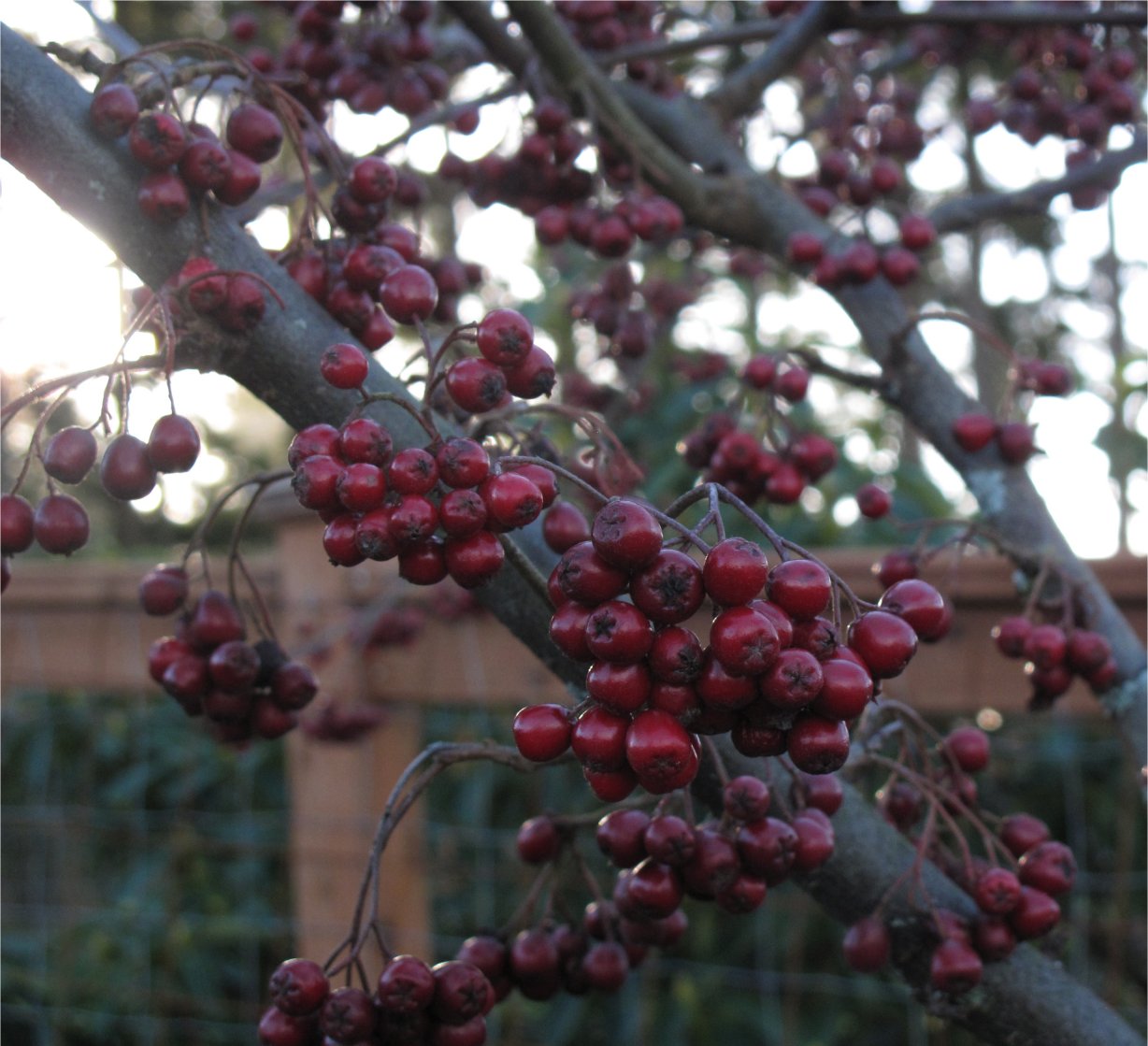
catoneaster lacteus no leaves4

The Cotoneaster genus is huge, possibly 350 or more species (taxonomists differ) and as many as 45 named cultivars. Some species are so similar in leaf and berry appearance that I’m not quite sure if my two are really Cotoneaster lacteus or a closely related species, possibly C. rehderi or even C. rhytidodophyllus. All hail from the Yunnan, Hubei and Sichuan regions of China.

The red berry color deepens as the berries ripen in winter  —  no matter whether the day is a wintery gray or a perfect blue, in shade or sunlight — the berries are always a special treat to see against the sky.
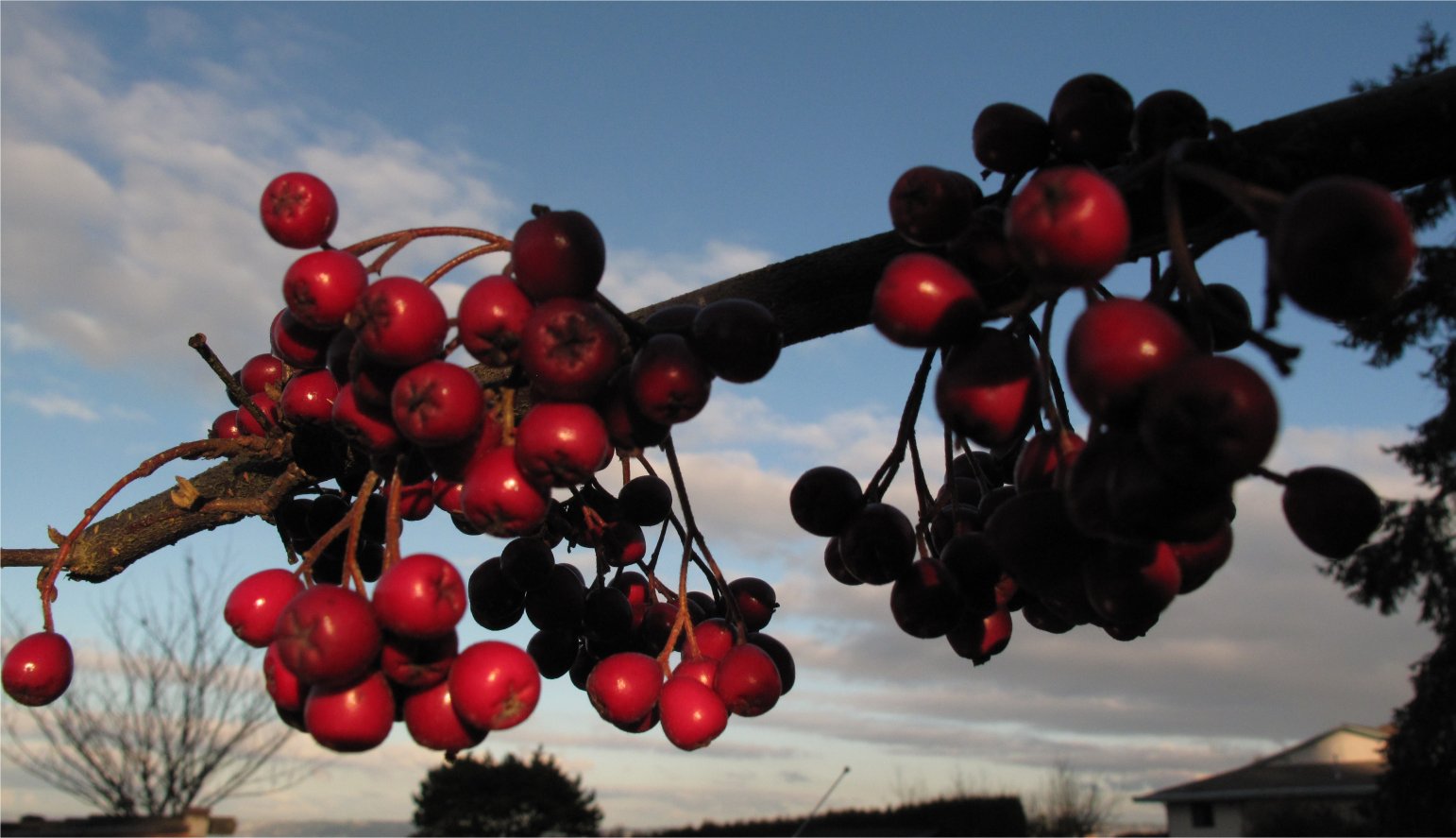
catoneaster lacteus no leaves6Just a week or two ago, the birds have finally decided the berries are worth eating.
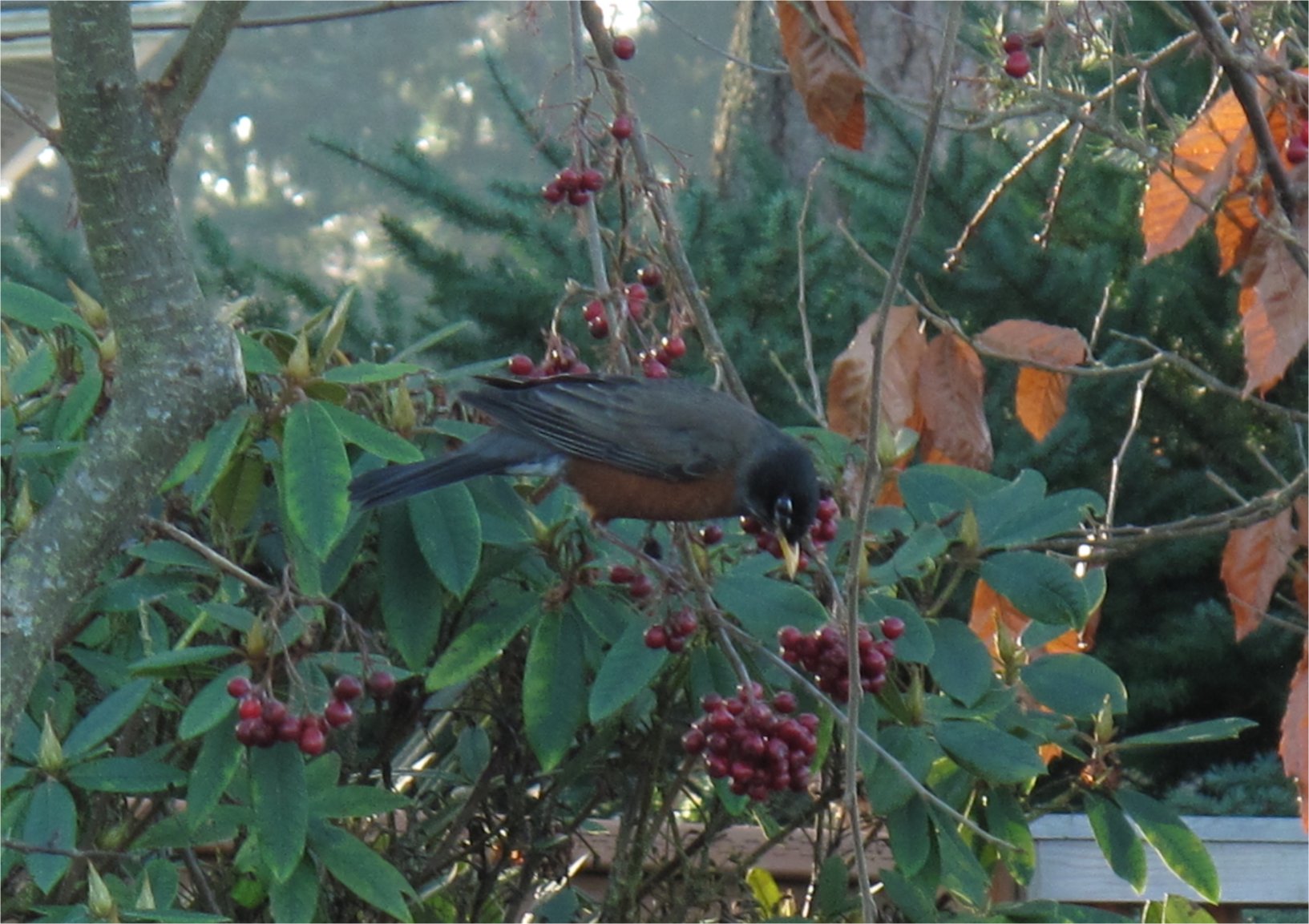
catoneaster lacteus birds1Even in the fading twilight, the fast dwindling supply of berries still attract a few stragglers.
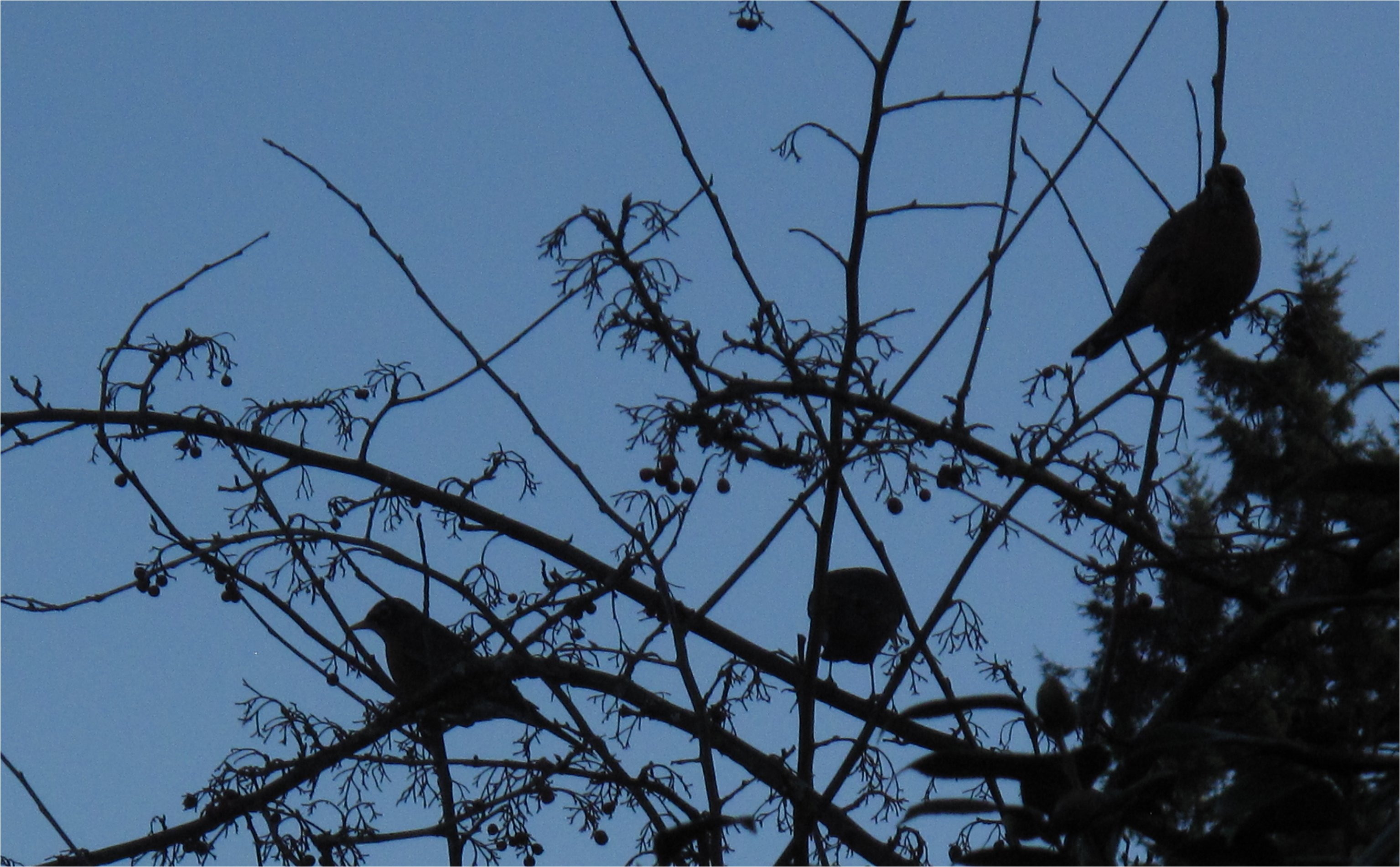
catoneaster lacteus birds2In just a few days the birds took care of the ripe berries, but all summer and into the fall they left them untouched so we humans could enjoy them.
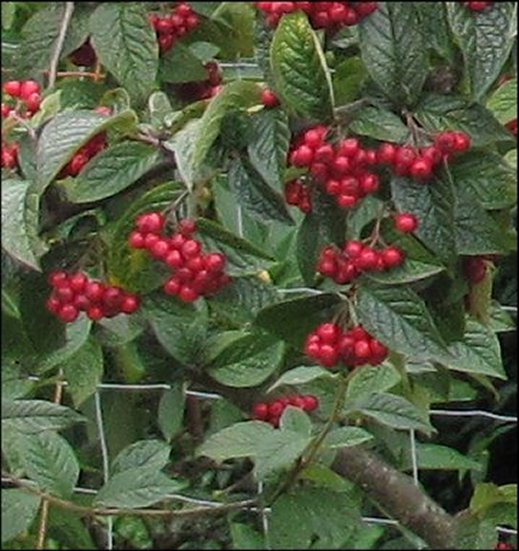
cotoneaster-even-closer

Late summer leaves and berries

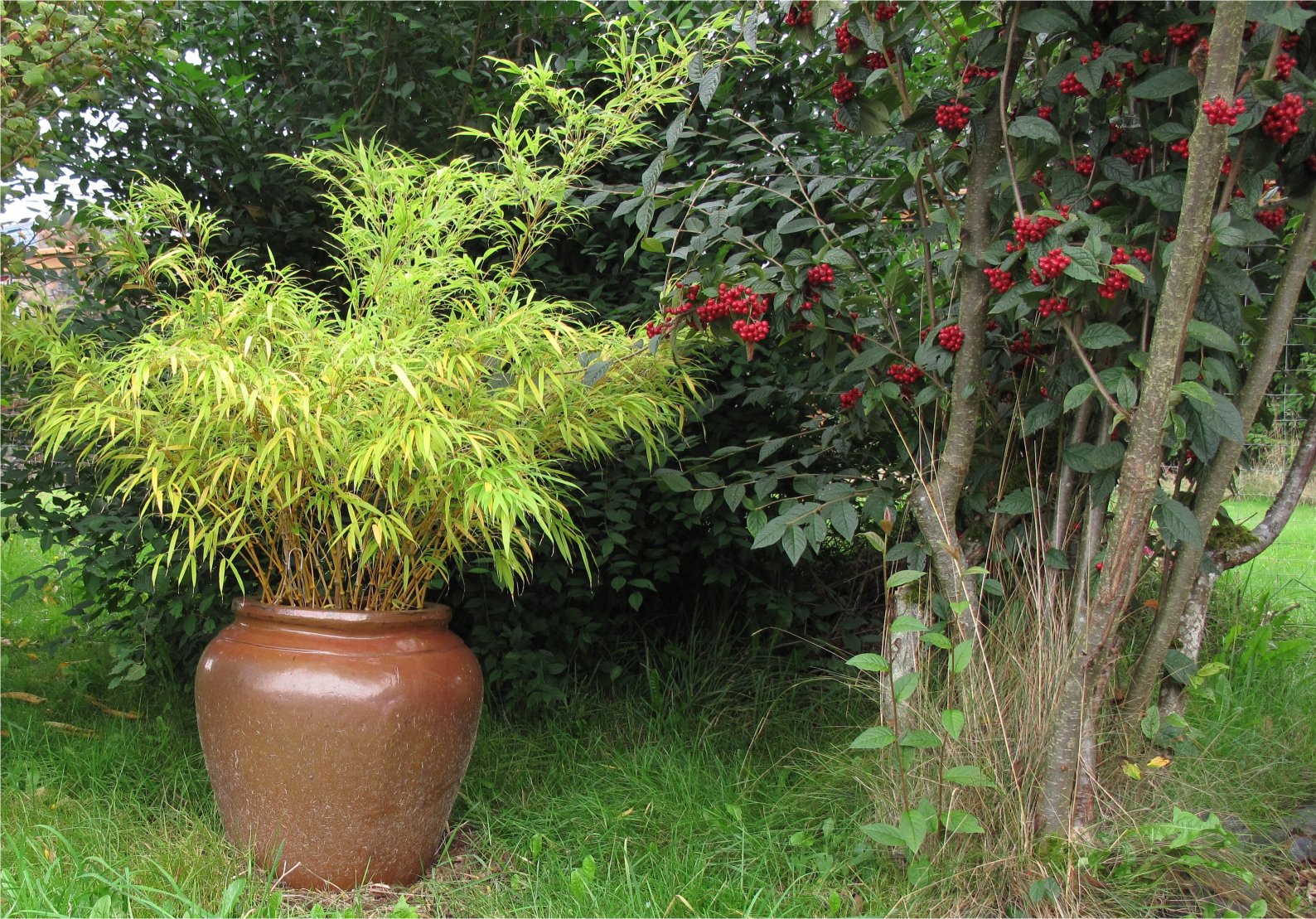
bamboo-red-flowering-currant-catoneaster

Cotoneaster lacteus? (aka C. parneyi in the trade) contrasting nicely with potted bamboo

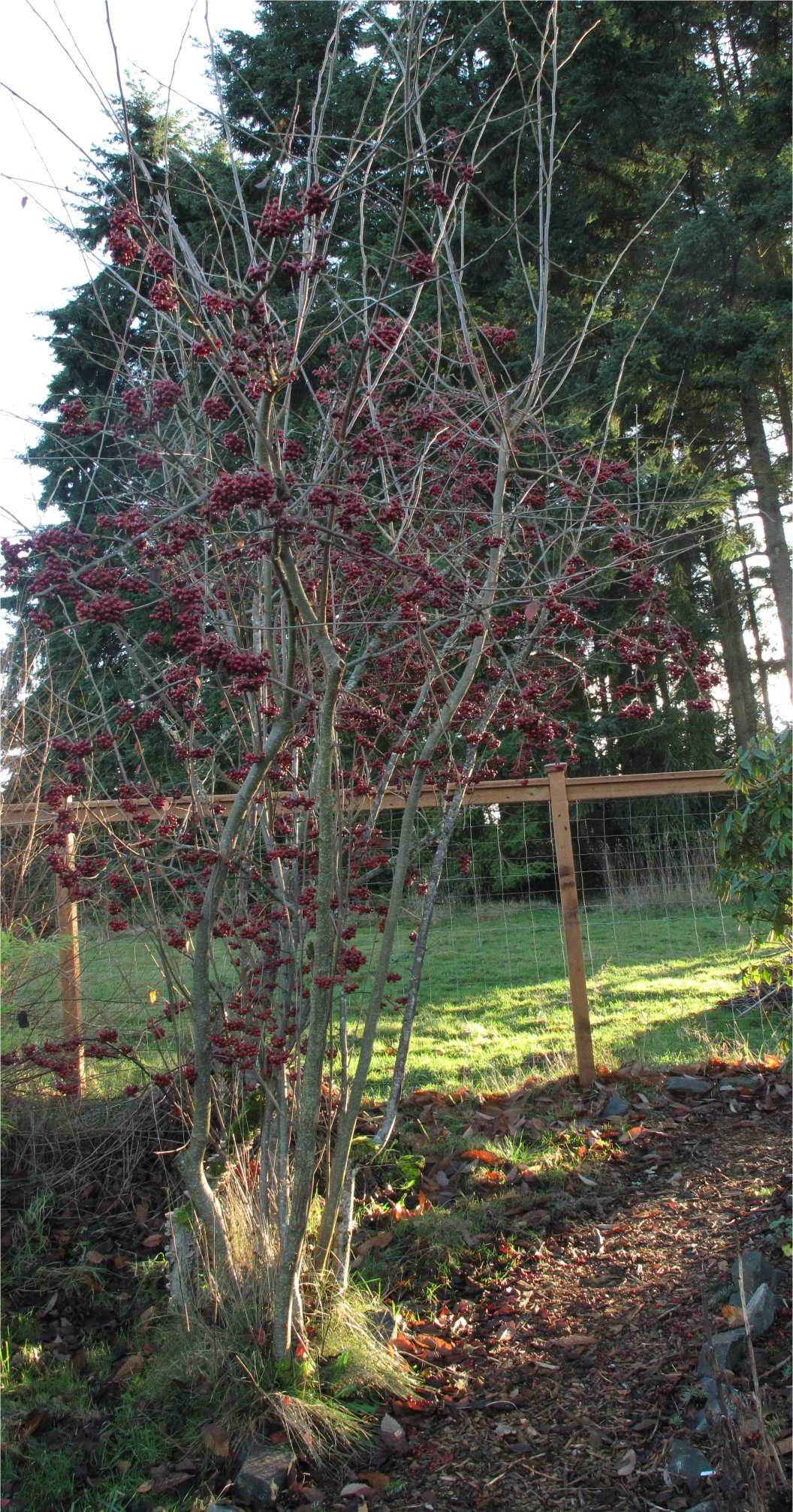
Both my Cotoneasters are at least 12 feet high and probably volunteered years ago in the two spots where they currently reside.  I occasionally discover seedlings and smaller volunteers around the garden.  Those are easily dug up and potted on without problems. This winter I’ll work on cutting out the cross branching and refining the shape to show more bare trunks, aiming to duplicate the shape of our native vine maples, which are also easily pruned into multiple trunks.
catoneaster lacteus no leaves3

Please prune me as soon as possible, my leaves are gone and you can see my branches.

So, could this plant get any better?  How about a variegated leaf too.  I’m already lusting for C. lacteus ‘Milkmaid.’
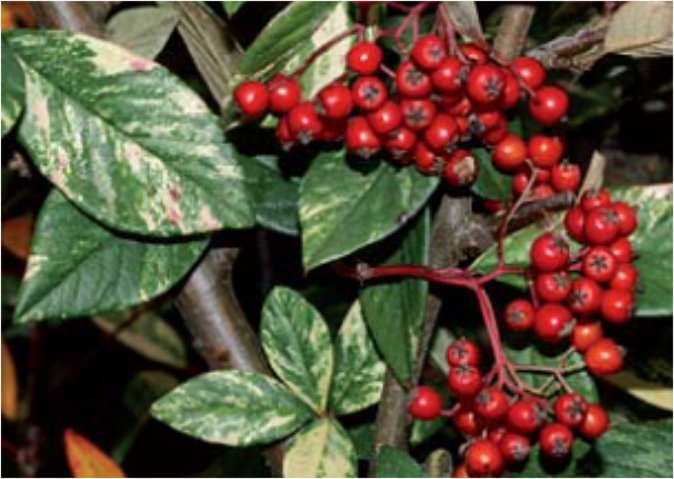
cotoneaster lacteus milkmaidPhoto C. lacteus ‘Milkmaid’ from Jeanette Fryer & Bertil Hylmo Book, Timber Press 2009

The Timber Press book has 200 Plates with close ups of leaves and berries. That’s Cotoneaster rhytidophyllus on the cover.  Looks a lot like C. lacteus doesn’t it?

cotoneaster book coverHere’s the notes on C. lacteus from the book:

Cotoneaster lacteus is common in warm temperature zones of both the northern and southern hemispheres. It is naturalized in the United States on the Californian coastal hills, where it is often found in cultivation as C.parneyi hort. Cotoneaster lacteus is also cultivated in Mexico, Chile, Argentina, South Africa and New Zealand. It is a very useful wind-hardy shrub. It can also be grown as a hedge where the summer growth is pruned to reveal the fruit. A magnificent hedge originating from George Forrest’s collection (Forrest 10419) still stands in Ireland’s National Botanic Gardens at Glasnevin, Dublin; planted in the late 1920s, it is now around 6 m high and 3 m thick. Cotoneaster lacteus has been collected by Jeanette Fryer (JFYU 008) and Keith Rushforth (KR 3929) in NW Yunnan in 1996. Cotoneaster lacteus in spring has striking, erect, tawny-haired new shoots, later covered with flowers which are followed by pretty red winter fruit. Received RHS Award of Merit in 1935 and Award of Garden Merit in 1984. Cultivar: ‘Milkmaid‘ (Plate14), a variegated form, very arresting with fruit which ripens earlier and is shiny red, slower growing than the species. Nonvariegated growth needs to be pruned out.

I’m officially on the lookout for the Milkmaid cultivar and now have the Botanic Gardens at Glasnevin on my list of travel destinations!
Thinking, Feeling Plants ?

Featured

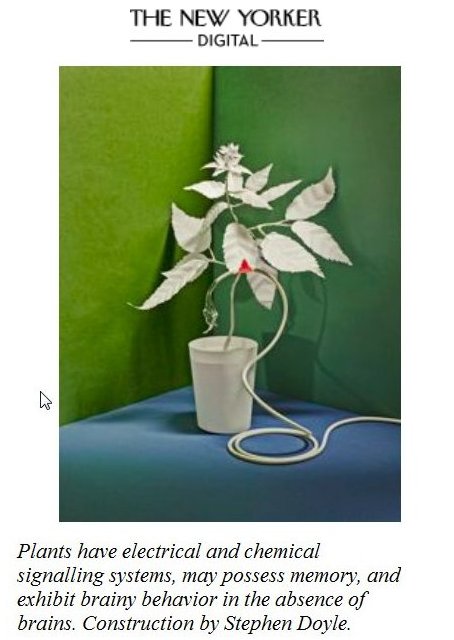
No, this post is not about my thinking or feeling flora, or me handling plant material by simply talking to the plant. It’s really about a provocative and fascinating Michael Pollan’s piece in the December 2013  New Yorker magazine.The Intelligent Plant: Scientists debate a new way of understanding flora.”  (The above link may open the complete article for current New Yorker subscribers onlyOr just scroll down to continue more about the fascinating neurobiology that plants are smarter than we think.New Yorker Mag2

The idea that plants might be intelligent (some would say even sentient) in some manner and worthy of study is the work of a group of scientists who prefer to categorize their work as “Plant Neurobiology.” Predictably. Many scientists, botanists and other academics were outraged. According to Michael Pollan, Depending on whom you talk to in the plant sciences today, the field of plant neurobiology represents either a radical new paradigm in our understanding of life or a slide back down into the murky scientific waters last stirred up by [the book] The Secret Life of Plants.”

In case you’re not familiar with The Secret Life of Plants, first published in 1973, one claim it made is that plants were sentient, even though lacking a nervous system or brain. Pollan says the book’s  “… most memorable passages described experiments of a former C.I.A. polygraph expert named Cleve Backster, who, in 1966, on a whim, hooked up a galvanometer to the leaf of a dracaena, a houseplant that he kept in his office. To his astonishment, Backster found that simply by imagining the dracaena being set on fire he could make it rouse the needle of the polygraph machine.”

Not surprisingly, legitimate researchers could not duplicate these results. Since it’s publication, much of the reported science in The Secret Life of Plants” has been discredited.  But Pollan says the cultural damage was significant and hindered important work:

According to Daniel Chamovitz, an Israeli biologist who is the author of the recent book What a Plant Knows, [The Secret Life of Plants] stymied important research on plant behavior as scientists became wary of any studies that hinted at parallels between animal senses and plant senses.” Others contend that “The Secret Life of Plants” led to “self-censorship” among researchers seeking to explore the “possible homologies between neurobiology and phytobiology”; that is, the possibility that plants are much more intelligent and much more like us than most people think—capable of cognition, communication, information processing, computation, learning, and memory.


That’s the backstory to Pollan’s fascinating review of the work plant neurobiologists are doing today.  That research is covered in depth in Pollan’s piece.  I’ll recount just one example, experiments on Mimosa pudica, better known as the Sensitive Plant.

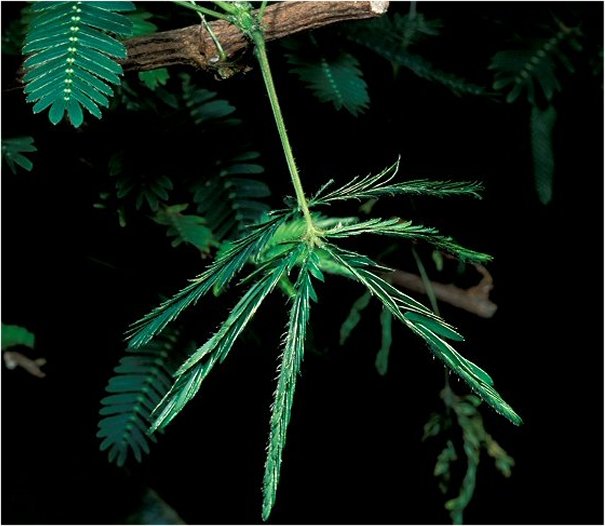
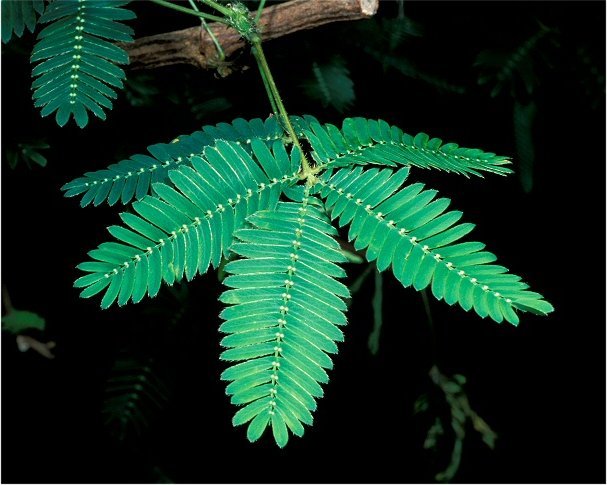
Mimosa pudica leaves open

Mimosa pudica leaves open.  Photo © BarryRice/sarracenia.com

Most of us are familiar with the way the leaves of this plant respond immediately to touch by folding up, presumably to frighten away insects. The leaves also collapse when the plant is dropped.

Mimosa pudica leaves closed

Mimosa pudica leaves closed. Photo © Barry Rice/sarracenia.com

Monica Gagliano, an animal ecologist at the University of Western Australia based her experiment with the sensitive plant on a set of protocols commonly used to test learning in animals. Her unpublished paper was presented at a scientific conference at the University of British Columbia in Vancouver, B.C. She potted 56 mimosa plants and designed a system to drop the pots from a height of fifteen centimeters every five seconds. Each training session involved 60 drops. Gagliano reported the mimosas sarted to reopen their leaves after just four to six drops; and by the end of the series their leaves remained completely open as if they concluded this stimulus could be completely ignored.

Even more interesting, Gagliano retested her plants after a week and found they continued to disregard the drop stimilus, as if they remembered what they had learned.  Gagliano’s conclusions suggested that “brains and neurons are a sophisticated solution but not a necessary requirement for learning.”

Another fascinating example Pollan detailed concerned underground plant networks that forest trees establish using mycorrhizal fungi to connect roots and enable the exchange of information and even materials. Dubbed the “wood-wide web” by researchers, it allows scores of trees in a forest to convey warnings of insect attacks, and also to deliver carbon, nitrogen and water to trees in need.

Pollan concludes that “when most of us think of plants, to the extent that we think about them at all, we think of them as old — holdovers from a simpler, pre-human evolutionary past.”  But, Pollan opines, “that for plant neurobiologists these plant behaviors hold the key to a future that will be organized around systems and technologies that are networked, decentralized, modular, reiterated, redundant and — green, able to nourish themselves on light. Plants are the great symbol of modernity, their ‘brainlessness’ turns out to be their strength, and perhaps the most valuable inspiration we can take from them.”

So if your interested in reading the entire article online The archive stores digital replicas of every print issue of The New Yorker published since 1925. Subscribers can explore the archive at archives.newyorker.com. After you’re done reading it, like me, you might no longer feel sheepish about talking, singing and engaging with the plants in your own garden.

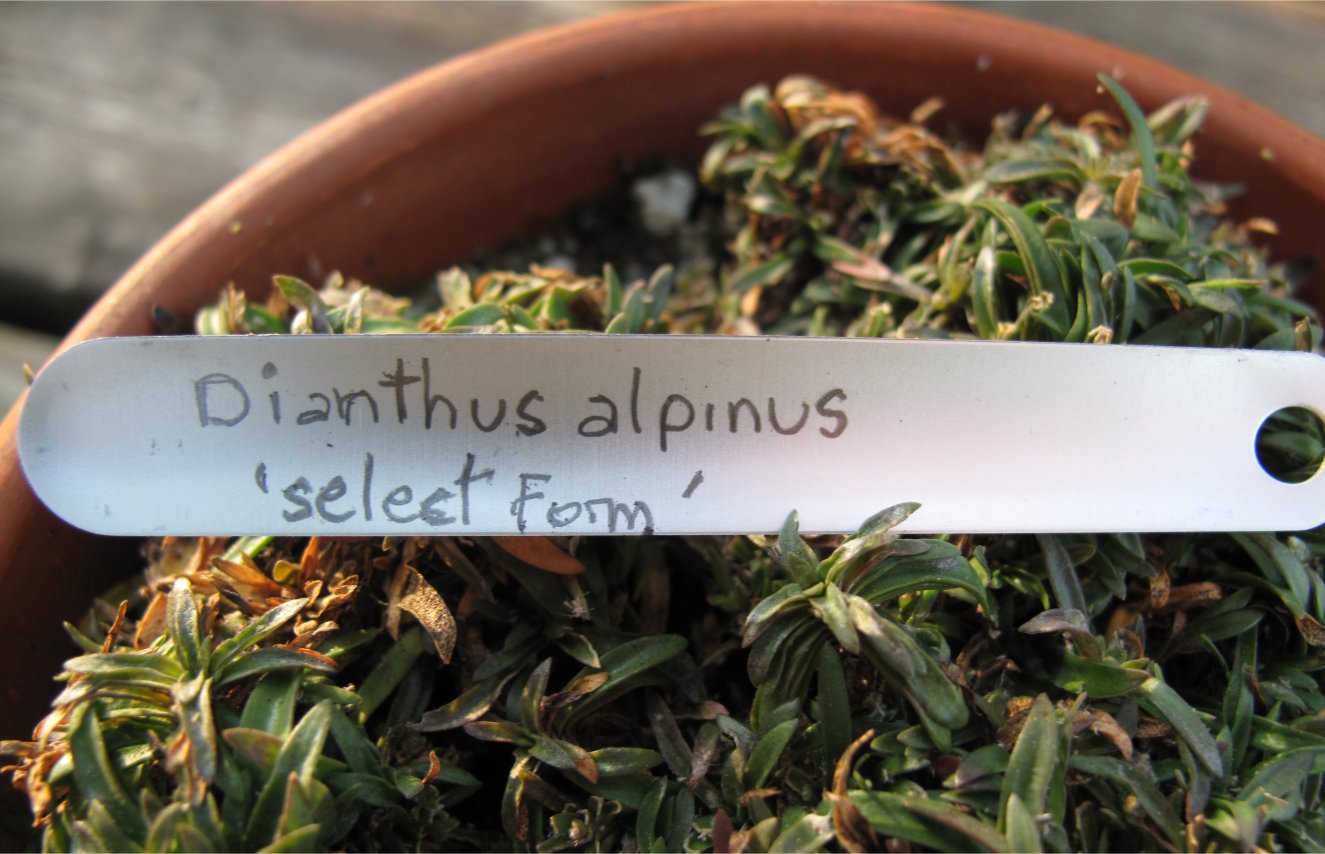
Hartley Metal Labels

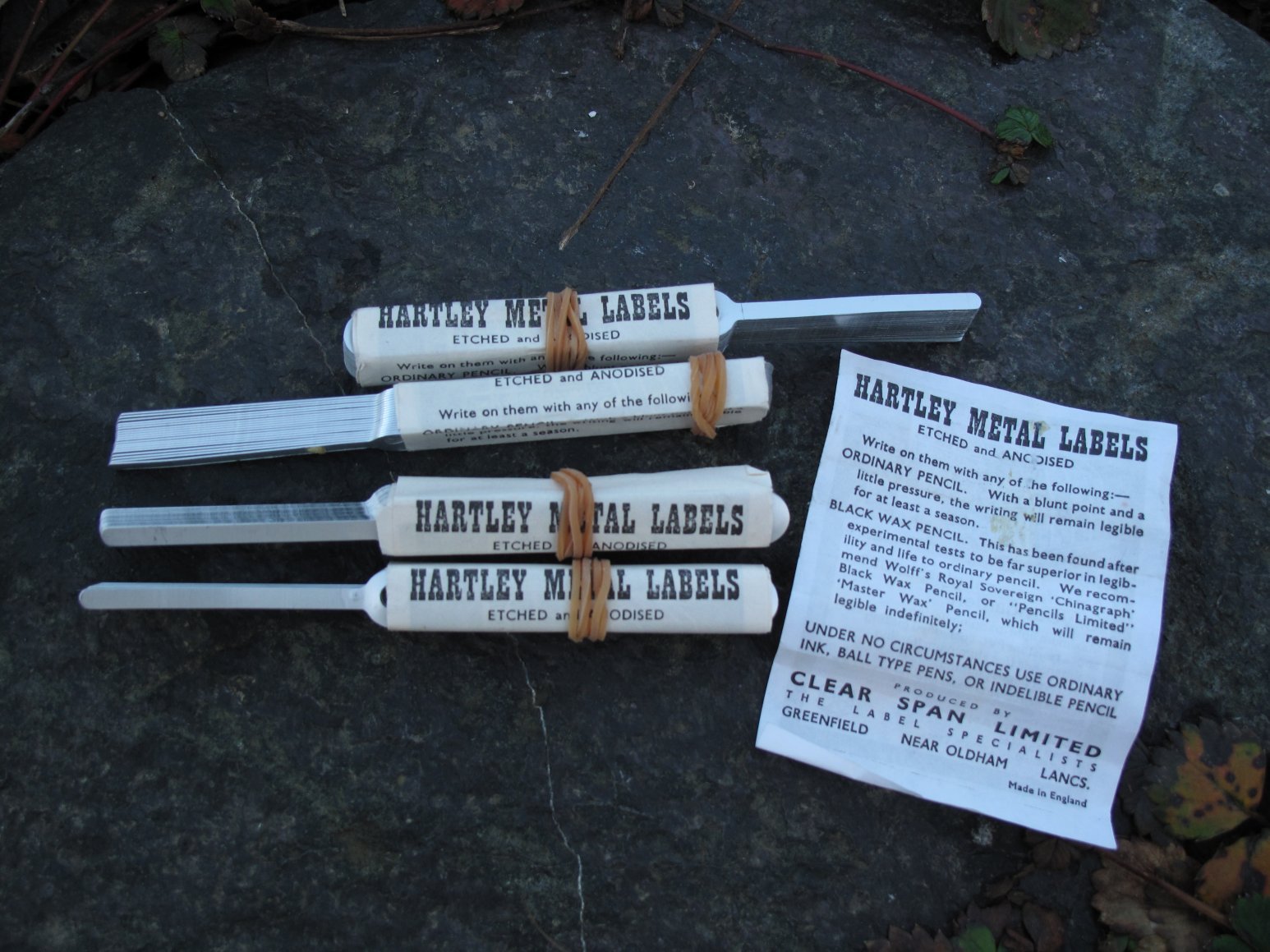
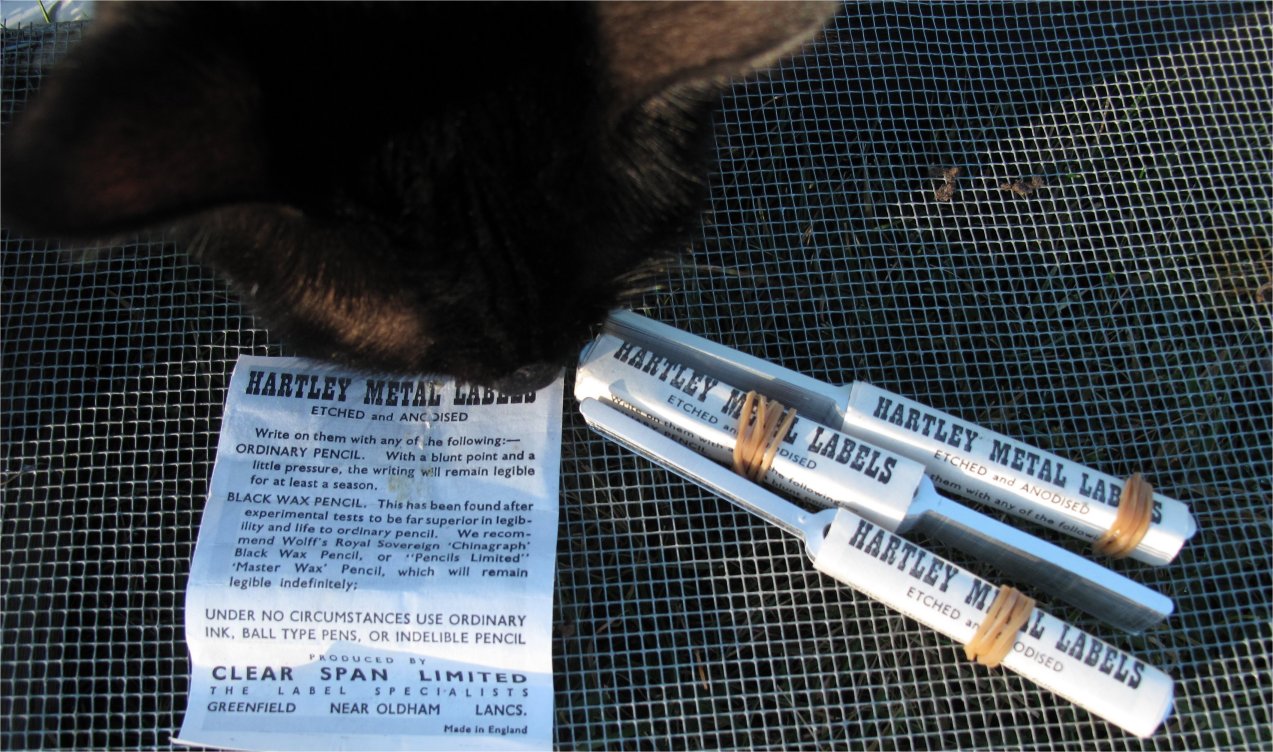
And now a bit of plant tag nostalgia. Made in England by the British company Clear Span, Hartley Metal Labels are undoubtedly no longer offered for sale anywhere. These “vintage” plant tags were offered to me at recent meeting of the Northwest Chapter of the North American Rock Garden Society.

Hartley Metal Labels

Hartley Metal Labels (Click photo to more easily read instruction sheet)

Age wise, our chapter skews toward the senior end of the spectrum.  Many of us are downsizing and that means going through our gardening stuff. So to raise money for the chapter, the owner who unearthed the labels was offering them at a recent meeting’s silent auction.  She was planning to continue her love of rock garden plants, but no longer had use for these beauties.

hartley label6

I immediately fell in love with the elegant slim labels manufactured of anodized aluminum. The marking surface is slightly concave, which adds to the longevity of the label.

hartley label2

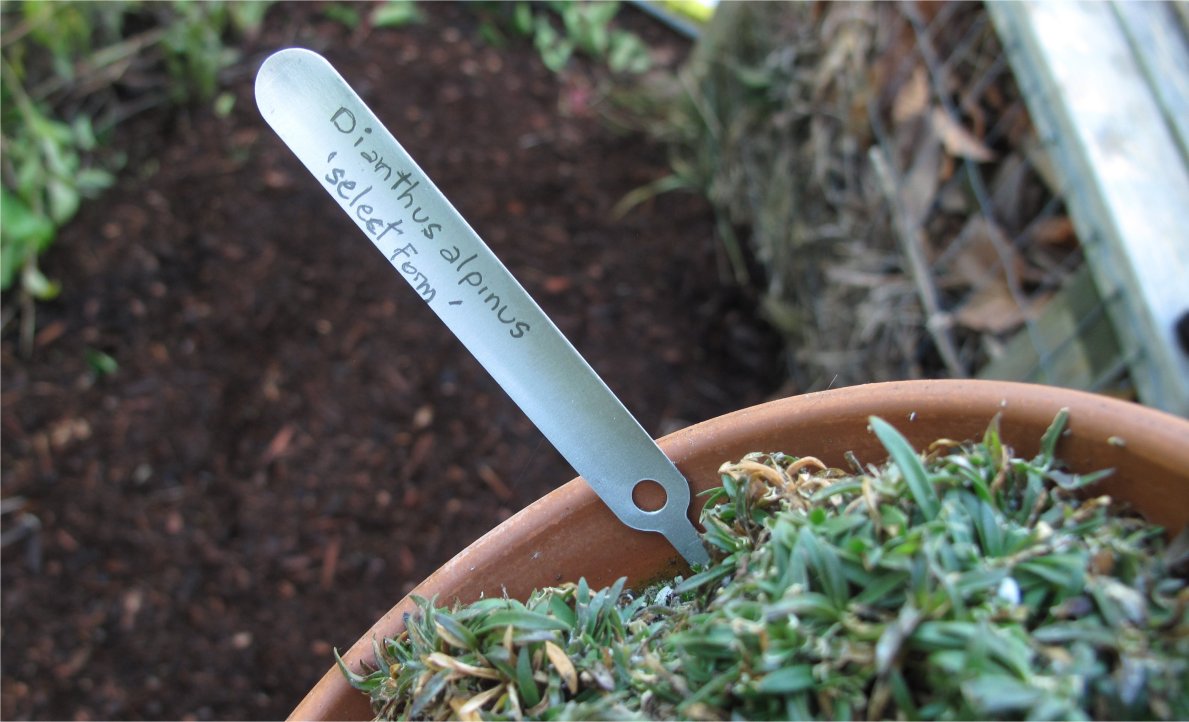
Label written with ordinary #2 pencil

As the manufacturer suggested decades ago, ordinary pencil with a blunt tip and a bit of pressure will render a tag that is legible for at least a season. Better still is to use a “wax pencil,” often referred to as a china or grease pencil.

There’s quite an interesting backstory around the Hartley Metal Label.  My cat Zoe seems to be interested in doing some of the research.

Zoe looking for more info

Zoe looking for more info

Clear Span’s founder, Vincent Hartley started his company in 1938, primarily to make greenhouses.  Hartley, an inventor, entrepreneur and Fellow of the Royal Horticultural Society, was known for quite a few inventions.  You can read more about Vincent Hartley here,  Remembering Vincent Hartley.