Pink Crimson Flag, November Bloomer?

So many variables determine when, where and why a particular plant blooms. For growers and retailers in the nursery trade, profuse blooms, not surprisingly, drive impulse sales.
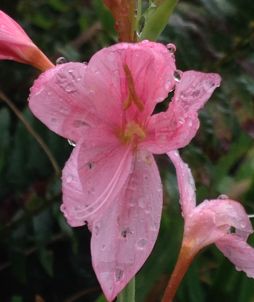
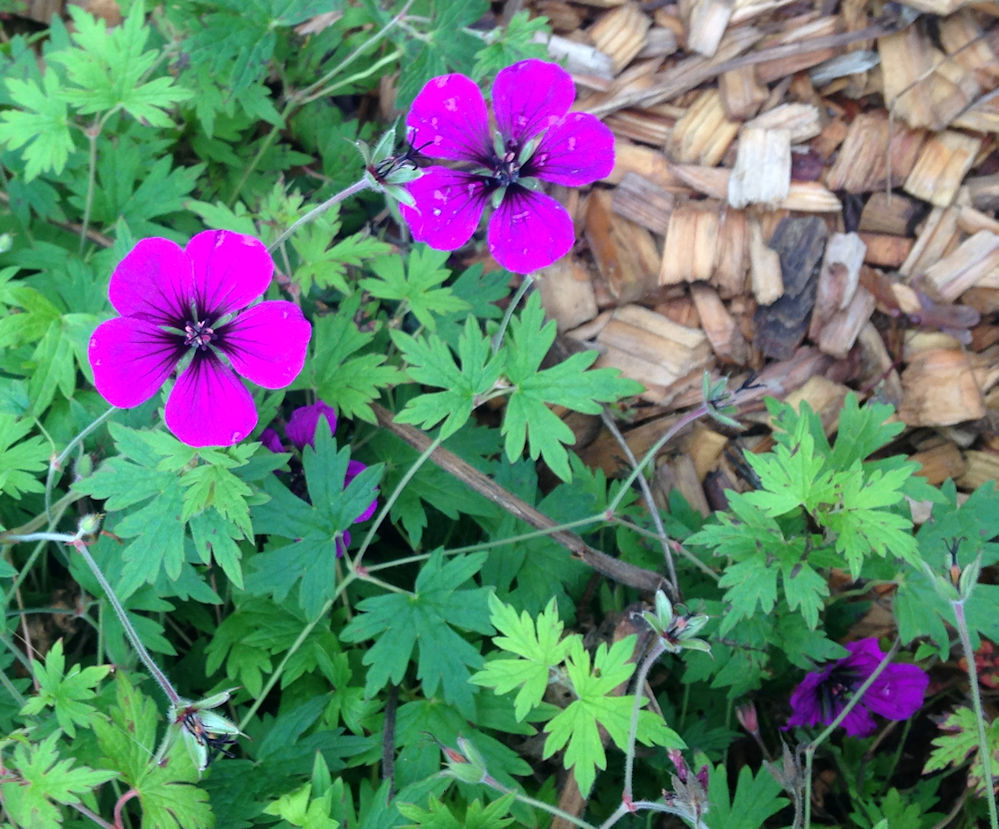
crimson flag1In the garden I’m always pleased when something blooms unexpectedly.  Yesterday I noticed a small clump of pink Crimson Flag (Hesperantha coccinea) blooming in the rain garden, probably a named cultivar.

My surprise was tempered by the fact that our recent weather has been relatively mild and accompanied by gobs and gobs of rain. In the last 48 hours my location on the north end of Vashon Island had slightly more than 2 3/4 inches of rain. (As of yesterday, the Seattle area rain total for November was about 3.52 inches).

The species is native to southern Africa and it’s not surprising that recent weather conditions encouraged bloom.
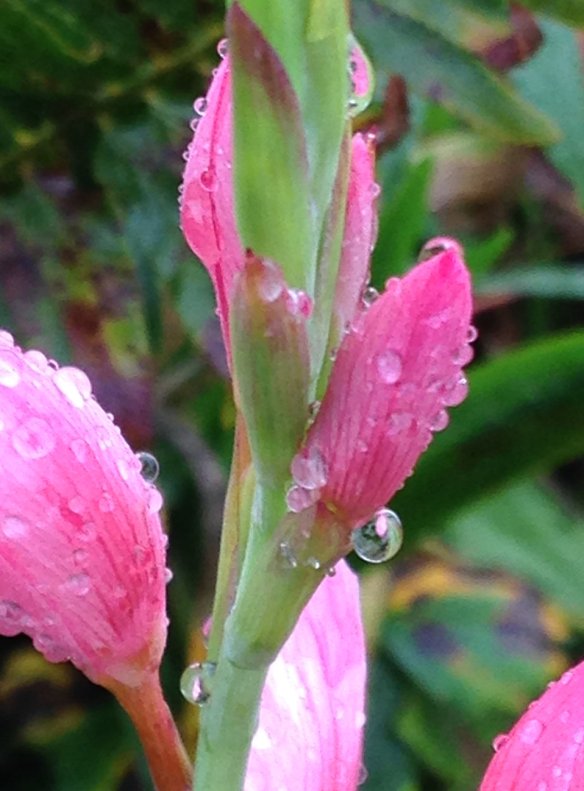
Buds of Pink Crimson Flag enjoying the rain

Buds of Pink Crimson Flag enjoying the rain

A website sponsored by the SANBI (South African Biodiversity Institute) says this about the plant:

It is a marvelous, water- loving, perennial bulbous plant. It occurs naturally in saturated soils on stream banks growing in full sun. Although the flowers are normally bright red, there are also pink and white forms…
The flowers are borne in profusion in summer during the warm and wet months between December and April.

I’ve written about the red flowering cultivar “Oregon Sunset” previously, including its confusing genus names and a downright unfortunate common name. You can read those posts here:

Crimson River Lilly ‘Oregon Sunset’
Crimson River Lilly Redux

Late Bloomers & Bulbing Fennel

bloom-clematis fall

Clematis ‘Hyde Hall’

I could have just as easily named this post repeat bloomers, bloom redux, unexpected fall flowers, or even bloom happy.

Who would have guessed after our extended Pacific Northwest drought of a summer, we would enjoy spring in mid-October.

A number of my plants, garden stalwarts, are unconvinced that Fall officially began on September 23rd.

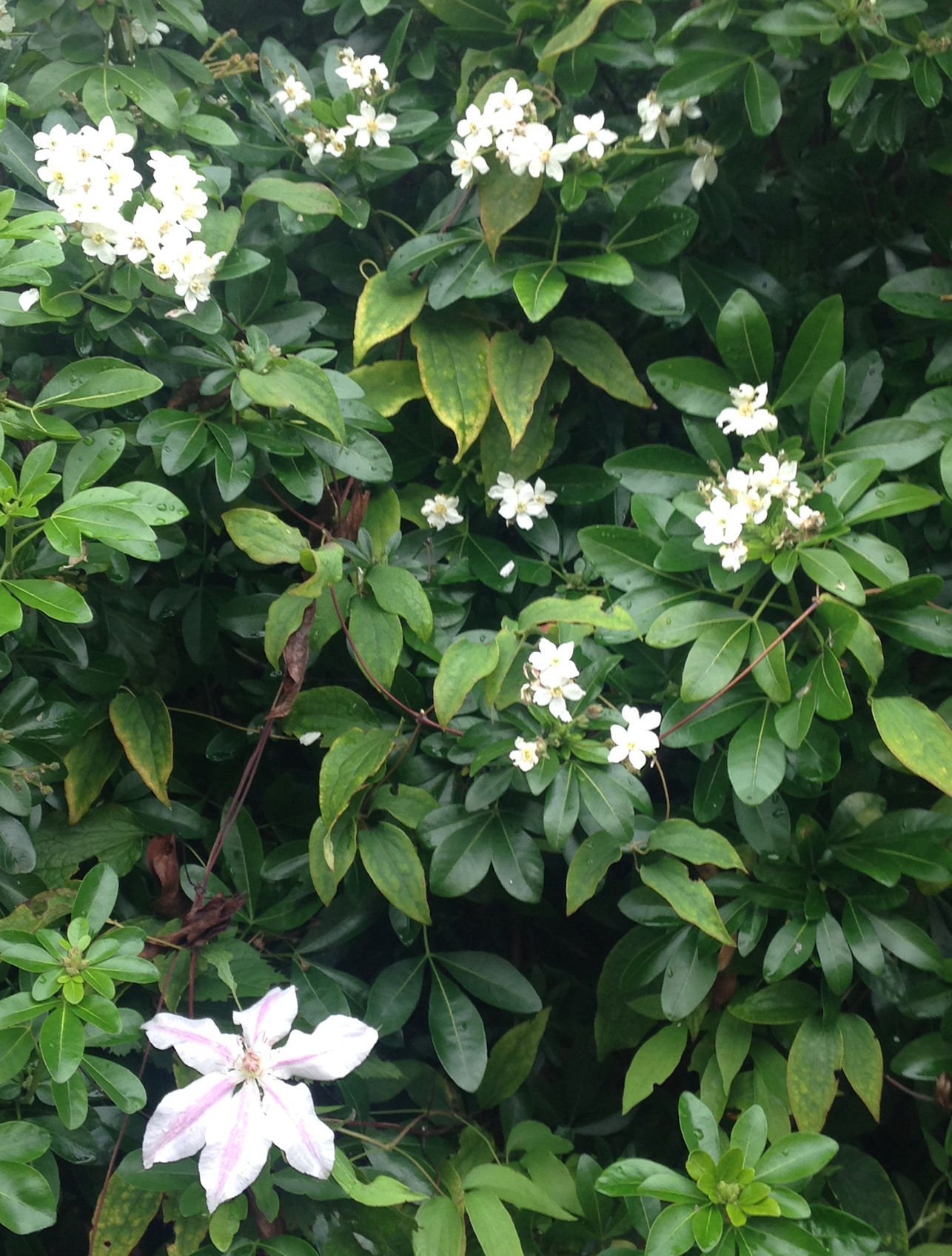
In the courtyard, as of October 18th, a Choysia and Clematis mimic late Spring.

choysia-clematis

Choysia ternata (Mexican Orange) and Clematis Hyde Hall on an October 18th afternoon

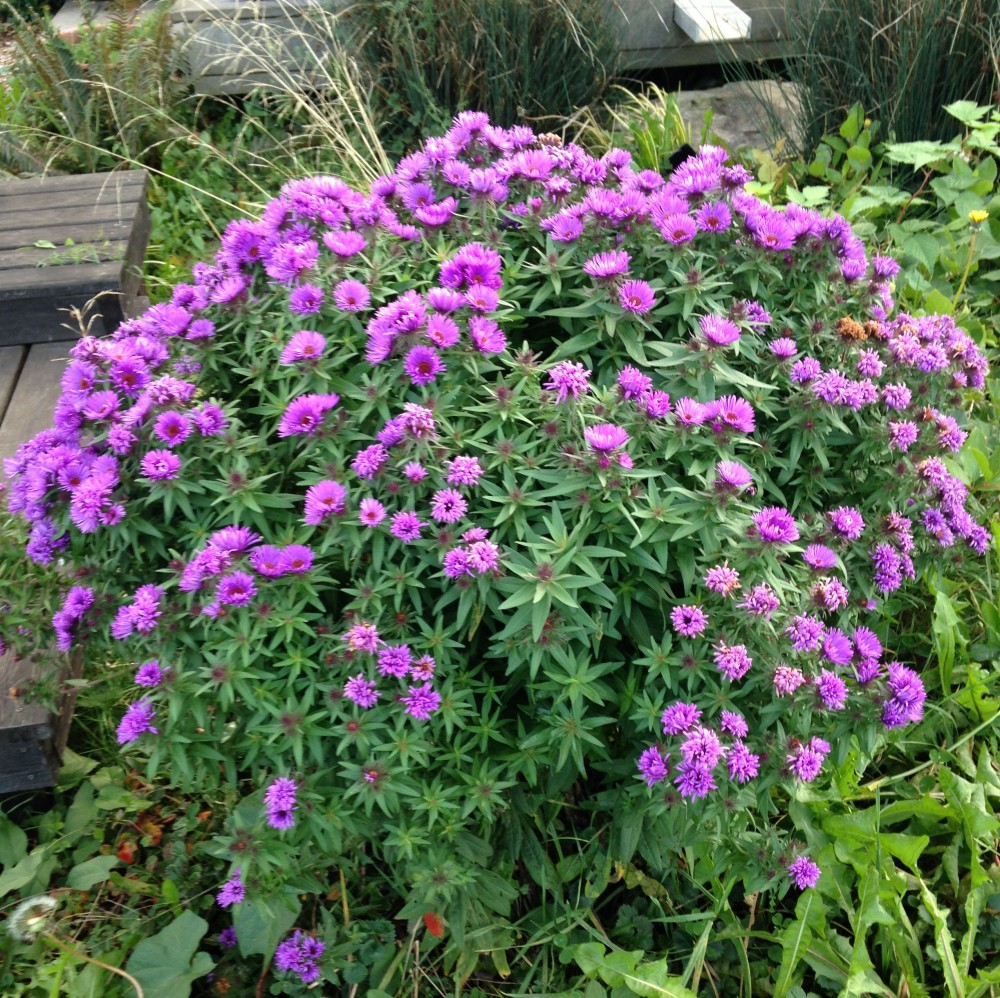
While just a few yards away — right on schedule — Asters are blooming in the rain garden.

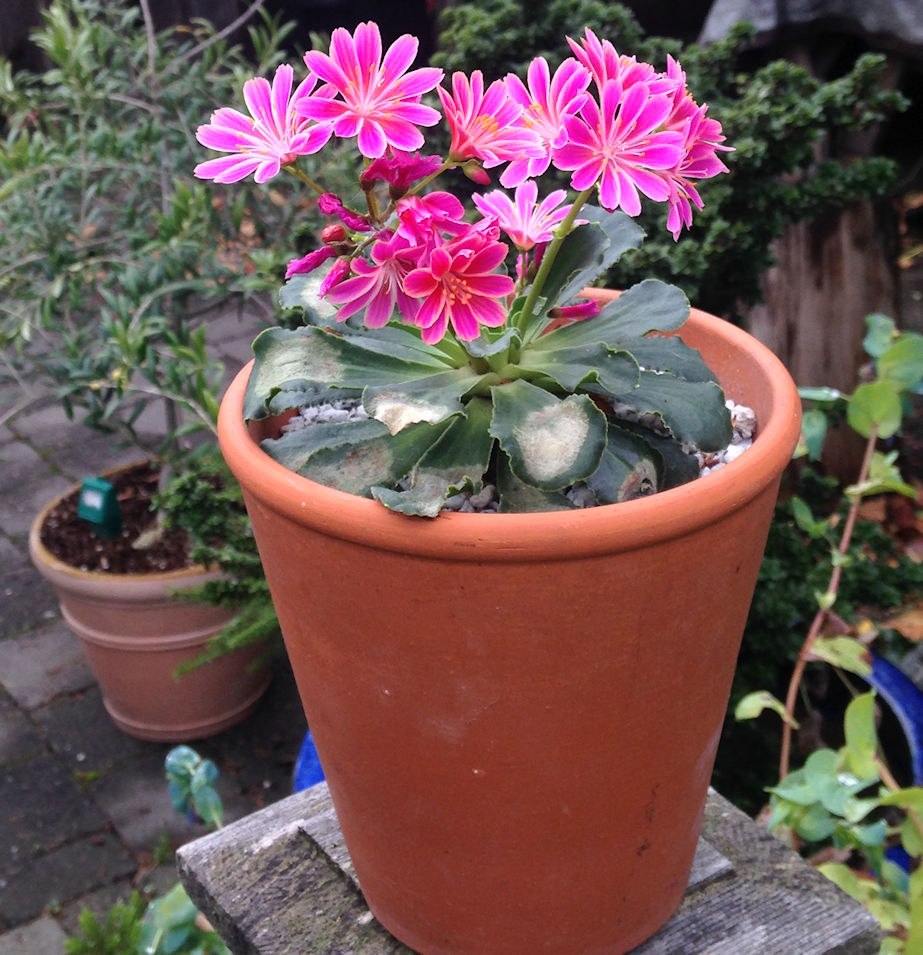
AsterI never expected this Lewisia to be blooming with Asters, considering it bloomed first in the Spring and then later in the summer. (It’s always been a reliable re-bloomer if spent stems are dead headed, but this year is a record).

Lewisia late bloomer

Lewisia cotyledon blooming on October 20th, 2015

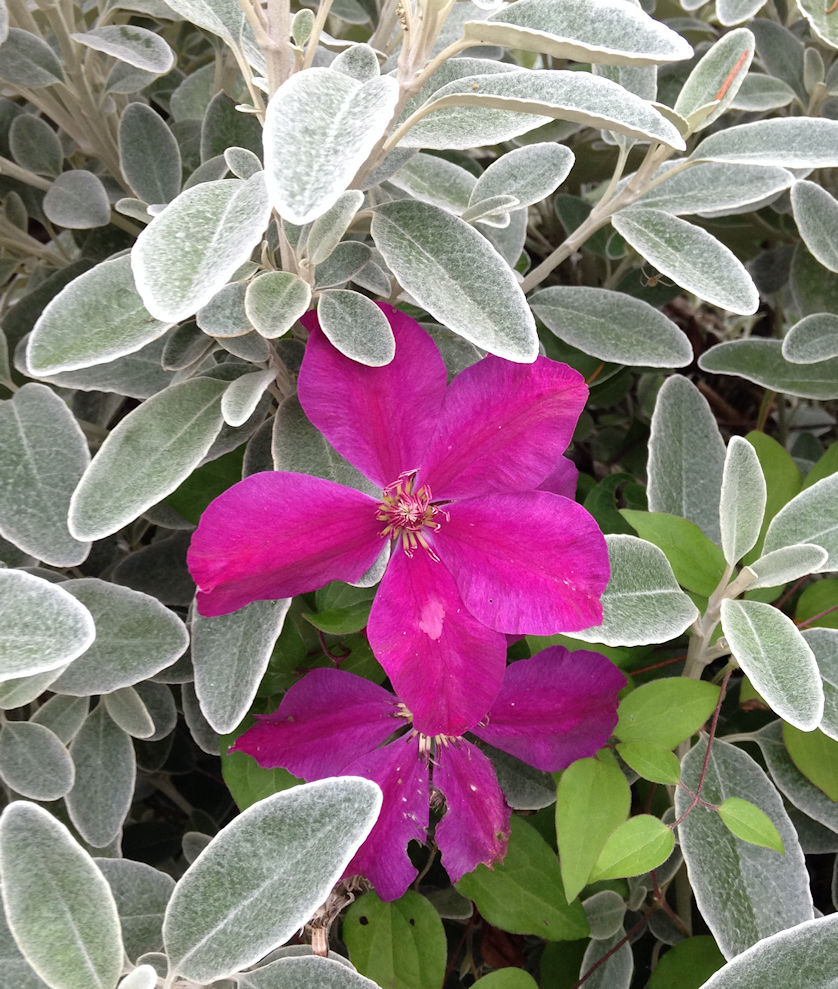
red clematis w Senecio greyiAnother Clematis, growing in a pot under the shrub Brachyglottis greyii (AKA, Senecio greyii or Daisy Bush), climbs through the silver grey leaves which support the vine.

The Daisy bush hails from New Zealand, is reliably hardy here, and provided nice cooling shade all summer for this red Clematis.

Just a few days after starting this post the temperature dipped and Fall was definitely in the air. Yet this Hardy Geranium was still sporadically flowering.

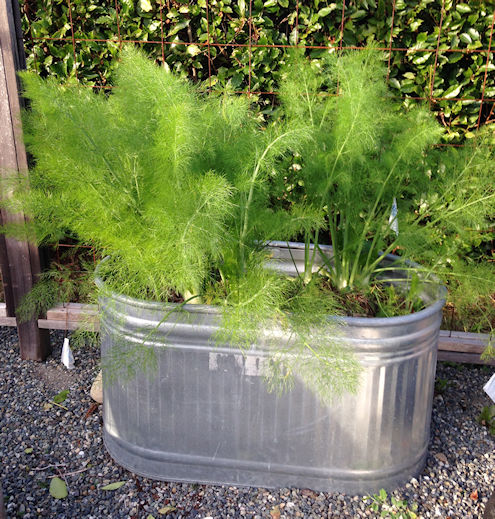
hardy geraniumWhile all of the above late bloomers are unexpected pleasures, over in the vegetable garden, seeds of the ‘Romanesco’ variety of Foeniculum vulgare var. azoricum (bulbing fennel) were intentionally planted in late August.

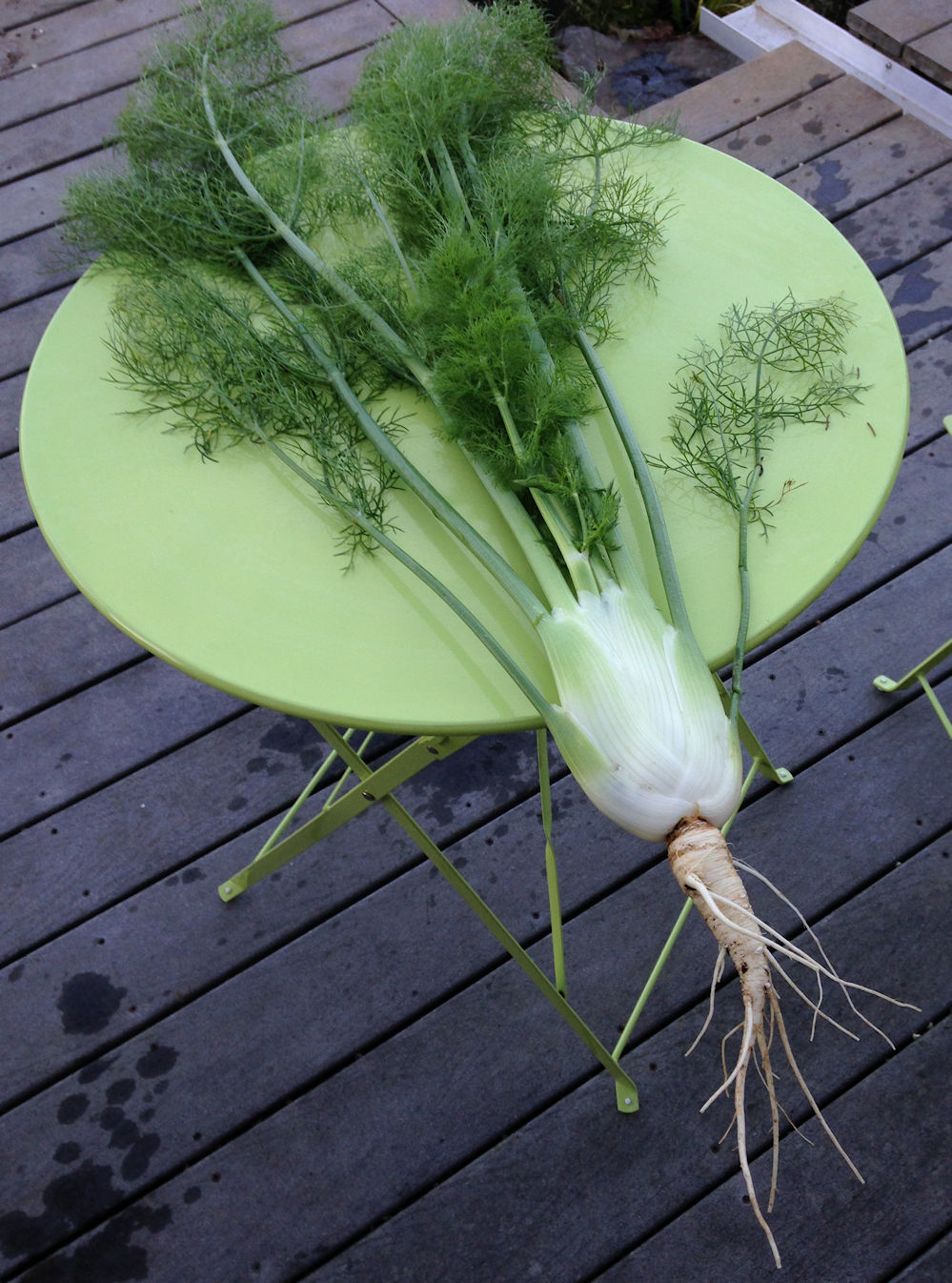
foeniculm vulgareBulbing fennel likes cool weather and the semi-sweet licorice flavor improves when soil or mulch is mounded around the base of the plant. I pulled up my first plant yesterday.

fennel bulbHad I cut the plant at the base of the bulb and left the taproot in the soil, the plant would continue to send up shoots of the delicate (and tasty) foliage until frost. But the best tasting part of the plant is the bulb.  This crunchy veggie with its light licorice/anise taste is superb when sliced thinly and tossed with a good olive oil and a bit of salt.

A Drought of Posts (and water too)

I haven’t posted anything since early June and have been cataloging my excuses, foremost is that the garden is full of plants (potted and otherwise) all screaming for attention.

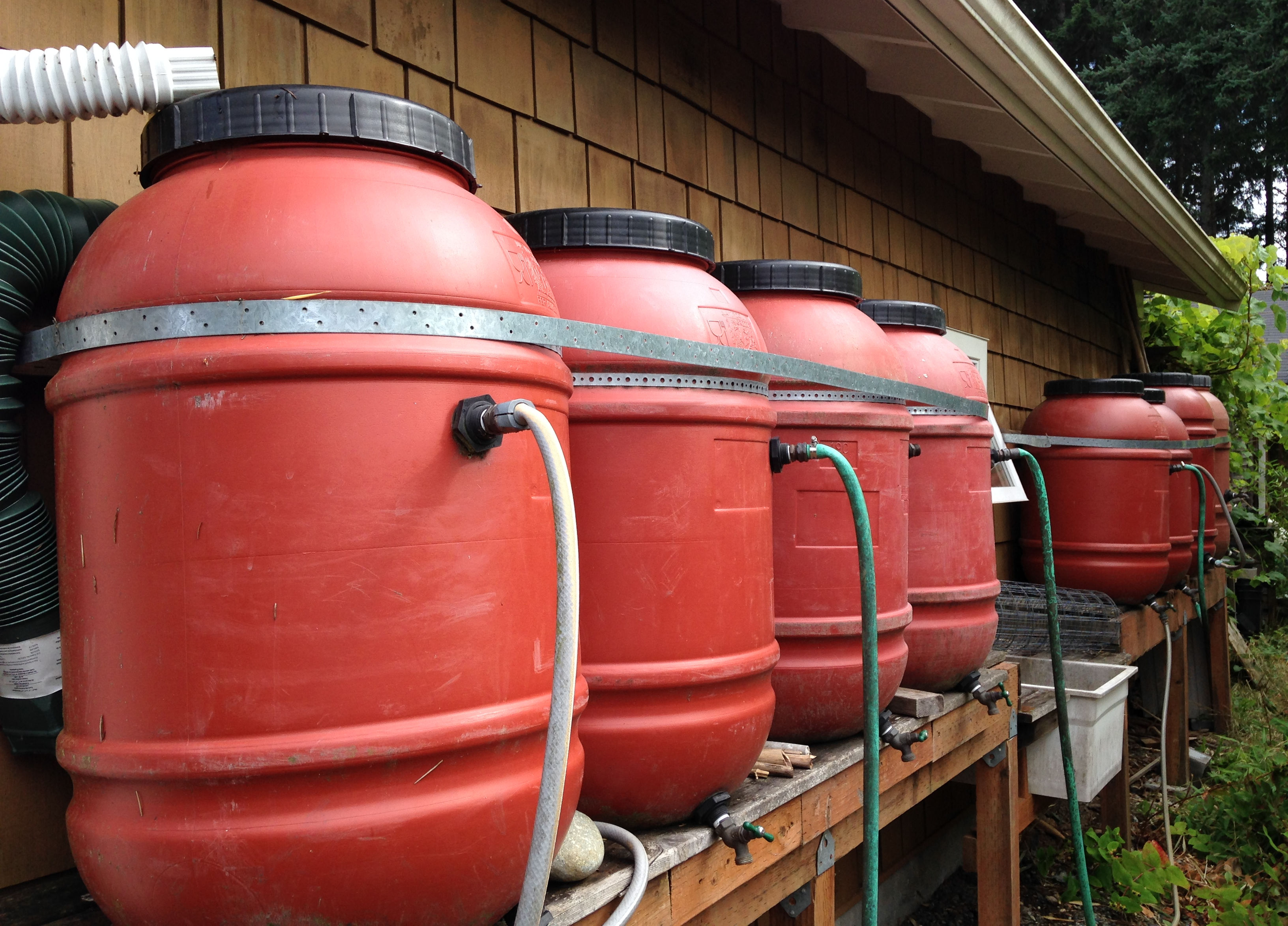
rainbarrels-2

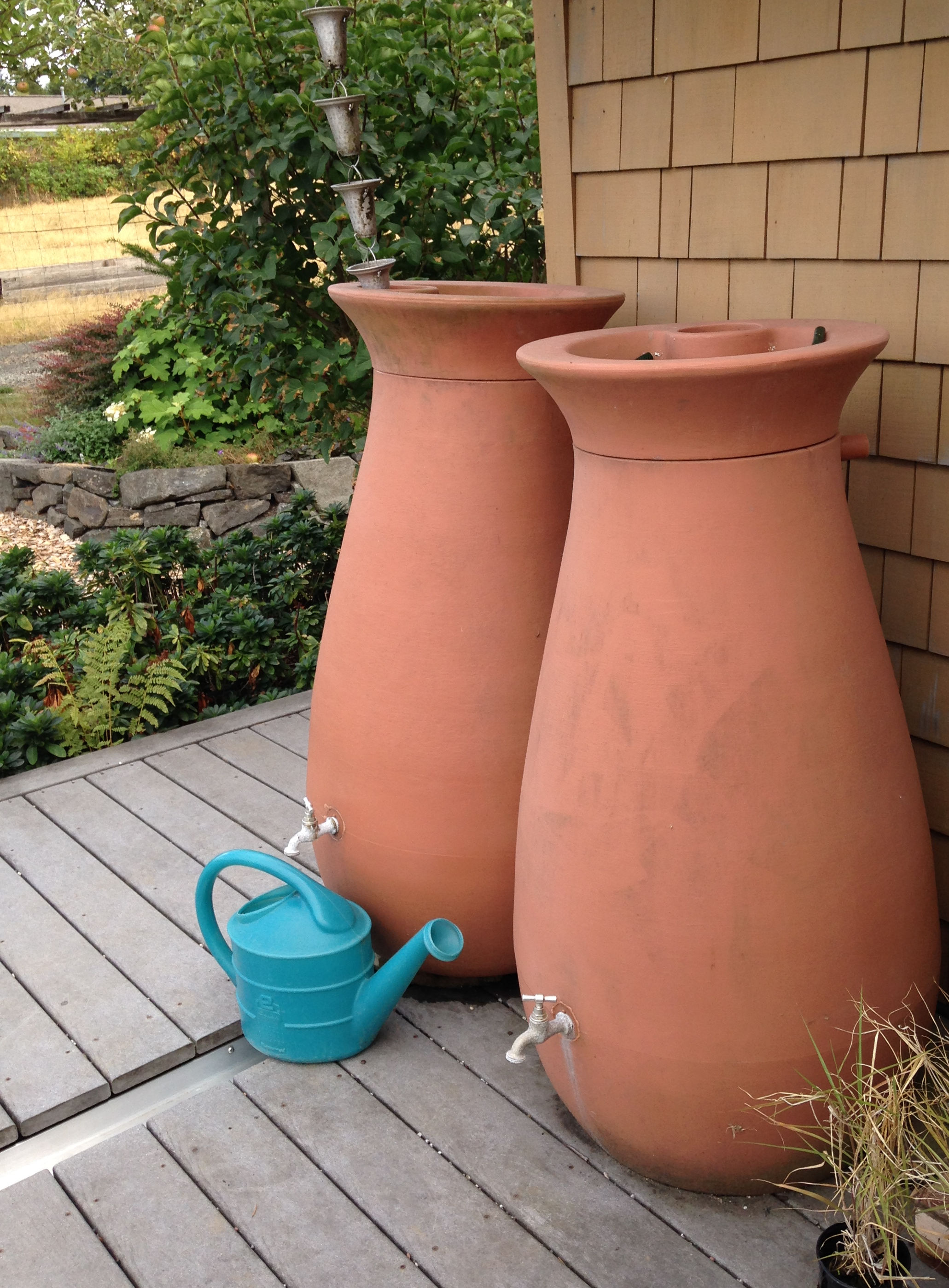
Two decorative rain barrels each holding 65 gallons

The small kitchen/vegetable garden needs weeding, tending, watering etc.; three quarters of an acre of property (even if just brown lawn and bone dry meadow) demand a modicum of upkeep; and keeping all the potted plants limping along in the face of record drought calls for hand watering using collected water from ten rain barrels supplemented with post-shower gray water left in the bottom of the bathtub.

All of which leave me less time for reflection then I planned.

rainbarrels

Eight more rain barrels (hold about 417 gallons)

Paradoxically, I suppose I could cite our incredibly warm and dry weather as motivation for sitting at a computer and writing rather than toiling in the garden, but since garden chores are a proven antidote to a sedentary lifestyle, I force myself to work outside no matter how hot.  [See my post on why gardeners live better and longer lives]

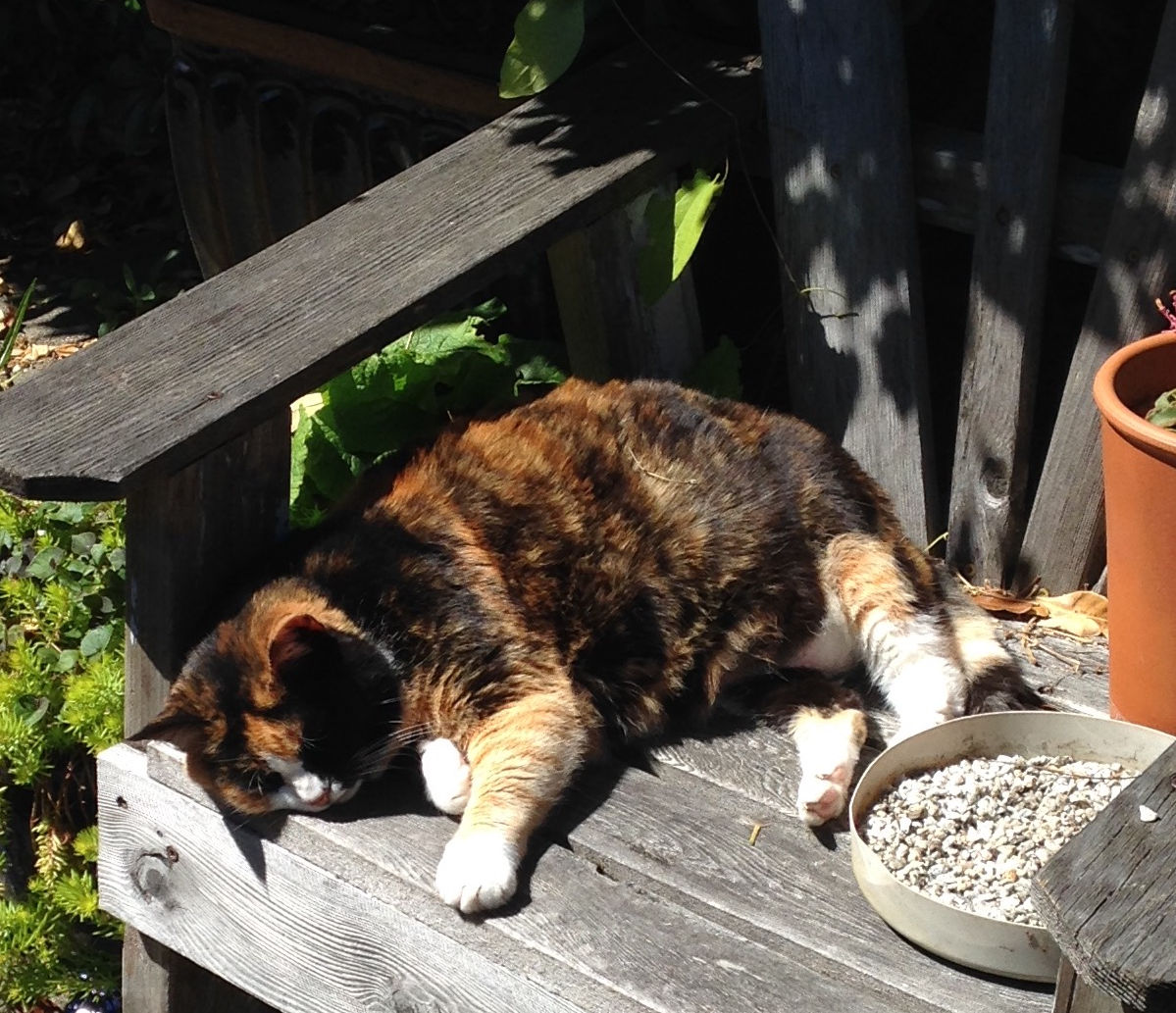
Add to that mix the example of five cats (now sadly four) who perfectly model indolent behavior in the face of really hot weather, and you can see why I long to curl up in the shade and nap too.

Emma

Emma, snoozing

****  ****  ****

Despite its reputation as a rain and cloud magnet, our region typically has very little rainfall in the months of July and August, and many of our native plants are adapted to our dry summers. This year rainfall fell off precipitously in early spring and was accompanied by hotter than usual temperatures.

Unlike the greater Seattle area, which depends heavily on runoff from the snow pack in the Cascade mountains, Vashon Island (about 37 square miles) must rely on our sole source aquifer, which is reportedly still in good shape.

Many folks on Vashon have their own wells, while others belong to small water districts. Our water district, Heights Water, reports that while use is up this summer (after two years of summer declines) the aquifer is holding up nicely. Nevertheless, we are keeping the perennial plant beds, the trees, the shrubs and the potted plants from suffering severe damage by using rain water and hand carrying gray water as much as possible.

Here’s a look at some more scenes from the garden.

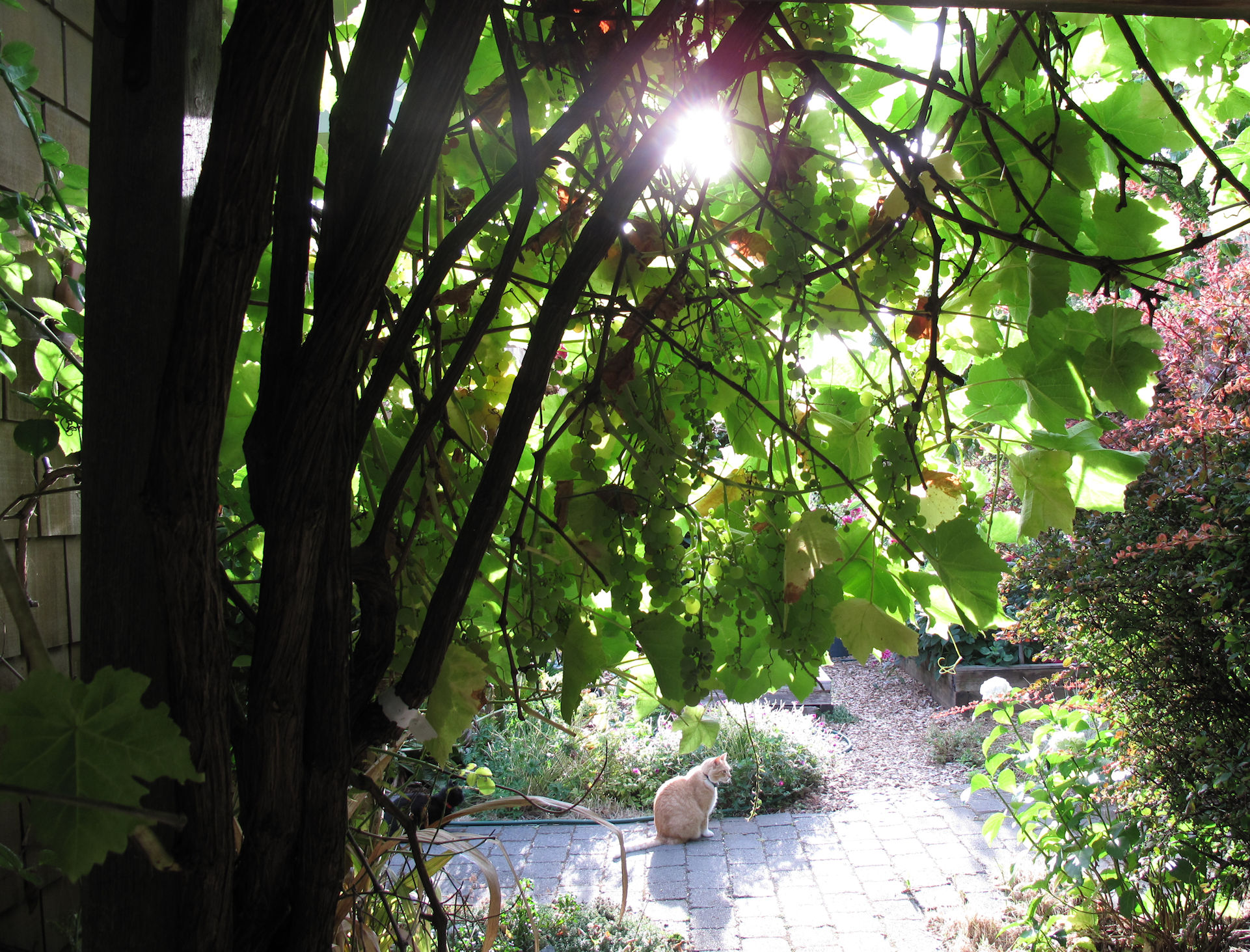
Morning sun from grape arbor

Woody enjoying morning sun as seen through the grape arbor

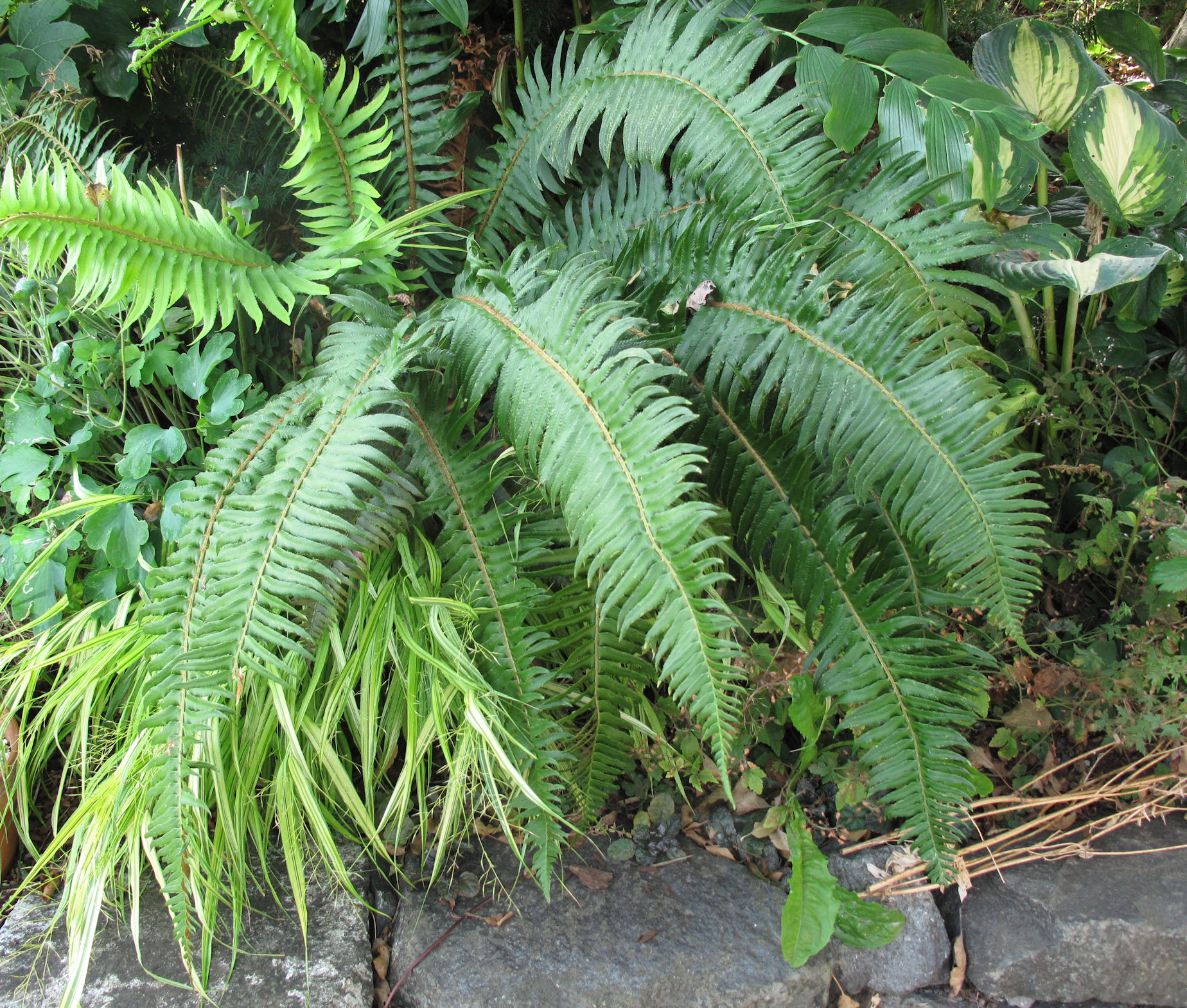
Sword fern, Japanese fountain grass, hosta

Sword fern, Japanese fountain grass, Hosta

agaves

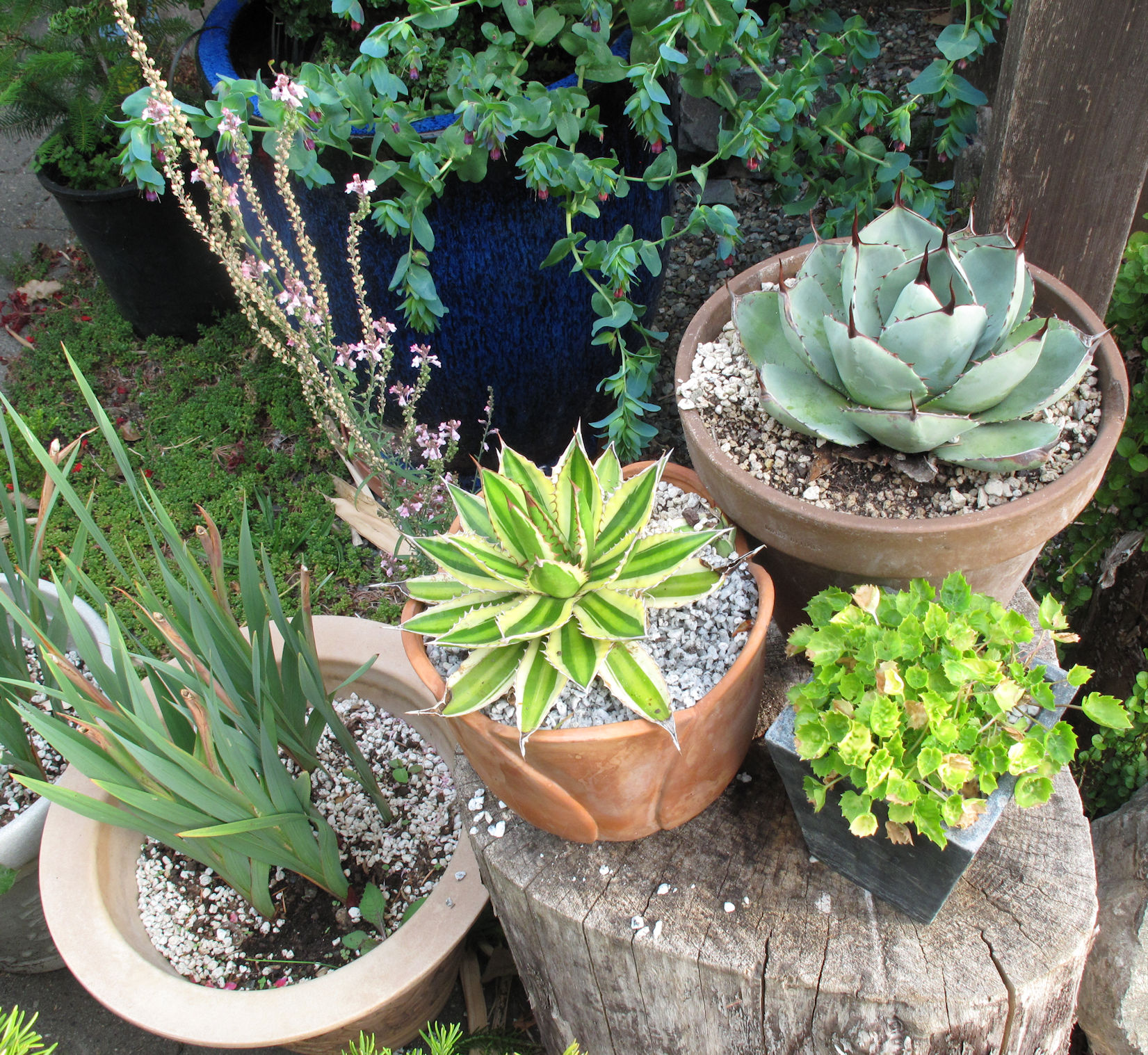
Agaves, Cerinthe, Campanula

grape arbor1

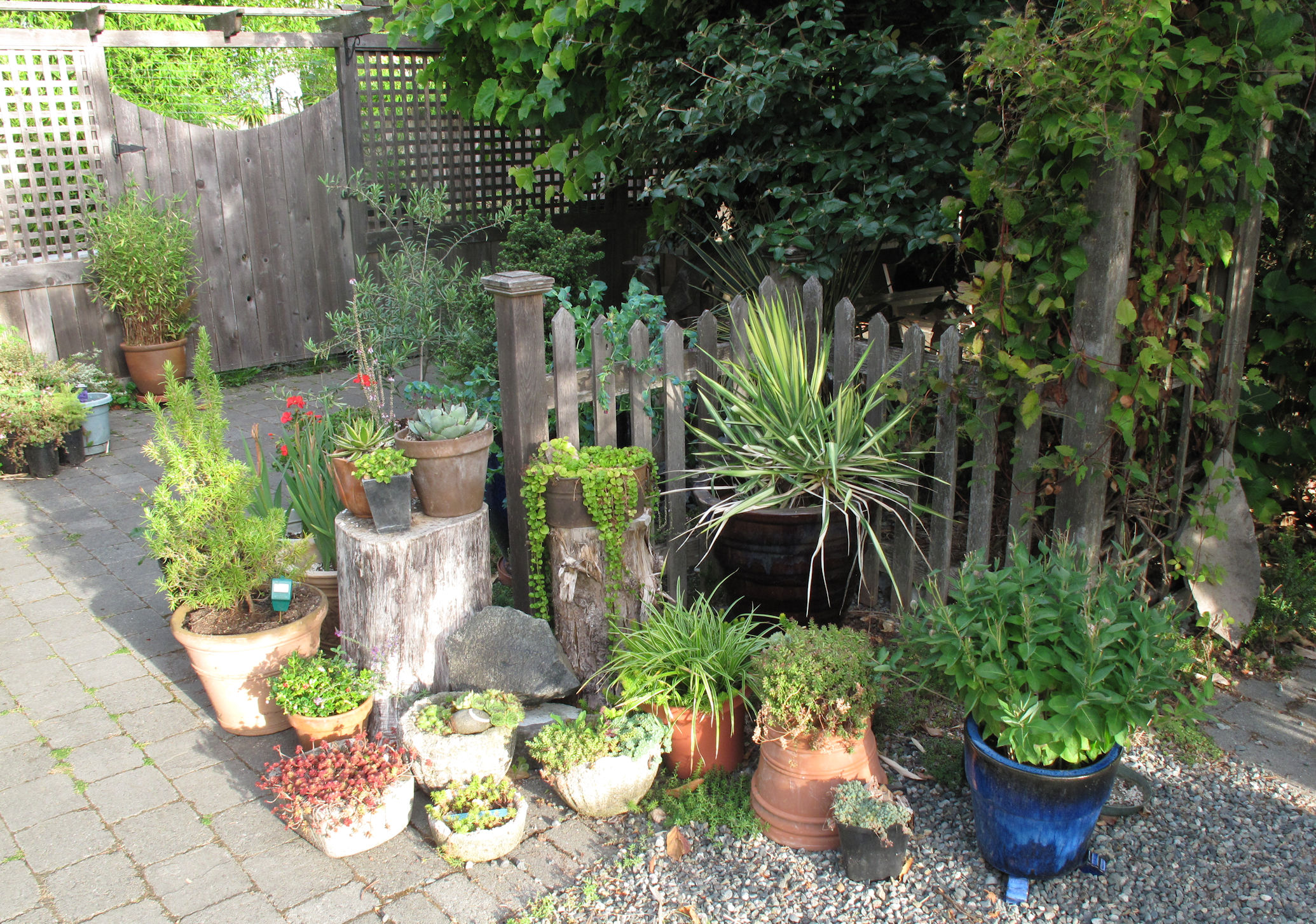
Pots at entrance to grape arbor

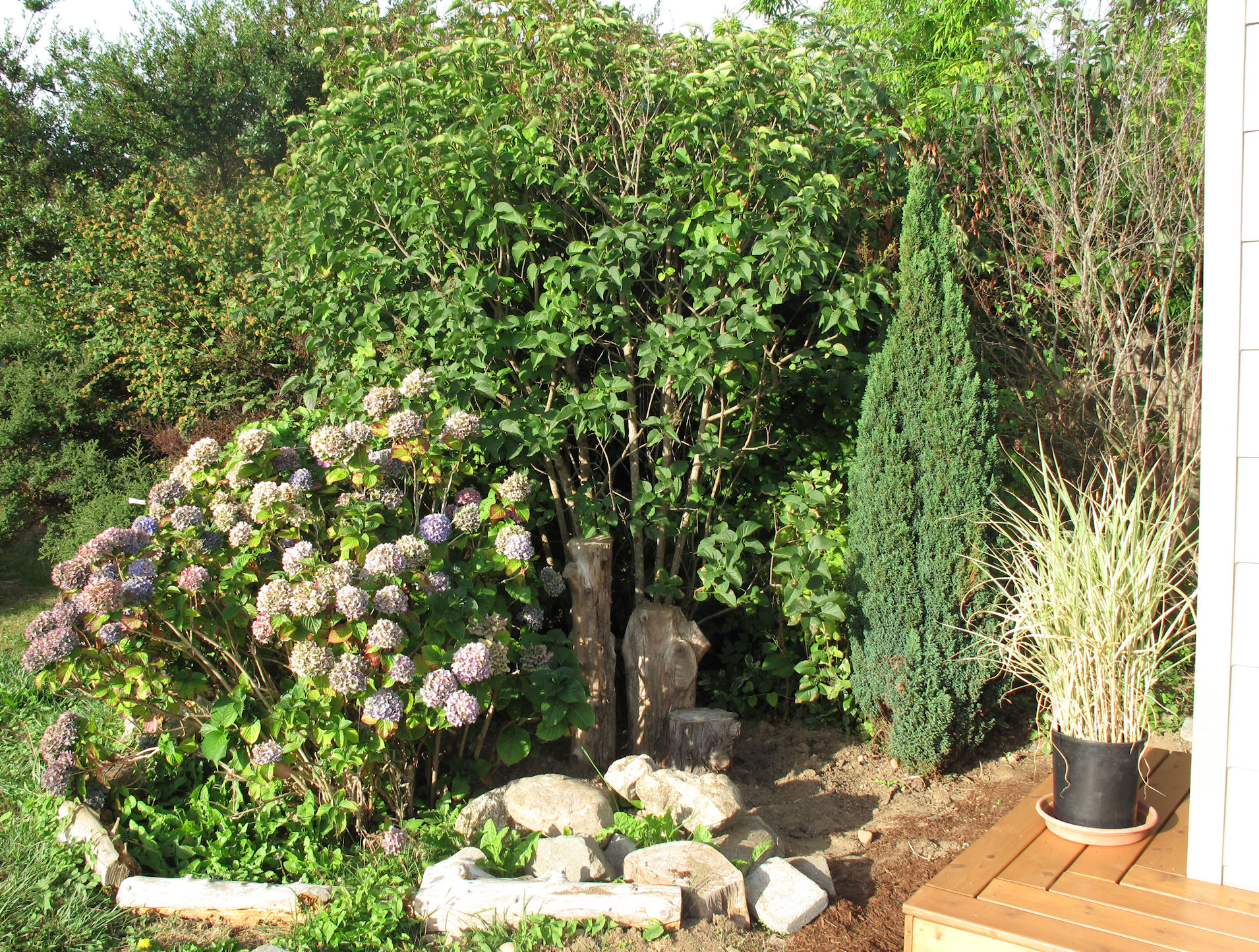
From left, variegated sedge in pot, dwarf cyprus (Chamaecyparis lawsoniana 'Ellwoodi'), lilac and hydrangea

From right , variegated sedge in pot, dwarf cyprus (Chamaecyparis lawsoniana ‘Ellwoodi’), lilac and hydrangea

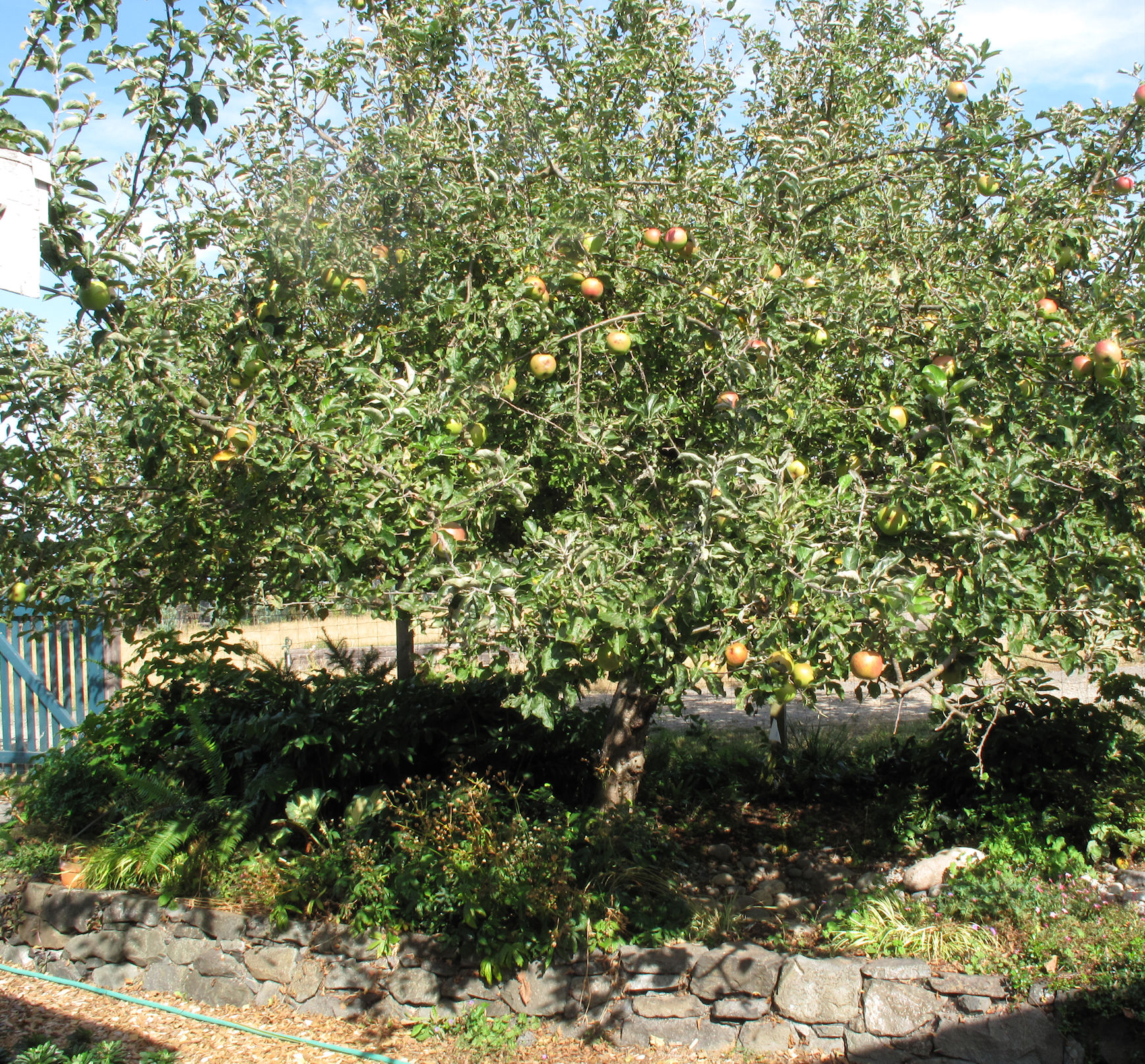
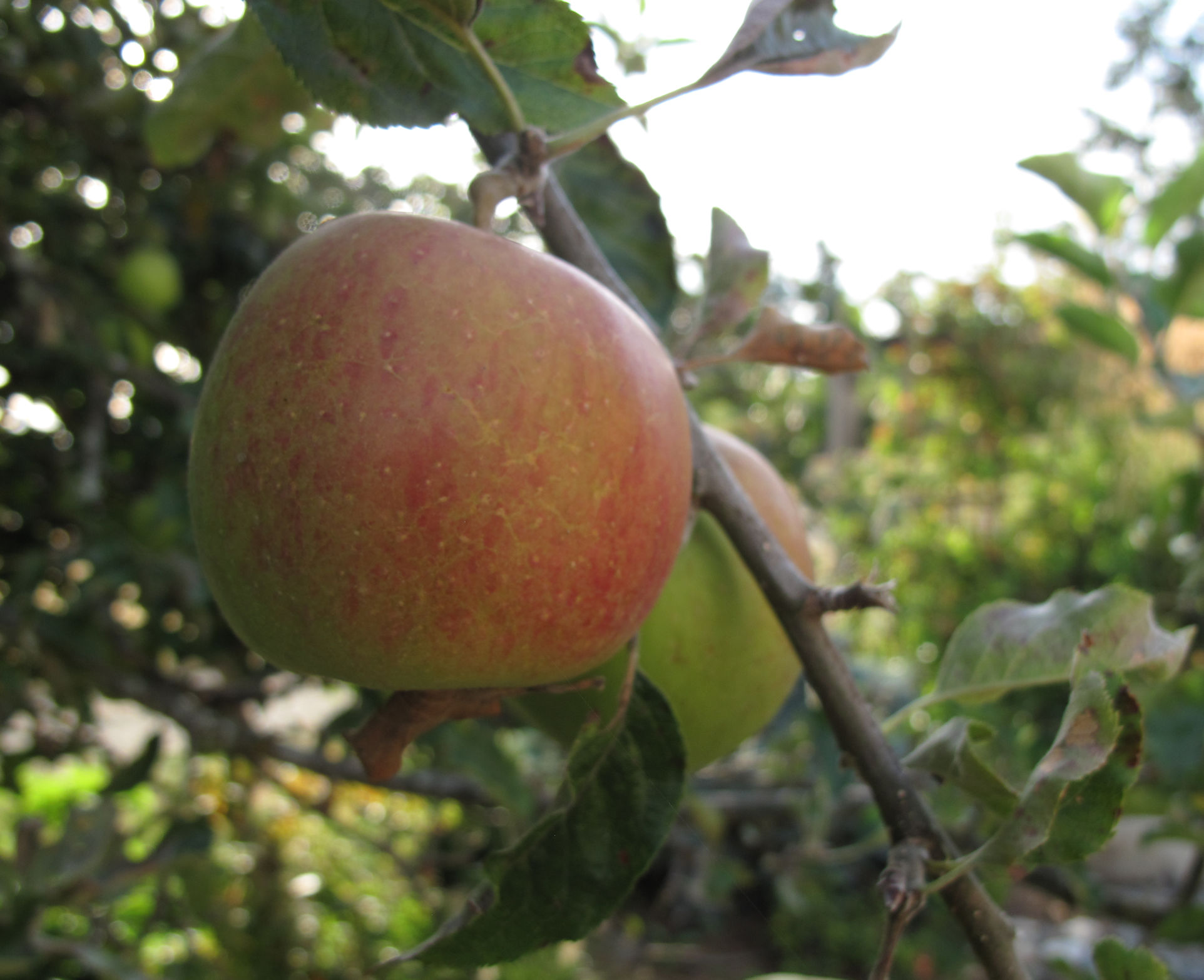
Our old apple tree is laden with fruit this year

Our old apple tree is laden with fruit this year

IMG_5935

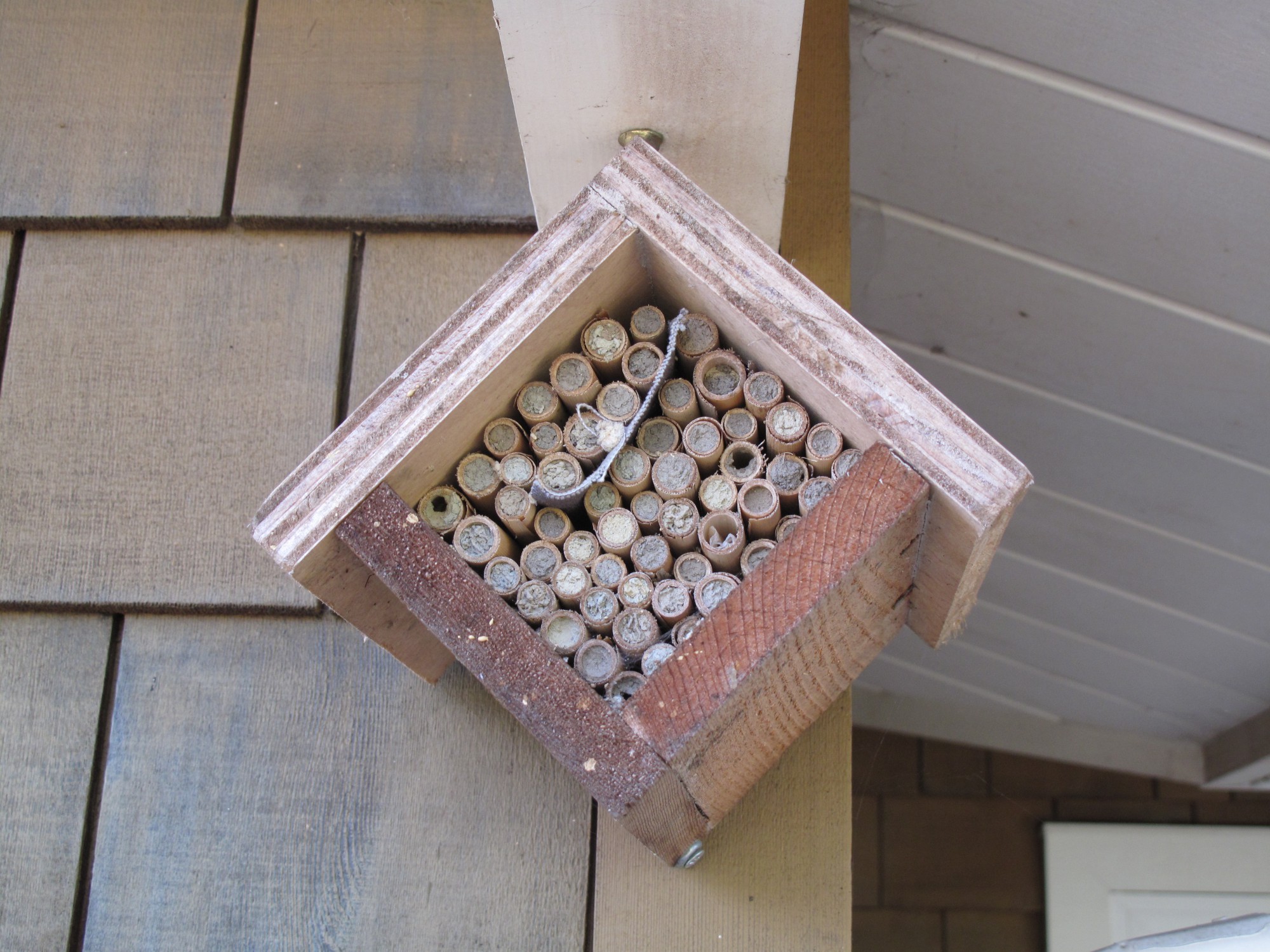
Mason bee house might be why apples bloomed

apple