Primula Polyneura

Here’s a shade loving primrose species that deserves wider use in American gardens.
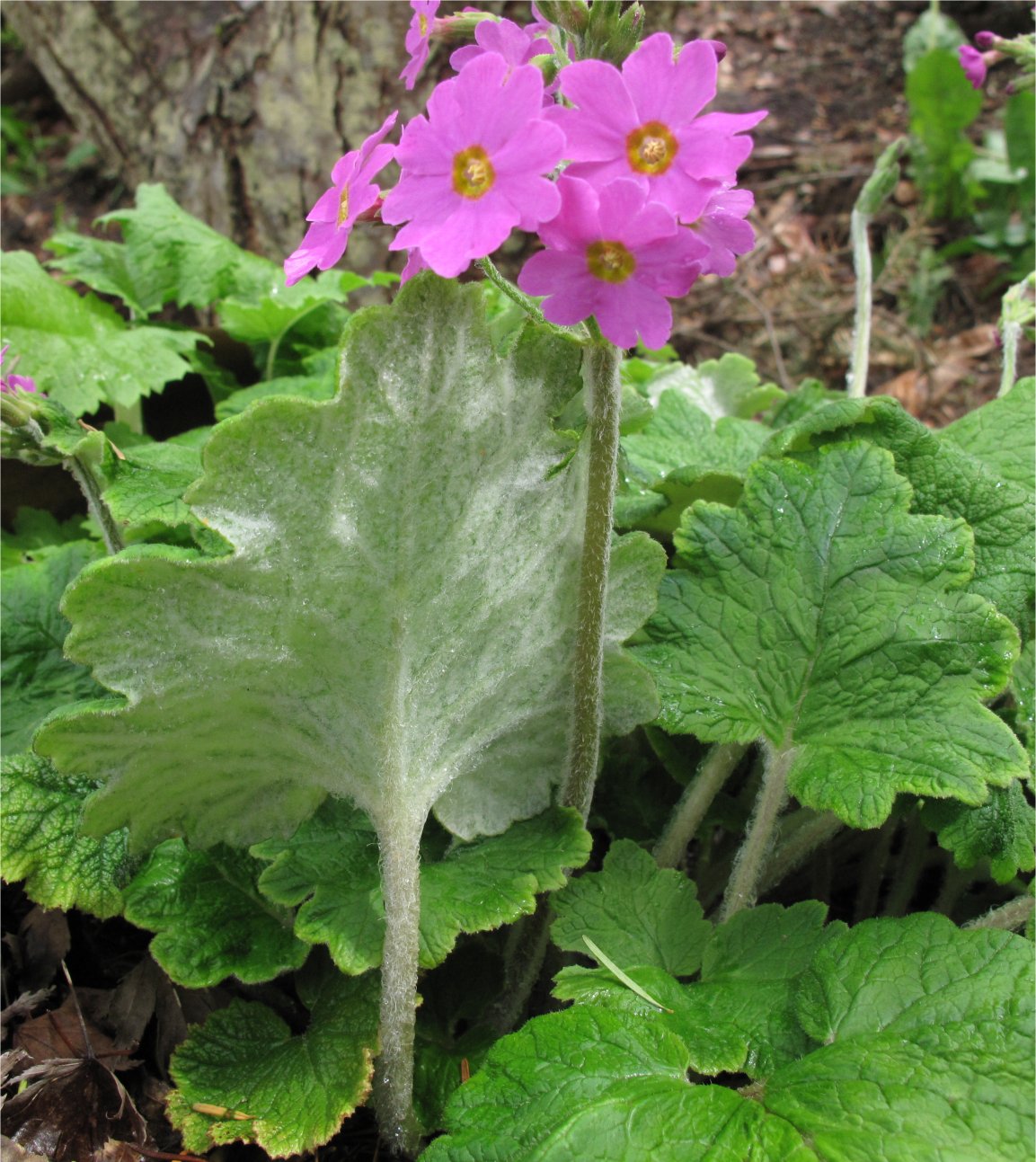
P-Polyneura1

P-Polyneura3

Click  for a closer look at leaf underside

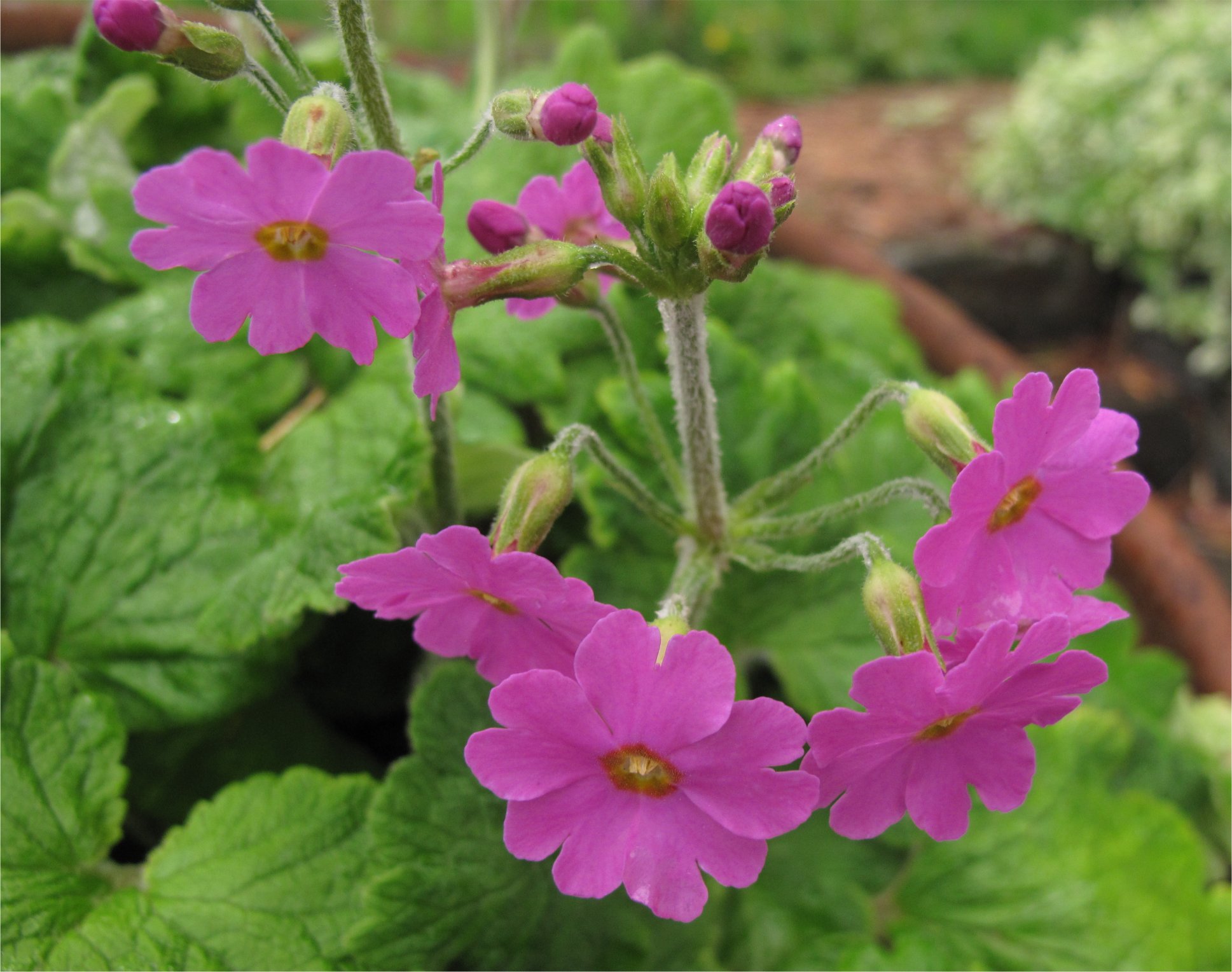
Primula polyneura is an underutilized species primrose native to western China.

In the wild, this species shows variability, probably in flower color, but in cultivation it’s quite reliable, coming true from seed.

Each year the clump, with somewhat hairy leaves and stems, enlarges. The undersides of the leaves are typical of this section of central and eastern Asia primulas known as Cortusoides.
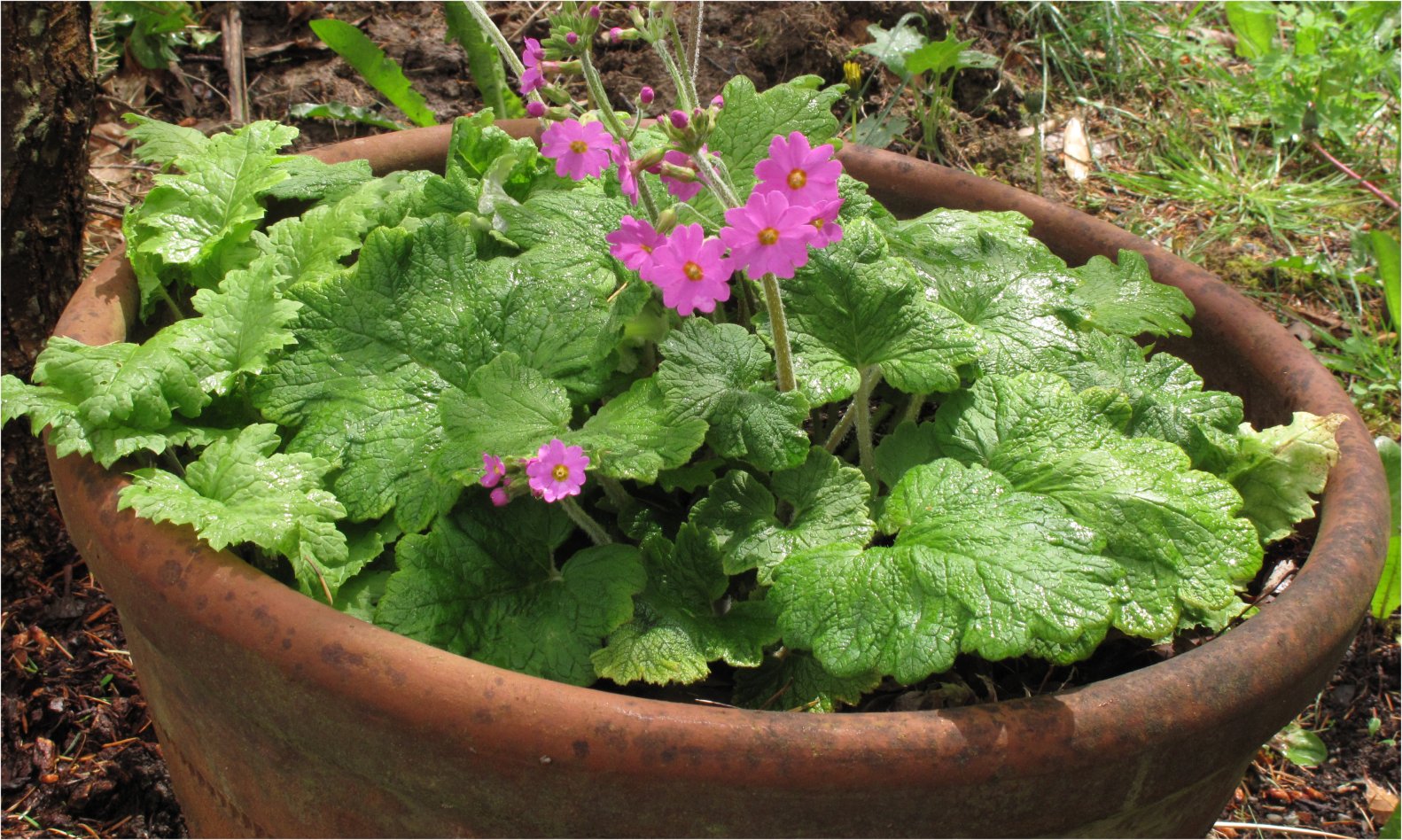
P-Polyneura2

I’m growing it in a pot (but it would do equally well in the ground). This year it is definitely bigger than last year. (It was originally a gift of a tiny seedling).

I’ve rarely seen it in the nursery trade. When I Google it, mainly British nurseries come up. It’s clearly happy in our Puget Sound climate, but I believe with a Zone 4-8 rating it would be happy in colder parts of North America.

Here’s more detailed information from two older Primrose reference books.

Cortusoides are deciduous or rarely evergreen perennials, lacking meal, arising from below-ground stocks. Leaves soft and usually hairy, often pleated; leaf-blades more or less rounded at the tip, circular to ovate in outline, heart shaped at the base and usually shallow to deep lobed…
P. polyneura is a long-lived, free flowering and undemanding plant for a cool, sheltered, moisture-retentaive but well drained site in peaty or “woodsey” soil…It’s readily grown from seed and can be propagated by division. — from Primula by John Richards, Timber Press 1993, 2003.

***

First described in 1895 by M. Franchet as fairly common in parts of western China. It is described as being a variable plant in the wild, but in cultivation it is fairly consistent. The typical Cortusoides leaves are densely felted on the undersides and are unmistakable. the flowers are in loose heads on the 6-inch (15cm) stems appearing in May, and are a particularly virulent pink — lovely to relieve the gloom under shrubs or a shady corner. It dies back completely for winter, but is reliable and hardy. A worthwile plant, not offered as often as one would like.
CULTIVATION:  Easy and permanent in the peat bed, or in a cool position in moist soil under dwarf shrubs.
PROPAGATION:  Readily from seed or by dividing established clumps in early spring.
AVAILABILITY:  specialist nurseries or seed lists.

—  from Primulas: The Complete Guide, by Mary A Robinson, The Crowood Press, Swindon, England, 1990.
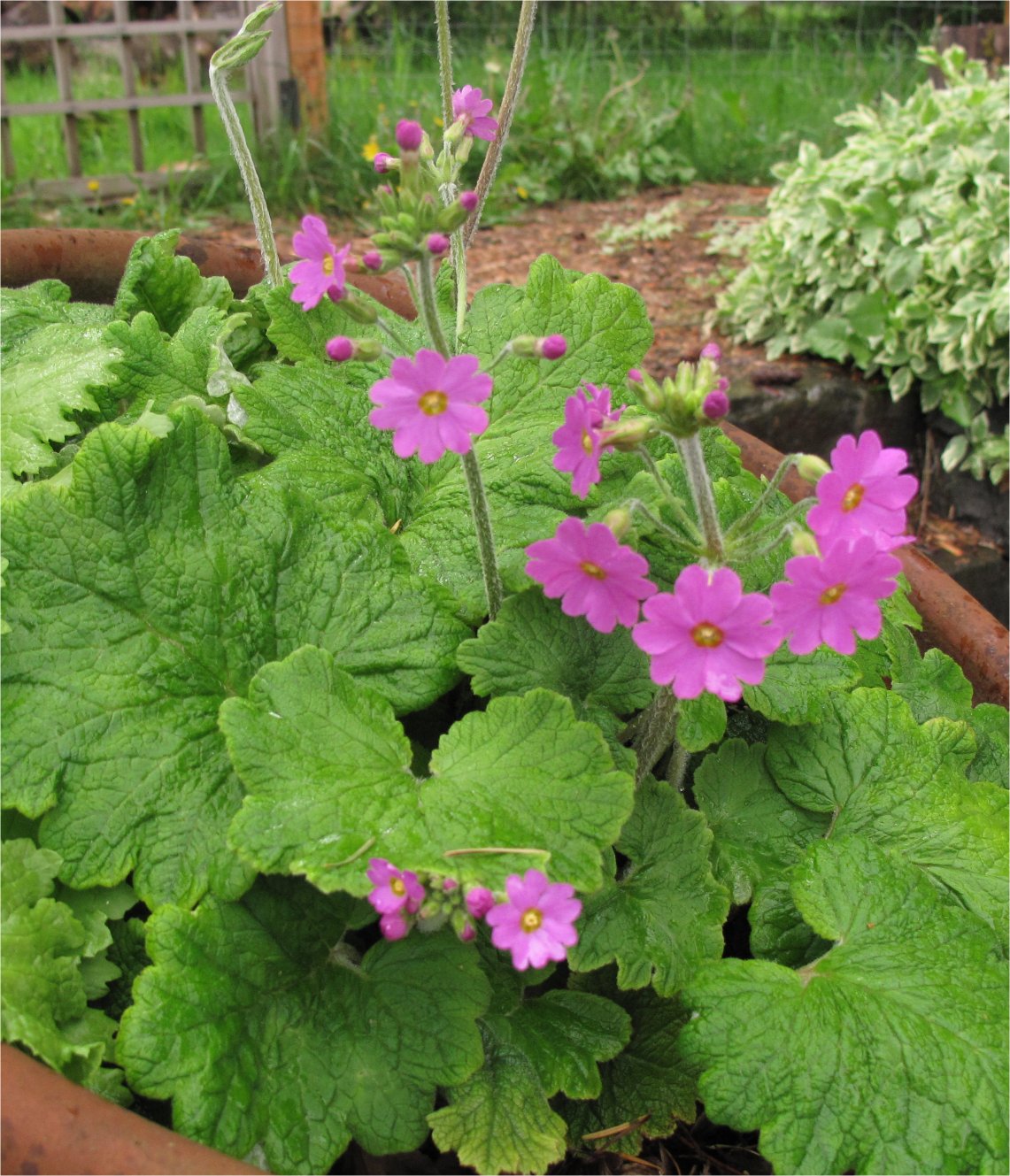
P-Polyneura4

This year I plan to collect seeds; next spring I’ll divide the clump and plant directly in my shade garden. If you are interested in trying some seed, let me know and I’ll be happy to mail some off later this summer.
Grow Hardy Geraniums: Five Good Reasons Why

Not to be confused with the well-known (and beloved) plant commonly known as geranium, the hardy geraniums (also known as cranesbills) belong to their own genus.

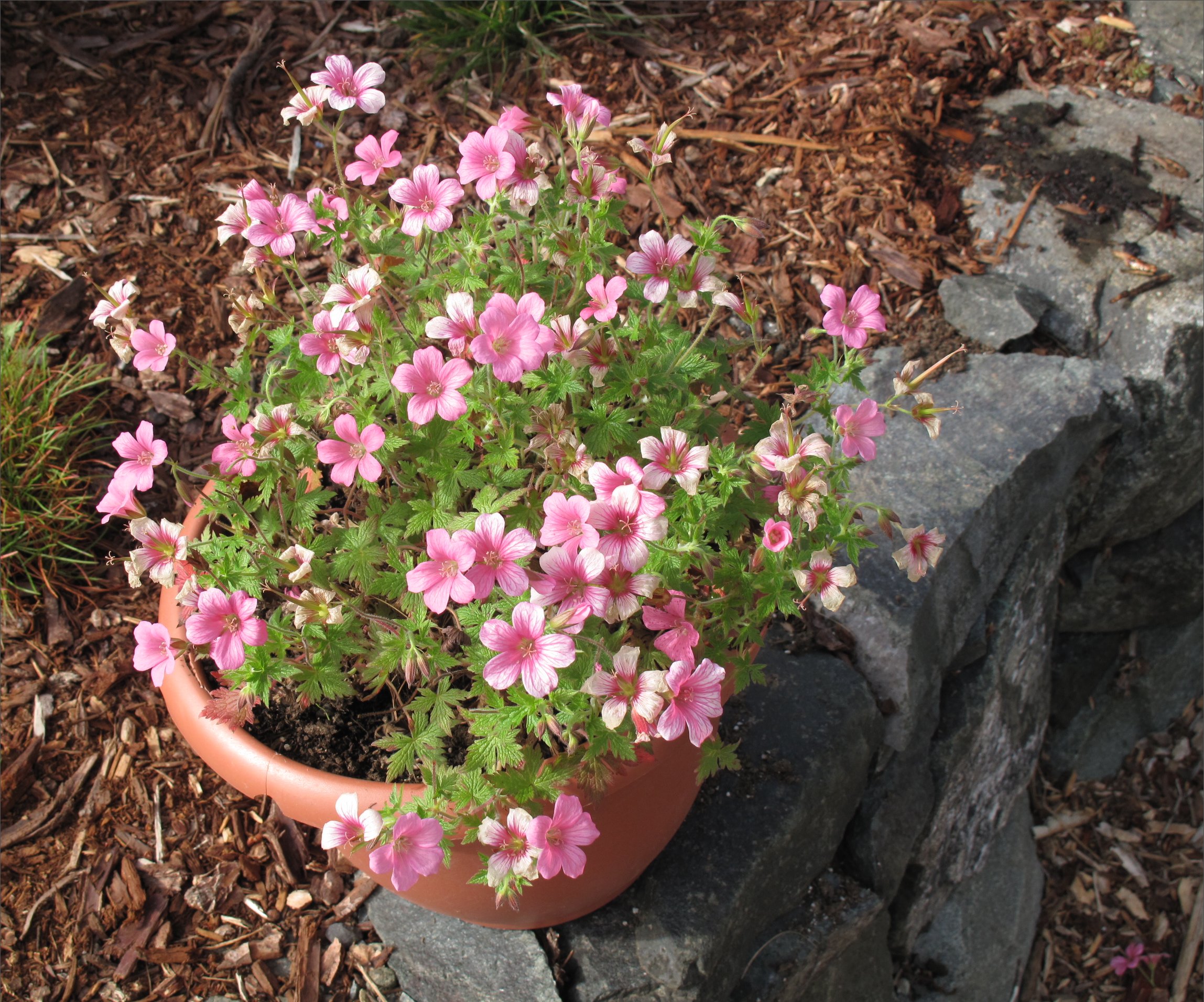
geranium ox pot

Geranium x Oxonianum ‘Claridge Druce’ blooming in pot circa July 2011

The more widely known plant actually belongs to the genus Pelargonium and here in temperate Pacific Northwest can seldom survive our winters without some help.  Not surprisingly, Hardy Geraniums, are tougher plants:

“whereas Pelargonium is essentially a genus of warm-temperate conditions, with very few species being hardy in Britain, Geranium is equally characteristic of cool-temperate conditions… [and] come from the temperate norther part of Eurasia and its more southerly mountain regions, and from temperate and mountainous parts of North and South America. But practically everywhere that suitable climates are to be found Geranium will be found too, including South Africa, the Arabian peninsula, the Indian peninsula, Taiwan, Indonesia, New Guinea and the Hawaiian Islands. In addition it is found in Australia (including Tasmania) New Zealand, the Azores, Canary Islands and Madeira.”  — from Hardy Geraniums by Peter F. Yeo , published by Timber Press, 1985, 1992.

The hardy geraniums seem to mostly flower in late spring or early summer, many with repeat blooms right through the fall, especially if you deadhead or shear the clump after the initial flush of bloom.

Here in the maritime Pacific Northwest my geraniums are just starting to bloom after two or three days of unusually high temperatures and a very wet March and April. I have some older varieties, probably very familiar to British gardeners, where Hardy Geraniums were popular before they caught on here in the States.

The alternative name Cranesbill comes from the fruit of the plant that forms on some species after the flowers fade, which apparently resembles a Crane’s bill to some observers.  I find them messy looking and deadhead them or shear them away. Two of my older varieties, Geranium x Oxonianum and Geranium hymalayense ‘Birch Double,’ don’t seem to have much of a crane’s bill after the flowers fall off, an added plus for me.

Here are my five reasons why some varieties make great garden plants, followed by more pictures of some of my favorites.

  1. Many of the shorter cultivars and crosses make the tidiest clumps of leaves in springtime. Great foliage plant for early spring! And great for the front of borders.
  2. They seem to be insect and pest free, except maybe for deer and possibly rabbits.
  3. Requires little maintenance: Removal of previous years growth in winter or early spring and occasional shearing or deadheading is all that’s generally required.
  4. Flowers are profuse, though some of the harder to find doubles are less vigorous.
  5. Reseeds readily, making them easy to pot up and share with friends. While division of the dormant parent clump in winter ensures you get the same flower.
clumping geraniums front of border

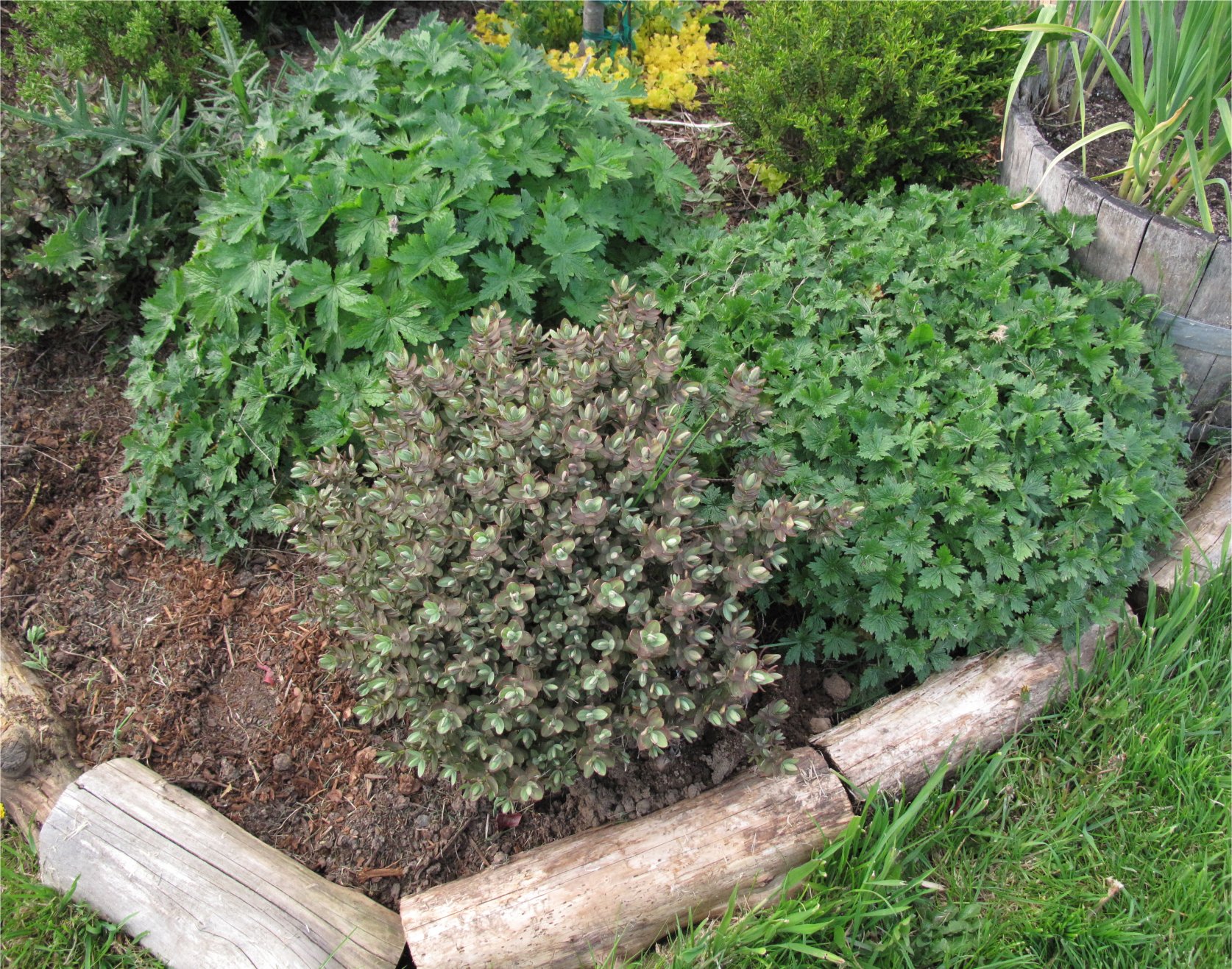
Hebe ‘Red Edge’ flanked by two Hardy Geranium clumps at the front of a border

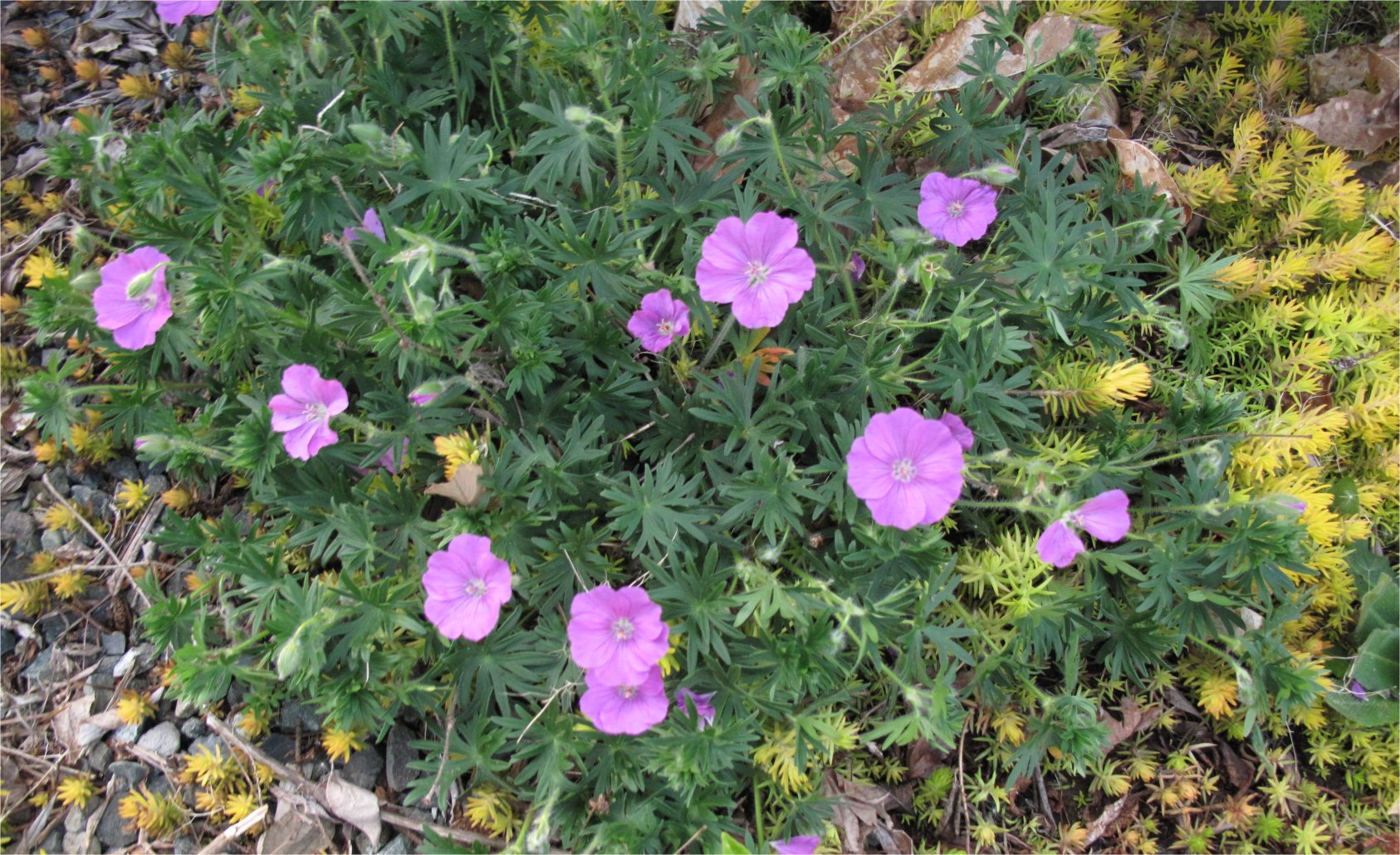
Geranium volunteer  (probalby sanguineum variant) sharing gravel driveway with yellow sedum

Volunteer Geranium (probably sanguineum variant) sharing gravel driveway with yellow sedum

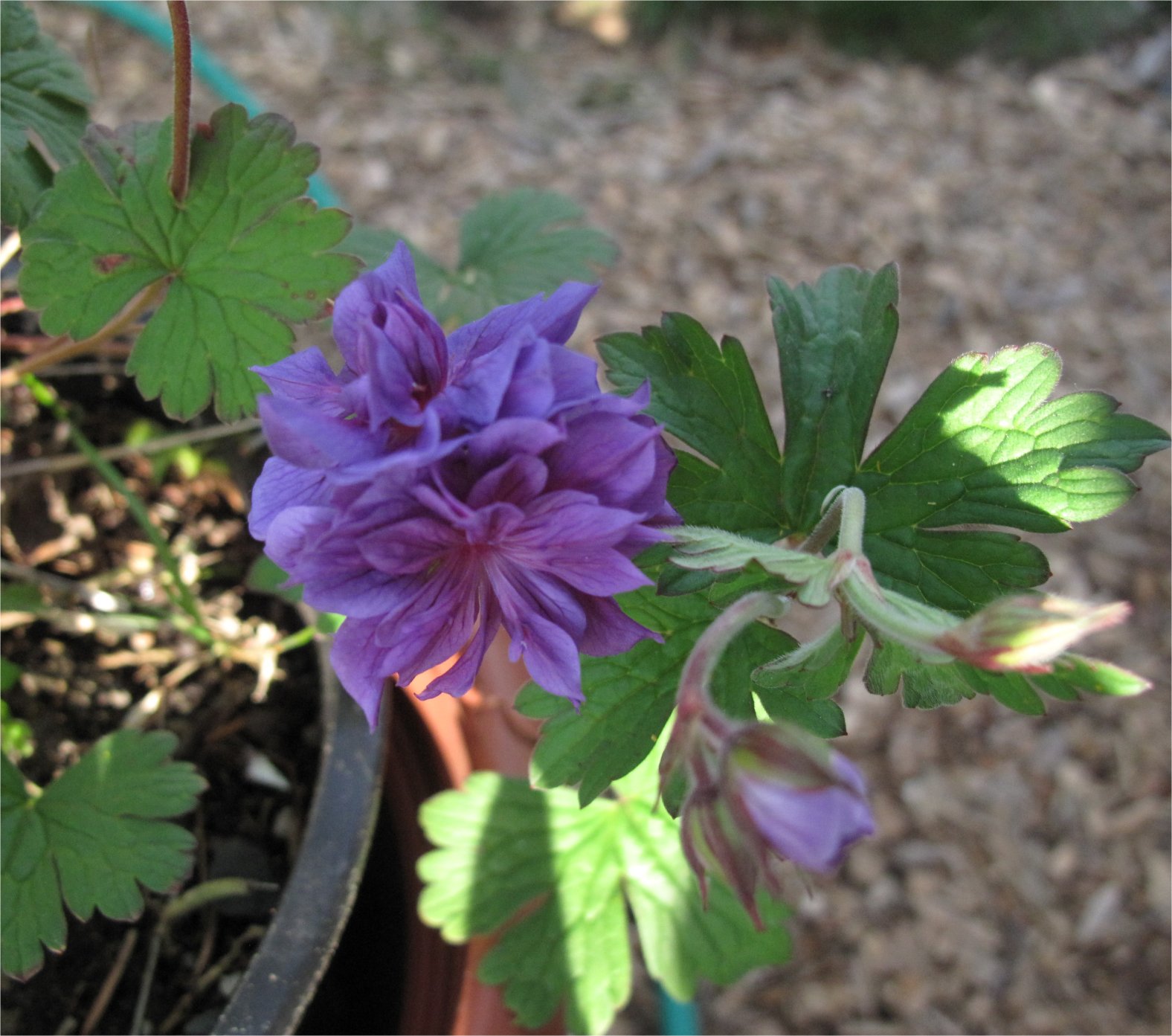
Geranium himalayense

Geranium himalayense ‘Plenum’ aka  ‘Birch Double’ s (first bloom of 2014)

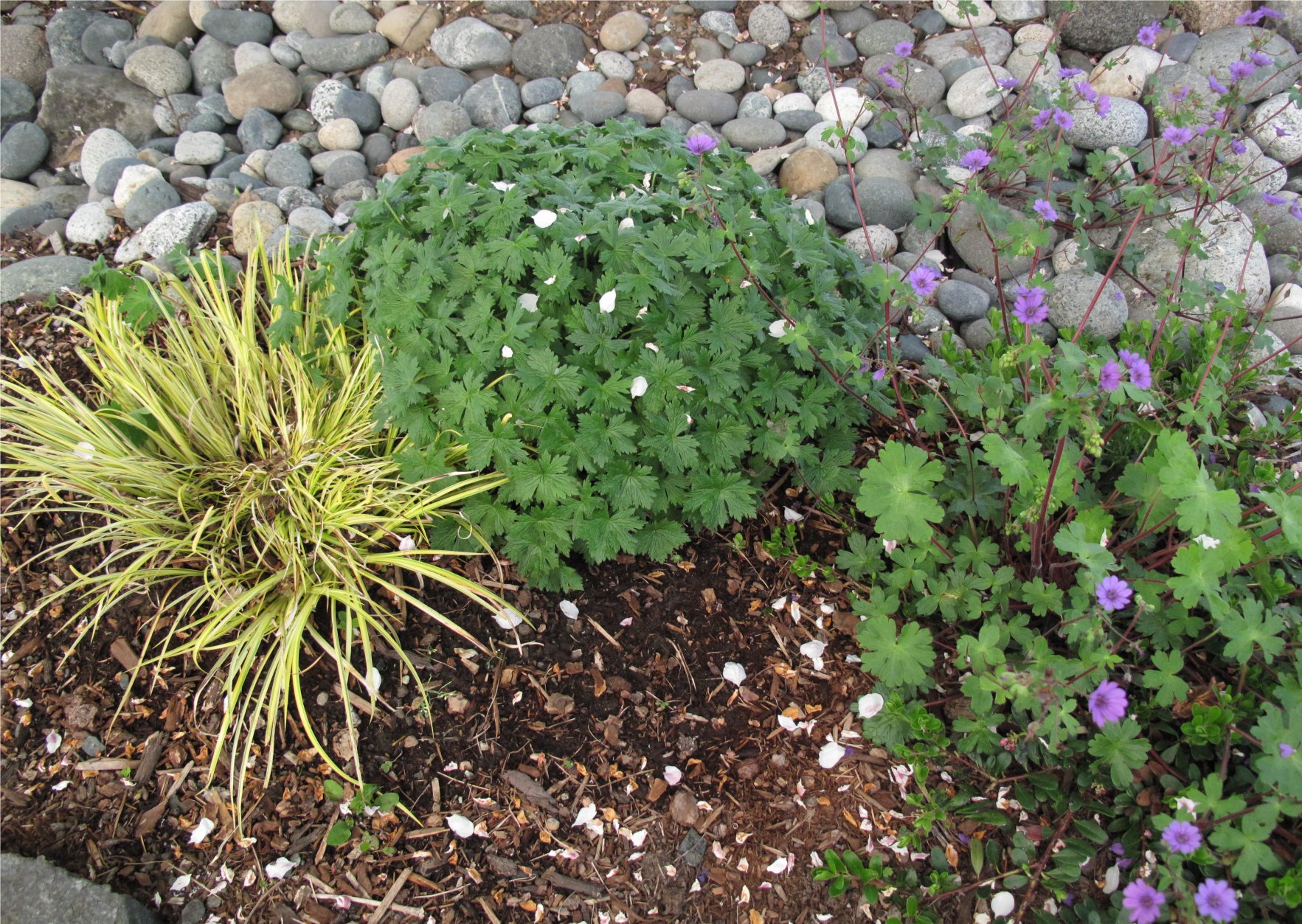
Ogon Druce Wallis

From left: Golden Variegated Sweet Flag ‘Ogon,’ G. ‘Claridge Druce’ with apple blossoms scattered on leaves, and G. ‘Bill Wallis’ just starting to bloom

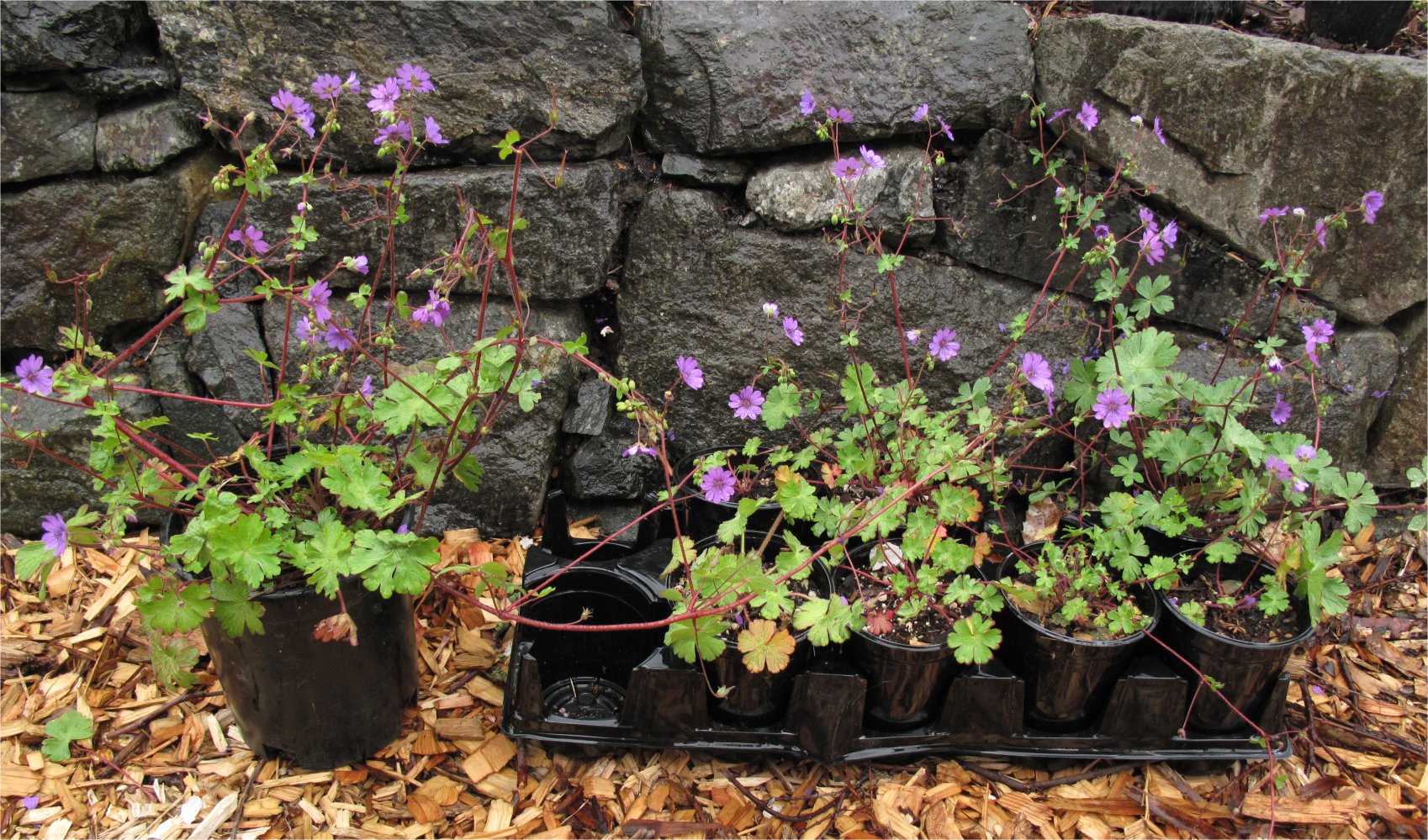
Img_5218

Geranium pyrenaicum ‘Bill Wallis’ seedlings potted up to share with friends

I’ve had some plants for 15 to 20 years, especially Geranium hymalayense ‘Birch Double’, which I bought at a plant sale in the 1980s. Of the five or six varieties I have in my garden, at least four have flowers that come true from seeds; Geranium x Oxonianum ‘Claridge Druce’ seedlings seem to be just like the parent flowers, so apparently it comes true from seed. Other geraniums around the garden seem to have seedlings that show variation, but I don’t mind. If something doesn’t come true from seed, and it’s worthy of keeping, I just make an effort to propagate it by division.

For more on Geranium x Oxonianum ‘Clardige Druce’, see this previous post.

Lewisias in Cultivation

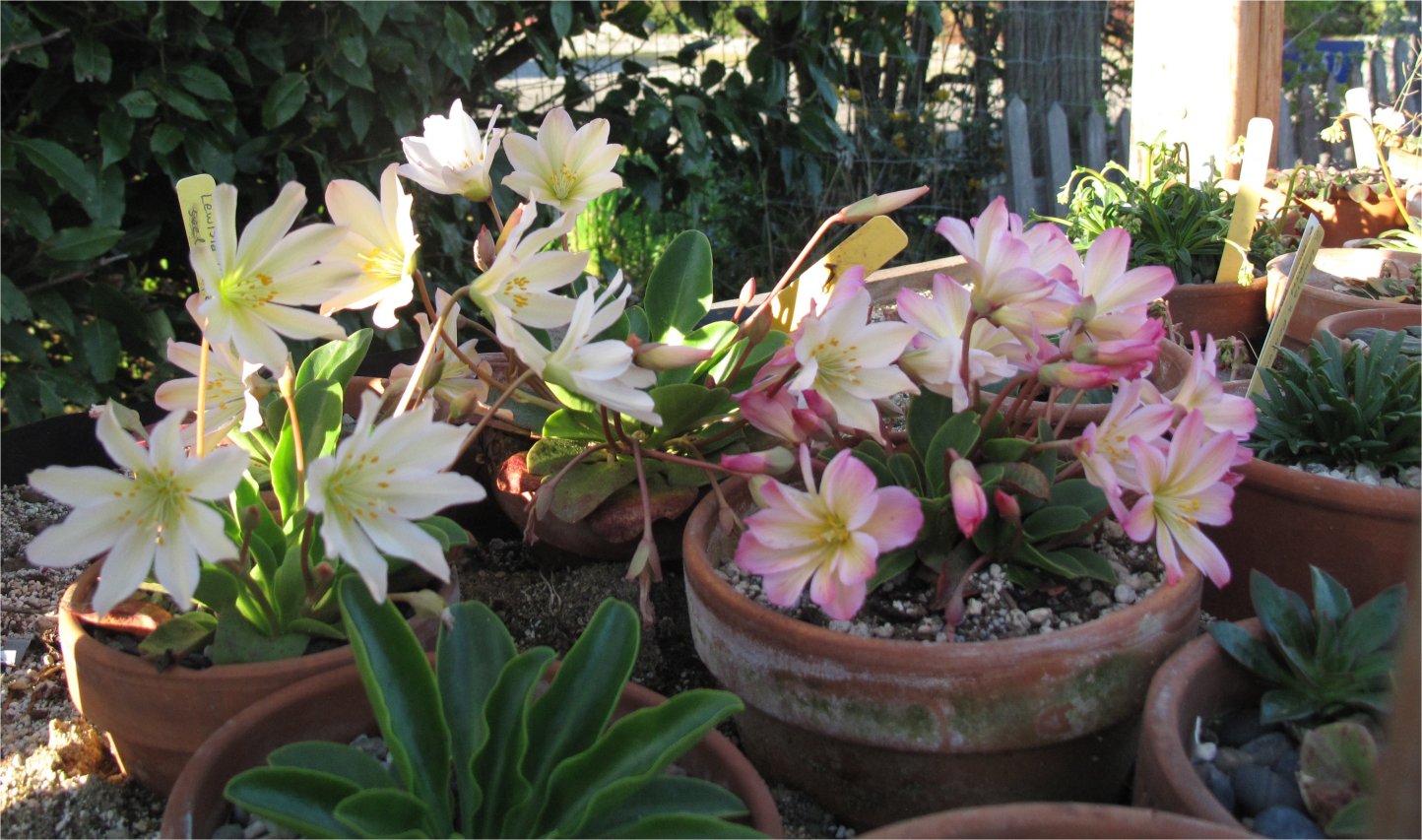
Lewisia cotyledon

Lewisia cotyledon

The Genus Lewisia, endemic to Western North America and numbering about 20 species belongs to the small family Portulacaceae, which is characterized by, among other characteristics, fleshy leaves.  Most of the 20 Lewisia species, especially the evergreens, have leaves that are downright succulent looking.

But it is the flowers that have captivated generations of alpine and rock garden enthusiasts since Meriwether Lewis, in July of 1806, first saw the plant in flower at about 3,400 feet near his campsite on the Bitterroot River near the village of Lolo in Missoula County, Montana.

For me pot culture, clay preferably, affords many advantages, especially the ability to have the blooms displayed at eye level.

Lewisia Cultivation1

Lewisia Tweedyi cultivars

Certainly many folks incorporate L. cotyledon hybrids into the landscape in rock gardens and other beds with excellent drainage. But for me, the simplicity of moving a clay pot into view, and also having the ability in our northwest wet winters to move the Lewisia pots to a drier covered area, heavily favors pot culture.

Lewisia Cultivation4

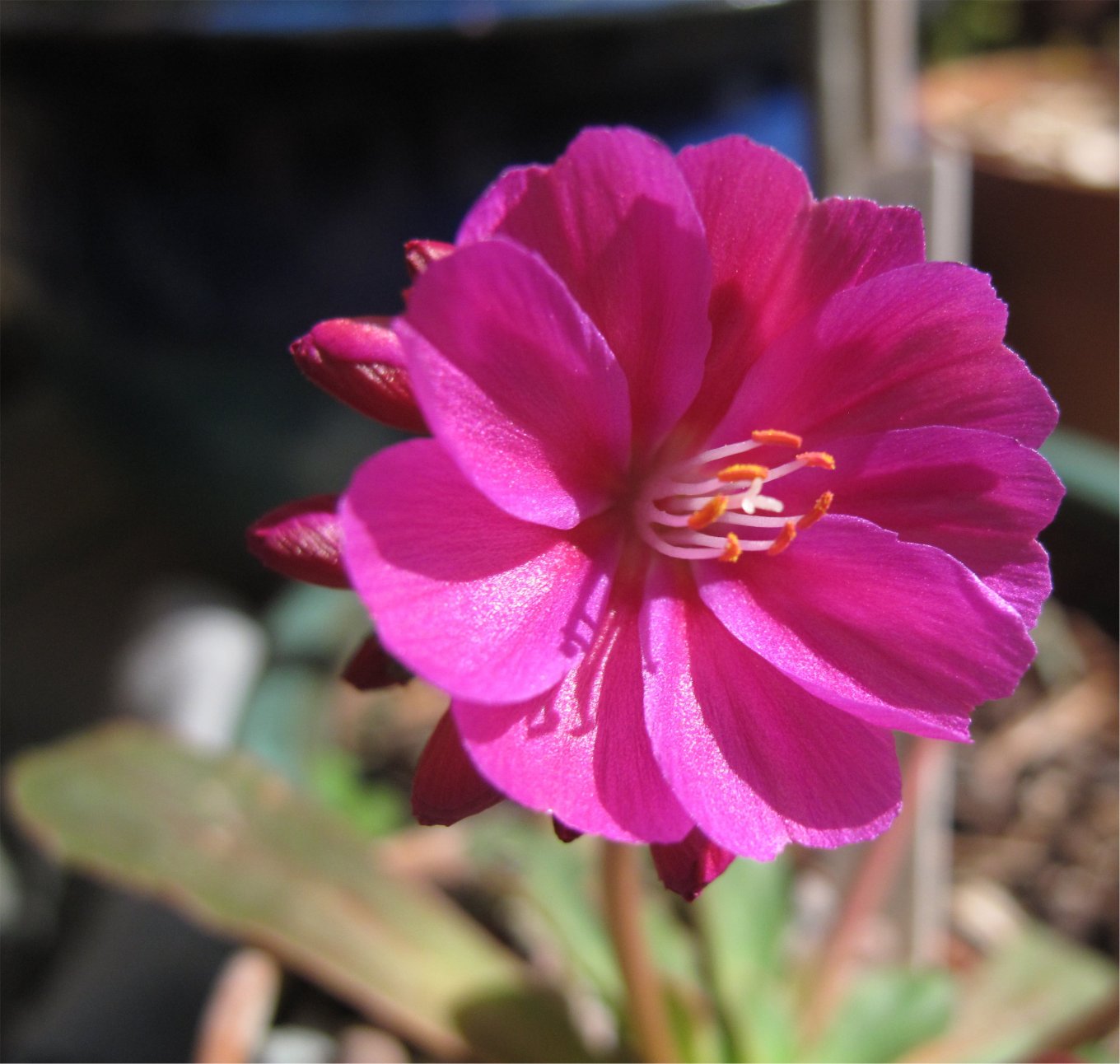
Cotyledon Hybrid Bloom

Lewisia cotyledon is considered by most gardeners the easiest to cultivate and is the species growers have hybridized the most, making its cultivars and hybrids the most visible in general nurseries and  occasionally available for purchase at the big retail garden centers. Nonetheless, even this plant disappoints many novice gardeners when grown in the landscape. While tough as nails with respect to temperatures, cotyledon and cotyledon hybrids prefer some protection from winter wet.

British alpine enthusiasts have been growing and hybridizing Lewisias for decades.  Crosses between L. cotyledon and L. rediviva from Ashwood Nurseries have produced some stunning yellow shades.

An Ashwood Hybrid grown from seed sown in 2010

An Ashwood hybrid I grew from seed sown in 2010


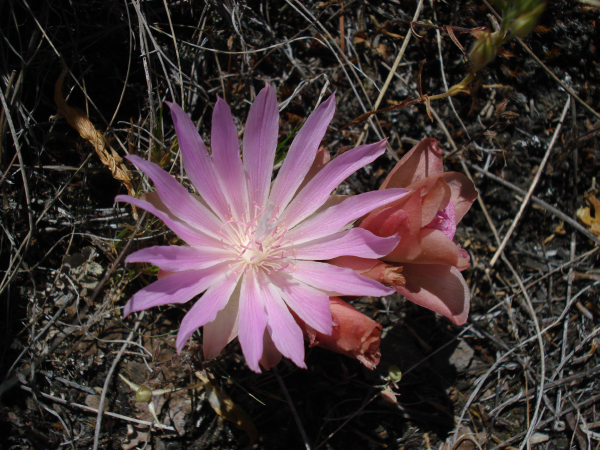
Rediviva may just be the most stunning species in the wild, with bloom that rivals any Lewisia. It’s distributed widely throughout the West, is very drought tolerant, since it dies back (estivates) in summer, presumably in response to dry conditions.

Rediviva

L. rediviva, Mount Sentinel near Missoula Montana (photo courtesy of Univ of Montana)

In cultivation during its active growing period in early spring rediviva tolerates saturated soils, though I recommend clay pots with excellent drainage or plunging pots into a sand bed. Watering the sand bed sparingly, especially during dormancy, is helpful in keeping rediviva happy.

I’m hoping to successfully grow most, if not all, 20 lewisia species. My goal is to be able to display the entire genus and also experiment with various crosses.  Right now I have the following species in cultivation:

  • L. cotyledon and many cotyledon hybrids
  • L. glandulosa
  • L. rediviva
  • L. columbiana
  • L. tweedyi (considered by botanists to be in its own genus, Lewisiopsis)
  • L. brachycalyx