Febrile February?

This month just might prove to be the warmest February on record for the Seattle area. And wetter too!  By February tenth we had already exceeded the average precipitation for the month (3.75″ vs 3.50″ average).  It’s 3 PM as I write and about 60° F. in my yard (time to mow the lawn); the temps in the city of Seattle are above 65° F., which to my mind is downright feverish.
IMG_5738

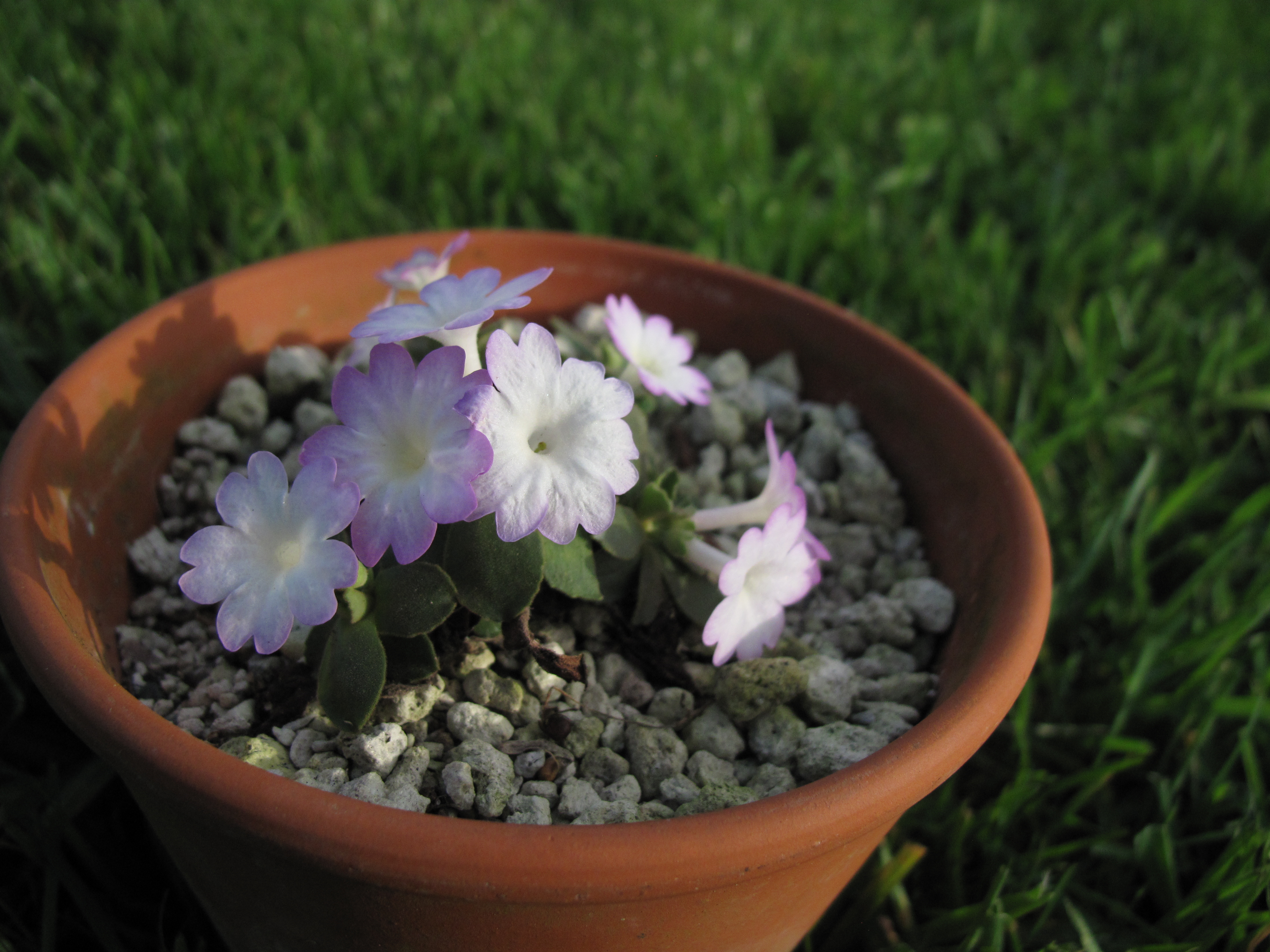
Primula allionii x pubescens hybrid ‘Wharfdale Ling’

I haven’t really paid close attention to the weather statistics until today, but some my plants have definitely been showing evidence they are ahead of schedule.  This little alpine primula cross was outside all winter under a bench, but still able to get a bit of moisture.  Two years ago it didn’t bloom heavily until mid-March.

A rosemary plant in a clay pot had the benefit of my greenhouse and is very happily blooming at the same time as the Hellebores.
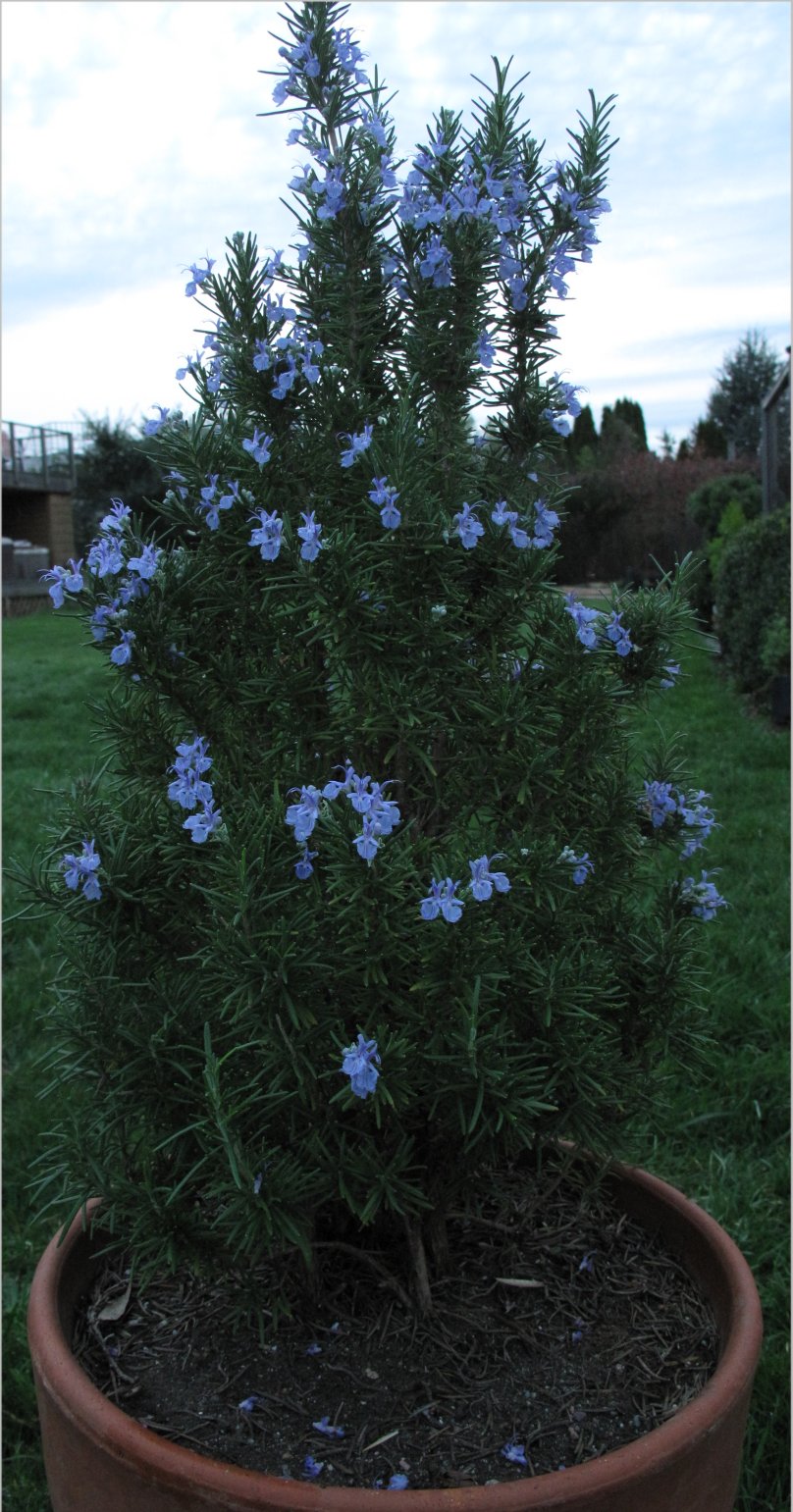
rosemary

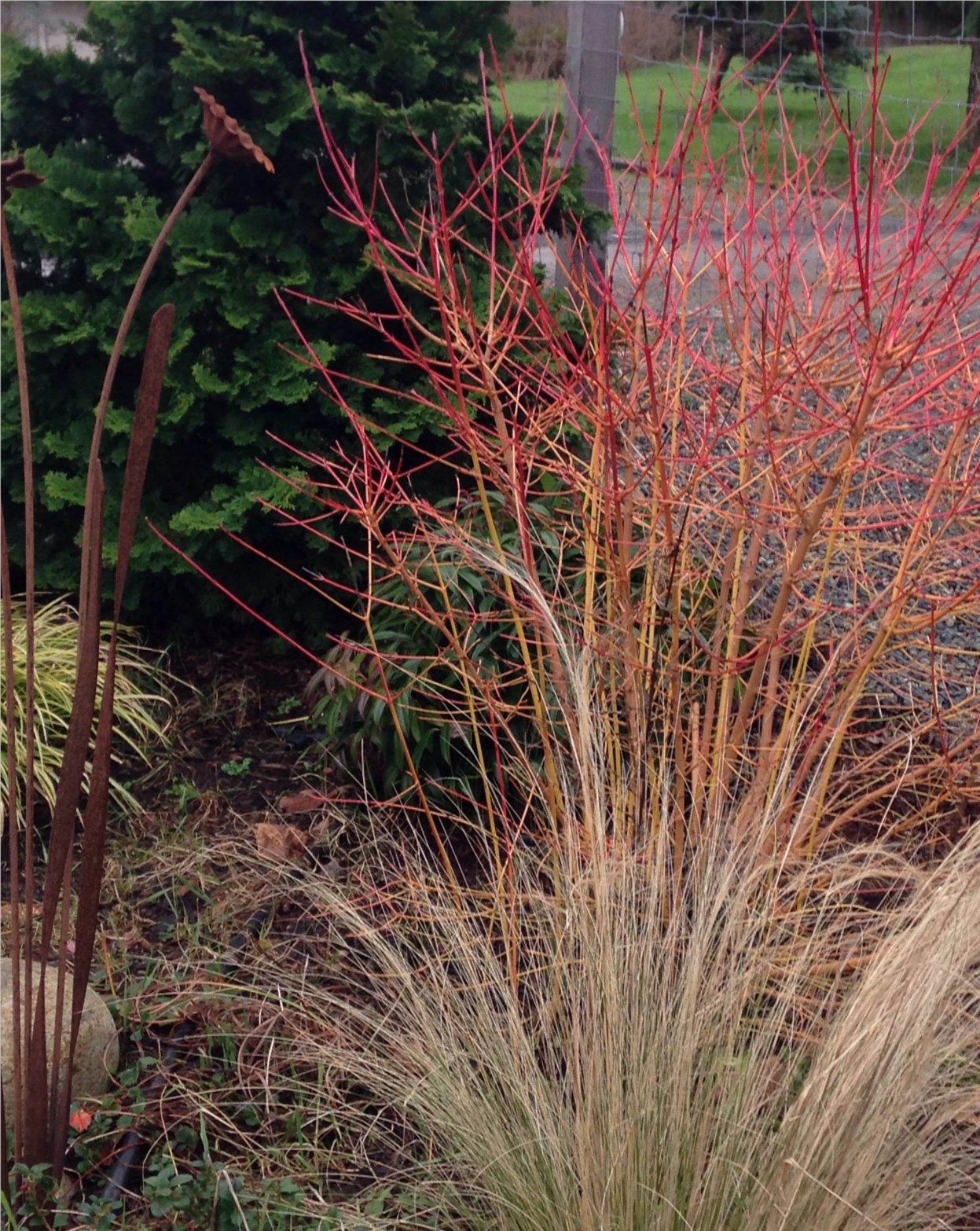
The dwarf red twig dogwood (below) is showing some nice red stems, which I believe is what it’s expected to do over the winter; perhaps it will leaf out earlier this year.
Img_0857

Mexican feather grass, red twig dogwood, Hinoki cypress

The Mexican feather grass in the foreground doesn’t look bad, but probably should be trimmed back to get ready for the real spring.

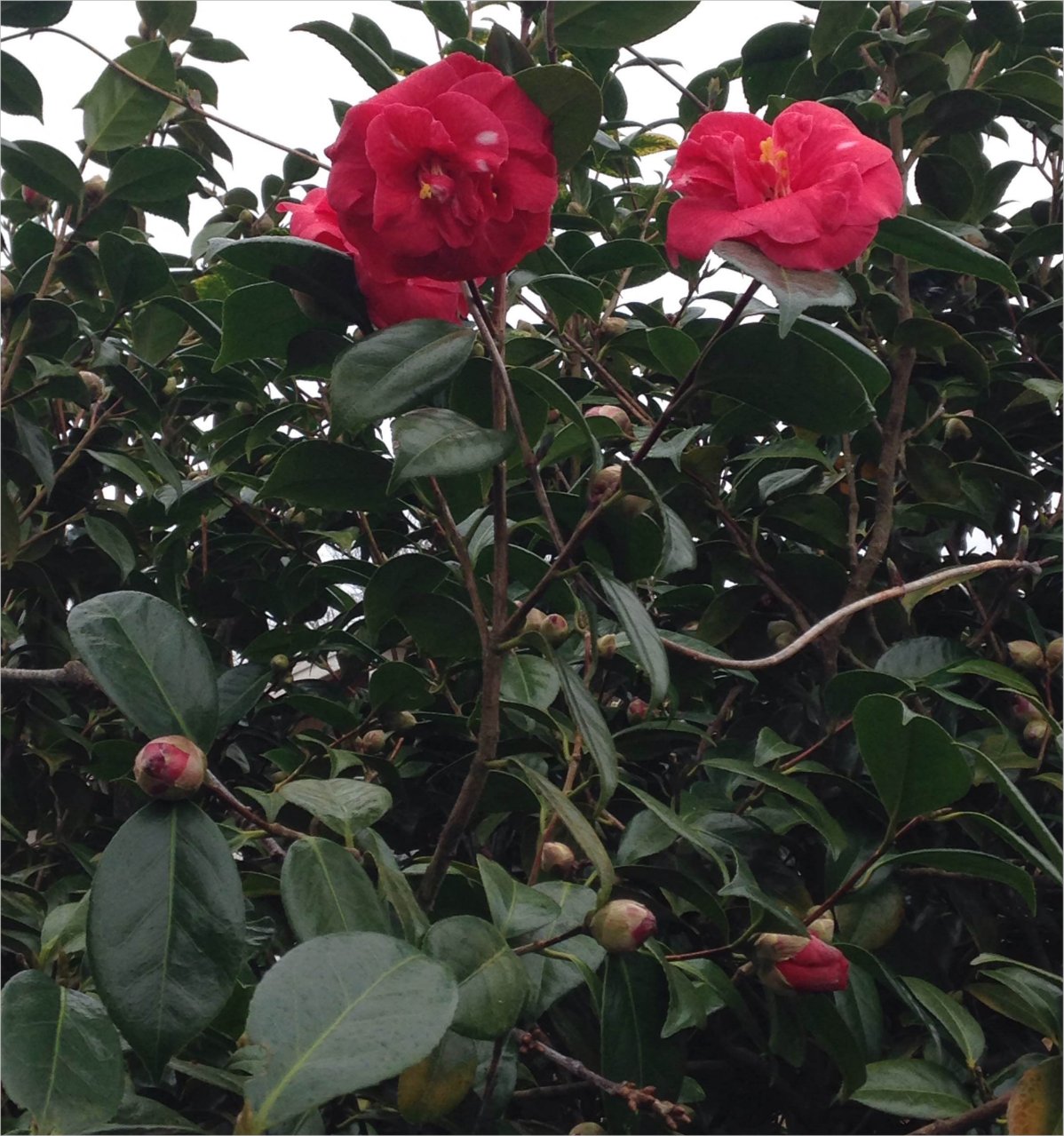
I’m not sure if the Camellia japonica in my garden is that early, since these two blooms are just out while the rest of the plant is still in buds.
Img_0855

This mature plant, about seven feet high is usually quite early, but right now it’s blooming at the same time as C. sasanqua, the winter blooming Camellia.

What’s blooming in your February garden?
Bug’s Eye View

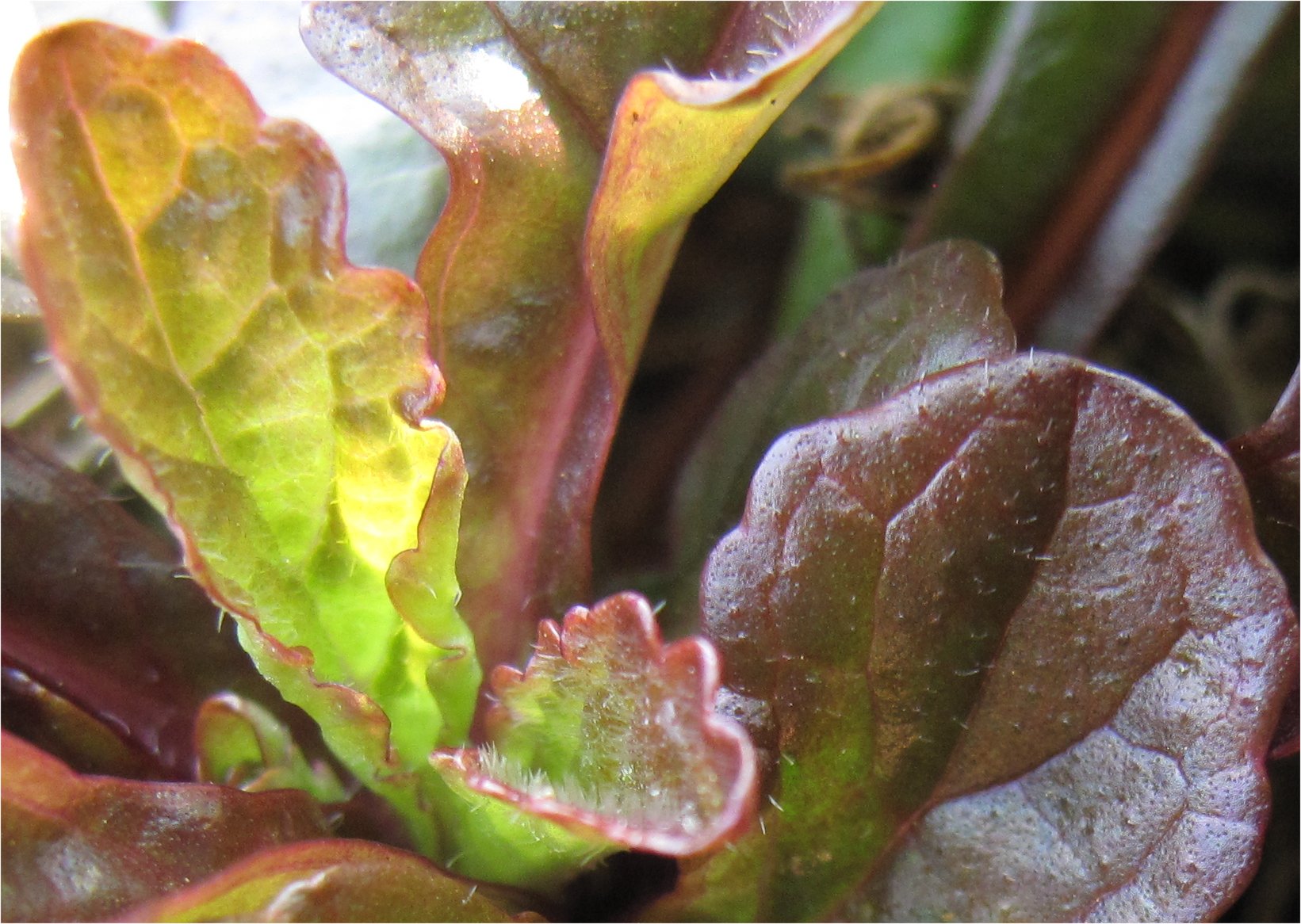
Nature will bear the closest inspection. She
Invites us to lay our eyes level with her
Smallest leaf, and take an insect view of its
Plain.
—Thoreau

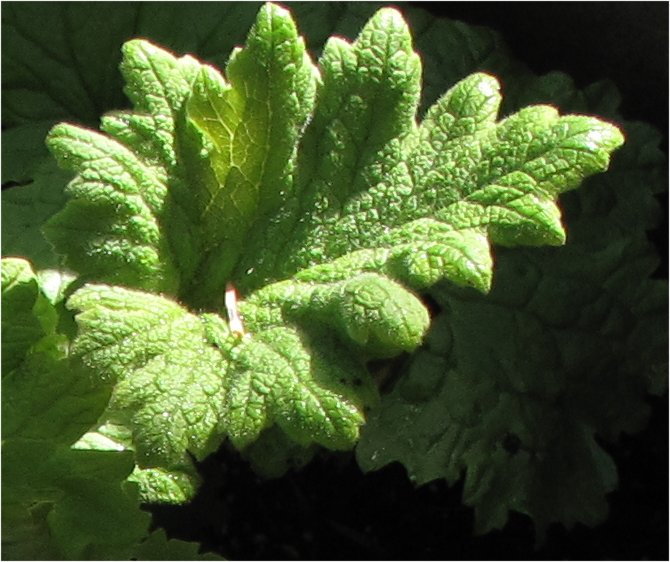
ajuga leaf

Ajuga leaves

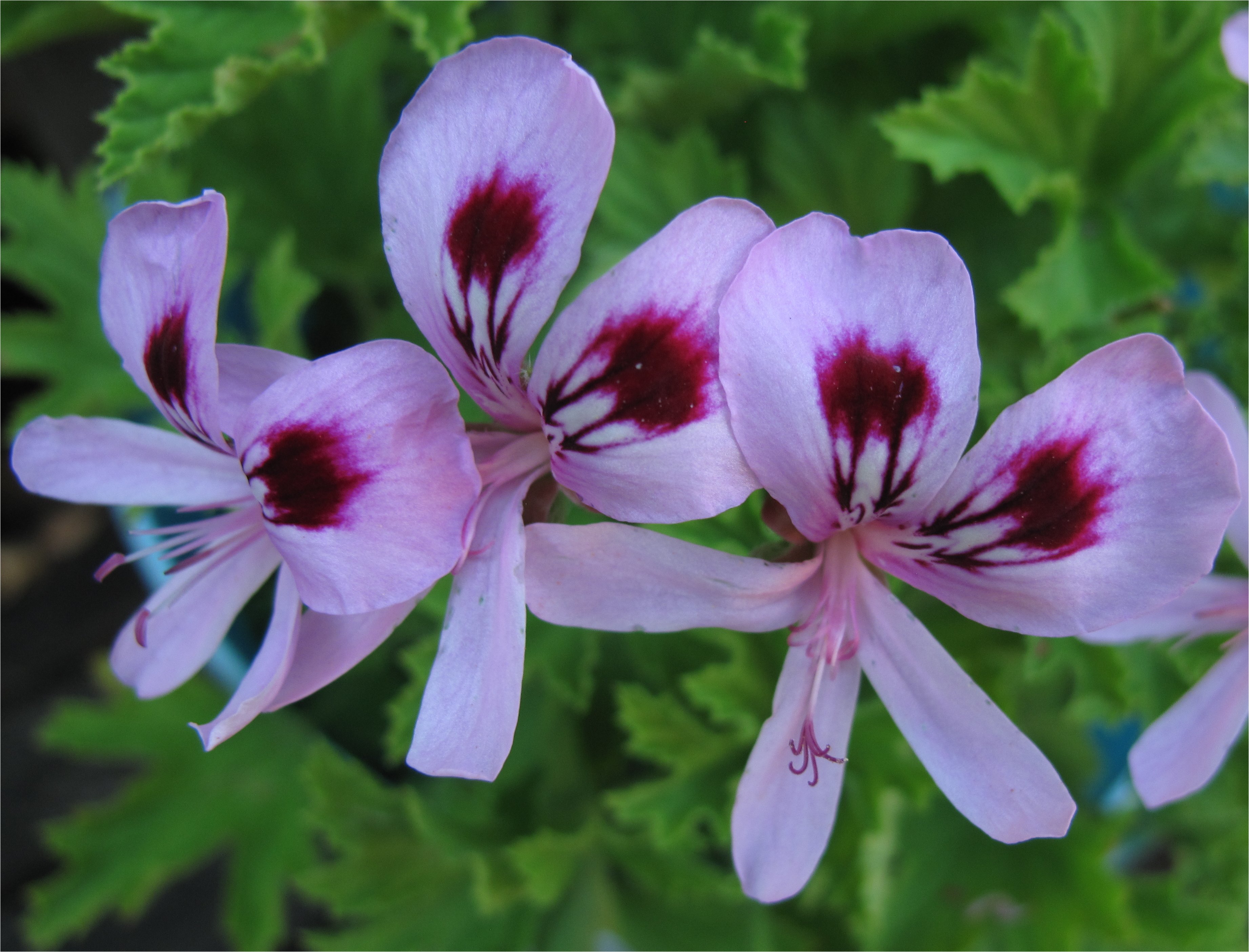
scented geranium

Scented Geranium

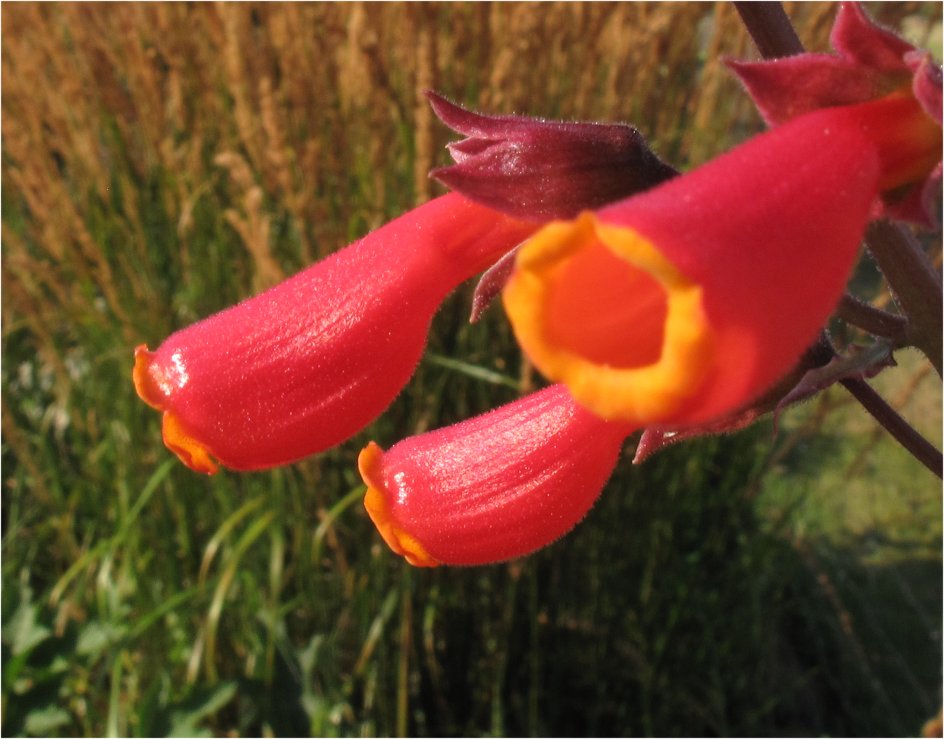
vine

Scarlet Chilean Glory Vine (Ecremocarpus scaber ‘Scarlet’)

leaf

Primula seiboldii

The universe is a continuous web.
Touch it at any point and the whole web quivers…

…At my touch the wild braid of creation trembles.

— Stanley Kunitz

A Gardener Poet and Okinawa Elders

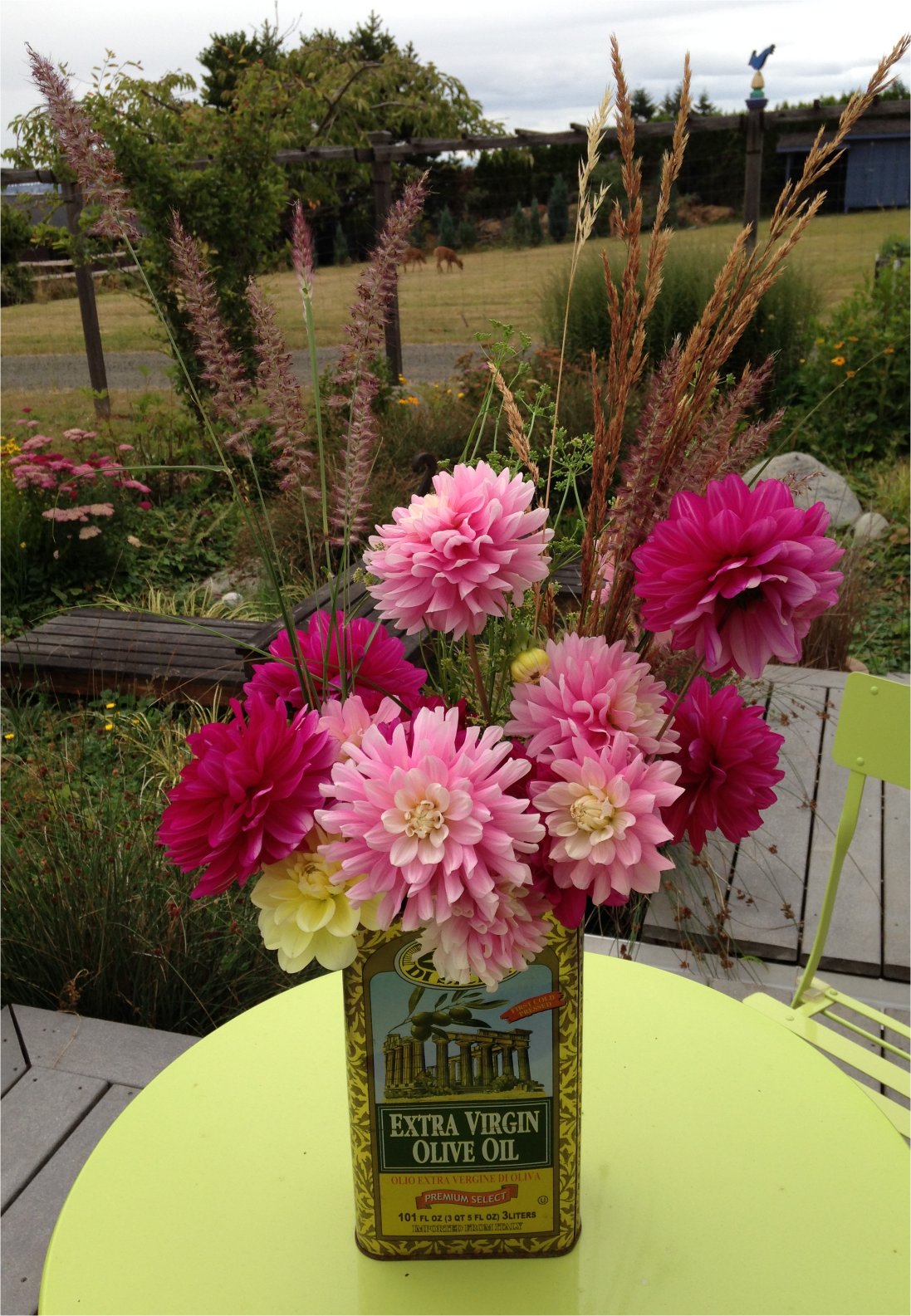
Dahlias with going to seed grass and parsley

Dahlias and grass  arrangement

You might wonder what a poet laureate of the United States and the elders of the Japanese island of Okinawa have in common.  Simply that gardeners live longer.

Whether you are growing vegetables in a p-patch or tending a backyard perennial border, evidence suggests the physical, mental and spiritual benefits of working the land are an “age old” fact.  In Japan on the island of Okinawa researchers have studied the island elders, especially those folks who have made it to one hundred.

According to Dan Buettner, author of The Blue Zones, “…almost all Okinawan centenarians grow or once grew a garden. It’s a source of daily physical activity that exercises the body with a wide range of motion and helps reduce stress. It’s also a near-constant source of fresh vegetables.”

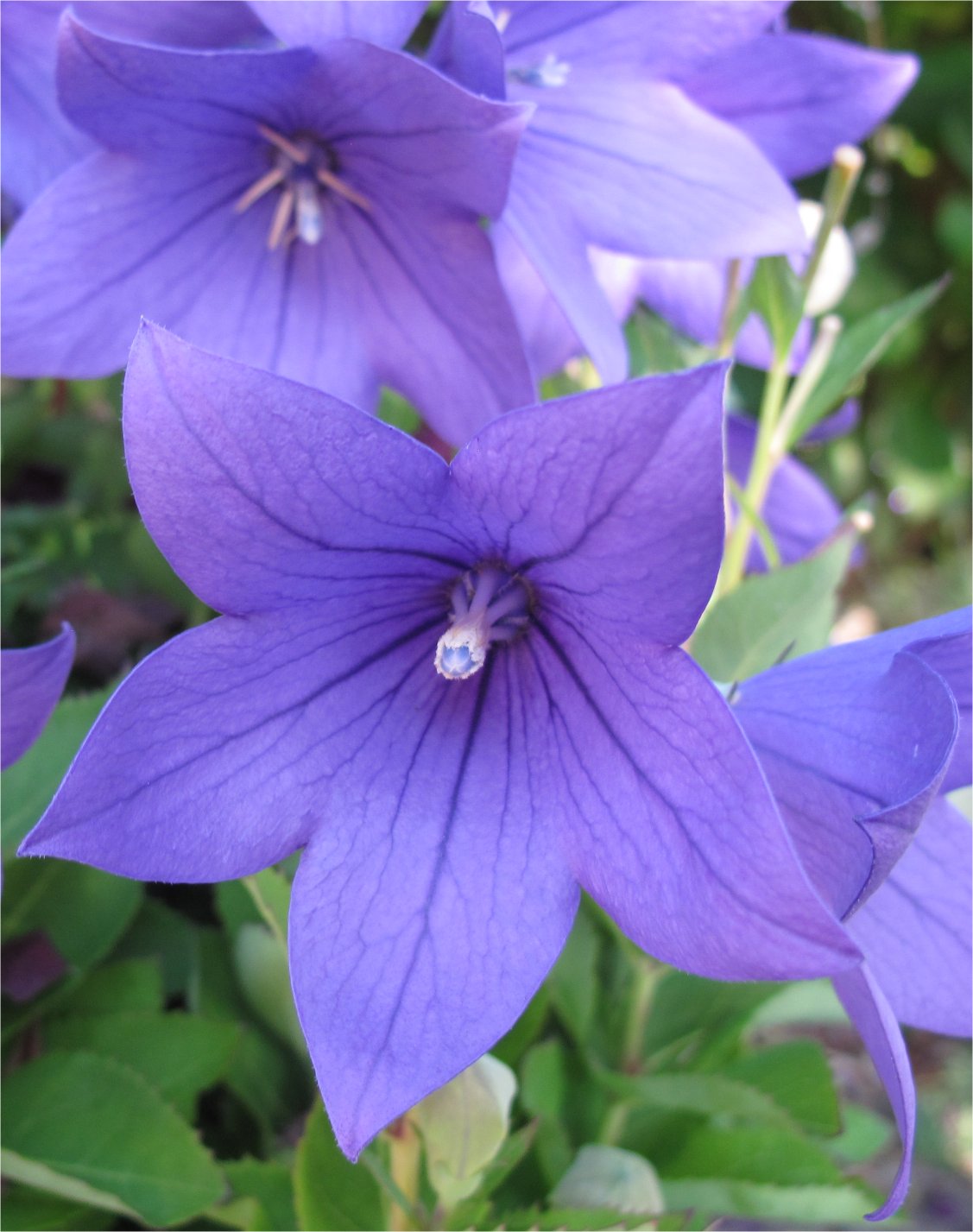
Balloon Flower

Balloon Flower

Buettner adds, “…older Okinawans have eaten a mostly plant-based diet most of their lives. Their meals of stir-fried vegetables, sweet potatoes, and tofu are high in nutrients and low in calories. The vine, (Goya A.k.a Bitter Melon) (Momordica charantia), with its antioxidants and compounds that lower blood sugar, is of particular interest. While centenarian Okinawans do eat some meat, it is traditionally reserved only for infrequent ceremonial occasions and taken only in small amounts.”

***

Throughout his long life of 101 years (1905-2006), Stanley Kunitz created poetry and tended gardens. A small book, The Wild Braid:  A Poet Reflects on a Century in the Garden, was published a year after he died. The book grew out of conversations between Stanley and Genine Lentine, also a poet. Many of their talks took place during daily rounds at Stanley’s seaside garden in Provincetown, Massachusetts.

The Round

Light splashed this morning
on the shell-pink anemones
swaying on their tall stems;
down blue-spiked veronica
light flowed in rivulets
over the humps of the honeybees;
this morning I saw light kiss
the silk of the roses
in their second flowering,
my late bloomers
flushed with their brandy.
A curious gladness shook me.

So I have shut the doors of my house,
so I have trudged downstairs to my cell,
so I am sitting in semi-dark
hunched over my desk
with nothing for a view
to tempt me
but a bloated compost heap,
steamy old stinkpile,
under my window;
and I pick my notebook up
and I start to read aloud
the still-wet words I scribbled
on the blotted page:
“Light splashed…”

I can scarcely wait till tomorrow
when a new life begins for me,
as it does each day,
as it does each day.

—Stanley Kunitz from The Collected Poems, 2000.